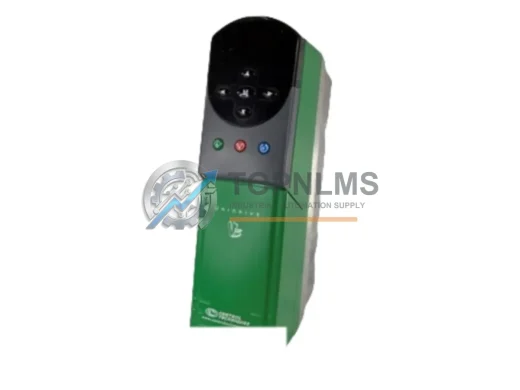
Product Overview
PHOENIX CONTACT IBS RT 24 DIO 16/16-T Original INTERBUS Spare: System Stability and Industrial Maintenance Value
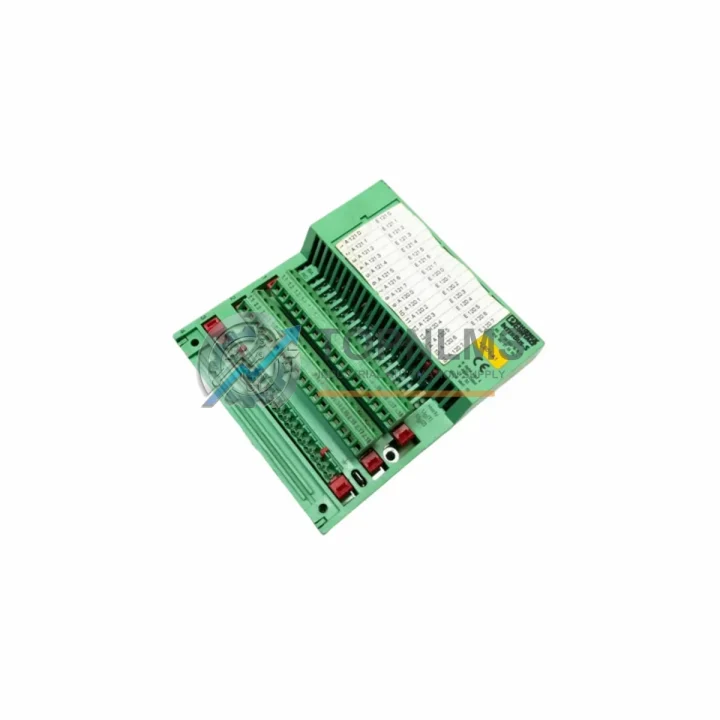
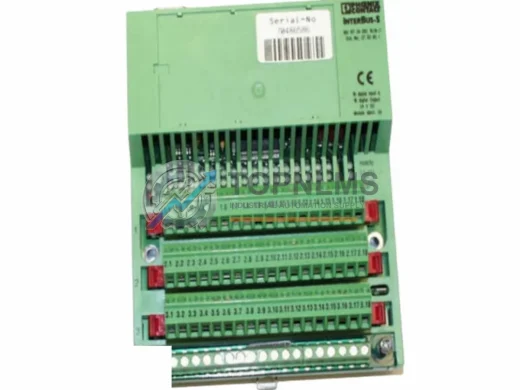
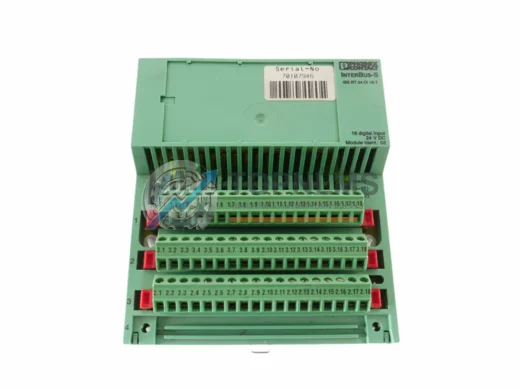
The PHOENIX CONTACT IBS RT 24 DIO 16/16-T is an original INTERBUS Remote Bus (RT Series) digital I/O module engineered for continuous-duty industrial automation environments. Delivering 16 digital inputs and 16 digital outputs at 24 VDC, this module functions as a critical communication and control node within INTERBUS fieldbus ring topologies, enabling deterministic, high-speed data exchange between the master controller and distributed field devices across the plant floor. Whether you are executing a scheduled maintenance window, responding to an unplanned line stoppage, or building a strategic spare parts buffer, a verified original IBS RT 24 DIO 16/16-T is a direct investment in production continuity and system stability.
In modern manufacturing facilities — automotive assembly, food and beverage processing, pharmaceutical production, and discrete parts manufacturing — INTERBUS RT Series modules are embedded deep within control cabinets, connecting PLCs and DCS controllers to sensors, actuators, solenoid valves, and motor starters distributed across the production cell. When a single digital I/O module fails, the downstream impact can cascade across an entire line segment. The IBS RT 24 DIO 16/16-T is engineered for plug-and-play replacement within existing INTERBUS topologies, preserving the original wiring scheme and eliminating the need for software reconfiguration in most standard installations — a critical advantage when every minute of downtime carries a measurable production cost.
Critical Technical Specs
| Parameter |
Specification |
| Part Number / SKU |
IBS RT 24 DIO 16/16-T |
| Brand |
PHOENIX CONTACT |
| Series |
INTERBUS Remote Bus (RT Series) |
| Module Type |
Digital I/O Module — Remote Bus Terminal |
| Digital Inputs |
16 × 24 VDC |
| Digital Outputs |
16 × 24 VDC (transistor, sourcing) |
| Supply Voltage |
24 VDC nominal (18–30 VDC permissible) |
| Fieldbus Protocol |
INTERBUS (IBS), Remote Bus topology |
| Process Data Width |
16 bits IN / 16 bits OUT |
| Bus Connection |
9-pin SUB-D remote bus connector (in/out) |
| Mounting |
DIN rail TS 35 (EN 60715) |
| Operating Temperature |
0 °C to +55 °C |
| Protection Class |
IP20 |
| Country of Origin |
Germany |
| Approx. Weight |
2,380 g (with packaging) |
| Compatibility |
INTERBUS RT Series; PHOENIX CONTACT ILC, RFC, and IBS master controllers; backward-compatible with earlier IBS RT 24 DIO variants |
| Application Environment |
Industrial control cabinets, factory automation, process control, machine building |
| Maintenance Note |
Inspect bus cables, power supply, and adjacent I/O modules during replacement |
| Warranty |
12 Months — all units individually tested prior to shipment |
Preventive Maintenance Strategy
A proactive maintenance approach for any INTERBUS-based control system extends well beyond replacing a single I/O module. When a technician opens the control cabinet to service or replace the IBS RT 24 DIO 16/16-T, best practice calls for a comprehensive inspection of surrounding components to prevent secondary failures and extend the operational life of the entire system segment.
Begin with the INTERBUS remote bus cables and 9-pin SUB-D connectors that link each RT module in the ring topology. These cables are subject to mechanical stress, vibration fatigue, and contact oxidation over years of service. Damaged or intermittent bus cables are a leading cause of phantom I/O faults that are frequently misdiagnosed as module failures — replacing the cable first can save significant diagnostic time. While the cabinet is open, verify the condition of the INTERBUS bus coupler or bus terminal (such as the IBS 24 BK-T) that feeds the remote bus segment; a degraded coupler can cause erratic behavior across all downstream I/O nodes simultaneously.
Next, inspect the 24 VDC power supply module feeding the I/O rail. PHOENIX CONTACT QUINT POWER or TRIO POWER series power supplies are commonly paired with INTERBUS installations. A supply operating near its rated current limit under sustained thermal load is a predictable failure point. Replacing or adding a redundant power supply during a planned outage is far less costly than an emergency shutdown. Simultaneously, check the terminal blocks and wiring ferrules on the I/O side — loose or corroded terminals on the 16 input and 16 output channels are a frequent source of intermittent field device faults that are difficult to trace without physical inspection.
For facilities running mixed I/O architectures, audit adjacent analog I/O modules such as the IBS RT 24 AI 4/4 (analog input) or IBS RT 24 AO 4/4 (analog output) sharing the same remote bus segment. These modules share the same bus infrastructure and are equally vulnerable to bus-level disturbances. If the system includes relay output modules such as the IBS RT 24 DO 16/16-R-T, inspect the relay contacts for wear — particularly on outputs driving inductive loads such as solenoids, motor contactors, or pneumatic valve coils, where contact erosion accelerates with switching frequency.
Communication integrity should be verified at the INTERBUS master controller level — whether that is a PHOENIX CONTACT ILC 150 ETH, RFC 430 ETH-IB, or a third-party PLC equipped with an INTERBUS master card. Reviewing diagnostic logs and confirming firmware currency at the master level can reveal early-warning patterns before they escalate to module-level failures. Additionally, inspect any signal isolators or surge protection devices installed on high-risk I/O channels — particularly on long cable runs or channels connected to field devices in electrically noisy environments. Finally, ensure that INTERBUS bus terminal end caps and slot covers are in place on all unused module positions to maintain IP20 protection and prevent contamination ingress into the bus connector area.
A well-maintained INTERBUS segment — with verified cabling, a healthy power supply, inspected relay and analog modules, current master firmware, and protected bus connectors — will dramatically reduce unplanned downtime and extend the service life of every module in the ring, including the IBS RT 24 DIO 16/16-T.
Strategic Replacement Solutions
The IBS RT 24 DIO 16/16-T is a direct drop-in replacement for aging or failed units within the INTERBUS RT remote bus family. PHOENIX CONTACT maintained backward compatibility across successive generations of the INTERBUS RT platform, meaning this module can replace earlier IBS RT 24 DIO variants without requiring changes to the INTERBUS master configuration, process data mapping, or field wiring. This is a significant operational advantage in legacy system environments where original engineering documentation may be incomplete or the original system integrator is no longer available for support.
For facilities managing end-of-life INTERBUS installations, the strategic approach is to maintain a minimum buffer stock of one to two IBS RT 24 DIO 16/16-T units per production line. The mean time between failures for digital I/O modules in continuous industrial service is typically measured in years, but the consequence of a stockout — waiting days or weeks for a replacement while a production line sits idle — far outweighs the carrying cost of a spare unit. Procurement teams should factor in lead times from standard distribution channels versus specialist industrial spare parts suppliers when setting reorder points and safety stock levels.
For customers evaluating a broader system migration, the IBS RT 24 DIO 16/16-T also serves as an effective bridge solution: it keeps existing INTERBUS infrastructure fully operational while a phased migration to a newer fieldbus platform — such as PROFINET or EtherNet/IP with PHOENIX CONTACT Axioline F or Inline I/O — is planned, budgeted, and executed in a controlled manner. This approach eliminates the risk of a forced, unplanned migration driven by a critical spare parts shortage, and allows engineering teams to migrate line by line rather than facing a full system cutover under pressure.
Support FAQ
Q1: Is this an original PHOENIX CONTACT IBS RT 24 DIO 16/16-T or a third-party compatible replacement?
This is an original PHOENIX CONTACT module sourced from authorized industrial supply channels. Each unit is individually tested for electrical functionality and INTERBUS communication integrity before shipment. A 12-month warranty is included from the date of delivery, with test records available upon request for quality-critical procurement processes.
Q2: How do I verify compatibility with my existing INTERBUS installation before ordering?
The IBS RT 24 DIO 16/16-T is compatible with all standard INTERBUS remote bus segments operating at 24 VDC. Confirm that your installation uses the INTERBUS RT remote bus topology — not the INTERBUS local bus or Inline variants. The module’s 9-pin SUB-D remote bus connectors and TS 35 DIN rail mounting are standardized across the RT family. If you have the existing module’s order number or a nameplate photo, our technical team can confirm compatibility before you place your order.
Q3: What does the pre-shipment testing process cover?
Every IBS RT 24 DIO 16/16-T undergoes a functional test verifying all 16 digital inputs and 16 digital outputs, supply voltage tolerance across the permissible range, INTERBUS communication handshake with a master controller, and physical connector integrity. Units that do not pass all test criteria are not shipped. Test records are retained and available upon request.
Q4: What is the recommended spare parts inventory strategy for a multi-line INTERBUS facility?
For facilities with three or more INTERBUS remote bus segments, a minimum of two IBS RT 24 DIO 16/16-T units per facility is recommended as a baseline buffer. High-criticality lines — continuous process, food and beverage, pharmaceutical — should maintain one unit per segment. Spares should be stored in anti-static packaging in a climate-controlled environment and rotated on a first-in, first-out basis. Annual functional verification of long-term stored spares is advisable to confirm readiness before a maintenance event.