
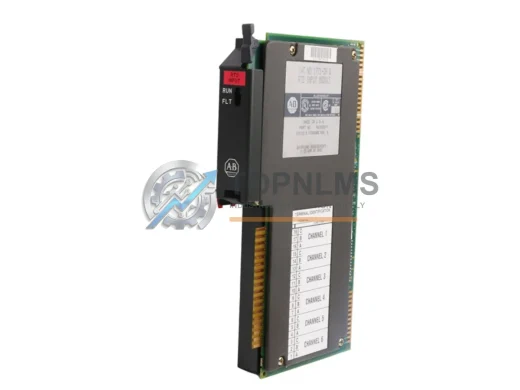
Allen-Bradley
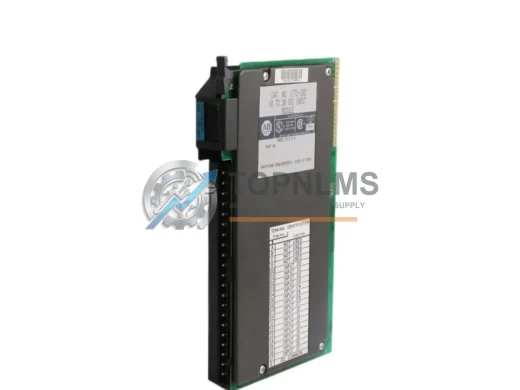
Allen-Bradley 1771-IR Original Industrial Spare PLC-5 Compatible
1771-IRAllen-Bradley 1771-IR 6-Channel RTD Input Module for PLC-5. Original spare, PLC-5 compatible, 12-month warranty. Fast shipping. Industrial replacement.
Request availability, condition, lead time and export shipping details for 1762-IR4.
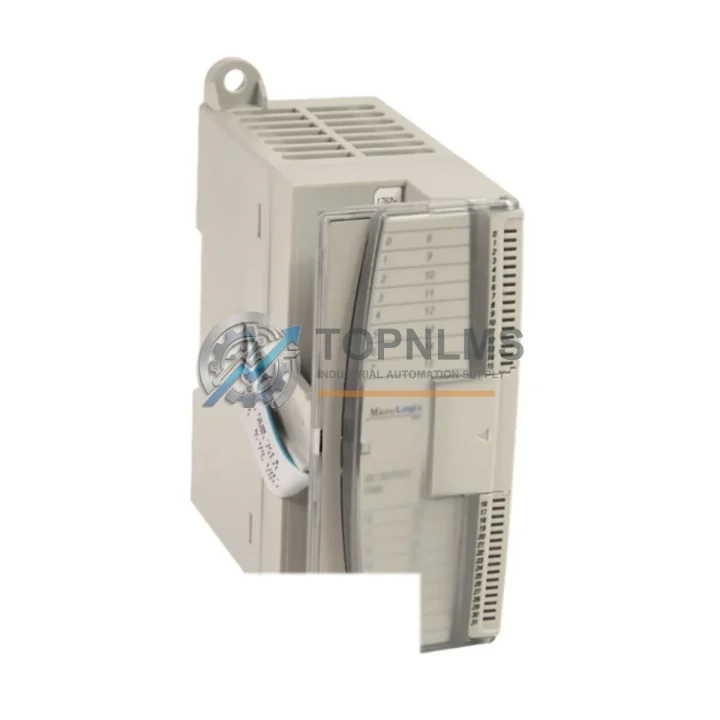
Send this exact part number, quantity and destination country. TOPNLMS will confirm availability, condition and export lead time before quotation.
The Allen-Bradley 1762-IR4 is a 4-channel RTD (Resistance Temperature Detector) input expansion module engineered for the MicroLogix 1100 and MicroLogix 1400 programmable controller platforms. As a genuine original spare part, the 1762-IR4 plays a critical role in maintaining accurate temperature measurement and closed-loop process control across a wide range of industrial applications — from food and beverage processing lines to chemical reactors, HVAC systems, and precision manufacturing cells.
In any facility where temperature monitoring is integral to product quality or process safety, the availability of a verified, tested replacement module is not optional — it is a fundamental pillar of operational resilience. A failed RTD input module can trigger immediate process shutdowns, compromise batch integrity, and generate costly unplanned downtime. Stocking the 1762-IR4 as a certified spare ensures that your maintenance team can execute a rapid, like-for-like replacement without waiting days or weeks for procurement cycles to complete.
Every 1762-IR4 unit supplied by TOPNLMS is sourced from verified channels, subjected to pre-shipment functional testing, and backed by a 12-month warranty — giving procurement engineers and plant managers the confidence to plan maintenance budgets and spare-parts inventories with precision.
| Parameter | Specification |
|---|---|
| Part Number / SKU | 1762-IR4 |
| Brand | Allen-Bradley (Rockwell Automation) |
| Series | MicroLogix Expansion I/O (1762 Series) |
| Module Type | 4-Channel RTD / Resistance Input |
| Compatible Controllers | MicroLogix 1100 (1763-L16xxx), MicroLogix 1400 (1766-L32xxx) |
| RTD Types Supported | 100Ω Platinum (PT100), 200Ω Platinum, 500Ω Platinum, 1000Ω Platinum; Nickel 120Ω; Copper 10Ω |
| Input Channels | 4 differential RTD/resistance inputs |
| Resolution | 16-bit (±0.1°C typical accuracy) |
| Temperature Range | -200°C to +870°C (sensor dependent) |
| Excitation Current | 1 mA per channel |
| Wiring Configuration | 2-wire, 3-wire, 4-wire RTD |
| Bus Current Draw | 40 mA @ 5 VDC (from controller backplane) |
| Operating Temperature | 0°C to +60°C |
| Storage Temperature | -40°C to +85°C |
| Relative Humidity | 5% to 95% non-condensing |
| Dimensions (H × W × D) | 90 mm × 40 mm × 87 mm (approx.) |
| Weight | 215 g |
| Certifications | UL, CE, CSA, RoHS compliant |
| Country of Origin | United States |
| Warranty | 12 Months — covers manufacturing defects and functional failure under normal operating conditions |
| Installation | DIN rail or panel mount; hot-swap not supported — power down before replacement |
| Maintenance Recommendation | Inspect terminal connections and RTD wiring annually; verify channel calibration during scheduled shutdowns |
When a 1762-IR4 RTD input module is flagged for replacement during a scheduled shutdown or emergency repair, experienced maintenance engineers know that the module itself is rarely the only component that warrants attention. The MicroLogix 1100 and 1400 control systems are modular by design, and the health of the entire I/O expansion bus directly affects the reliability of every connected module.
Begin any RTD module replacement by inspecting the 1762-IQ16 digital input module and 1762-OW16 relay output module installed in adjacent slots. These modules share the same expansion bus and are subject to the same environmental stresses — vibration, thermal cycling, and humidity — that degrade RTD input channels over time. If the 1762-IR4 has shown intermittent faults, there is a meaningful probability that neighboring I/O modules are experiencing similar connector fatigue or internal drift.
Next, verify the integrity of the 1762-OB16 transistor output module if your system uses it for actuator control downstream of temperature-based logic. A degraded output module can mask what appears to be a temperature measurement fault, leading maintenance teams to replace the RTD module unnecessarily. Systematic inspection of the full I/O stack prevents misdiagnosis and reduces repeat callouts.
The MicroLogix 1100 controller unit (1763-L16BWA or 1763-L16BBB) itself should be evaluated during any major I/O replacement. Check the controller’s battery backup (1763-BA series) for voltage — a depleted battery causes program loss on power interruption, which can be catastrophic in process-critical environments. Replacing the battery as part of a planned maintenance window costs a fraction of the downtime caused by an unexpected program wipe.
For systems where the MicroLogix 1400 (1766-L32BXBA) is deployed, inspect the 1762-IF4 analog input module alongside the 1762-IR4. Both modules handle analog signal conditioning, and facilities that run mixed RTD and 4–20 mA sensor loops often find that calibration drift in one module correlates with degradation in the other. Scheduling simultaneous verification of both modules during a single planned outage is far more cost-effective than two separate shutdowns.
Terminal block integrity is another frequently overlooked maintenance item. The 1492-CABLE series field wiring accessories and associated terminal strips connecting RTD sensors to the 1762-IR4 should be inspected for oxidation, loose ferrules, and insulation cracking — particularly in high-vibration or high-humidity environments. Poor terminal connections are the leading cause of intermittent RTD faults that are incorrectly attributed to module failure.
If your facility uses a 1761-NET-ENI Ethernet interface or 1761-NET-AIC Advanced Interface Converter for remote monitoring of MicroLogix systems, include these communication modules in your inspection checklist. Network communication faults can prevent remote diagnostics from detecting RTD channel alarms in time, turning a manageable fault into a full process shutdown.
Finally, for facilities managing aging MicroLogix installations alongside newer ControlLogix or CompactLogix systems, consider stocking the 1747-SCNR ScanPort module or relevant 1756-series gateway modules to ensure cross-platform communication remains intact during system upgrades. A well-maintained spare-parts inventory that spans both legacy and current-generation Rockwell Automation hardware is the most effective hedge against extended downtime in mixed-generation control environments.
The 1762-IR4 has been a cornerstone of MicroLogix-based temperature control systems for over two decades. Many facilities continue to operate MicroLogix 1100 and 1400 platforms well beyond their original design life because the cost and complexity of full system migration outweigh the benefits — particularly when the existing control logic is deeply embedded in production workflows.
For these facilities, sourcing genuine original 1762-IR4 modules is the most reliable strategy for maintaining system integrity. Counterfeit or non-original modules may appear functionally identical but often fail to meet the original calibration tolerances, leading to measurement errors that are difficult to diagnose and can compromise product quality or process safety.
TOPNLMS supplies only verified original 1762-IR4 units, each tested for channel accuracy, bus communication integrity, and terminal block condition before shipment. This pre-shipment verification process means that when your maintenance team installs a replacement module, it will perform identically to the original — no field calibration surprises, no unexpected channel offsets.
For facilities planning a phased migration from MicroLogix to CompactLogix or ControlLogix platforms, maintaining a buffer stock of 1762-IR4 modules provides the operational flexibility to defer migration on a system-by-system basis without accepting elevated downtime risk. A strategic spare-parts inventory of 2–3 units per critical production line is a widely adopted best practice in facilities with high uptime requirements.
Lead times for legacy Rockwell Automation I/O modules can be unpredictable through standard distribution channels. Securing stock through TOPNLMS eliminates procurement uncertainty and ensures that your maintenance team has immediate access to verified replacement parts when unplanned failures occur — at any hour, on any shift.
Q1: Is the 1762-IR4 compatible with both MicroLogix 1100 and MicroLogix 1400 controllers?
Yes. The 1762-IR4 is fully compatible with the MicroLogix 1100 (1763-L16xxx series) and MicroLogix 1400 (1766-L32xxx series) as an expansion I/O module. It connects via the 1762 expansion bus and is configured through RSLogix 500 or Studio 5000 Logix Designer software. No hardware modification is required for either platform.
Q2: What pre-shipment testing does TOPNLMS perform on the 1762-IR4?
Each unit undergoes functional verification of all 4 RTD input channels, bus communication integrity testing, and physical inspection of terminal blocks and connector pins before shipment. Units that do not meet original specification tolerances are not shipped. A test report is available upon request for quality-critical procurement processes.
Q3: How should I verify compatibility before installing a replacement 1762-IR4 in my system?
Confirm that your controller firmware version supports the 1762-IR4 module (RSLogix 500 v7.0 or later is recommended). Check the existing I/O configuration file to verify the module slot assignment and RTD type settings. Power down the controller and all expansion modules before removing the faulty unit. After installation, perform a channel-by-channel verification against known reference temperatures before returning the system to production.
Q4: What does the 12-month warranty cover, and how is a warranty claim processed?
The 12-month warranty covers manufacturing defects and functional failure under normal operating conditions, including channel measurement errors beyond published tolerances and bus communication failures. It does not cover damage caused by incorrect wiring, overvoltage, physical impact, or installation in environments outside the published operating specifications. To initiate a warranty claim, contact TOPNLMS with your order number and a description of the fault. Replacement units are dispatched upon fault verification, with return shipping of the defective unit required.
© 2026 TOPNLMS. All rights reserved.
Original Source: https://topnlms.com
Contact: [email protected] | +86 18359293191
Allen-Bradley 1771-IR 6-Channel RTD Input Module for PLC-5. Original spare, PLC-5 compatible, 12-month warranty. Fast shipping. Industrial replacement.
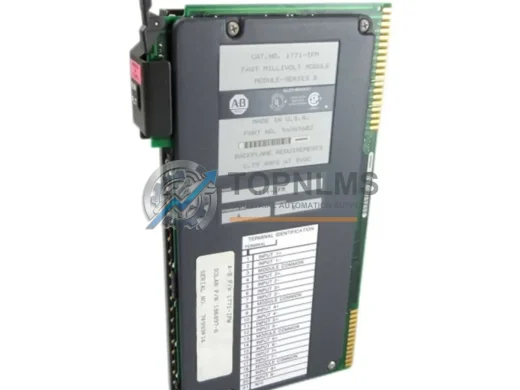
Allen-Bradley 1771-IFM 8-channel isolated analog input module for PLC-5 systems. Original spare, 12-month warranty, fast worldwide shipping. Replace legacy I/O reliably.
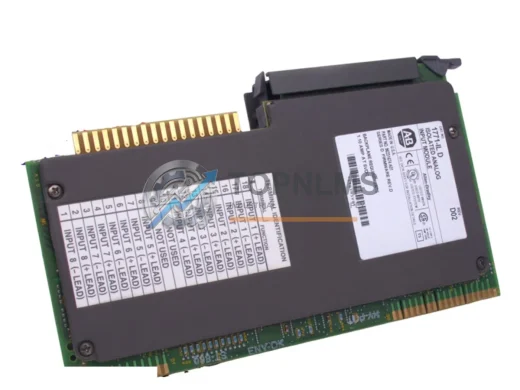
Allen-Bradley 1771-IL 4-ch analog input module for PLC-5. Ruggedized for harsh environments. In stock, tested, 12-month warranty. Ships from TOPNLMS.
Allen-Bradley 1771-IBD 16-point DC digital input module for PLC-5. Rugged, EMI-resistant, 12-month warranty. In stock — fast global shipping from TOPNLMS.
Click Quote This Model and the Part Number field will auto-fill with 1762-IR4.