
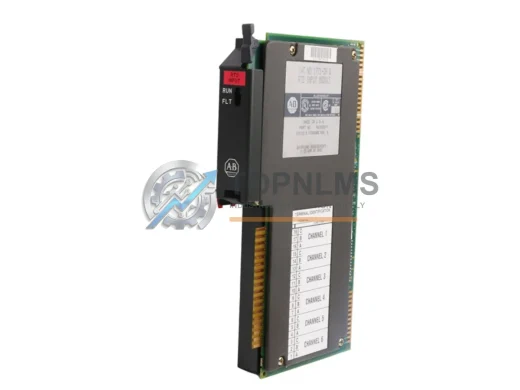
Allen-Bradley
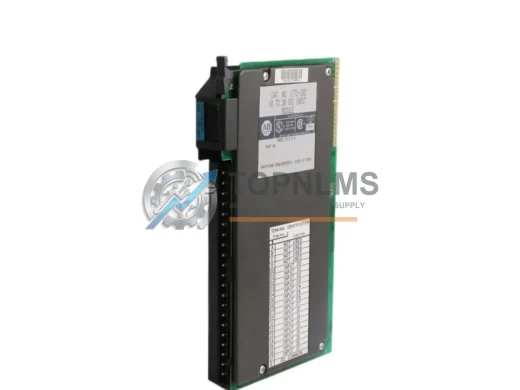
Allen-Bradley 1771-IR Original Industrial Spare PLC-5 Compatible
1771-IRAllen-Bradley 1771-IR 6-Channel RTD Input Module for PLC-5. Original spare, PLC-5 compatible, 12-month warranty. Fast shipping. Industrial replacement.
Request availability, condition, lead time and export shipping details for 1756-OF8I.
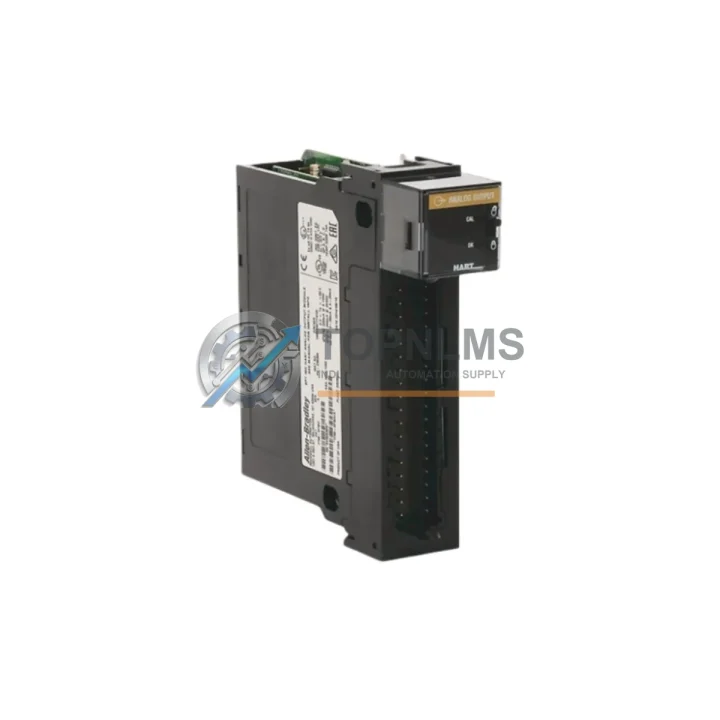
Send this exact part number, quantity and destination country. TOPNLMS will confirm availability, condition and export lead time before quotation.
The Allen-Bradley 1756-OF8I is an 8-channel isolated analog output module designed for the ControlLogix 1756 platform. As legacy ControlLogix systems age and original 1756-OF8I units reach end-of-service or become difficult to source, plant engineers and procurement teams face increasing pressure to maintain uptime without committing to a full system overhaul. TOPNLMS supplies verified replacement and upgrade-grade 1756-OF8I modules that slot directly into existing 1756 chassis, preserving your wiring infrastructure, RSLogix 5000 / Studio 5000 program logic, and control cabinet layout — with zero architectural changes required.
Whether you are replacing a failed unit on a running line, building a cold-standby spare inventory, or executing a phased migration away from an older PLC-5 or SLC 500 platform toward ControlLogix, the 1756-OF8I fits into your upgrade path without forcing a redesign of your analog signal loops. Each channel delivers individually isolated ±10 V DC or 4–20 mA output, making it compatible with a wide range of field devices including control valves, variable-frequency drives, and positioners already wired to your existing marshalling panels.
| Parameter | 1756-OF8I (This Module) | Legacy / Predecessor Reference |
|---|---|---|
| Platform | ControlLogix 1756 | PLC-5, SLC 500, FlexLogix 1794 |
| Output Channels | 8 isolated analog outputs | Varies (4–16 ch depending on legacy model) |
| Output Range | ±10 V DC / 4–20 mA (per channel) | Often non-isolated; shared common reference |
| Channel Isolation | Full per-channel isolation | Typically group or no isolation |
| Backplane Interface | 1756 ControlLogix backplane | PLC-5 I/O rack / SLC 500 rack |
| Communication | EtherNet/IP via 1756-EN2T / 1756-ENBT | DH+, Remote I/O, ControlNet |
| Programming Environment | RSLogix 5000 / Studio 5000 | RSLogix 5 / RSLogix 500 |
| Chassis Compatibility | 1756-A4, 1756-A7, 1756-A10, 1756-A13, 1756-A17 | PLC-5 rack, 1746 SLC rack |
| Power Supply | 1756-PA72 / 1756-PB72 (backplane powered) | Dedicated rack PSU |
| Installation Footprint | Single 1756 slot | Single or double slot (legacy) |
| Replacement Recommendation | Direct slot-for-slot replacement in 1756 chassis | Requires I/O remapping for cross-platform migration |
| Warranty | 12-Month Warranty | N/A (end-of-life / discontinued) |
A successful 1756-OF8I migration rarely involves a single module swap. In practice, the upgrade touches multiple layers of the control architecture. When replacing a failed or discontinued analog output module in a ControlLogix chassis, engineers typically audit the adjacent slots first. A 1756-IF16 analog input module sharing the same chassis may need firmware alignment to ensure consistent scan-cycle behavior across the updated backplane. If the system relies on a 1756-EN2T EtherNet/IP communication module for remote I/O or SCADA connectivity, confirming its firmware revision against the replacement 1756-OF8I is a standard pre-commissioning step.
For plants migrating from older DH+ or Remote I/O architectures, a 1756-DHRIO bridge module is often retained in the same chassis to maintain communication with legacy field panels during the transition period — allowing a phased cutover rather than a hard shutdown. On the power side, the 1756-PA72 power supply should be load-checked after adding or replacing output modules, particularly in fully populated 1756-A17 chassis where total backplane current draw is a design constraint.
Wiring continuity is another critical factor. Many sites use 1492-AIFM analog interface modules (wiring arm assemblies) to terminate field cables without disturbing the marshalling panel. These arms connect directly to the 1756-OF8I via a 40-pin RTB, meaning the field wiring remains untouched during the module swap — a significant advantage for minimizing downtime on a live production line. If your installation uses a 1756-TBCH or 1756-TBS6H removable terminal block, verify the terminal block style matches the replacement module before ordering.
In systems where the 1756-OF8I drives variable-frequency drives or servo amplifiers, signal integrity across the isolated output channels is paramount. A signal isolator or loop-powered isolator installed between the module output and the drive input can eliminate ground loop interference — particularly important in retrofit projects where new ControlLogix hardware is integrated into an existing cabinet alongside legacy drives and motor starters. For HMI visibility of the analog output values, a PanelView Plus 7 terminal connected via EtherNet/IP provides real-time tag monitoring without additional programming overhead.
Finally, if the migration scope includes replacing the controller itself — for example, upgrading from a 1756-L61 or 1756-L71 ControlLogix controller to a current-generation 1756-L83E or 1756-L85E — the 1756-OF8I module configuration transfers cleanly through the Studio 5000 project import process, preserving all channel scaling, alarm limits, and tag assignments.
Q: Can I replace a failed 1756-OF8I without modifying my RSLogix 5000 / Studio 5000 program?
A: Yes. The 1756-OF8I is a direct slot-for-slot replacement within any 1756 ControlLogix chassis. The controller recognizes the module by its catalog number and electronic keying profile. As long as the replacement module matches the original catalog number and revision range, no program changes are required. Simply remove the failed module, insert the replacement, and the controller will re-establish communication automatically on the next scan cycle.
Q: Is the wiring compatible with my existing field terminations?
A: Yes, provided you are using the same removable terminal block (RTB) style — either the 1756-TBCH (cage clamp) or 1756-TBS6H (screw clamp). The RTB detaches from the module and remains wired to the field cables, so the replacement module accepts the same RTB without rewiring. If your site uses 1492-AIFM wiring arms, the 40-pin connector interface is identical across 1756-OF8I revisions.
Q: What communication protocols does the 1756-OF8I support?
A: The 1756-OF8I communicates over the ControlLogix backplane using the standard 1756 backplane protocol. It does not have an independent network port. Network connectivity (EtherNet/IP, ControlNet, DeviceNet) is handled by the communication modules — such as the 1756-EN2T or 1756-CNB — installed in the same chassis. No protocol configuration is required on the analog output module itself.
Q: How do I handle electronic keying when installing a replacement module?
A: Studio 5000 offers three keying options: Exact Match, Compatible Keying, and Disabled Keying. For replacement scenarios where the catalog number is identical, Compatible Keying is the recommended setting — it allows minor revision differences between the configured and physical module while still enforcing catalog number matching. This prevents accidental installation of an incompatible module type in the slot.
Q: Can the 1756-OF8I be used in a redundant ControlLogix system?
A: Yes. The 1756-OF8I is supported in ControlLogix redundancy configurations using the 1756-RM2 redundancy module. In a redundant chassis pair, both primary and secondary chassis must contain identical module configurations. Ensure the replacement module revision is consistent across both chassis to maintain redundancy synchronization.
Q: What physical space does the module require in the control cabinet?
A: The 1756-OF8I occupies a single slot in any 1756 ControlLogix chassis (1756-A4 through 1756-A17). No additional DIN rail space or external power wiring is required beyond the backplane connection. The module dimensions are standard 1756 form factor, making it compatible with all existing 1756 chassis mounting arrangements without cabinet modification.
Every 1756-OF8I supplied by TOPNLMS is covered by a 12-month warranty from the date of shipment. Prior to dispatch, each module undergoes functional verification including backplane communication check, channel output calibration verification, and visual inspection for physical integrity. Modules that do not pass pre-shipment testing are not shipped.
In the event of a warranty claim, TOPNLMS provides a replacement unit or full refund based on the confirmed fault condition. Our after-sales response target is within 24 business hours of claim submission. Warranty coverage applies to manufacturing defects and functional failures under normal operating conditions — it does not cover damage resulting from incorrect installation, overvoltage, or physical mishandling.
For procurement teams managing critical spare inventories, TOPNLMS can provide batch testing documentation and individual module serial number records upon request. We ship globally from Xiamen, China, with standard lead times of 3–7 business days for in-stock units. Express shipping options are available for emergency replacement scenarios where minimizing downtime is the primary constraint.
To place an order, request a quotation, or confirm stock availability for the 1756-OF8I or related ControlLogix components, contact our technical sales team directly.
Allen-Bradley 1771-IR 6-Channel RTD Input Module for PLC-5. Original spare, PLC-5 compatible, 12-month warranty. Fast shipping. Industrial replacement.
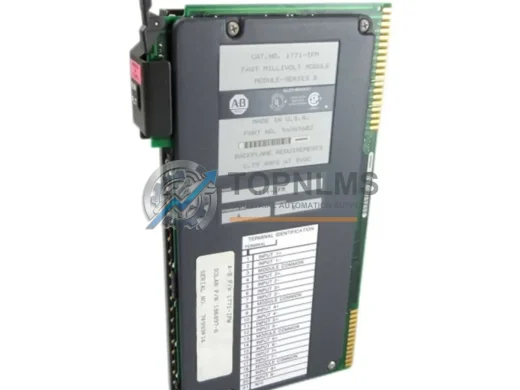
Allen-Bradley 1771-IFM 8-channel isolated analog input module for PLC-5 systems. Original spare, 12-month warranty, fast worldwide shipping. Replace legacy I/O reliably.
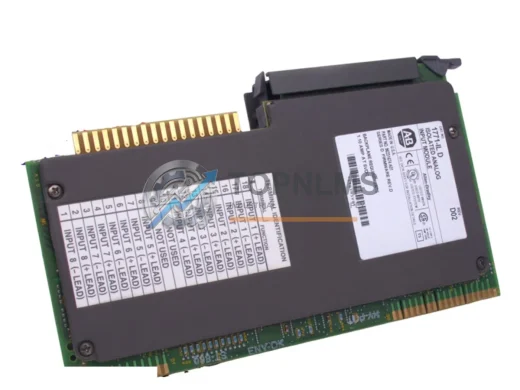
Allen-Bradley 1771-IL 4-ch analog input module for PLC-5. Ruggedized for harsh environments. In stock, tested, 12-month warranty. Ships from TOPNLMS.
Allen-Bradley 1771-IBD 16-point DC digital input module for PLC-5. Rugged, EMI-resistant, 12-month warranty. In stock — fast global shipping from TOPNLMS.
Click Quote This Model and the Part Number field will auto-fill with 1756-OF8I.