Product Overview
Allen-Bradley 1756-IV16 Replacement for ControlLogix: Smooth Migration from Legacy Discrete Input Systems
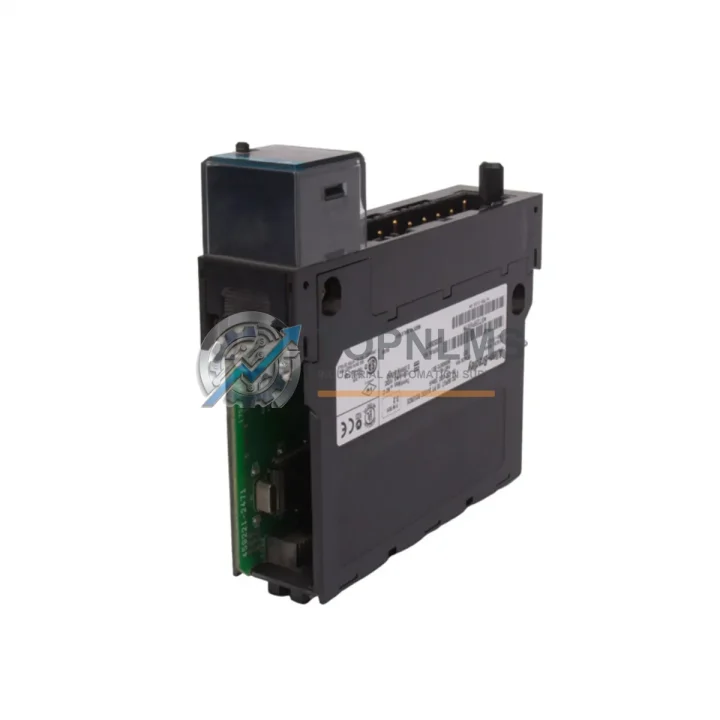
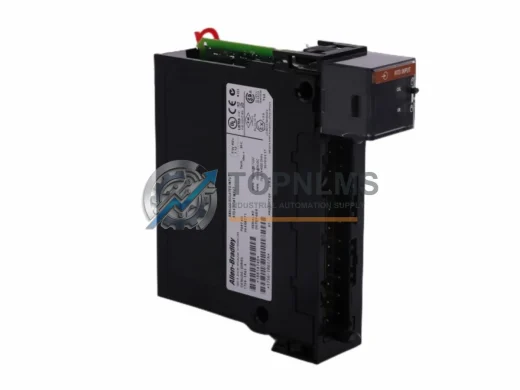
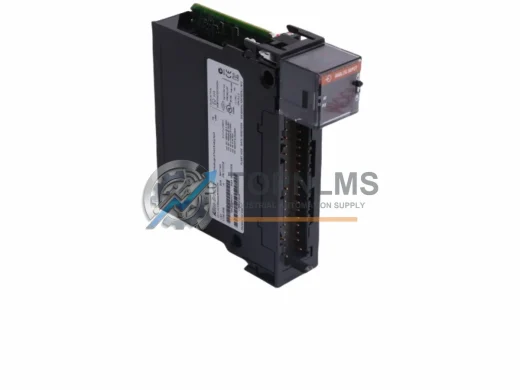
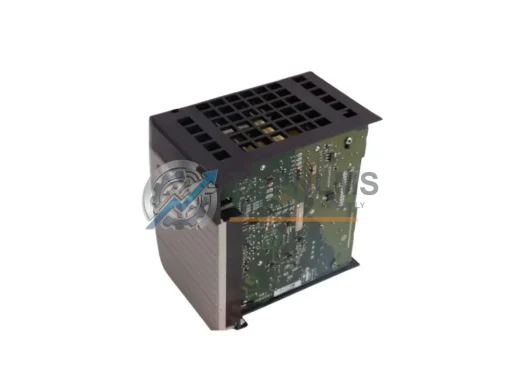
The Allen-Bradley 1756-IV16 is a 16-point, 12/24V DC discrete input module designed for the ControlLogix platform — one of the most widely deployed programmable automation controller (PAC) architectures in process and discrete manufacturing. As facilities transition away from aging SLC 500, PLC-5, and early ControlLogix 1756 chassis configurations, the 1756-IV16 serves as a direct-fit replacement or upgrade path that preserves existing field wiring, rack infrastructure, and Logix-based control programs with minimal re-engineering effort.
Whether your plant is retiring a 1746-IB16 SLC 500 input card, consolidating I/O from a legacy 1771 PLC-5 rack, or simply replacing a failed 1756-IV16 in an active ControlLogix 1756-A10 or 1756-A17 chassis, this module slots directly into the existing backplane without requiring new terminal block wiring or Studio 5000 Logix Designer program restructuring. The 24V DC sink/source input architecture is electrically compatible with the vast majority of field sensors — including proximity switches, photoelectric sensors, limit switches, and pushbutton stations — already wired to the original module.
Compatibility Comparison Table
| Parameter |
Legacy / Replaced Module |
1756-IV16 (This Module) |
| Common Legacy Replacements |
1746-IB16 (SLC 500), 1771-IBD (PLC-5), 1756-IB16 (early ControlLogix) |
1756-IV16 ControlLogix |
| Input Points |
16 (varies by model) |
16 points |
| Input Voltage |
12/24V DC (varies) |
12/24V DC |
| Input Type |
Sink or Source (model-dependent) |
Sink/Source (IEC Type 1 & 3) |
| Backplane Compatibility |
1746, 1771, or 1756 chassis |
1756 ControlLogix chassis (all sizes) |
| Communication Interface |
DH+, Remote I/O, ControlNet (legacy) |
ControlLogix backplane (EtherNet/IP via controller) |
| Programming Environment |
RSLogix 5, RSLogix 500 |
Studio 5000 Logix Designer / RSLogix 5000 |
| Terminal Block Wiring |
Removable RTB (1756-TBCH / 1756-TBS6H) |
Compatible with 1756-TBCH, 1756-TBS6H removable terminal blocks |
| Isolation |
Group isolated (varies) |
Group isolated, 2 groups of 8 |
| Installation Space |
1 slot (1756 chassis) |
1 slot (1756 chassis) |
| Replacement Recommendation |
Direct replacement for 1756-IV16 revisions A–D |
✔ Drop-in compatible |
| Warranty |
— |
12-Month Warranty |
Seamless Upgrade Solutions
A successful migration to or around the 1756-IV16 rarely involves a single module swap. In practice, field engineers replacing discrete input capacity in a ControlLogix system will simultaneously evaluate adjacent components to ensure system-wide compatibility and minimize future downtime.
On the power side, the 1756-PA75 or 1756-PB75 power supply modules must be verified to support the additional backplane current draw when adding or replacing I/O modules in a populated 1756-A10 or 1756-A17 chassis. If the existing power supply is already near capacity, a parallel chassis expansion using a 1756-XT chassis extender or a remote I/O drop via a 1756-EN2T EtherNet/IP communication module may be the preferred architecture.
For wiring continuity, the 1756-TBCH 36-pin removable terminal block is the standard mating connector for the 1756-IV16. In high-density panel environments where space is constrained, engineers often transition to the 1756-TBS6H spring-clamp terminal block, which reduces wiring time and eliminates screw-torque variability — a common source of intermittent field faults in older installations.
When the migration scope extends to the controller itself — for example, replacing an end-of-life 1756-L55 or 1756-L61 processor — the 1756-L83E or 1756-L85E ControlLogix 5580 controllers offer backward-compatible tag structures and I/O tree configurations, allowing existing 1756-IV16 module definitions to be imported directly into the new project without re-mapping input addresses. The 1756-EN2T or 1756-EN3TR EtherNet/IP bridge modules handle upstream SCADA and HMI connectivity, typically to a PanelView Plus 7 or FactoryTalk View SE supervisory layer.
In mixed-signal environments where the 1756-IV16 discrete inputs share a cabinet with analog measurement loops, the 1756-IF16 analog input module or 1756-IF8 are commonly installed in adjacent slots. Signal isolation between the DC discrete field circuits and the analog 4–20 mA loops is maintained through the module’s internal group isolation — but for particularly noisy environments, external DIN-rail-mounted signal isolators or surge protection terminal blocks are recommended before the RTB connection.
For facilities running a hybrid architecture that includes both ControlLogix and legacy SLC 500 equipment, the 1747-AENTR EtherNet/IP adapter allows SLC 500 I/O to be retained on the network while the primary control logic migrates to the 1756 platform — reducing the capital cost of a full cutover and allowing a phased decommissioning of the older 1746 chassis.
Retrofit Guidance FAQ
Q: Can I reuse existing field wiring when replacing a 1756-IV16?
A: Yes. The 1756-IV16 uses a removable terminal block (RTB) — either the 1756-TBCH or 1756-TBS6H. If the original RTB is intact and undamaged, it can be unplugged from the failed module and plugged directly into the replacement unit. Field wiring does not need to be disturbed, which is the primary advantage of the ControlLogix RTB system and a key reason this module is favored for rapid spare-part replacement in production environments.
Q: Do I need to modify my Studio 5000 program after swapping the module?
A: In most cases, no. If the replacement 1756-IV16 is the same catalog number and revision range, the controller will recognize it automatically upon chassis power-up. The I/O tree in Studio 5000 Logix Designer will show the module as online without requiring a program download. If the module revision differs significantly, a module properties update may be required, but input tag addresses and ladder logic rungs remain unchanged.
Q: Is the 1756-IV16 compatible with both 1756-A4 and 1756-A17 chassis?
A: Yes. The 1756-IV16 is a single-slot module compatible with all standard ControlLogix 1756 chassis sizes — 1756-A4, 1756-A7, 1756-A10, 1756-A13, and 1756-A17 — as well as the 1756-A5XT and 1756-A7LXT extended-temperature variants used in harsh-environment installations.
Q: What communication protocol does the 1756-IV16 use?
A: The module communicates over the ControlLogix backplane using the proprietary ControlBus protocol. Upstream communication to SCADA, HMI, or remote engineering workstations is handled by the controller (e.g., 1756-L83E) via EtherNet/IP through a 1756-EN2T or 1756-EN3TR bridge module. The 1756-IV16 itself does not require any network configuration — it is addressed and owned by the local or remote controller through the I/O configuration tree.
Q: Can the 1756-IV16 replace a 1746-IB16 from an SLC 500 system?
A: Not as a direct physical swap — the 1746 and 1756 chassis are mechanically incompatible. However, the 1756-IV16 is the functional equivalent for the ControlLogix platform. A migration from SLC 500 to ControlLogix typically involves installing a new 1756 chassis, mapping the existing 1746-IB16 input points to 1756-IV16 input tags in Studio 5000, and re-terminating field wiring to the 1756-TBCH terminal block. The 1747-AENTR adapter can bridge the transition period if a phased migration is preferred.
Q: How much physical space does the 1756-IV16 require in the control cabinet?
A: The module occupies one slot in any standard 1756 ControlLogix chassis. No additional DIN rail space or external terminal strip is required beyond the RTB, which mounts directly to the module face. This makes it straightforward to replace in densely populated panels without rearranging adjacent modules.
Warranty Assurance
Every 1756-IV16 shipped by TOPNLMS is covered by a 12-month warranty from the date of delivery. Prior to shipment, each unit undergoes functional verification including backplane communication check, input channel continuity test, and LED indicator validation to confirm the module is operationally ready for installation.
If a module is found to be defective on arrival (DOA) or fails within the warranty period under normal operating conditions, TOPNLMS will arrange a replacement unit or issue a full refund — whichever the customer prefers. Our technical support team is available to assist with installation questions, compatibility verification, and troubleshooting via email at [email protected] or by phone at +86 18359293191.
We maintain in-stock inventory of the 1756-IV16 and common ControlLogix spare parts to support urgent replacement requirements. Standard orders ship within 1–3 business days from our Xiamen warehouse. Expedited shipping options are available for critical production downtime situations. All units are packaged in anti-static protective packaging with original-style labeling to ensure safe transit and easy identification upon receipt.
For B2B procurement teams, we can provide product test reports, shipping documentation, and certificate of conformance upon request. Volume pricing is available for stocking orders of 5 units or more.