Product Overview
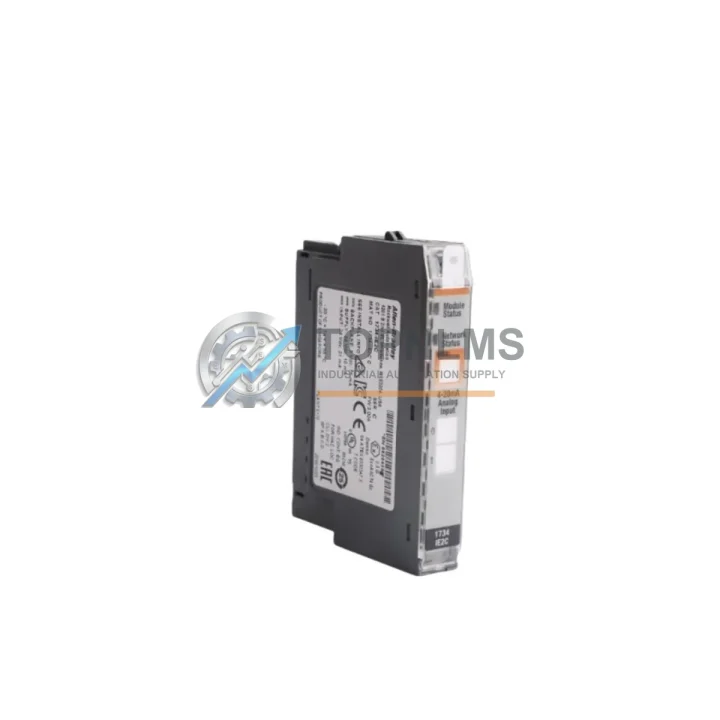
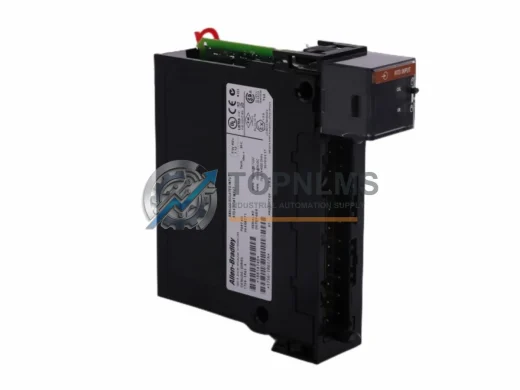
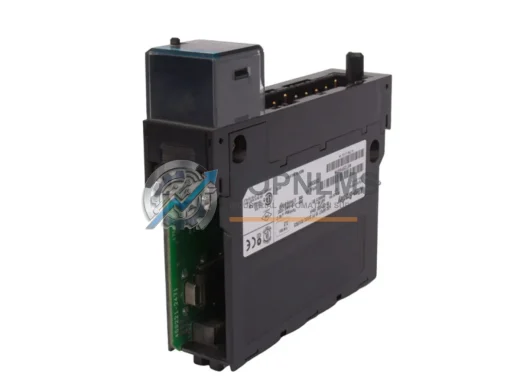
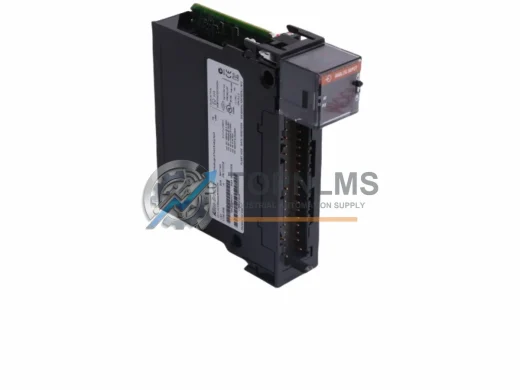
Allen-Bradley 1734-IE2C Original Industrial Spare POINT I/O Compatible: Ensuring System Stability in Demanding Automation Environments
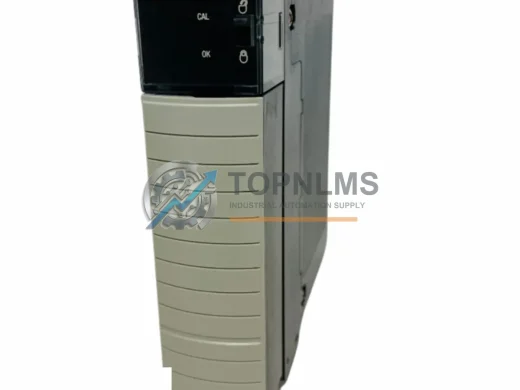
The Allen-Bradley 1734-IE2C is a 2-channel current analog input module designed for the POINT I/O platform — one of Rockwell Automation’s most widely deployed distributed I/O architectures in process and discrete manufacturing environments. As a genuine original spare part, the 1734-IE2C plays a critical role in maintaining signal integrity, process continuity, and system uptime across a broad range of industrial control applications. Whether you are managing a planned shutdown, responding to an unscheduled fault, or building a strategic spare parts inventory, sourcing an authentic 1734-IE2C is a foundational step in protecting your production assets.
In modern industrial facilities, analog input modules are among the most frequently replaced components during corrective and preventive maintenance cycles. The 1734-IE2C accepts 4–20 mA current loop signals from field instruments such as pressure transmitters, flow meters, and level sensors, converting them into digital values that the controller uses for process regulation. Any degradation in this signal path — whether from module aging, electrical noise, or connector wear — can introduce measurement drift, false alarms, or process shutdowns. Keeping a verified original 1734-IE2C on the shelf eliminates the diagnostic uncertainty that comes with counterfeit or refurbished alternatives.
Critical Technical Specs Table
| Parameter |
Specification |
| Part Number / SKU |
1734-IE2C |
| Brand / Manufacturer |
Allen-Bradley (Rockwell Automation) |
| Series |
POINT I/O |
| Module Type |
2-Channel Current Analog Input |
| Input Signal Range |
4–20 mA (current loop) |
| Resolution |
16-bit |
| Input Impedance |
250 Ω (nominal) |
| Backplane Current (5V) |
75 mA |
| Operating Temperature |
0 °C to 55 °C (32 °F to 131 °F) |
| Storage Temperature |
-40 °C to 85 °C |
| Relative Humidity |
5–95% non-condensing |
| Mounting |
POINT I/O base unit (1734-TB, 1734-TBS, 1734-TOP compatible) |
| Communication |
Via POINT I/O adapter (e.g., 1734-AENT, 1734-ACNR) |
| Certifications |
UL, CE, cUL |
| Country of Origin |
United States |
| Product Weight |
Approx. 40 g |
| Compatibility |
POINT I/O platform; compatible with ControlLogix, CompactLogix, SoftLogix, FlexLogix controllers via adapter |
| Warranty |
12 Months — covers manufacturing defects; each unit tested prior to shipment |
Preventive Maintenance Strategy
When a 1734-IE2C analog input module is flagged for replacement during a scheduled maintenance window, experienced maintenance engineers know that the module itself is rarely the only component that warrants attention. The POINT I/O platform is a modular, distributed architecture, and the health of the 1734-IE2C is directly tied to the condition of the surrounding system components.
Begin with the 1734-AENT EtherNet/IP adapter — the communication backbone of the POINT I/O node. If the adapter firmware is outdated or the unit shows intermittent connection drops, replacing the 1734-IE2C alone will not resolve upstream communication faults. Inspect the adapter’s LED diagnostics and verify network latency before closing the maintenance ticket.
Next, examine the 1734-TB or 1734-TBS terminal base on which the 1734-IE2C is mounted. Terminal bases accumulate mechanical stress from repeated module insertions and vibration in panel environments. Corroded or loose terminal connections are a leading cause of signal noise in current loop circuits — a problem that is often misdiagnosed as a failed input module. Replacing the terminal base alongside the 1734-IE2C is a low-cost step that significantly improves long-term reliability.
The field wiring connected to the 1734-IE2C should also be inspected. Current loop circuits are sensitive to cable insulation degradation, ground loops, and shield continuity. If the facility uses shielded twisted-pair instrumentation cable routed through cable trays shared with power conductors, verify that shield grounding is single-point and that no insulation damage has occurred near conduit entry points.
For facilities running multiple POINT I/O nodes, the 1734-EP24DC power supply expander is a frequently overlooked maintenance item. An aging or undersized power expander can cause voltage sag across the I/O bus, leading to erratic analog readings that mimic a faulty input module. Checking the expander’s output voltage under load during the maintenance window is a best practice that prevents repeat callouts.
If the control cabinet also houses 1734-OB8 or 1734-OB8E digital output modules, inspect their output transistors for signs of thermal stress, particularly in applications with inductive loads such as solenoid valves or motor starters. Inductive kickback that is not properly suppressed can propagate noise onto the backplane and affect analog measurement accuracy on adjacent modules like the 1734-IE2C.
For process applications where the 1734-IE2C reads signals from HART-capable transmitters, consider whether a 1734-IE2CH HART analog input module would provide additional diagnostic value during the replacement cycle. The HART variant allows in-situ transmitter diagnostics without disconnecting field wiring, reducing future maintenance time.
Finally, review the status of the 1734-ACNR ControlNet adapter if your facility operates a legacy ControlNet backbone alongside EtherNet/IP. Mixed-network POINT I/O nodes require both adapters to be maintained in sync, and a firmware mismatch between adapters can cause the entire node to drop offline during a controller switchover.
A comprehensive maintenance checklist for a POINT I/O node containing a 1734-IE2C should therefore include: the EtherNet/IP or ControlNet adapter, terminal bases, power expanders, digital output modules, field cable integrity, and transmitter health — in addition to the analog input module itself. Procuring these components as a coordinated spare parts kit reduces the risk of a second unplanned shutdown within the same maintenance cycle.
Strategic Replacement Solutions
The 1734-IE2C has been in active production for over two decades, and many facilities are now operating aging POINT I/O nodes where the original modules are approaching or have exceeded their rated service life. In these environments, the strategic question is not simply whether to replace a failed module, but how to manage the transition from aging hardware to a sustainable long-term spare parts posture.
For facilities that cannot justify a full system migration to a newer platform such as the Logix 5000 with Compact 5000 I/O, maintaining a stock of original 1734-IE2C modules is the most cost-effective path to system continuity. Original modules preserve the existing RSLogix 5000 or Studio 5000 configuration without requiring tag remapping, I/O tree restructuring, or controller firmware updates — all of which carry project risk and require engineering time.
When replacing a 1734-IE2C in the field, the swap procedure is straightforward: the module is keyed to prevent incorrect installation, and the configuration is stored in the controller project file rather than the module itself. This means a replacement module is operational within minutes of installation, provided the terminal base wiring is intact and the adapter is online. Downtime for a planned 1734-IE2C replacement is typically under 30 minutes for a trained technician.
For facilities managing multiple production lines, establishing a minimum stock level of two 1734-IE2C modules per POINT I/O node type is a widely adopted industry practice. This buffer accommodates both an immediate replacement need and a secondary spare while a replenishment order is in transit. Given the global supply chain variability that has affected industrial components in recent years, maintaining a 90-day forward stock position is a prudent risk management strategy.
Sourcing original Allen-Bradley 1734-IE2C modules from a verified distributor ensures that each unit has been manufactured to Rockwell Automation’s quality standards, has not been subjected to unauthorized repair or repackaging, and carries a traceable lot code. At TOPNLMS, every 1734-IE2C is inspected and function-tested prior to shipment, and is covered by a 12-month warranty against manufacturing defects.
Support FAQ
Q1: What is the expected service life of the Allen-Bradley 1734-IE2C, and when should I plan for replacement?
Rockwell Automation does not publish a fixed MTBF figure for the 1734-IE2C, but field experience across process industries suggests a typical service life of 10–15 years under normal operating conditions. Modules installed in high-vibration, high-humidity, or high-temperature environments may require earlier replacement. We recommend scheduling a functional verification test every 3–5 years as part of your preventive maintenance program, and maintaining at least one spare module per node type in your on-site inventory.
Q2: Is the 1734-IE2C compatible with all POINT I/O adapters and Logix controllers?
The 1734-IE2C is compatible with all standard POINT I/O adapters, including the 1734-AENT (EtherNet/IP), 1734-ACNR (ControlNet), 1734-ADN (DeviceNet), and 1734-APB (PROFIBUS). It is supported by ControlLogix, CompactLogix, SoftLogix, and FlexLogix controllers running RSLogix 5000 or Studio 5000. No hardware modification is required for installation into an existing POINT I/O node — the module is plug-and-play within the platform.
Q3: How is the 1734-IE2C tested before shipment, and what does the 12-month warranty cover?
Every 1734-IE2C shipped from TOPNLMS undergoes a pre-shipment inspection that includes visual examination for physical damage, verification of module firmware revision, and a functional test of both analog input channels across the 4–20 mA range. The 12-month warranty covers manufacturing defects and functional failures under normal operating conditions. It does not cover damage resulting from incorrect installation, overvoltage, or environmental conditions outside the module’s rated specifications.
Q4: Can I use a 1734-IE2C to replace an older revision of the same module without reconfiguring my controller project?
In most cases, yes. Allen-Bradley maintains backward compatibility across hardware revisions of the 1734-IE2C. If your Studio 5000 project was configured with an earlier hardware revision, the controller will typically accept the newer revision without requiring a project update. However, we recommend verifying the revision compatibility in the Rockwell Automation Product Compatibility and Download Center (PCDC) before installation, particularly if your controller firmware is at an older revision level.
© 2026 TOPNLMS. All rights reserved.
Original Source: https://topnlms.com
Contact: [email protected] | +86 18359293191