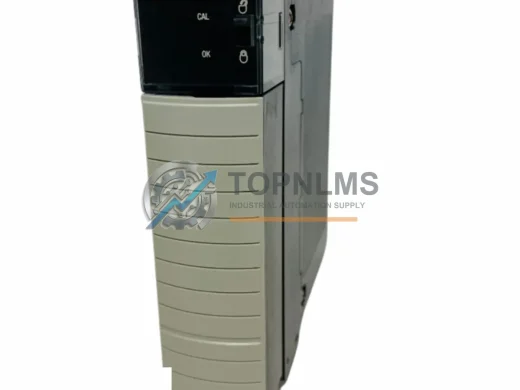
Product Overview
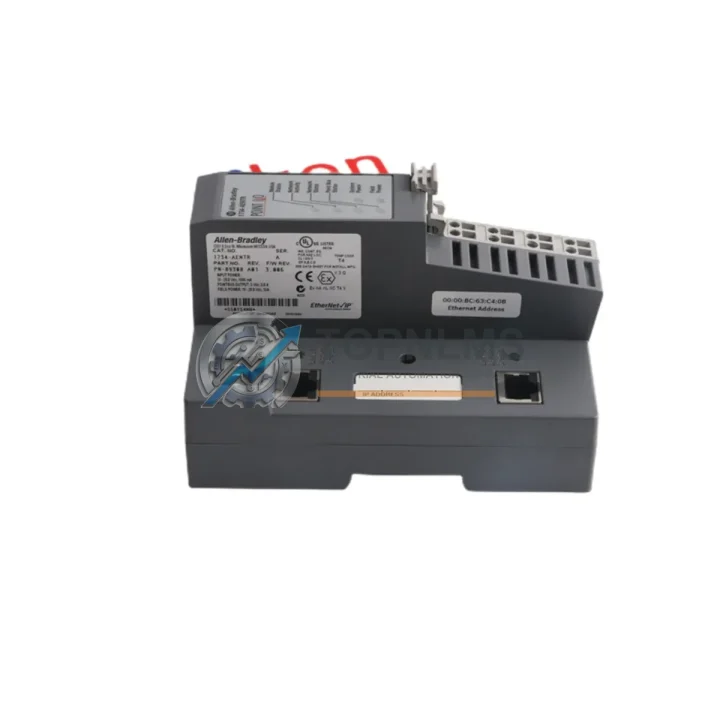
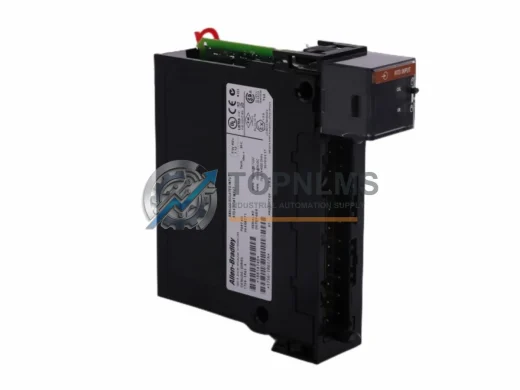
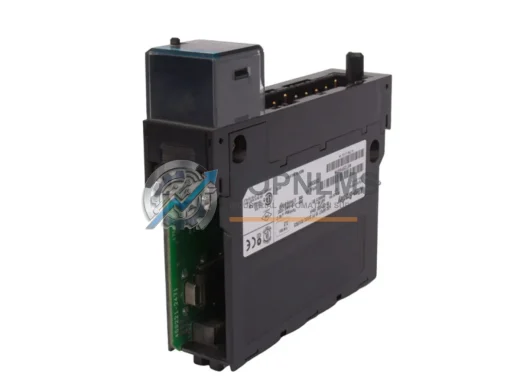
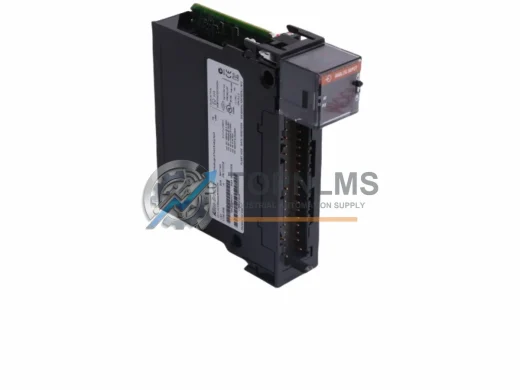
Allen-Bradley 1734-AENT Original Industrial Spare POINT I/O Compatible: System Stability & Maintenance Value
The Allen-Bradley 1734-AENT is a genuine EtherNet/IP network adapter designed for the POINT I/O platform — one of the most widely deployed distributed I/O architectures in modern industrial automation. As a critical communication node between the EtherNet/IP network and the POINT I/O backplane, the 1734-AENT directly governs the reliability of your entire distributed control loop. When this adapter fails or degrades, every I/O module on the node goes offline, triggering unplanned downtime that can cascade across production lines, batch processes, and safety interlocks.
Sourcing an original 1734-AENT as a verified spare is one of the highest-value decisions a maintenance engineer can make for any facility running Rockwell Automation control systems. Whether you are managing a legacy system that has been in service for over a decade or commissioning a new POINT I/O node to expand an existing ControlLogix or CompactLogix architecture, having a tested, ready-to-deploy 1734-AENT on the shelf eliminates the single greatest risk in distributed I/O maintenance: adapter unavailability at the moment of failure.
Critical Technical Specs
| Part Number |
1734-AENT |
| Brand / Manufacturer |
Allen-Bradley (Rockwell Automation) |
| Series |
POINT I/O |
| Product Type |
EtherNet/IP Network Adapter |
| Communication Protocol |
EtherNet/IP (CIP over TCP/IP) |
| Network Speed |
10/100 Mbps, auto-negotiating |
| IP Address Configuration |
BOOTP, DHCP, or rotary switch (hardware node address) |
| Max I/O Modules per Node |
Up to 63 POINT I/O modules |
| Power Supply Voltage |
24V DC (supplied via POINT I/O power supply module) |
| Mounting |
DIN rail (35 mm), snap-on POINT I/O base unit |
| Operating Temperature |
0°C to 55°C (32°F to 131°F) |
| Storage Temperature |
-40°C to 85°C |
| Relative Humidity |
5% to 95% non-condensing |
| Enclosure Rating |
IP20 (panel or enclosure installation required) |
| Compatible Controllers |
ControlLogix (1756), CompactLogix (1769), SoftLogix, PLC-5E, SLC 5/05 |
| Compatible Software |
RSLogix 5000 / Studio 5000 Logix Designer |
| Condition |
Original, new or refurbished-to-spec |
| Warranty |
12 Months from date of shipment |
| Pre-shipment Testing |
Full functional test performed before dispatch |
Preventive Maintenance Strategy
A POINT I/O node is never a standalone component — it is the communication backbone for an entire cluster of I/O modules, and its health is inseparable from the health of every device connected to it. When scheduling a planned maintenance window around the 1734-AENT, experienced maintenance teams treat the inspection as an opportunity to audit the entire node and the broader control cabinet.
Begin with the power supply feeding the POINT I/O rail. The 1734-EP24DC POINT I/O power supply module is the most common companion to the 1734-AENT, and a degraded power supply is frequently the root cause of intermittent adapter resets and communication timeouts. Inspect terminal connections for oxidation and verify output voltage under load. While the cabinet is open, check the 1734-TOP or 1734-TOP3 terminal base units for cracked housings or loose wiring — these bases are the mechanical and electrical interface between each I/O module and the backplane, and they are often overlooked until a module fails to seat correctly.
Digital input modules such as the 1734-IB8 (8-point 24V DC sink input) and digital output modules such as the 1734-OB8 should be inspected for field wiring integrity and LED status consistency. If any channel shows unexpected behavior during the inspection cycle, replace the module proactively rather than waiting for a confirmed fault. Similarly, analog modules like the 1734-IE4C (4-channel current input) should be verified against known process values to detect signal drift before it affects process control accuracy.
For nodes installed in environments with high vibration or thermal cycling, inspect the Ethernet cable and RJ45 connector at the 1734-AENT port. A marginal cable connection is one of the most common causes of intermittent EtherNet/IP communication faults that are difficult to diagnose remotely. If the node is part of a ring topology using Device Level Ring (DLR), also inspect the secondary Ethernet port and the associated 1734-AENTR adapter if a redundant ring configuration is in use.
At the controller level, verify that the 1756-EN2T or 1756-EN2TR EtherNet/IP communication module in the ControlLogix chassis is operating within normal parameters. A degraded chassis communication module can cause the 1734-AENT to appear faulty when the actual fault lies upstream. If the system uses a 1756-L7x or 1756-L8x ControlLogix controller, confirm that firmware versions are compatible with the 1734-AENT firmware revision in use. Firmware mismatches are a known source of connection instability in mixed-revision POINT I/O deployments.
Finally, review the 24V DC power distribution feeding the control cabinet. Relay modules, safety relays, and terminal-mounted fuse blocks protecting the POINT I/O power circuit should be tested for continuity and proper trip characteristics. A blown fuse or a welded relay contact in the power distribution circuit can take an entire POINT I/O node offline in seconds — and having a spare 1734-AENT on the shelf will not help if the power circuit feeding it has not been maintained.
Strategic Replacement Solutions
The 1734-AENT has been in production for many years, and a significant number of installed units are now approaching or exceeding their recommended service life. Facilities that originally commissioned POINT I/O nodes in the mid-2000s or early 2010s are increasingly encountering adapter failures that cannot be resolved through firmware updates or configuration changes — the hardware itself has reached end of reliable service.
Replacing an aging 1734-AENT with an original spare is the lowest-risk, lowest-cost path to restoring node availability. Unlike a full node replacement or a migration to a newer I/O platform, a direct 1734-AENT swap requires no changes to the controller program, no re-engineering of the I/O tree, and no retraining of maintenance personnel. The replacement adapter inherits the same IP address, the same EDS configuration, and the same module properties as the failed unit — provided the replacement is configured correctly before installation.
For facilities managing multiple POINT I/O nodes across a plant floor, a strategic spare inventory of 1734-AENT adapters — typically one spare per five to ten nodes, depending on criticality — provides a meaningful reduction in mean time to repair (MTTR) for network adapter failures. Combined with a documented replacement procedure and a pre-configured spare (IP address set via rotary switches or BOOTP reservation), a trained technician can restore a failed node to full operation in under thirty minutes, compared to the hours or days required to source a replacement through standard procurement channels during an unplanned outage.
All 1734-AENT units supplied by TOPNLMS are fully tested prior to shipment, verified for firmware compatibility, and covered by a 12-month warranty from the date of dispatch. Units are packaged to IPC standards for electrostatic discharge protection and shipped with documentation supporting incoming inspection and traceability requirements.
Support FAQ
Q: Is this 1734-AENT a direct drop-in replacement for my existing unit?
A: Yes. The 1734-AENT is a direct replacement for any existing 1734-AENT installation. Configure the IP address using the rotary switches or BOOTP/DHCP before installation, and the replacement unit will assume the same role in your EtherNet/IP network without requiring controller program changes. Verify firmware revision compatibility with your Studio 5000 project if your system uses a specific minimum firmware requirement.
Q: What testing is performed before shipment?
A: Every unit undergoes a full functional test including power-on verification, Ethernet port communication test, and backplane communication check with a POINT I/O module. Test records are available upon request for quality assurance and incoming inspection purposes.
Q: How should I manage spare inventory for POINT I/O network adapters?
A: Industry best practice for critical automation infrastructure recommends maintaining at least one spare adapter per production line or per five to ten nodes, whichever results in a higher spare count. For facilities with 24/7 operations or long lead times from standard distributors, increasing the spare ratio to one per three nodes is advisable. Pre-configure spares with the correct IP address range documentation so any technician can deploy them without specialist support.
Q: What is covered under the 12-month warranty?
A: The 12-month warranty covers all manufacturing defects and functional failures under normal operating conditions as specified in the Allen-Bradley 1734-AENT product documentation. Warranty claims are processed with priority turnaround. Units damaged by incorrect installation, overvoltage, or environmental conditions outside the rated specification are not covered, but our technical team will assist with root cause analysis to prevent recurrence.