
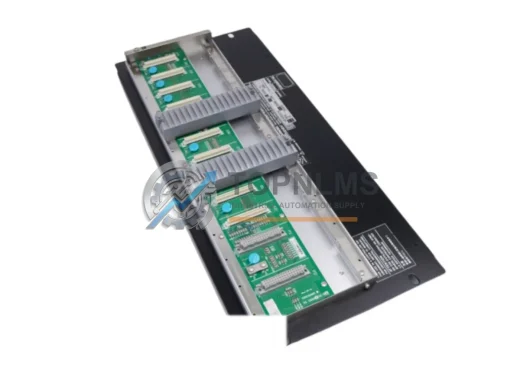
Yokogawa
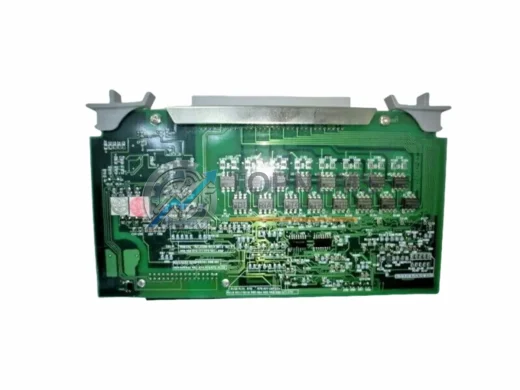
Yokogawa ANB10D-421 Original Industrial Spare CENTUM VP Compatible
ANB10D-421Yokogawa ANB10D-421 original 4-ch 4–20mA analog output module for CENTUM VP & CS 3000. Industrial spare, 12-month warranty, tested before shipment.
Request availability, condition, lead time and export shipping details for AIP444-S1.
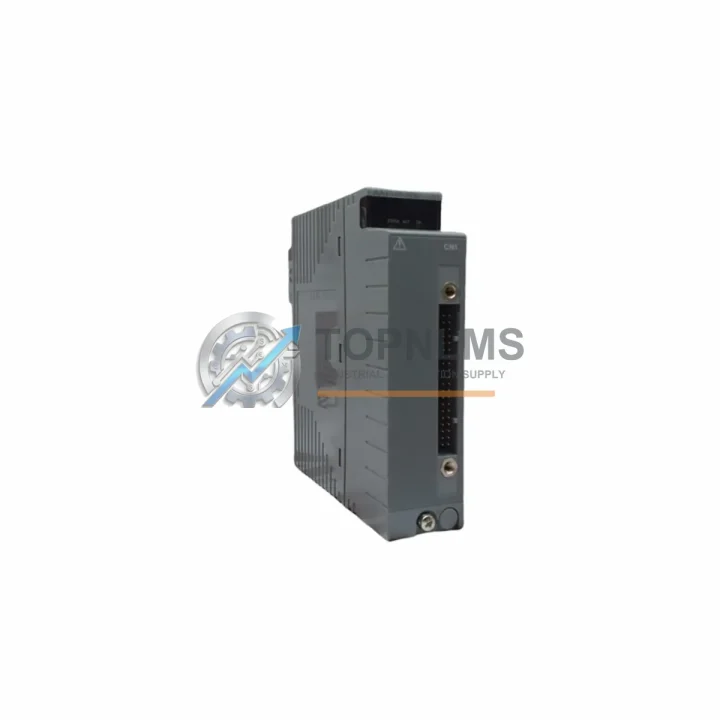
Send this exact part number, quantity and destination country. TOPNLMS will confirm availability, condition and export lead time before quotation.
The Yokogawa AIP444-S1 is a 4-channel analog input module engineered for the CENTUM VP and CS 3000 Distributed Control Systems — two of the most widely deployed DCS platforms in petrochemical, power generation, pulp & paper, and pharmaceutical process industries. As a genuine original spare part, the AIP444-S1 delivers the signal fidelity, firmware compatibility, and long-term reliability that maintenance engineers depend on when system uptime is non-negotiable.
In high-availability process plants, a single failed analog input card can cascade into unplanned shutdowns, batch losses, or safety system activations. Stocking the AIP444-S1 as a verified spare eliminates the critical gap between fault detection and system restoration — reducing mean time to repair (MTTR) from days to minutes. Every unit shipped from TOPNLMS undergoes functional verification and is backed by a 12-month warranty, giving procurement and maintenance teams the confidence to plan ahead rather than react under pressure.
| Parameter | Specification |
|---|---|
| Model / SKU | AIP444-S1 |
| Brand | Yokogawa Electric Corporation |
| Series / Platform | CENTUM VP / CS 3000 |
| Module Type | 4-Channel Analog Input (AI) Module |
| Input Signal Range | 4–20 mA DC (standard); configurable per channel |
| Resolution | 16-bit A/D conversion |
| Isolation | Channel-to-channel and channel-to-bus isolation |
| Communication Bus | CENTUM VP / CS 3000 internal I/O bus |
| Compatible Controllers | FCS (Field Control Station), PFCS, SFCS |
| Operating Temperature | 0°C to 55°C |
| Humidity | 5% to 95% RH (non-condensing) |
| Power Consumption | Per Yokogawa AIP444 series specification |
| Mounting | Nest-mount into CENTUM VP / CS 3000 I/O nest |
| Weight | Approx. 2,670 g (module + packaging) |
| Country of Origin | Japan |
| Warranty | 12 Months — Tested & Verified Before Shipment |
| Condition | Original / Genuine — New or Refurbished Stock Available |
Experienced DCS maintenance engineers know that analog input failures rarely occur in isolation. The AIP444-S1 sits at the front end of the signal chain — receiving 4–20 mA process signals from field transmitters and converting them for the Field Control Station. When planning a scheduled inspection or emergency replacement of this module, a disciplined maintenance team will simultaneously audit the surrounding I/O infrastructure to prevent repeat callouts.
Start with the field signal cables and terminal assemblies connected to the AIP444-S1 nest. Corroded terminals or degraded shielded cables introduce noise that mimics module faults — replacing the module without inspecting the wiring often leads to recurring alarms. Next, verify the AIP444 nest power supply module (such as the Yokogawa PW481 or equivalent nest power unit) — a marginal power rail causes intermittent channel dropouts that are difficult to diagnose under load.
While the cabinet is open, inspect the CENTUM VP FCS controller module (e.g., FCU-series or equivalent Field Control Unit) for firmware currency and hardware health. The AIP444-S1 communicates directly with the FCS over the internal I/O bus; a degraded controller backplane connector can cause the replacement module to appear faulty even when it is fully functional. Similarly, check the ESB bus coupler or I/O bus interface module that bridges the FCS to the I/O nest — bus communication errors are a common root cause of phantom analog input faults.
For plants running hybrid architectures, it is worth auditing adjacent analog output modules (e.g., AOP444 series) and digital input/output modules (e.g., ADV151, ADV161 series) in the same nest. These modules share the same power bus and environmental stresses; if one has failed, others in the same nest are statistically at elevated risk. Proactive replacement of aging I/O modules during a planned outage is far less costly than sequential emergency replacements during production.
Do not overlook the HART multiplexer or signal conditioner upstream of the AIP444-S1 if HART-enabled field devices are in use. A failed HART modem or signal isolator can corrupt the 4–20 mA signal before it reaches the module, causing false diagnostics. Finally, review the UPS and DC power distribution panel supplying the DCS cabinet — voltage sags during peak load are a leading cause of premature I/O module failure across the entire CENTUM VP system.
Maintaining a small buffer stock of the AIP444-S1 alongside complementary spares — including nest power units, bus interface modules, and key I/O cards — transforms your maintenance posture from reactive to predictive, directly reducing unplanned downtime risk across the entire control loop.
The AIP444-S1 is a direct replacement for earlier CENTUM CS 3000 analog input modules within compatible I/O nests, making it an ideal solution for plants extending the operational life of legacy DCS installations. Rather than committing to a full DCS migration — a project that can cost millions and require months of engineering — maintenance teams can selectively replace failed or end-of-life I/O modules with genuine Yokogawa originals, preserving the existing control logic, loop tuning, and operator interface without revalidation overhead.
This strategy is particularly valuable in regulated industries such as pharmaceuticals and food processing, where control system changes trigger revalidation requirements. By using an original AIP444-S1 — same manufacturer, same firmware baseline, same form factor — the replacement qualifies as a like-for-like swap, minimizing documentation burden and audit risk.
For plants managing large CENTUM VP installations across multiple process units, establishing a centralized spare parts inventory that includes the AIP444-S1 and its associated nest components enables rapid cross-unit deployment. A module pulled from a non-critical utility loop can restore a critical reactor control loop within the same shift — a flexibility that only pre-stocked, verified spares can provide.
TOPNLMS sources AIP444-S1 units through verified industrial supply channels, performs functional testing prior to shipment, and provides full traceability documentation. Standard lead time is 3–7 business days for in-stock units, with expedited options available for urgent plant shutdowns.
Q1: Is the AIP444-S1 compatible with both CENTUM VP and CS 3000 systems?
Yes. The AIP444-S1 is designed for use within Yokogawa CENTUM VP and CS 3000 I/O nests. Compatibility depends on the specific nest type and FCS firmware version. We recommend confirming your nest model and FCS revision before ordering — our technical team can assist with compatibility verification at no charge.
Q2: What testing is performed before shipment?
Every AIP444-S1 unit undergoes functional power-on testing and channel signal verification before dispatch. Units are inspected for physical integrity, connector condition, and firmware readability. A test report is available upon request. All units are covered by a 12-month warranty from the date of shipment.
Q3: How should I manage AIP444-S1 inventory for a large DCS installation?
Industry best practice recommends holding a minimum of one spare per 10–20 installed modules of the same type, adjusted for criticality of the controlled process. For high-criticality loops (reactor feeds, safety-instrumented system interfaces, or primary product streams), a 1:5 or 1:3 ratio is advisable. Bulk procurement pricing is available — contact us for volume quotations.
Q4: Can the AIP444-S1 be installed without a DCS shutdown?
Yokogawa CENTUM VP supports hot-swap of I/O modules in most configurations, allowing replacement without a full system shutdown. However, the specific loop must be placed in manual mode and the field device isolated before module removal. Always follow your site’s Management of Change (MOC) and Permit to Work (PTW) procedures. Consult the Yokogawa AIP444 hardware manual for detailed hot-swap procedures applicable to your FCS version.
Yokogawa ANB10D-421 original 4-ch 4–20mA analog output module for CENTUM VP & CS 3000. Industrial spare, 12-month warranty, tested before shipment.
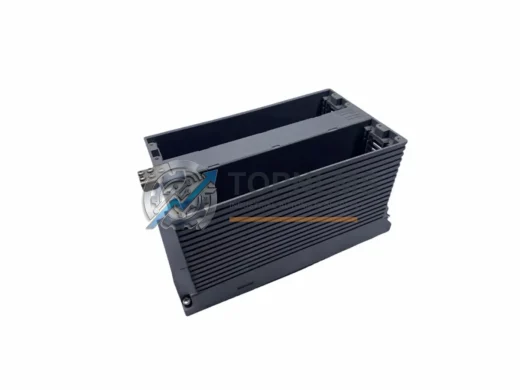
YOKOGAWA AMN32 S1 original DCS I/O module for CENTUM VP systems. Verified spare, 12-month warranty, fast global shipping. Reduce downtime now.
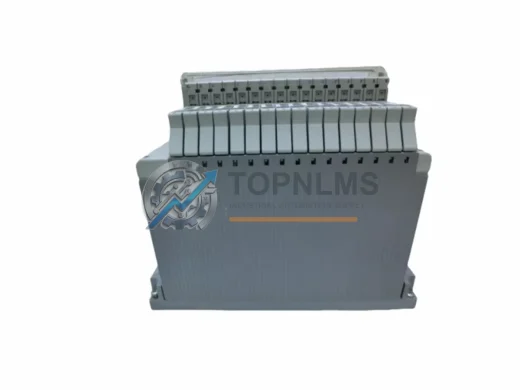
YOKOGAWA AMN21 replacement & upgrade solution for CENTUM CS3000/VP DCS. Compatible wiring, 12-month warranty, fast shipping. Contact: [email protected]
YOKOGAWA AMM21-S2 analog output module replacement for CENTUM VP DCS. Compatible upgrade solution. 12-month warranty. Fast global shipping from stock.
Click Quote This Model and the Part Number field will auto-fill with AIP444-S1.