
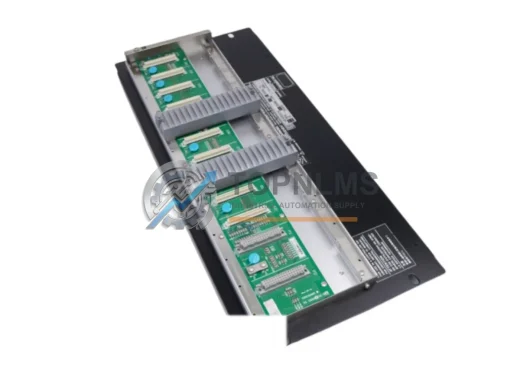
Yokogawa
Yokogawa ANB10D-421 Original Industrial Spare CENTUM VP Compatible
ANB10D-421Yokogawa ANB10D-421 original 4-ch 4–20mA analog output module for CENTUM VP & CS 3000. Industrial spare, 12-month warranty, tested before shipment.
Request availability, condition, lead time and export shipping details for AMN21.
Send this exact part number, quantity and destination country. TOPNLMS will confirm availability, condition and export lead time before quotation.
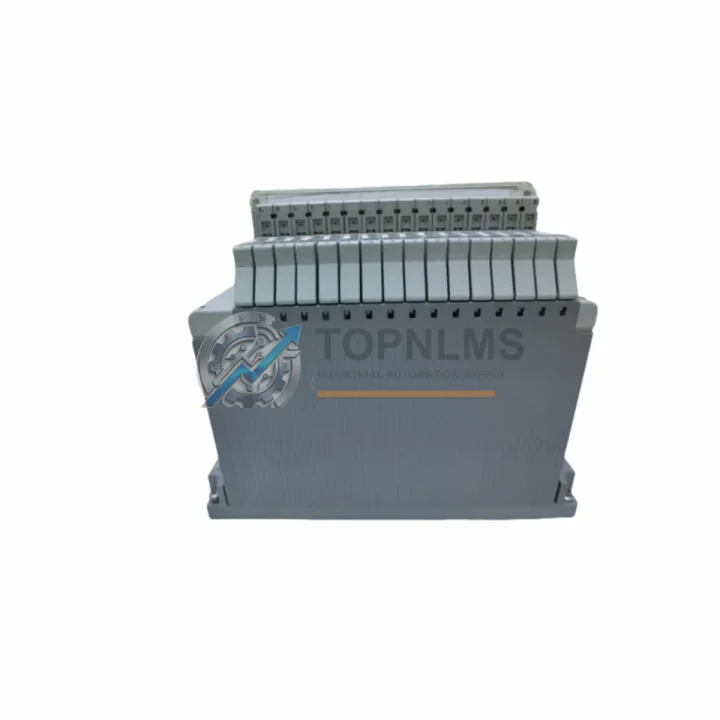
The YOKOGAWA AMN21 is a high-density analog input module designed for the CENTUM CS3000 and CENTUM VP Distributed Control Systems. As legacy CENTUM CS3000 installations approach end-of-life and spare parts become increasingly scarce, plant engineers and procurement teams face mounting pressure to source verified replacement units or plan a structured migration path. TOPNLMS maintains ready stock of the AMN21 to support both emergency replacement and planned system modernization projects, with same-week dispatch from Xiamen and a 12-month warranty on every unit.
The AMN21 provides 16-channel analog input capability, accepting 4–20 mA and 1–5 V signals from field transmitters including pressure, temperature, flow, and level instruments. Its direct compatibility with the CENTUM CS3000 FCS (Field Control Station) node bus means that a like-for-like swap requires no changes to the existing I/O wiring termination, no re-engineering of the control database, and no modification to the Vnet/IP or ESB-Bus communication architecture. Engineers migrating from an older AMN11 or AMN12 module will find that the AMN21 retains the same physical form factor, the same 16-point terminal assignment, and the same FCS slot addressing, making it the preferred drop-in upgrade when the original module has failed or is approaching its rated service life.
For sites running a mixed CENTUM CS3000 and CENTUM VP environment, the AMN21 is fully interoperable across both generations. The module communicates over the V-net node bus using the same protocol framing as the ALR111 alarm module, the AMM12 analog output module, and the ADM12 digital mixed I/O module that are commonly installed in the same FCS cabinet. This means a partial cabinet refresh—replacing only the failed analog input cards while retaining the existing AMM12 output modules and the ALR111 alarm interface—is fully supported without any firmware or configuration changes to the FCS builder project.
When the migration scope extends beyond a single card replacement to a full FCS node upgrade, the AMN21 integrates directly into the standard CENTUM VP node bus alongside the newer AAI141 and AAI143 multi-channel analog input modules. Sites that are transitioning from CENTUM CS3000 to CENTUM VP can phase in the AMN21 as an interim measure, maintaining production continuity while the engineering team completes the full FCS migration, re-tags the I/O database, and validates the new HIS (Human Interface Station) graphics. The module’s compatibility with the existing RIO (Remote I/O) bus extender and the ESB-Bus coupler means that remote marshalling cabinet installations do not require additional hardware changes.
Physical installation is straightforward. The AMN21 mounts on the standard CENTUM node unit baseplate and is secured by the same front-panel locking lever used across the CS3000 I/O card family. The 16-point field wiring connects to the existing terminal block assembly without re-termination, provided the original AMN11 or AMN12 wiring standard was followed. Power is drawn from the node unit’s internal 24 VDC bus, so no separate power supply wiring is required. The module’s LED status indicators—RUN, ALM, and ERR—are positioned identically to the predecessor cards, allowing maintenance technicians to apply existing troubleshooting procedures without retraining.
For sites where the CENTUM CS3000 FCS is being decommissioned entirely in favor of a CENTUM VP or STARDOM FCN/FCJ controller platform, the AMN21 can serve as a validated spare during the parallel-run commissioning phase. During this period, the old FCS and the new controller operate simultaneously, with the AMN21 providing live analog input data to the legacy system while the new AAI141 modules are being loop-checked on the replacement FCS. This parallel-run approach, supported by YOKOGAWA’s migration methodology, minimizes the risk of unplanned process shutdowns and allows the control room team to validate the new HIS displays against the existing DCS historian data before final cutover.
| Parameter | Legacy: AMN11 / AMN12 | Replacement: AMN21 |
|---|---|---|
| Compatible Platform | CENTUM CS3000 | CENTUM CS3000 & CENTUM VP |
| Analog Input Channels | 8 ch (AMN11) / 16 ch (AMN12) | 16 ch |
| Signal Range | 4–20 mA / 1–5 V | 4–20 mA / 1–5 V |
| Node Bus Protocol | V-net (CS3000) | V-net / ESB-Bus compatible |
| Physical Form Factor | Standard CS3000 I/O card | Identical — direct slot replacement |
| Wiring Termination | 16-point terminal block | 16-point terminal block (same pinout) |
| FCS Slot Addressing | Standard node unit slot | Same slot addressing — no re-config |
| Power Supply | 24 VDC from node unit bus | 24 VDC from node unit bus |
| Installation Change Required | — | None — plug-and-replace |
| Warranty (TOPNLMS) | — | 12 Months |
A successful AMN21 migration rarely involves a single module in isolation. In most CENTUM CS3000 and CENTUM VP installations, the analog input cards share a node unit baseplate with the AMM12 analog output module, which handles 4–20 mA control signals to final control elements such as control valves and variable-speed drives. When the AMN21 is replaced as part of a broader FCS refresh, it is common practice to simultaneously inspect and, if necessary, replace the AMM12 to ensure that both input and output channels are operating within specification before the FCS is returned to automatic control.
The node unit’s internal communication relies on the ESB-Bus coupler module, which bridges the local I/O bus to the Vnet/IP network backbone. If the ESB-Bus coupler is showing intermittent communication faults—often the root cause of spurious AMN21 diagnostic alarms—replacing the coupler alongside the AMN21 eliminates the possibility of a recurring fault after the I/O card swap. Similarly, the ALR111 alarm interface module, which aggregates discrete alarm signals from field devices into the FCS alarm management system, should be verified for firmware compatibility when the node unit is opened for maintenance.
For sites migrating from CENTUM CS3000 to CENTUM VP, the AAI141 multi-channel analog input module is the natural long-term successor to the AMN21 in the new FCS architecture. The AAI141 supports FOUNDATION Fieldbus H1 and HART communication in addition to conventional 4–20 mA, providing a migration path to smart field device integration without replacing the field wiring. During the transition period, the AMN21 and AAI141 can coexist in the same CENTUM VP FCS cabinet, with the AMN21 handling legacy conventional loops and the AAI141 managing new HART-enabled transmitters.
Programming cable connectivity is another consideration during commissioning. The YOKOGAWA SB301 programming cable or the equivalent USB-to-serial adapter is required to connect a laptop running CENTUM VP Engineering Environment (ENG) to the FCS for online monitoring and I/O force testing during loop checks. Ensuring this cable and the associated ENG software license are available on-site before the AMN21 swap begins prevents unnecessary delays during the commissioning window.
Finally, for installations where the CENTUM CS3000 FCS is housed in a Yokogawa standard control cabinet with a dedicated 24 VDC power supply unit (PSU), verifying the PSU output capacity before adding replacement modules is recommended. The standard CENTUM node unit PSU supports a defined maximum load; adding a higher-channel-count AMN21 in place of an AMN11 increases the current draw slightly, and this should be confirmed against the PSU’s rated output before energizing the node unit.
Q: Can I replace an AMN11 or AMN12 with an AMN21 without modifying the FCS builder project?
A: Yes. The AMN21 uses the same slot addressing and node bus protocol as the AMN11 and AMN12. The FCS builder project recognizes the replacement module automatically during the next FCS download or online change operation. No I/O tag re-mapping is required provided the channel count of the new module meets or exceeds the original.
Q: Is the field wiring termination compatible between AMN11/AMN12 and AMN21?
A: Yes. The 16-point terminal block pinout is identical across the AMN series. Field cables can be transferred directly to the replacement module without re-labeling or re-termination, significantly reducing the maintenance window duration.
Q: Does the AMN21 support HART communication for smart transmitters?
A: The AMN21 supports conventional 4–20 mA analog signals. For HART-enabled smart transmitters, the AAI141 or AAI143 modules in the CENTUM VP platform provide native HART communication. A HART multiplexer can also be used alongside the AMN21 to access HART device data without replacing the I/O card.
Q: What is the physical space requirement for the AMN21 in the control cabinet?
A: The AMN21 occupies a single standard slot on the CENTUM node unit baseplate, identical to the AMN11 and AMN12. No additional cabinet space or mounting hardware is required for a like-for-like replacement.
Q: How do I verify the AMN21 is communicating correctly after installation?
A: After inserting the module and powering the node unit, the RUN LED should illuminate green within 30 seconds. The FCS online monitor in CENTUM VP Engineering Environment will display the module status as NORMAL. Any ALM or ERR LED indication should be investigated using the FCS diagnostic log before proceeding with loop checks.
Q: Can the AMN21 be used in a CENTUM VP RIO (Remote I/O) configuration?
A: Yes. The AMN21 is compatible with the CENTUM VP RIO bus extender, allowing it to be installed in remote marshalling cabinets located up to 750 meters from the FCS node unit. The ESB-Bus coupler at the remote cabinet handles the communication bridging transparently.
Every YOKOGAWA AMN21 unit shipped by TOPNLMS is covered by a 12-month warranty from the date of dispatch. Prior to shipment, each module undergoes a functional verification check including power-on self-test, LED status confirmation, and communication bus response validation. Units that do not pass the pre-shipment check are quarantined and not dispatched.
In the event of a warranty claim, TOPNLMS provides a replacement unit dispatch within 3 business days of claim confirmation, minimizing the impact on plant operations. Our after-sales team is reachable by email at [email protected] and by phone at +86 18359293191 during business hours (GMT+8). Warranty coverage includes manufacturing defects and functional failures under normal operating conditions; it does not cover damage resulting from incorrect installation, overvoltage, or physical impact.
For procurement teams requiring documentation, TOPNLMS can provide a test report, packing list, and commercial invoice with each shipment. Export from Xiamen is available via DHL, FedEx, and UPS with tracking provided at the time of dispatch. Lead time for in-stock units is typically 3–5 business days to most destinations.
Yokogawa ANB10D-421 original 4-ch 4–20mA analog output module for CENTUM VP & CS 3000. Industrial spare, 12-month warranty, tested before shipment.
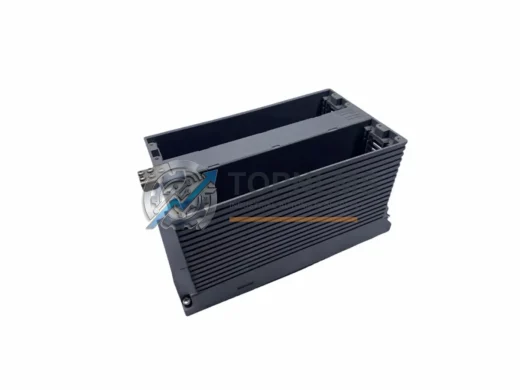
YOKOGAWA AMN32 S1 original DCS I/O module for CENTUM VP systems. Verified spare, 12-month warranty, fast global shipping. Reduce downtime now.
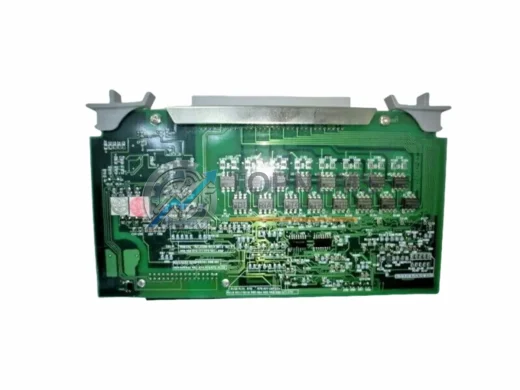
YOKOGAWA AMM21-S2 analog output module replacement for CENTUM VP DCS. Compatible upgrade solution. 12-month warranty. Fast global shipping from stock.
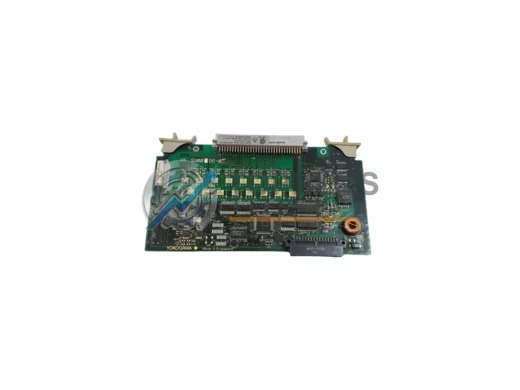
Yokogawa AMM12-S2 original analog input module for CENTUM DCS systems. Tested, 12-month warranty, fast worldwide shipping. Reduce downtime with genuine spares.
Click Quote This Model and the Part Number field will auto-fill with AMN21.