
Yaskawa
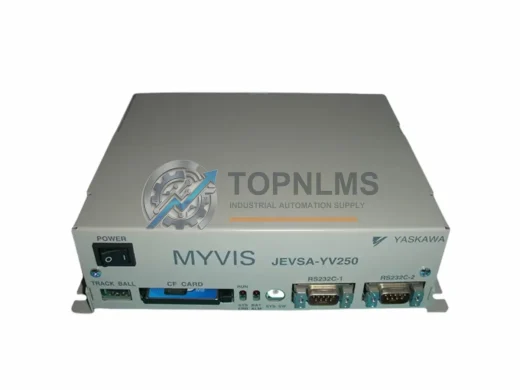
YASKAWA JEVSA-YV250-E Ruggedized Vision Controller
JEVSA-YV250-EYASKAWA JEVSA-YV250-E iVY2 Series Machine Vision Controller. Rugged, EMI-resistant, 12-month warranty. In stock — fast shipping from TOPNLMS.
Request availability, condition, lead time and export shipping details for HR16000MTLCPC.
Send this exact part number, quantity and destination country. TOPNLMS will confirm availability, condition and export lead time before quotation.
The SVS-VISTEK HR16000MTLCPC is a high-resolution 16,384-pixel CCD line scan camera designed for demanding industrial machine vision applications where image quality, system stability, and long-term spare parts availability are non-negotiable. Built on SVS-VISTEK’s proven HR Series platform, this camera delivers exceptional spatial resolution and radiometric performance for web inspection, flat panel display testing, print quality control, solar cell inspection, and precision metrology on high-speed production lines.
For maintenance engineers and procurement teams managing aging machine vision infrastructure, securing a verified original HR16000MTLCPC spare is a critical risk-mitigation step. Production lines that rely on line scan imaging cannot afford unplanned downtime caused by camera failure. Stocking a tested, ready-to-deploy unit of the HR16000MTLCPC eliminates the lead-time risk associated with sourcing high-resolution CCD cameras on short notice, particularly as global supply chains for legacy imaging components tighten.
The HR16000MTLCPC interfaces via Camera Link Full configuration, delivering the full 16K pixel line at high line rates with deterministic data transfer to the frame grabber. This makes it directly compatible with established Camera Link Full frame grabbers from leading suppliers, and the camera’s mechanical form factor and connector layout are consistent with the broader HR Series family, simplifying swap-out procedures during scheduled maintenance windows.
| Parameter | Specification |
|---|---|
| Model / SKU | HR16000MTLCPC |
| Brand / Series | SVS-VISTEK / HR Series |
| Sensor Type | CCD Line Scan |
| Resolution | 16,384 pixels (16K) |
| Interface | Camera Link Full |
| Pixel Size | 5 µm × 5 µm (typical HR Series) |
| Output | Monochrome (MT suffix) |
| Power Supply | 12 V DC via Camera Link connector |
| Operating Temperature | 0 °C to +50 °C |
| Origin | Germany |
| Compatibility | Camera Link Full frame grabbers; HR Series accessories |
| Maintenance Recommendation | Inspect lens mount, clean sensor window, verify frame grabber sync annually |
| Warranty | 12 Months – tested before shipment |
A robust preventive maintenance program for a line scan imaging station built around the HR16000MTLCPC extends well beyond the camera itself. During scheduled downtime, maintenance teams should simultaneously inspect and, where necessary, replace the Camera Link Full cable assembly connecting the camera to the frame grabber — cable degradation is a leading cause of intermittent image artifacts that are often misdiagnosed as camera failure. High-quality, shielded Camera Link cables rated for the full MDR-to-MDR or MDR-to-SDR configuration should be kept as on-hand spares.
The frame grabber installed in the industrial PC or vision controller is the next critical component. Cards compatible with Camera Link Full — such as those from the Matrox Solios or National Instruments PCIe-1433 families — should be verified for firmware currency and driver compatibility with the host OS during each maintenance cycle. A spare frame grabber card reduces recovery time from hours to minutes in the event of a board-level failure.
The illumination system paired with the HR16000MTLCPC is equally maintenance-sensitive. LED line light modules degrade in intensity over time, causing gradual image quality drift that may not trigger hard alarms but will erode inspection accuracy. Scheduling photometric verification of the line light and maintaining a replacement LED bar or controller module in stock is standard practice in high-uptime facilities.
The lens assembly — typically a high-resolution telecentric or fixed-focal-length lens matched to the 16K sensor format — should be inspected for contamination, mechanical play, and focus drift. Lens mounts and C-mount or F-mount adapters are low-cost items that are frequently overlooked until a physical shock event causes misalignment. Keeping a verified spare lens and mount adapter on the shelf is a low-cost insurance policy.
The industrial PC or embedded vision controller hosting the frame grabber and image processing software is another single point of failure. Ensuring the controller has adequate thermal management, that cooling fans are serviced, and that the system image is backed up to a recovery drive are all part of a complete maintenance plan. Where the vision system interfaces with a PLC or DCS — for example, passing inspection pass/fail signals via digital I/O to a Siemens S7-300 or Allen-Bradley ControlLogix controller — the I/O interface modules and signal cables between the vision controller and the PLC should also be inspected for contact integrity and correct signal levels.
Finally, the power supply unit feeding the camera, illumination controller, and vision PC should be load-tested and its output voltages verified. An aging 24 V DC industrial power supply operating near its rated capacity is a common root cause of intermittent camera resets and frame grabber synchronization errors. Stocking a replacement DIN-rail power supply module of appropriate wattage is a straightforward way to eliminate this failure mode from your risk register.
When the HR16000MTLCPC reaches end of service life or sustains physical damage, the replacement strategy depends on whether the goal is like-for-like restoration or a controlled upgrade. For like-for-like restoration, a verified original HR16000MTLCPC from stock is the fastest path to production recovery — no software reconfiguration, no frame grabber driver changes, no re-qualification of the inspection algorithm. This is the primary reason procurement teams maintain a buffer stock of this model rather than relying on spot-market sourcing.
For facilities where the HR16000MTLCPC is approaching obsolescence and a platform upgrade is being planned, the transition should be managed carefully. The replacement camera must match the 16K pixel count, Camera Link Full interface, and physical envelope of the original to avoid mechanical redesign of the camera mount and optical path. Any change in pixel size will require recalibration of the entire optical system and re-validation of the inspection thresholds — a process that can take days or weeks on a production line. Maintaining the original HR16000MTLCPC in service until a fully validated replacement is qualified and ready is the lowest-risk approach.
For older installations where the HR16000MTLCPC replaced an earlier SVS-VISTEK model, the same compatibility logic applies in reverse: the HR Series was designed to offer a consistent mechanical and electrical interface across the product family, which means that a well-maintained HR16000MTLCPC can often extend the productive life of an imaging station originally designed around a lower-resolution predecessor without requiring structural changes to the machine frame or control cabinet.
Q1: What is the expected service life of the HR16000MTLCPC, and when should I plan for replacement?
CCD line scan cameras in continuous industrial operation typically have a service life of 5–10 years depending on duty cycle, environmental conditions, and handling. We recommend establishing a replacement plan when the camera reaches 7 years of service or when image quality metrics begin to drift outside calibrated tolerances, whichever comes first. Stocking a spare unit before the primary camera shows signs of degradation is the lowest-risk strategy.
Q2: How do I verify compatibility between the HR16000MTLCPC and my existing frame grabber?
The HR16000MTLCPC uses the Camera Link Full interface standard. Any frame grabber certified for Camera Link Full — including cards from Matrox, National Instruments, Euresys, and Active Silicon — is electrically compatible. Verify that your frame grabber driver supports the camera’s line rate and pixel clock requirements, and confirm that the Camera Link cable length does not exceed the specification for your data rate (typically 10 m for Camera Link Full at maximum speed).
Q3: What pre-shipment testing is performed on the HR16000MTLCPC?
Every unit is powered on, connected to a Camera Link Full test interface, and verified for correct pixel output, line rate stability, and absence of defective pixels across the full 16K sensor width before shipment. A functional test report is available upon request. Units are packed in anti-static, shock-absorbing packaging to protect the sensor and connector during transit.
Q4: What does the 12-month warranty cover, and what is the support response process?
The 12-month warranty covers defects in materials and workmanship under normal operating conditions. If a unit fails within the warranty period, contact us at [email protected] with a description of the fault and your order reference. We will arrange return logistics and ship a replacement unit from stock to minimize your downtime. Our target response time for warranty claims is one business day.
YASKAWA JEVSA-YV250-E iVY2 Series Machine Vision Controller. Rugged, EMI-resistant, 12-month warranty. In stock — fast shipping from TOPNLMS.
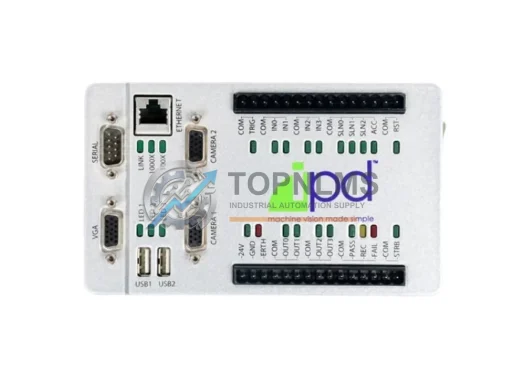
Teledyne DALSA VA20-03 original industrial spare for VA20 Series. Dual-camera vision appliance, 12-month warranty, fast shipping. Compatible replacement for Coreco Imaging VA20 systems.
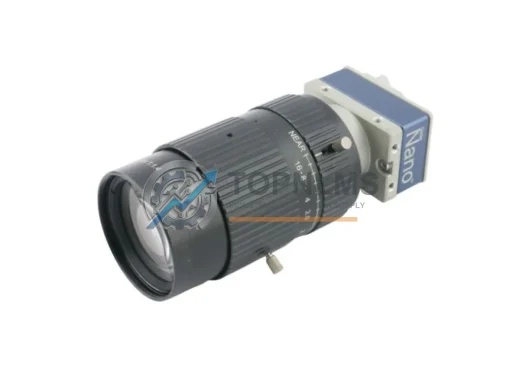
Teledyne BOT-DG3-DA-4900C-00 Genie Nano 4.9MP GigE Vision camera. Original industrial spare, 12-month warranty, fast shipping. Compatible replacement for machine vision systems.
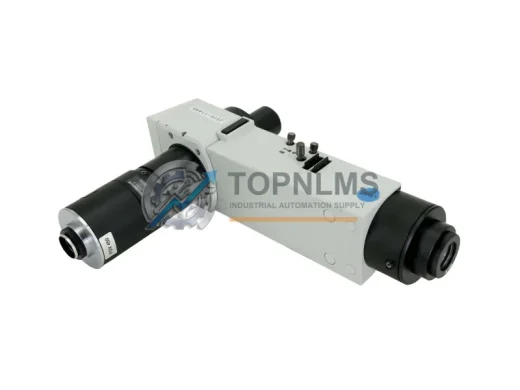
Drop-in replacement for Olympus OLY-UTV1X-UCMAD2-URLA BX/IX Series. Compatible with XENUS800, UTLU, UCLW. 12-month warranty. Fast shipping from stock.
Click Quote This Model and the Part Number field will auto-fill with HR16000MTLCPC.