Product Overview
MATROX SOL2MEVCLB Original Industrial Spare – Solios Series System Stability & Maintenance Value
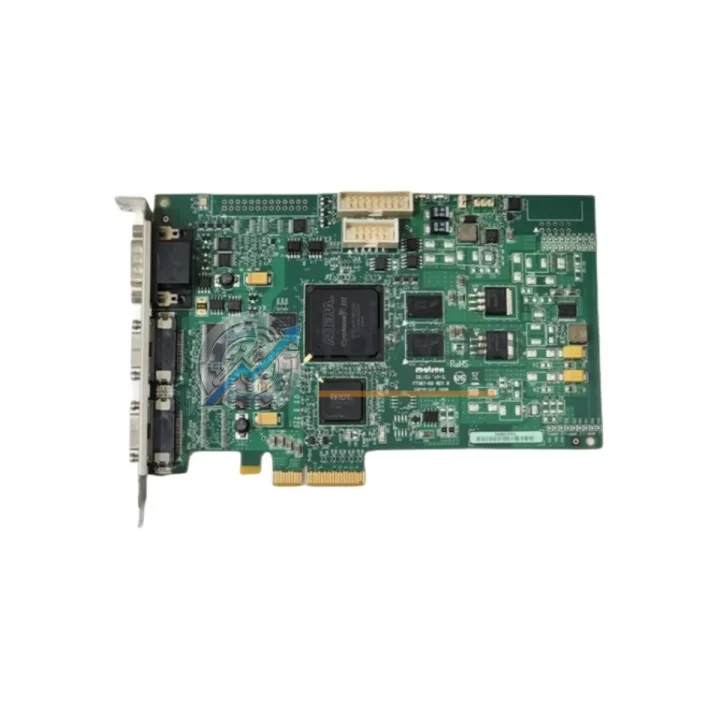
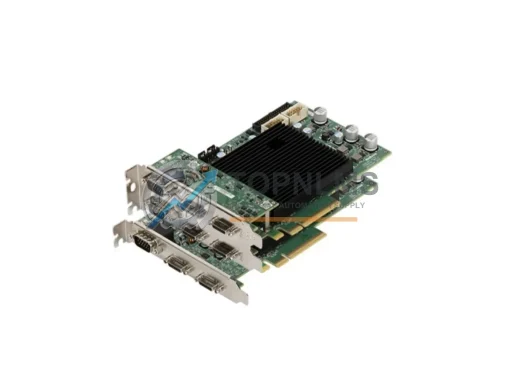
The MATROX SOL2MEVCLB is a genuine, original dual Camera Link PCIe frame grabber from the Solios series, engineered for demanding machine vision and industrial imaging applications. In automated production environments — from automotive assembly lines to pharmaceutical inspection systems — the frame grabber is the critical bridge between high-speed industrial cameras and the host control system. An unplanned failure of this component can halt an entire production line within seconds. Stocking the SOL2MEVCLB as a verified spare is one of the most cost-effective decisions a maintenance team can make to protect system uptime and reduce mean time to repair (MTTR).
The Solios series was designed by MATROX Imaging to deliver deterministic, low-latency image acquisition across dual Camera Link channels simultaneously. The SOL2MEVCLB supports both Base and Medium Camera Link configurations, making it compatible with a wide range of industrial cameras used in quality inspection, dimensional measurement, barcode reading, and robotic guidance. Its PCIe interface ensures high-bandwidth data transfer to the host PC, sustaining the throughput required by modern vision algorithms running in real time.
Critical Technical Specs
| Parameter |
Specification |
| Part Number / SKU |
SOL2MEVCLB |
| Brand / Manufacturer |
MATROX Imaging |
| Series |
Solios (Solios eV-CL) |
| Product Type |
Dual-Channel Camera Link PCIe Frame Grabber |
| Camera Interface |
Dual Camera Link (Base / Medium configuration) |
| Host Interface |
PCI Express (PCIe) x4 |
| Supported Camera Link Modes |
Base, Medium (per channel) |
| Max Pixel Clock |
Up to 85 MHz per channel (Camera Link compliant) |
| Image Acquisition |
Area scan, line scan; 8/10/12/14/16-bit depth |
| Trigger / I/O |
External trigger input, strobe output, general-purpose I/O |
| Software Compatibility |
MATROX MIL (Matrox Imaging Library), MIL-Lite; Windows / Linux |
| Operating Temperature |
0°C to 55°C (industrial ambient) |
| Country of Origin |
Canada |
| Condition |
Original / Genuine — New or Tested Surplus |
| Compatibility |
Replaces / compatible with Solios eV-CL series variants; drop-in for existing Solios-based vision stations |
| Warranty |
12-Month Quality Warranty |
Preventive Maintenance Strategy
A frame grabber failure rarely occurs in isolation. In most machine vision stations, the SOL2MEVCLB operates as part of a tightly integrated imaging subsystem. When scheduling planned maintenance or responding to an unplanned shutdown, experienced maintenance engineers know that replacing the frame grabber alone is only the first step. A thorough inspection of the surrounding components is essential to prevent repeat failures and ensure the system returns to full specification.
Start with the Camera Link cables connecting the industrial cameras to the SOL2MEVCLB. These MDR-26 or SDR-26 cables are subject to mechanical fatigue in high-cycle environments and are a frequent source of intermittent image dropout that is often misdiagnosed as a frame grabber fault. Replacing cables at the same time as the board eliminates this ambiguity. Next, inspect the industrial cameras themselves — particularly the Camera Link transmitter circuitry — since a camera with a degraded CL output can damage a new frame grabber if left unchecked.
The PCIe slot and host industrial PC should also be evaluated. Verify that the PCIe x4 slot is clean, that the riser card or backplane connector shows no oxidation, and that the host PC’s power supply delivers stable 12V and 3.3V rails under load. An unstable industrial PC power supply unit (PSU) is a common root cause of frame grabber instability that persists after board replacement. If the vision station is housed in a control cabinet, check the 24VDC DIN-rail power supply feeding the cabinet’s auxiliary circuits and any I/O terminal blocks connected to the frame grabber’s trigger and strobe lines.
For systems where the SOL2MEVCLB’s trigger input is driven by a PLC digital output module, verify the output signal integrity with a multimeter or oscilloscope. A degraded PLC DO module producing slow rise times or voltage sag can cause missed triggers and erratic acquisition timing. Similarly, inspect any signal isolators or optocoupler modules in the trigger circuit — these components age and can introduce latency or signal distortion that manifests as inconsistent image capture.
If the vision system communicates inspection results to a higher-level SCADA or MES via Ethernet or fieldbus communication modules, confirm that network switches, patch cables, and communication cards are functioning correctly. A communication bottleneck downstream of the frame grabber can mask acquisition performance issues and complicate fault diagnosis. Finally, review the cooling and ventilation of the control cabinet: the SOL2MEVCLB generates heat under continuous operation, and inadequate airflow — often caused by a failing cabinet cooling fan or filter mat — can shorten the service life of the board significantly. Proactive replacement of fan units and filter media during the same maintenance window is a low-cost measure that protects a high-value spare.
Strategic Replacement Solutions
The MATROX SOL2MEVCLB is a proven solution for extending the operational life of Solios-based machine vision stations without requiring a full system redesign. Many facilities running legacy vision inspection lines face pressure to upgrade to newer platforms, but the capital cost and revalidation effort of a full replacement are often prohibitive. Sourcing a genuine SOL2MEVCLB spare allows maintenance teams to restore the original system to factory specification, preserving all existing camera configurations, MIL software licenses, and validated inspection recipes.
Because the SOL2MEVCLB is a direct form-fit-function replacement within the Solios eV-CL family, installation is straightforward: remove the failed board, seat the replacement in the same PCIe slot, and restore the MIL driver and application configuration from backup. In most cases, the vision application resumes operation without any parameter changes, minimizing the revalidation burden on quality and engineering teams. This is a critical advantage in regulated industries such as medical device manufacturing or automotive Tier 1 supply, where any system change may trigger a formal change-control process.
For facilities managing multiple vision stations across a plant floor, we recommend maintaining at least one SOL2MEVCLB in the on-site spare parts inventory. The cost of a single unplanned line stoppage — measured in lost production, scrap, and labor — typically exceeds the cost of the spare board many times over. A documented spare parts strategy that includes the frame grabber, Camera Link cables, and associated trigger I/O components provides the fastest possible recovery path and supports ISO 9001 and IATF 16949 maintenance planning requirements.
Support FAQ
Q1: Is the SOL2MEVCLB compatible with my existing Solios-based vision station?
Yes. The SOL2MEVCLB is a genuine MATROX Solios series board and is a direct replacement for other Solios eV-CL dual-channel variants. It uses the same PCIe interface, Camera Link connectors, and MIL driver stack. Confirm your host PC has an available PCIe x4 (or larger) slot and that your MIL software version supports the Solios eV-CL family — MATROX MIL 9.0 and later are fully compatible.
Q2: What does the 12-month warranty cover, and how is the board tested before shipment?
Every SOL2MEVCLB unit is functionally tested prior to shipment, including PCIe enumeration verification, Camera Link channel integrity checks, and trigger I/O validation. The 12-month warranty covers manufacturing defects and functional failures under normal operating conditions. Warranty claims are processed via our support team at [email protected], and replacement or repair is coordinated promptly to minimize your downtime.
Q3: How should I manage spare parts inventory for a multi-station vision system?
For facilities with three or more Solios-based vision stations, we recommend a minimum of one SOL2MEVCLB spare per five stations, supplemented by a set of Camera Link cables and a spare industrial PC or at minimum a spare PCIe riser. Document the MIL software version, camera configuration files, and inspection recipe backups for each station so that a replacement board can be commissioned in under two hours. Periodic inventory audits — aligned with your annual preventive maintenance schedule — ensure spares remain within their storage life and are ready for immediate deployment.
Q4: Can I use the SOL2MEVCLB to replace an older or different MATROX frame grabber model?
The SOL2MEVCLB is specifically designed for Camera Link camera interfaces and PCIe host systems. It is not a direct replacement for MATROX frame grabbers using different camera interfaces (e.g., GigE Vision, CoaXPress, or analog). However, if your existing system uses Camera Link cameras and a PCIe host, the SOL2MEVCLB can replace older MATROX Solios or Odyssey CL boards with appropriate driver updates. Contact our technical team to confirm compatibility before ordering.