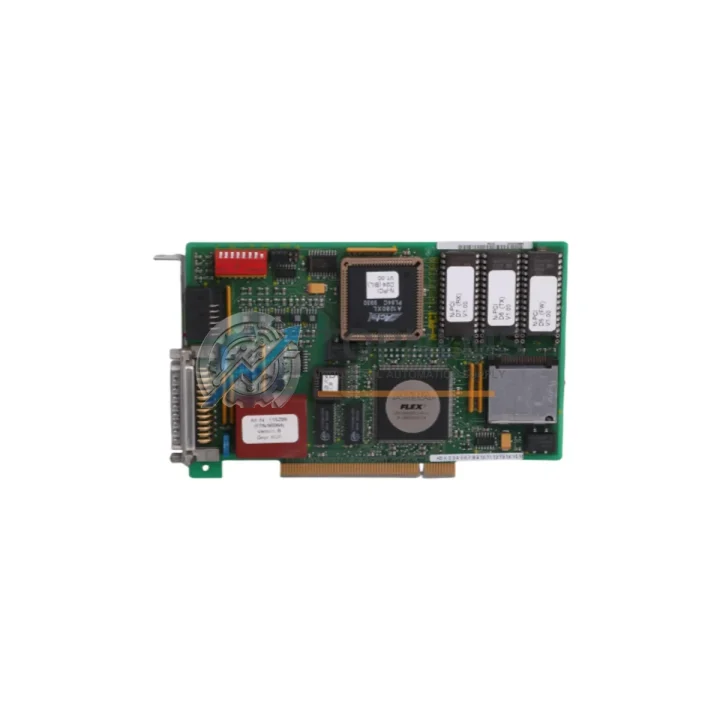
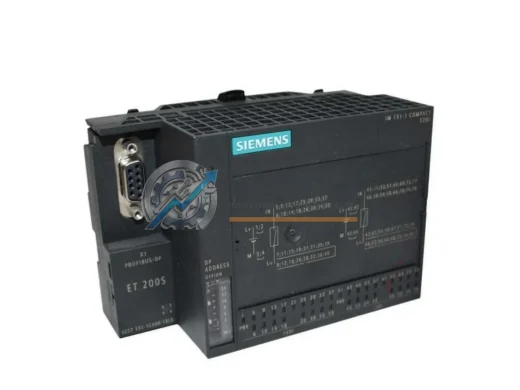
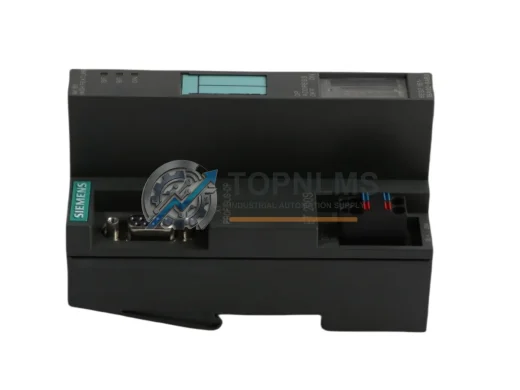
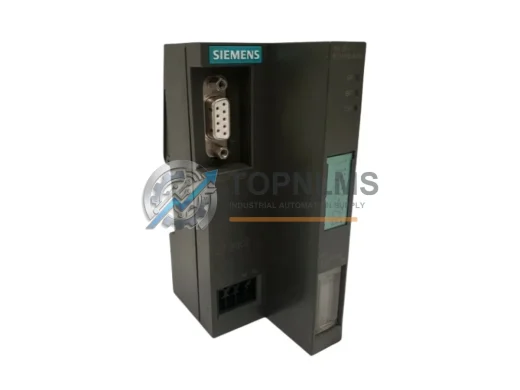
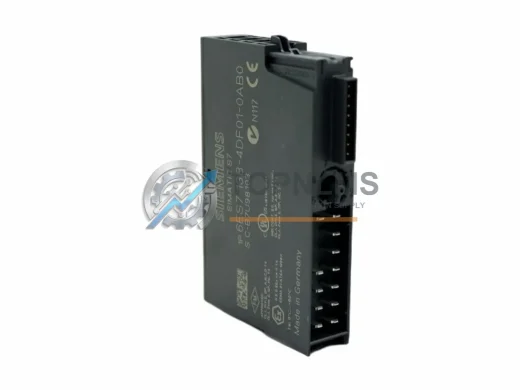
Product Overview
SIEMENS 6DS1224-8AA Original Industrial Spare TELEPERM M Compatible: Ensuring System Stability in Critical DCS Environments
The SIEMENS 6DS1224-8AA is an original interface module engineered for the TELEPERM M Distributed Control System (DCS) — one of Siemens’ most enduring process automation platforms deployed across petrochemical, power generation, pharmaceutical, and heavy manufacturing facilities worldwide. As aging TELEPERM M installations continue to operate well beyond their original design life, sourcing verified original spare parts like the 6DS1224-8AA becomes a mission-critical priority for maintenance engineers and plant reliability teams.
At TOPNLMS, every 6DS1224-8AA unit is sourced from authenticated industrial supply channels, individually inspected, and dispatched with full documentation. Whether you are managing a scheduled turnaround, responding to an unplanned trip, or building a strategic spare parts buffer, this module delivers the compatibility, reliability, and traceability your operation demands.
Critical Technical Specs
| Parameter |
Specification |
| Part Number / SKU |
6DS1224-8AA |
| Brand |
SIEMENS |
| Series / Platform |
TELEPERM M DCS |
| Module Type |
Interface Module |
| Country of Origin |
Germany (DE) |
| Compatibility |
TELEPERM M DCS racks and backplanes; compatible with AS 220, AS 230, AS 235 automation stations |
| Communication Interface |
TELEPERM M internal bus (SINEC H1 / proprietary backplane) |
| Operating Voltage |
24 V DC (supplied via backplane) |
| Operating Temperature |
0 °C to +60 °C |
| Storage Temperature |
-25 °C to +70 °C |
| Humidity |
5% to 95% RH, non-condensing |
| Installation |
DIN rail / TELEPERM M subrack slot insertion |
| Weight |
Approx. 200 g |
| Maintenance Recommendation |
Inspect every 12–24 months; replace on first sign of communication fault or LED error indication |
| Warranty |
12 Months — covers manufacturing defects and functional failure under normal operating conditions |
Preventive Maintenance Strategy
The 6DS1224-8AA does not operate in isolation. In a TELEPERM M control cabinet, it forms part of a tightly integrated signal and communication chain. A disciplined preventive maintenance program should treat this interface module as one node in a broader inspection cycle — and experienced maintenance teams know that when one module shows signs of degradation, adjacent components in the same subrack or electrical loop deserve equal scrutiny.
During a scheduled inspection or corrective replacement of the 6DS1224-8AA, it is best practice to simultaneously verify the condition of the 6DS1224-8AB and 6DS1224-8AC interface module variants installed in neighboring slots, as these share the same backplane bus and power rail. A fault in one module can induce marginal signal errors in adjacent units that may not immediately trigger alarms but will degrade system reliability over time.
The TELEPERM M power supply modules — particularly the 6DS1100-8AA and 6DS1101-8AA — should be load-tested during the same maintenance window. Voltage sag or ripple on the 24 V DC rail is a leading cause of intermittent interface module faults and is frequently misdiagnosed as a module failure when the root cause lies upstream in the power distribution assembly.
I/O modules connected downstream of the 6DS1224-8AA — such as the 6DS1410-8AA analog input module and 6DS1420-8AA analog output module — should be checked for calibration drift and terminal block integrity. Loose or corroded terminals on these modules are a common source of process signal noise that can be falsely attributed to interface module faults during troubleshooting.
Communication continuity between the interface module and the automation station depends on the integrity of the SINEC H1 coaxial bus cables and BNC connectors within the cabinet. These cables age and become brittle in high-temperature environments; a full cable inspection and continuity test should accompany any interface module replacement. Similarly, the 6DS1700-8AA bus coupler module, if present in the rack, should be verified for proper termination resistance.
For plants running extended TELEPERM M installations alongside newer Siemens platforms, the 6DS1900-8AA gateway or migration interface modules may also be present in the same cabinet. These components bridge legacy TELEPERM M signals to PROFIBUS or PROFINET networks and are subject to the same environmental stresses as the 6DS1224-8AA. Including them in the inspection checklist prevents communication gaps that could affect the broader control network.
Finally, the subrack itself — including the TELEPERM M 6DS1000-series subrack chassis and its backplane connector pins — should be visually inspected for oxidation, mechanical damage, or contamination. A clean, mechanically sound subrack is the foundation of reliable module seating and signal integrity across the entire DCS node.
Strategic Replacement Solutions
The SIEMENS 6DS1224-8AA is a legacy component, and its availability on the open market is finite. Plants that rely on TELEPERM M systems for continuous process control face a strategic imperative: secure verified original spare modules now, before supply becomes critically constrained.
Replacing a failed 6DS1224-8AA with a non-original or counterfeit substitute carries significant risk in a DCS environment. TELEPERM M systems use proprietary backplane communication protocols, and interface modules must meet exact firmware and hardware revision specifications to maintain system compatibility. An incompatible module can cause communication timeouts, false process alarms, or — in worst-case scenarios — uncontrolled process deviations that trigger emergency shutdowns.
TOPNLMS supplies original 6DS1224-8AA modules that are fully compatible with existing TELEPERM M AS 220, AS 230, and AS 235 automation stations without requiring firmware updates or system reconfiguration. This plug-and-play compatibility dramatically reduces replacement time during a corrective maintenance event — a critical advantage when every minute of unplanned downtime carries significant production cost.
For plants executing a phased migration from TELEPERM M to a modern Siemens SIMATIC PCS 7 or PCS neo platform, maintaining a buffer stock of 6DS1224-8AA modules ensures that the legacy system remains stable and controllable throughout the transition period — protecting production continuity while the migration project proceeds on schedule.
We recommend that maintenance planners and procurement teams assess their current 6DS1224-8AA inventory against projected system life and order a minimum of two to three spare units per active subrack. This buffer supports both immediate corrective replacement and one planned preventive swap within a 24-month maintenance cycle.
Support FAQ
Q1: Is the 6DS1224-8AA compatible with all TELEPERM M automation station variants?
The 6DS1224-8AA is designed for the TELEPERM M DCS platform and is compatible with AS 220, AS 230, and AS 235 automation stations. Compatibility with specific hardware revision levels of your existing installation should be verified against your system’s engineering documentation. Our technical team can assist with compatibility verification prior to order confirmation.
Q2: What is the recommended inventory strategy for a plant with multiple TELEPERM M nodes?
For plants with two or more active TELEPERM M subracks, we recommend maintaining a minimum of two 6DS1224-8AA units in on-site spare stock. This supports immediate corrective replacement without waiting for procurement lead times, and provides a backup unit for bench testing during fault diagnosis. For critical continuous-process facilities, a three-unit buffer per node type is considered best practice.
Q3: How is each unit tested and verified before shipment?
Every 6DS1224-8AA dispatched by TOPNLMS undergoes a pre-shipment functional inspection covering visual integrity, connector pin condition, and board-level continuity checks. Units are packaged in anti-static protective materials with individual identification documentation. All modules are covered by a 12-month warranty against manufacturing defects and functional failure under normal operating conditions.
Q4: What is the lead time and shipping arrangement for international orders?
In-stock units are typically dispatched within 1–3 business days of order confirmation. We support worldwide shipping via DHL, FedEx, and UPS Express services with full tracking. Export documentation, including commercial invoices and packing lists compliant with customs requirements, is provided for all international shipments. Contact our team for volume pricing and priority fulfillment arrangements.