

ProSoft Technology
ProSoft MVI56-DFCM Replacement/Upgrade for ControlLogix
MVI56-DFCMMVI56-DFCM drop-in replacement for ControlLogix. DF1 full-duplex compatibility, 12-month warranty, fast global shipping from TOPNLMS.
Request availability, condition, lead time and export shipping details for MVI69-104S.
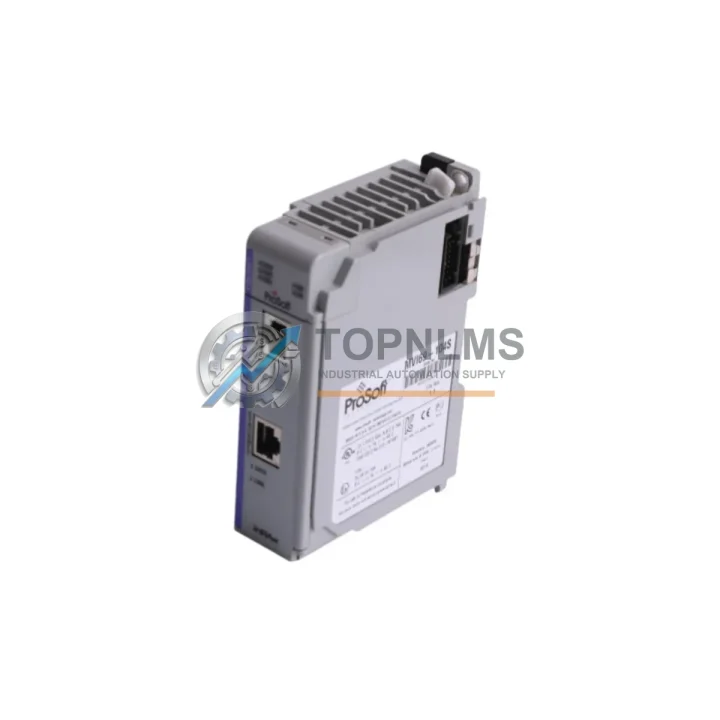
Send this exact part number, quantity and destination country. TOPNLMS will confirm availability, condition and export lead time before quotation.
The ProSoft MVI69-104S is a dedicated IEC 60870-5-104 slave communication module engineered for Allen-Bradley CompactLogix and MicroLogix 1500 platforms. As legacy SCADA infrastructure ages and original MVI69-104S units reach end-of-life or become increasingly difficult to source, plant engineers and system integrators face mounting pressure to maintain uptime without triggering a full control system overhaul. This module provides a validated, drop-in replacement path that preserves existing wiring topology, ladder logic structure, and HMI communication links — dramatically reducing migration risk and commissioning time.
Whether you are replacing a failed unit on an active production line, upgrading from an older MVI46-104S or MVI56-104S installed in a legacy SLC 500 or ControlLogix rack, or consolidating a distributed SCADA network onto a modern CompactLogix 5370 or 5380 chassis, the MVI69-104S delivers the protocol fidelity and physical compatibility your project demands. The module slots directly into the CompactLogix local I/O rack, draws power from the backplane, and communicates with the processor via the standard 1769 bus — no external power supply or dedicated communication cable required for backplane data exchange.
In SCADA telecontrol applications governed by IEC 60870-5-104, the MVI69-104S acts as a slave (controlled station), responding to master station commands transmitted over TCP/IP Ethernet. This makes it the correct replacement for installations where the existing MVI69-104S interfaces a substation RTU, a power distribution SCADA master, or a water/wastewater supervisory system. The module supports spontaneous transmission, general interrogation, clock synchronization, and command execution — all core IEC 60870-5-104 services required for utility and infrastructure automation.
| Parameter | Legacy / Replaced Model | MVI69-104S (Replacement) |
|---|---|---|
| SKU / Part Number | MVI46-104S / MVI56-104S / older MVI69-104S revisions | MVI69-104S |
| Target Platform | SLC 500, ControlLogix (1756), older CompactLogix | CompactLogix 5370 / 5380, MicroLogix 1500 |
| Rack / Bus Interface | 1746 (SLC), 1756 (CLX), 1769 (older CL) | 1769 CompactLogix local I/O bus |
| Communication Protocol | IEC 60870-5-104 (TCP/IP slave) | IEC 60870-5-104 (TCP/IP slave) — identical |
| Physical Interface | RJ-45 Ethernet (10/100) | RJ-45 Ethernet (10/100) — same pinout |
| Power Supply | External 24 VDC (MVI46) / Backplane (MVI56/MVI69) | Backplane powered — no external PSU required |
| Configuration Method | ProSoft Configuration Builder (PCB) | ProSoft Configuration Builder (PCB) — same tool |
| Ladder Logic / AOI | Legacy MSG / COP instructions | Compatible sample ladder + Add-On Instructions |
| Wiring Compatibility | Varies by platform | Ethernet cable reuse; no field wiring changes |
| Installation Space | 1 slot (MVI69 series) | 1 slot — same physical footprint |
| Replacement Recommendation | Direct slot-for-slot replacement within CompactLogix rack | ✔ Confirmed compatible |
| Warranty | — | 12-Month Warranty from TOPNLMS |
A successful MVI69-104S migration rarely involves a single module swap. In practice, field engineers encounter a cluster of interdependent components that must be evaluated and, in many cases, replaced or reconfigured simultaneously. When upgrading from a legacy SLC 500 system running an MVI46-104S, the entire rack architecture changes: the 1746 backplane gives way to the 1769 CompactLogix bus, which means the processor — typically a 1769-L33ER or 1769-L36ERM — must be confirmed compatible with the new module’s memory map and MSG instruction structure. If the existing HMI is a PanelView 600 or PanelView Plus 700 communicating via DH+ or DF1, a protocol gateway or a PanelView Plus 7 upgrade may be required to maintain operator interface continuity.
On the I/O side, digital and analog I/O modules such as the 1769-IQ16 (16-point 24 VDC input) and 1769-OF4 (4-channel analog output) typically remain in place during a communication module swap, as they are independent of the IEC 60870-5-104 data path. However, if the retrofit also involves expanding the I/O count or relocating modules within the rack, a 1769-ECR end cap or 1769-CRL/CRR expansion cable may be needed to maintain bus integrity. Power distribution within the control cabinet should also be reviewed: the 1769-PA2 or 1769-PB2 power supply modules must be rated for the updated total current draw after the MVI69-104S is installed.
Communication infrastructure upgrades frequently accompany this type of module replacement. If the SCADA master communicates over a managed Ethernet switch, VLAN segmentation for the IEC 60870-5-104 TCP/IP traffic should be verified. In substations or remote pump stations where the existing communication path uses a serial-to-Ethernet converter bridging an older IEC 60870-5-101 serial link, the MVI69-104S natively handles the TCP/IP variant (104), eliminating the need for that converter entirely. For sites that also run Modbus TCP or DNP3 alongside IEC 60870-5-104, a multi-protocol gateway module or a second ProSoft MVI69-MNET or MVI69-DNPSNET module in an adjacent rack slot can handle parallel protocol stacks without processor overhead.
Programming and commissioning tools are another consideration. ProSoft Configuration Builder (PCB) software is required to configure the MVI69-104S data map, connection parameters, and IEC object definitions. If the site laptop still runs an older version of RSLogix 5000 or Studio 5000 Logix Designer, compatibility with the target processor firmware version should be confirmed before going on-site. A 1784-U2DHP USB-to-DH+ adapter or a standard USB-to-Ethernet cable is typically sufficient for processor connection during commissioning.
Q: Can I reuse the existing Ethernet cable and IP address configuration from the old MVI69-104S?
A: Yes. The MVI69-104S uses a standard RJ-45 Ethernet interface. The IP address, subnet mask, and gateway are configured via ProSoft Configuration Builder and stored in the module’s non-volatile memory. You can assign the same IP address as the replaced unit, making the swap transparent to the SCADA master without requiring any changes to the master station’s connection table.
Q: Do I need to modify my existing ladder logic program?
A: In most cases, minimal changes are required. The MVI69-104S uses the same M0/M1 file-based data exchange mechanism as previous MVI69 series modules. If you are migrating from an MVI46-104S or MVI56-104S, the data file structure and MSG instruction addressing will need to be remapped to the 1769 bus addressing scheme, but the IEC object definitions and data point assignments remain the same.
Q: Is the physical slot footprint identical to the module I am replacing?
A: Yes. The MVI69-104S occupies a single 1769 CompactLogix I/O slot. If you are replacing an existing MVI69-104S of an earlier hardware revision, the slot-for-slot swap is direct. If migrating from a different platform (SLC 500 or ControlLogix), the rack and backplane will differ, but the MVI69-104S itself fits any available 1769 slot in the CompactLogix local rack or expansion rack.
Q: What communication protocol parameters are configurable?
A: The module supports full IEC 60870-5-104 slave configuration including: TCP port (default 2404), T1/T2/T3 timers, k/w window parameters, ASDU address, IOA addressing, cause of transmission (COT) mapping, and spontaneous data change detection thresholds. All parameters are set in ProSoft Configuration Builder and downloaded to the module via Ethernet.
Q: How do I handle the transition period if I cannot take the system offline for an extended time?
A: We recommend pre-configuring the replacement MVI69-104S on a bench test setup using a laptop running ProSoft Configuration Builder and a Studio 5000 offline project. Verify the data map, IEC object list, and TCP connection parameters before the maintenance window. On-site, the physical swap and program download can typically be completed within 30–60 minutes, minimizing production downtime.
Q: Are there any known firmware compatibility issues with newer CompactLogix processors?
A: The MVI69-104S is compatible with CompactLogix processors running firmware v20 and above. For processors running Studio 5000 Logix Designer v31 or later, use the current ProSoft sample code package which includes updated Add-On Instructions (AOIs) optimized for the newer firmware environment.
Every MVI69-104S unit shipped by TOPNLMS is covered by a 12-month warranty from the date of delivery. Prior to shipment, each module undergoes functional verification including power-on self-test, Ethernet port continuity check, and firmware version confirmation. Units are packed in anti-static ESD-safe packaging with foam cushioning to prevent transit damage.
If a unit develops a fault within the warranty period, TOPNLMS provides a replacement dispatch within 3 business days of fault confirmation. Our technical support team is available to assist with configuration questions, compatibility verification, and commissioning guidance via email at [email protected] or by phone at +86 18359293191. We maintain buffer stock of MVI69-series modules to support rapid replacement without extended lead times.
For procurement teams, we can provide a proforma invoice, packing list, certificate of origin, and test report upon request. Payment terms, bulk pricing, and framework agreements for ongoing MRO supply are available for qualified industrial buyers. All units are sourced through verified supply channels and are not refurbished or counterfeit — authenticity can be confirmed via ProSoft Technology’s serial number verification process.
MVI56-DFCM drop-in replacement for ControlLogix. DF1 full-duplex compatibility, 12-month warranty, fast global shipping from TOPNLMS.
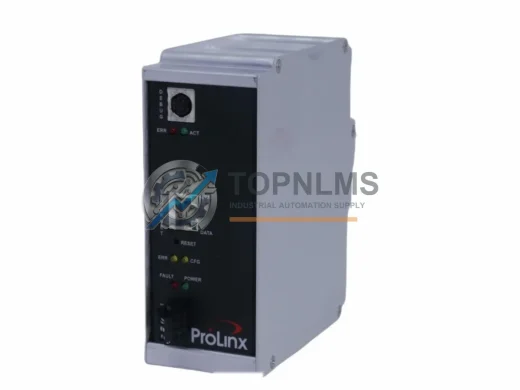
ProSoft 5201-DFNT-EGD EtherNet/IP to GE EGD in-chassis gateway. Rugged, reliable, 12-month warranty. In stock at TOPNLMS — fast global shipping.

ProSoft MVI56-101M Modbus RTU/ASCII module for ControlLogix. Ruggedized, in stock, tested, 12-month warranty. Fast shipping — TOPNLMS.

ProSoft PLX31-MBTCP-MBS Modbus TCP/IP to Serial gateway. Rugged, EMI-resistant, 12-month warranty. In stock — fast shipping from TOPNLMS.
Click Quote This Model and the Part Number field will auto-fill with MVI69-104S.