
ADLINK Technology
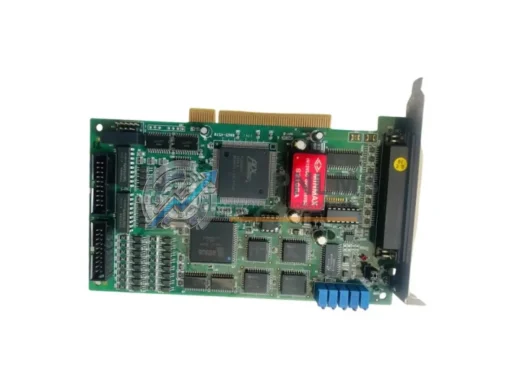
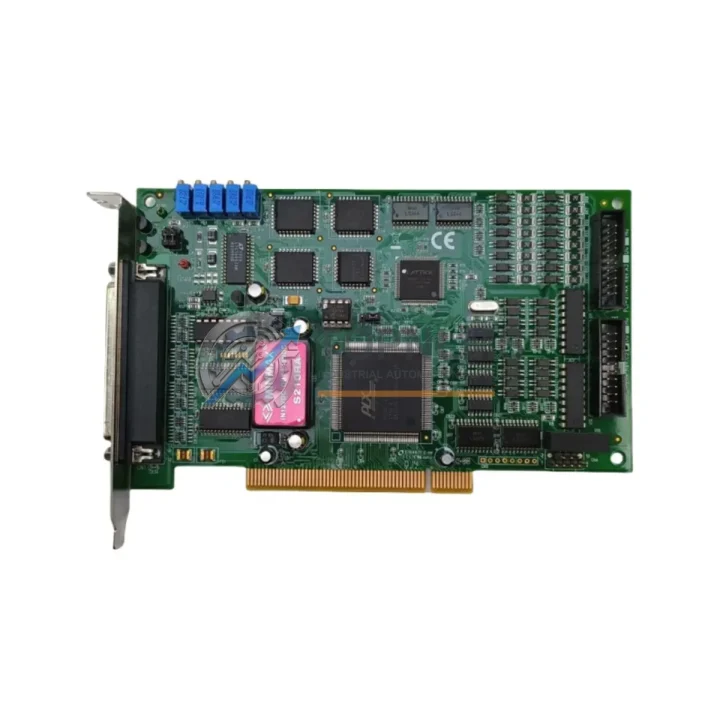
ADLINK PCI-9114A-DG Replacement for PCI-9114 Series
PCI-9114A-DGADLINK PCI-9114A-DG replacement & upgrade for PCI-9114 Series. 16-CH, 12-bit, 110kS/s multifunction DAQ. Compatible, tested, 12-month warranty. Ships fast.
Request availability, condition, lead time and export shipping details for PCI-9114DG.
Send this exact part number, quantity and destination country. TOPNLMS will confirm availability, condition and export lead time before quotation.
The ADLINK PCI-9114DG is a 16-channel normal-gain analog input data acquisition PCI card engineered for industrial measurement, process monitoring, and control system integration. As legacy DAQ platforms age out of vendor support, facilities running older ADLINK PCI-9114, PCI-9114A, or third-party ISA/PCI data acquisition cards face increasing pressure to modernize without disrupting production continuity. The PCI-9114DG is the proven drop-in upgrade path — preserving existing wiring infrastructure, software compatibility, and rack geometry while delivering reliable, specification-accurate analog input performance.
Whether your facility is retiring an ADLINK PCI-9114A, migrating from a competing 16-channel analog input card, or replacing a failed DAQ module in a SCADA or DCS front-end, the PCI-9114DG provides a validated, low-risk migration route. Its standard PCI bus interface ensures compatibility with any industrial PC, embedded controller, or rack-mount workstation equipped with a conventional PCI slot — a form factor that remains dominant across installed automation infrastructure worldwide.
| Parameter | Legacy: ADLINK PCI-9114 / PCI-9114A | Replacement: ADLINK PCI-9114DG |
|---|---|---|
| Analog Input Channels | 16 SE / 8 Diff | 16 SE / 8 Diff |
| Gain Configuration | Programmable (varies by variant) | Normal Gain (fixed, software-selectable range) |
| Resolution | 12-bit ADC | 12-bit ADC |
| Sampling Rate | Up to 100 kS/s | Up to 100 kS/s |
| Bus Interface | PCI 2.1 / 2.2 | PCI 2.2 (backward compatible) |
| I/O Connector | 68-pin SCSI-II (compatible with ADLINK ACL-10168 cable) | 68-pin SCSI-II (same pinout — no rewiring required) |
| Driver Support | ADLINK DAQPilot / DAQ-LVIEW (legacy) | ADLINK DAQPilot, LabVIEW, MATLAB, Windows 10/11 |
| Physical Dimensions | Standard PCI half-length card | Standard PCI half-length card (same slot footprint) |
| Power Supply | +5 V / +12 V from PCI slot | +5 V / +12 V from PCI slot (no external PSU required) |
| Operating Temperature | 0–60 °C | 0–60 °C |
| Replacement Recommendation | Direct replacement — same connector, same slot, same driver stack. No hardware modification required. | |
| Warranty | EOL / No support | 12-Month Warranty from TOPNLMS |
A successful PCI-9114DG migration rarely involves the DAQ card alone. In most industrial PC-based data acquisition systems, the card operates as part of a tightly integrated signal chain. When upgrading from a legacy ADLINK PCI-9114 or PCI-9114A, engineers typically address the full signal path to ensure measurement integrity and system stability.
The 68-pin SCSI-II connector on the PCI-9114DG is fully compatible with the ADLINK ACL-10168 shielded cable assembly, which routes analog signals from field terminal blocks to the card without modification. If your existing cable harness is worn or non-shielded, replacing it with a new ACL-10168 during the card swap eliminates a common source of noise and ground loop interference in analog measurement circuits.
For facilities using ADLINK ADAM-3968 or ADAM-3951 DIN-rail terminal boards as the field-side interface, these modules connect directly to the PCI-9114DG via the same 68-pin cable — preserving all existing field wiring terminations. This is particularly valuable in retrofit projects where re-terminating dozens of thermocouple, RTD, or 4–20 mA signal wires would introduce significant downtime and commissioning risk.
In systems where the PCI-9114DG is installed alongside digital I/O expansion — such as an ADLINK PCI-7230 isolated digital I/O card or a PCI-7248 48-channel DIO card — the PCI bus arbitration and IRQ allocation must be verified post-installation. Modern industrial PCs handle this automatically, but legacy BIOS configurations may require manual IRQ assignment to prevent resource conflicts between DAQ and DIO cards sharing the same PCI bus segment.
For applications requiring signal conditioning upstream of the PCI-9114DG — such as thermocouple cold-junction compensation, RTD linearization, or 4–20 mA to voltage conversion — ADLINK ADAM-4018 or ADAM-4117 remote I/O modules can serve as front-end conditioners, feeding pre-processed voltage signals into the analog inputs. This architecture is common in distributed process monitoring systems where sensors are located far from the DAQ PC.
Where the host PC is being upgraded simultaneously — for example, migrating from a Windows XP embedded controller to a Windows 10 industrial workstation — the ADLINK DAQPilot driver package for the PCI-9114DG supports both 32-bit and 64-bit operating environments. Existing LabVIEW VIs or MATLAB DAQ Toolbox scripts written for the PCI-9114A can typically be reused with minor channel configuration updates, significantly reducing software re-engineering effort.
In SCADA front-end architectures where the DAQ PC communicates upstream via Modbus TCP or OPC-DA to a DCS or SCADA server, the PCI-9114DG replacement is transparent to the communication layer — the host PC’s Modbus or OPC server continues to publish the same tag addresses, requiring no changes to the SCADA historian or HMI display configuration.
Q: Can I reuse my existing field wiring when replacing a PCI-9114A with the PCI-9114DG?
A: Yes. The PCI-9114DG uses the same 68-pin SCSI-II connector and identical channel-to-pin mapping as the PCI-9114A. If your existing ACL-10168 cable and terminal board are in good condition, no rewiring is required. Simply swap the card, reinstall the driver, and verify channel calibration offsets.
Q: Is the PCI-9114DG compatible with Windows 10 and Windows 11?
A: Yes. ADLINK provides signed 64-bit drivers for the PCI-9114DG compatible with Windows 10 and Windows 11. Legacy Windows XP or Windows 7 driver packages are also available for systems that cannot be upgraded.
Q: What is the difference between the PCI-9114DG and the PCI-9114HG variant?
A: The DG (Normal Gain) variant supports standard input voltage ranges (typically ±10 V, ±5 V, ±2.5 V, ±1.25 V). The HG (High Gain) variant adds higher-gain ranges for low-level signal measurement (e.g., ±625 mV, ±312.5 mV). If your application measures standard industrial voltage signals, the DG is the correct replacement.
Q: Will my existing LabVIEW or MATLAB DAQ code work without modification?
A: In most cases, yes. The PCI-9114DG is recognized by ADLINK’s DAQPilot API using the same device class as the PCI-9114A. LabVIEW VIs using NI-DAQmx-style ADLINK wrappers may require a device name update. MATLAB DAQ Toolbox scripts using the ADLINK adaptor should function without code changes after driver reinstallation.
Q: How do I verify the card is functioning correctly after installation?
A: Use ADLINK’s DAQPilot diagnostic utility to perform a self-test and channel scan immediately after installation. Apply a known reference voltage (e.g., from a precision calibrator) to channel 0 and verify the digitized reading matches within the card’s specified accuracy. Check all 16 channels before returning the system to production.
Q: What if my industrial PC only has PCIe slots — is there an adapter?
A: Standard PCI cards are not natively compatible with PCIe slots. However, PCI-to-PCIe bridge adapters (such as those from Startech or Bplus Technology) can host PCI cards in PCIe systems. Alternatively, ADLINK’s PCIe-9114 series provides a native PCIe equivalent with compatible software and similar channel architecture for systems that have fully transitioned to PCIe.
Every ADLINK PCI-9114DG shipped by TOPNLMS is covered by a 12-month warranty from the date of delivery. Prior to shipment, each unit undergoes functional verification including analog input channel scan, gain range confirmation, and PCI bus enumeration testing. Units that do not pass outgoing inspection are not shipped.
In the event of a confirmed hardware defect within the warranty period, TOPNLMS provides replacement dispatch within 3 business days. Our technical support team is available to assist with installation verification, driver configuration, and compatibility questions throughout the warranty period and beyond.
We maintain standing inventory of the PCI-9114DG to support urgent replacement requirements. Express shipping from our Xiamen warehouse is available to minimize production downtime. All units are shipped in anti-static packaging with individual serial number documentation for traceability.
For volume procurement, OEM integration projects, or long-term supply agreements, please contact our industrial sales team directly to discuss pricing, lead times, and technical support arrangements.
ADLINK PCI-9114A-DG replacement & upgrade for PCI-9114 Series. 16-CH, 12-bit, 110kS/s multifunction DAQ. Compatible, tested, 12-month warranty. Ships fast.
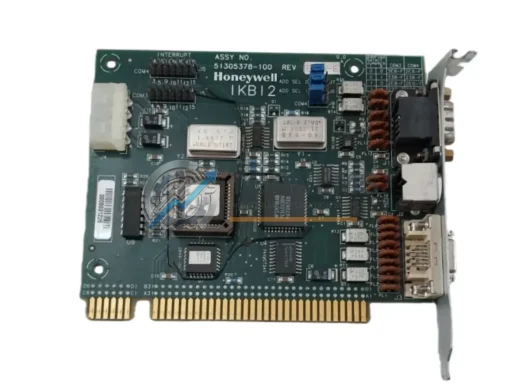
Honeywell 51305378-100 IKBI2 Printer Interface Board replacement for TDC 3000 DCS. Original spare, 12-month warranty, fast global shipping. Upgrade legacy systems now.
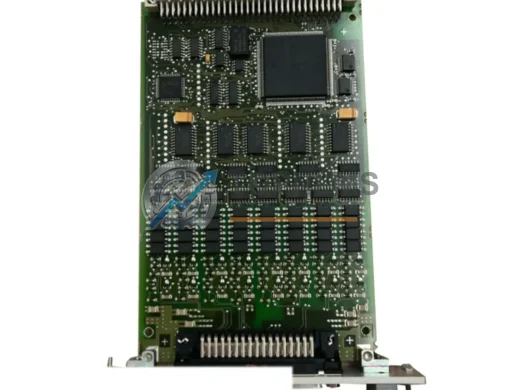
Siemens 6AR1302-0AA00-0AA0 CP51M1 SIMATIC TDC communication processor. Ruggedized for harsh environments. In stock, tested, 12-month warranty. Fast shipping.
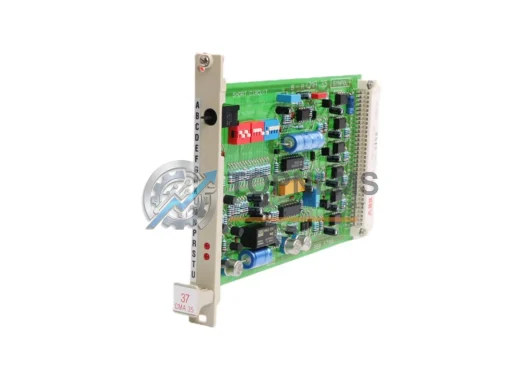
ABB CMA35 GVT3605799 original short circuit protection card for AC500 & ACS drive systems. Industrial replacement spare, tested, 12-month warranty, fast shipping.
Click Quote This Model and the Part Number field will auto-fill with PCI-9114DG.