Product Overview
ADLINK PCI-9114A-DG Replacement for PCI-9114 Series: Smooth Migration & Legacy System Compatibility
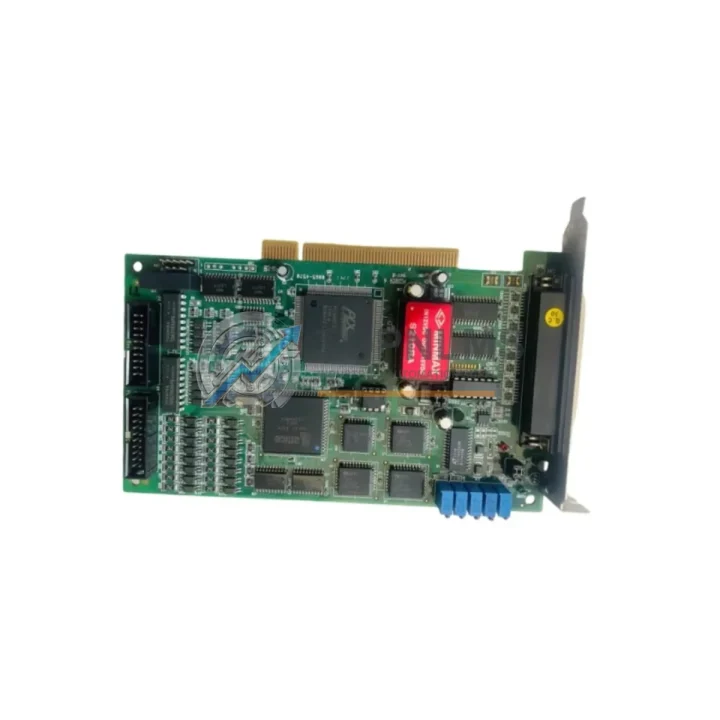
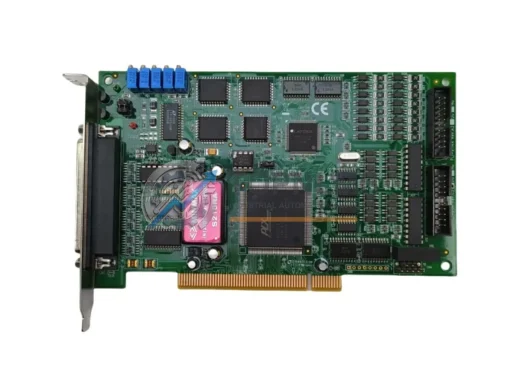
The ADLINK PCI-9114A-DG is a high-performance multifunction PCI data acquisition card delivering 16 single-ended (or 8 differential) analog input channels at 12-bit resolution and a maximum sampling rate of 110 kS/s. For facilities running legacy measurement and control systems built around the original PCI-9114 Series platform, this card represents the most direct and lowest-risk upgrade path available. Whether your existing system relies on the PCI-9114, PCI-9114A, or PCI-9114DG variant, the PCI-9114A-DG is engineered to slot into the same PCI bus slot, accept the same 68-pin SCSI-II connector wiring, and operate under the same software driver framework — dramatically reducing re-engineering time and unplanned downtime during the transition.
Industrial measurement systems that have been in continuous operation for 10 or more years frequently encounter the challenge of discontinued hardware. When the original PCI-9114 or PCI-9114A card reaches end-of-life, procurement teams face a critical decision: source a like-for-like replacement or undertake a costly platform migration. The PCI-9114A-DG resolves this dilemma by maintaining full backward compatibility with the PCI-9114 Series wiring harness and ADLINK DAQPilot / DAQ-LVIEW driver stack. Field engineers can swap the card, re-validate the analog input calibration offsets, and return the system to production — often within a single maintenance window.
In practice, the migration workflow begins at the terminal block level. Systems using the ADLINK ACL-10168 or compatible 68-pin terminal boards can retain their existing field wiring without modification. The PCI-9114A-DG accepts the same differential and single-ended signal configurations, preserving the channel-to-terminal mapping that your technicians have documented over years of operation. This is particularly valuable in process industries where re-labeling and re-verifying hundreds of signal wires represents a significant labor cost and a source of commissioning errors.
On the software side, applications written against the ADLINK DAQBench or NI-DAQ compatible API layer continue to function without recompilation in most cases. The PCI-9114A-DG is recognized by the same device ID structure as the PCI-9114 Series, meaning that SCADA systems, LabVIEW data acquisition VIs, and custom C/C++ measurement applications built for the legacy card can be validated against the replacement with minimal code changes. For systems using the ADLINK PCI-9116 or PCI-9118 in adjacent slots for higher-speed or higher-resolution channels, the PCI-9114A-DG coexists on the same PCI bus without IRQ conflicts, provided standard Windows device manager arbitration is applied.
Physical installation follows the standard PCI form factor. The card occupies a single PCI slot in a standard ATX or industrial rackmount chassis. For systems housed in Advantech IPC-610 or similar industrial PCs with limited slot availability, the single-slot footprint of the PCI-9114A-DG is a significant advantage over multi-slot DAQ solutions. Power draw is within the standard PCI 5V/3.3V rail specification, requiring no auxiliary power connectors — an important consideration for aging power supplies in legacy control cabinets where headroom may be limited.
Communication and synchronization with other system components is handled through the onboard programmable timer/counter (based on the 82C54 or equivalent), which supports external trigger inputs and digital I/O handshaking. In systems where the PCI-9114A-DG works alongside an ADLINK PCI-7230 isolated digital I/O card or a PCI-7248 48-channel DIO card, the shared PCI bus and common ADLINK driver architecture simplify multi-card synchronization. For applications requiring analog output in addition to analog input — such as closed-loop PID control or signal simulation — the PCI-9114A-DG can be paired with an ADLINK PCI-6208A analog output card without requiring a separate DAQ chassis or communication bridge.
In retrofit scenarios involving older ADLINK ACL-8112 ISA-bus DAQ cards, the migration to the PCI-9114A-DG involves a bus architecture change from ISA to PCI. Modern industrial PCs and embedded controllers no longer provide ISA slots, making this transition mandatory for any system refresh. The PCI-9114A-DG provides a clear upgrade path: the analog input specifications (12-bit, 110 kS/s) meet or exceed the ACL-8112PG performance envelope, and the ADLINK driver migration guide covers the API differences between the legacy ACL driver and the current DAQBench framework. This allows software teams to port existing measurement routines systematically rather than rewriting from scratch.
For distributed measurement architectures where multiple PCI-9114A-DG cards are deployed across several industrial PCs connected via Ethernet or RS-485 to a central SCADA server, the card’s deterministic interrupt-driven acquisition mode ensures consistent sample timing across nodes. When combined with an ADLINK PCI-7841 CAN bus interface card or a PCI-7853R multifunction reconfigurable I/O card in the same chassis, the PCI-9114A-DG contributes the analog front-end while the communication cards handle fieldbus integration — a common architecture in automotive test cells and energy monitoring installations.
Every PCI-9114A-DG unit supplied by TOPNLMS undergoes incoming inspection including functional verification of all analog input channels, digital I/O lines, and counter/timer outputs. Units are tested against ADLINK’s published specification limits for offset error, gain error, and crosstalk before dispatch. Stock is maintained in our Xiamen warehouse, enabling same-day or next-business-day shipment for urgent replacement orders. Export documentation, including commercial invoice and packing list, is prepared to support both domestic CN delivery and international air freight to Southeast Asia, Europe, and the Americas.
Compatibility Comparison Table
| Parameter |
Legacy: PCI-9114 / PCI-9114A / PCI-9114DG |
Replacement: PCI-9114A-DG |
Compatibility / Notes |
| Bus Interface |
PCI (32-bit, 33 MHz) |
PCI (32-bit, 33 MHz) |
✅ Direct slot replacement |
| Analog Input Channels |
16 SE / 8 DIFF |
16 SE / 8 DIFF |
✅ Identical channel count |
| ADC Resolution |
12-bit |
12-bit |
✅ No software scaling changes required |
| Max Sampling Rate |
100–110 kS/s (variant dependent) |
110 kS/s |
✅ Meets or exceeds legacy spec |
| Connector |
68-pin SCSI-II |
68-pin SCSI-II |
✅ Existing cable/terminal board retained |
| Digital I/O |
16 DIO (TTL) |
16 DIO (TTL) |
✅ Same pinout |
| Counter/Timer |
1× 16-bit (82C54 compatible) |
1× 16-bit (82C54 compatible) |
✅ Trigger logic unchanged |
| Driver Support |
ADLINK DAQBench / DAQ-LVIEW |
ADLINK DAQBench / DAQ-LVIEW |
✅ Same driver stack |
| OS Compatibility |
Windows XP/7/10 (32/64-bit) |
Windows 7/10/11 (32/64-bit) |
⚠️ Verify XP driver if legacy OS retained |
| Physical Form Factor |
Half-size PCI card |
Half-size PCI card |
✅ Same chassis slot footprint |
| Power Requirement |
PCI 5V/3.3V rail |
PCI 5V/3.3V rail |
✅ No auxiliary power needed |
| Warranty (TOPNLMS) |
— |
12 Months |
✅ Covered from shipment date |
Seamless Upgrade Solutions
A successful PCI-9114A-DG retrofit rarely involves the DAQ card alone. In most legacy system upgrades, the following components are evaluated or replaced in parallel. The ADLINK ACLS-10168 or ACLS-10168-E 68-pin screw terminal board connects directly to the PCI-9114A-DG via a standard CA-6868 SCSI-II cable, preserving existing field wiring without re-termination. For systems requiring signal conditioning ahead of the analog inputs — particularly in environments with high common-mode noise or long cable runs from sensors — an ADLINK ACLD-9182 signal conditioning board or equivalent DIN-rail-mounted signal isolator is recommended between the field junction box and the terminal board.
Where the legacy system also included an ADLINK PCI-7230 32-channel isolated digital I/O card for relay output and optocoupled input functions, this card can be retained alongside the PCI-9114A-DG in the same chassis, sharing the PCI bus without conflict. Similarly, if the control architecture includes an ADLINK PCI-8164 4-axis motion control card for coordinated servo or stepper axis management, the PCI-9114A-DG handles the analog feedback acquisition while the motion card manages trajectory execution — a common split in semiconductor handling and precision dispensing equipment.
For systems transitioning from ISA-based ADLINK ACL-8112 or ACL-8216 DAQ cards, the host industrial PC itself typically requires replacement. In this scenario, an Advantech IPC-610 or IPC-510 rackmount industrial PC with sufficient PCI slots provides the platform for the PCI-9114A-DG alongside any required communication cards. If the upgraded system needs to interface with a Modbus RTU or PROFIBUS DP fieldbus network, an ADLINK PCI-7841 isolated CAN/serial interface card or a third-party PROFIBUS master PCI card can be added to the same chassis, with the PCI-9114A-DG continuing to handle high-speed analog data acquisition independently of the fieldbus traffic.
Programming cable and software toolkit requirements should also be assessed during the upgrade planning phase. ADLINK’s DAQBench SDK, available as a free download from the ADLINK support portal, includes updated INF files and example code for the PCI-9114A-DG. For LabVIEW users, the ADLINK LabVIEW driver package provides ready-made VIs compatible with NI-DAQmx function call conventions, minimizing the effort required to adapt existing measurement VIs to the replacement card.
Retrofit Guidance FAQ
Q: Can I reuse my existing 68-pin SCSI-II cable and terminal board?
A: Yes. The PCI-9114A-DG uses the same 68-pin SCSI-II connector as the PCI-9114 Series. Your existing CA-6868 cable and ACLS-10168 terminal board connect directly without modification. Verify cable condition and connector seating before powering up.
Q: Will my existing LabVIEW or C++ DAQ application work without recompilation?
A: In most cases, yes. The PCI-9114A-DG is recognized by the same ADLINK DAQBench driver framework. Applications using the standard ADLINK API (DRV_DeviceOpen, DRV_AIConfig, DRV_AIContScanStart) require no source code changes. Recompilation may be needed if the legacy application was built against a 32-bit driver on a 64-bit OS migration.
Q: What is the procedure for re-calibrating analog input channels after card swap?
A: Use the ADLINK Calibration Utility (included with DAQBench) to perform a software calibration against a known reference voltage. Document the offset and gain correction values per channel. For high-accuracy applications (<0.1% full-scale error), a hardware calibration using a precision voltage source is recommended before returning the system to production.
Q: Does the PCI-9114A-DG support external trigger and hardware timing?
A: Yes. The card provides an external trigger input (TRIG pin on the 68-pin connector) and a pacer clock output. Hardware-timed acquisition modes (interrupt-driven and DMA) are supported. Existing trigger wiring from PLCs or function generators connected to the legacy card’s trigger input can be retained.
Q: What if my industrial PC chassis has only one free PCI slot?
A: The PCI-9114A-DG occupies a single PCI slot. If additional I/O is required, evaluate whether digital I/O or communication functions can be consolidated onto a multifunction card, or consider a chassis expansion unit. Contact TOPNLMS for system architecture consultation.
Q: Is the card compatible with Windows 10 and Windows 11?
A: Yes. ADLINK provides signed 64-bit drivers for Windows 10 and Windows 11. Download the latest DAQBench package from the ADLINK support portal before installation. For Windows XP or Windows 7 legacy OS environments, confirm driver version compatibility with ADLINK technical support prior to ordering.
Warranty Assurance
Every ADLINK PCI-9114A-DG unit supplied by TOPNLMS is covered by a 12-month warranty from the date of shipment. Prior to dispatch, each unit undergoes a multi-point functional test covering all analog input channels, digital I/O lines, counter/timer operation, and PCI bus enumeration. Units that do not meet ADLINK’s published specification limits are quarantined and not shipped.
In the event of a warranty claim, TOPNLMS provides a replacement unit or full refund within the warranty period, subject to inspection confirming the defect is not attributable to improper installation, ESD damage, or operation outside the rated environmental conditions. Our standard response time for warranty inquiries is 1 business day. Replacement units are dispatched from our Xiamen warehouse, with express air freight available for urgent production-critical situations.
For procurement teams requiring documentation, TOPNLMS can provide a test report, certificate of conformance, and commercial invoice with HS code declaration for each shipment. All units are shipped in anti-static packaging with appropriate cushioning for international air freight. Lead time for in-stock units is 1–3 business days for domestic CN delivery and 5–10 business days for international destinations, depending on customs clearance.
TOPNLMS maintains a standing inventory of PCI-9114 Series components to support ongoing maintenance contracts and emergency replacement programs. Contact our technical sales team to discuss volume pricing, consignment stock arrangements, or approved vendor qualification documentation.