
KONTRON
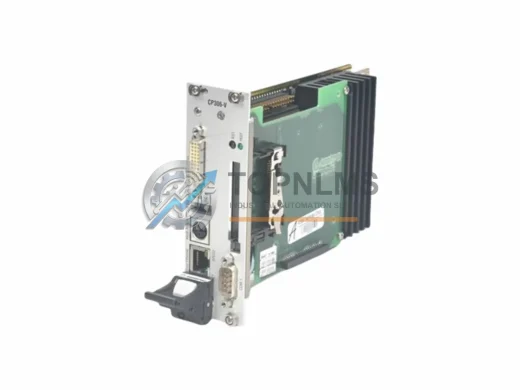
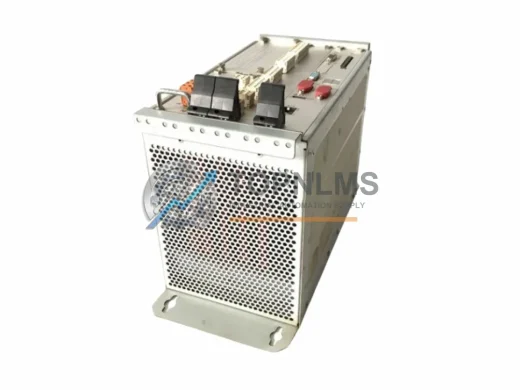
KONTRON CP306-V Original Industrial Spare CP306 Compatible
CP306-VKONTRON CP306-V original CompactPCI single board computer. CP306 series industrial spare, fast replacement, 12-month warranty. Verified & shipped worldwide.
Request availability, condition, lead time and export shipping details for CP6000.
Send this exact part number, quantity and destination country. TOPNLMS will confirm availability, condition and export lead time before quotation.
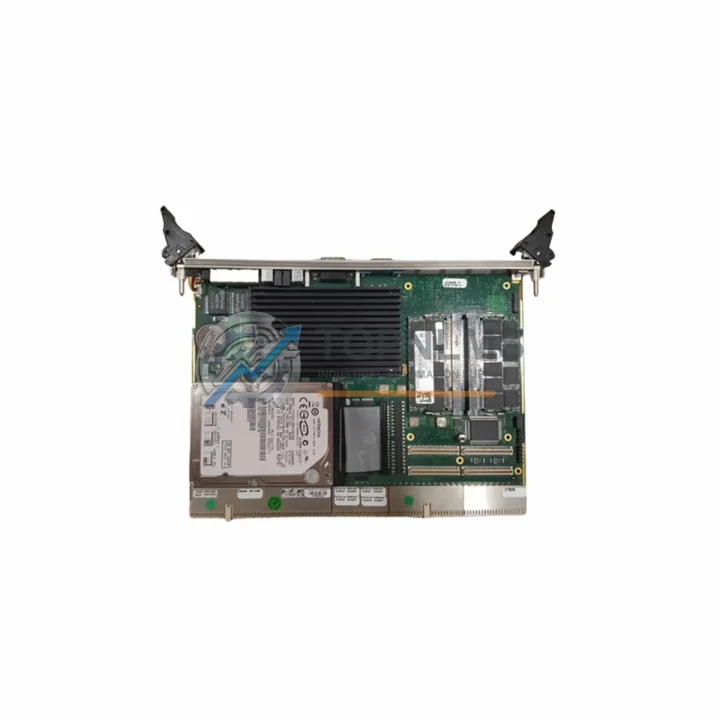
The KONTRON CP6000 is a high-performance CompactPCI Serial (CPCI-S.0) processor module engineered for demanding industrial computing environments. As legacy CompactPCI (cPCI) platforms reach end-of-life and original KONTRON CP6000 units become increasingly difficult to source, system integrators and plant engineers face mounting pressure to maintain uptime without triggering a full control-system overhaul. This page is designed to guide procurement teams, maintenance engineers, and automation architects through a structured, low-risk migration path — preserving existing rack infrastructure, wiring, and software investments while restoring full operational capability.
Whether you are replacing a failed CP6000 board in a running production line, upgrading a legacy CPCI chassis to extend its service life, or consolidating spare-parts inventory ahead of a planned retrofit, TOPNLMS maintains verified stock of the KONTRON CP6000 and its compatible ecosystem components, ready for immediate dispatch from Xiamen with full pre-shipment functional testing and a 12-month warranty.
| Parameter | Legacy / Predecessor Models | KONTRON CP6000 (Replacement) |
|---|---|---|
| Form Factor | 3U / 6U CompactPCI (PICMG 2.0) | 3U CompactPCI Serial (CPCI-S.0) |
| Bus Interface | Parallel PCI (32/64-bit) | PCIe Gen 2 via CPCI-S.0 backplane |
| Processor Architecture | Intel Core 2 Duo / Atom (legacy) | Intel Core i7/i5 (6th/7th Gen) — higher throughput |
| Front Panel I/O | VGA, PS/2, legacy serial (RS-232) | DisplayPort, USB 3.0, GbE, COM port |
| Rear I/O (Backplane) | J1/J2 parallel PCI connectors | CPCI-S.0 system slot (J1) + fat-pipe (J2/J3) |
| Power Supply Compatibility | Standard cPCI 5V/3.3V rail | 12V primary rail (CPCI-S.0 compliant chassis required) |
| OS Support | Windows XP/7, VxWorks 6.x, Linux 2.6 | Windows 10 IoT, Linux 4.x/5.x, VxWorks 7 |
| Communication Protocols | PROFIBUS, RS-232/485, legacy Ethernet | GbE (dual), USB 3.0, PCIe expansion, optional TSN |
| Physical Dimensions | 3U × 4HP / 8HP (chassis-dependent) | 3U × 4HP — direct slot-for-slot fit in CPCI-S.0 chassis |
| Installation Requirement | PICMG 2.0 backplane | CPCI-S.0 backplane (chassis upgrade may be required) |
| Replacement Recommendation | CP306, CP307, CP6001 (EOL) | CP6000 — direct functional replacement with performance uplift |
| Warranty | N/A (EOL / no support) | 12-Month Warranty from TOPNLMS |
A successful CP6000 migration rarely involves a single board swap. In practice, the transition from a legacy CompactPCI platform to a CompactPCI Serial architecture requires careful coordination of the surrounding ecosystem. During the upgrade process, engineers typically need to evaluate and replace or retain several adjacent components.
The KONTRON CP6000 operates within a CPCI-S.0 chassis, which means the backplane must support the PCIe-based fat-pipe interconnect. If the existing chassis uses a PICMG 2.0 parallel PCI backplane — common in older KONTRON CP306 or CP307 installations — a chassis upgrade to a CPCI-S.0-compatible unit such as the KONTRON VX3042 or equivalent 3U CPCI-S.0 shelf is the recommended first step. This preserves the 19-inch rack footprint and minimizes cabinet re-engineering.
Power delivery is another critical consideration. Legacy cPCI systems typically draw from 5V and 3.3V rails, while the CP6000 operates on a 12V primary rail per the CPCI-S.0 specification. Facilities running older KONTRON CP6001 or similar boards may need to verify or replace the chassis power supply module — a standard 300W or 500W CPCI-S.0 PSU is typically sufficient for a single-board computer configuration with peripheral I/O modules.
On the I/O side, plants that previously relied on rear-transition modules (RTMs) for RS-232, RS-485, or PROFIBUS connectivity will need to assess whether existing KONTRON RTM-CP6000 or third-party RTM assemblies remain compatible with the new backplane pinout. In many retrofit scenarios, a dedicated serial communication module or a PROFIBUS DP master card installed in a peripheral slot provides a cleaner migration path than attempting to reuse legacy RTM wiring harnesses.
For applications that previously used a KONTRON CP6923 or similar Ethernet switch module to aggregate plant-floor network traffic, the CP6000’s dual GbE front-panel ports often eliminate the need for a dedicated switch blade in smaller configurations — reducing slot count and simplifying the cabinet layout. Larger installations with multiple I/O nodes may still benefit from retaining a managed Ethernet switch module in the chassis for VLAN segmentation and deterministic latency control.
Storage migration is straightforward: the CP6000 supports standard SATA SSDs and CFast cards, making it easy to clone existing CompactFlash or 2.5-inch HDD images from legacy boards such as the KONTRON CP307 using standard imaging tools. This approach preserves the existing SCADA or HMI application stack — including any WinCC, iFIX, or custom runtime environments — without requiring a full software re-qualification cycle.
Finally, for sites that use a KONTRON MFCC-8540 or similar mezzanine carrier for FPGA-based signal processing or custom I/O, the CP6000’s PCIe expansion capability via the CPCI-S.0 fat-pipe interface provides sufficient bandwidth to support high-throughput mezzanine cards, preserving existing IP and reducing re-engineering costs.
Q: Can I install the CP6000 directly into my existing PICMG 2.0 CompactPCI chassis?
A: No. The CP6000 uses the CPCI-S.0 connector standard, which is physically and electrically incompatible with PICMG 2.0 backplanes. A chassis upgrade to a CPCI-S.0-compliant unit is required. The 3U rack height and 19-inch form factor are typically preserved, minimizing cabinet modifications.
Q: Will my existing application software run on the CP6000 without modification?
A: In most cases, yes — provided the OS is updated to a CP6000-supported version (Windows 10 IoT, Linux 4.x/5.x, or VxWorks 7). Application binaries compiled for x86 architecture are generally portable. Driver updates for peripheral I/O cards may be required. TOPNLMS recommends a bench-test validation cycle before field deployment.
Q: How do I handle PROFIBUS or RS-485 wiring that was connected to the legacy board’s rear I/O?
A: The CP6000 does not provide native PROFIBUS or RS-485 on the front panel. These interfaces should be migrated to a dedicated PROFIBUS DP master module or a serial communication card installed in a peripheral CPCI-S.0 slot. Existing field wiring can typically be re-terminated to the new module’s terminal block without modification.
Q: What is the typical installation time for a CP6000 board swap in a running system?
A: A prepared engineer with the correct chassis and a pre-imaged storage device can complete a CP6000 installation in 2–4 hours, including OS boot verification and basic I/O checks. Full system commissioning, including communication protocol validation and HMI reconnection, typically requires an additional 4–8 hours depending on system complexity.
Q: Does the CP6000 support hot-swap operation?
A: Hot-swap capability depends on the chassis and backplane implementation. CPCI-S.0 defines hot-swap signaling, but the host system software must also support it. Consult the chassis manufacturer’s documentation and verify OS-level hot-swap driver support before attempting live board replacement in a production environment.
Q: How do I verify the CP6000 unit I receive is genuine and functional?
A: Every CP6000 unit shipped by TOPNLMS undergoes a pre-shipment power-on test and functional verification. A test report is available upon request. Units are shipped in anti-static packaging with tamper-evident sealing. Serial numbers are recorded and traceable.
Every KONTRON CP6000 module supplied by TOPNLMS is backed by a 12-month warranty covering manufacturing defects and functional failures under normal operating conditions. Our warranty process is straightforward: if a unit fails within the warranty period, we arrange a replacement shipment — typically within 3–5 business days — at no additional cost to the buyer.
Pre-shipment testing is standard on all units. Each CP6000 is powered on, POST-verified, and subjected to a basic I/O functional check before packaging. Units that do not pass testing are quarantined and not shipped. This process significantly reduces the risk of DOA (dead-on-arrival) incidents, which are a common pain point when sourcing legacy industrial boards from unverified channels.
For procurement teams managing planned maintenance windows or building strategic spare-parts inventory, TOPNLMS offers batch purchasing with staggered delivery scheduling. Lead times for in-stock units are typically 3–7 business days for international shipments via DHL Express or FedEx International Priority, with full tracking provided from dispatch to delivery.
After-sales support is available via email and phone throughout the warranty period. Our technical team can assist with installation queries, compatibility verification, and test-report interpretation. We maintain records of all shipped units and can provide documentation to support your internal maintenance management system (MMS) or asset register.
For volume inquiries, OEM procurement, or urgent replacement requirements, contact our sales team directly.
KONTRON CP306-V original CompactPCI single board computer. CP306 series industrial spare, fast replacement, 12-month warranty. Verified & shipped worldwide.
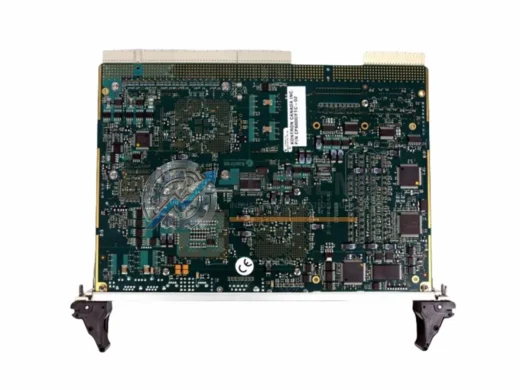
Buy KONTRON CP6000/FTC-02 original CompactPCI fault-tolerant controller. CP6000 Series compatible industrial spare. 12-month warranty. Fast global shipping.
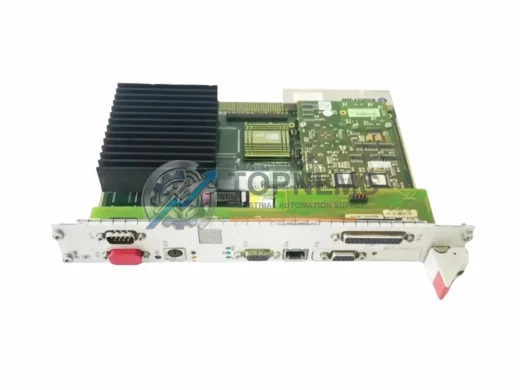
Original Kontron CP600/CP610 31.171-1010.1 L/01 industrial circuit board. Genuine spare for Trumpf systems. Fast shipping, 12-month warranty. In stock at TOPNLMS.
Kontron ASMC2177G AdvancedMC mezzanine controller for MicroTCA & ATCA. Original spare, 12-month warranty, fast shipping. Verified industrial replacement.
Click Quote This Model and the Part Number field will auto-fill with CP6000.