
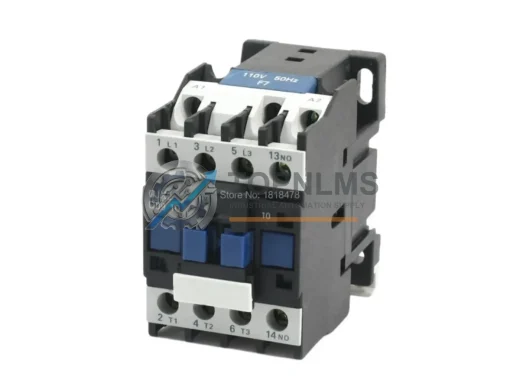
ABB
ABB D0910S Ruggedized Transistor Output Module
D0910SABB D0910S ruggedized 10-channel 24VDC PNP transistor output module for Freelance DCS. In stock, tested, 12-month warranty. Fast global shipping from TOPNLMS.
Request availability, condition, lead time and export shipping details for SPSED01.
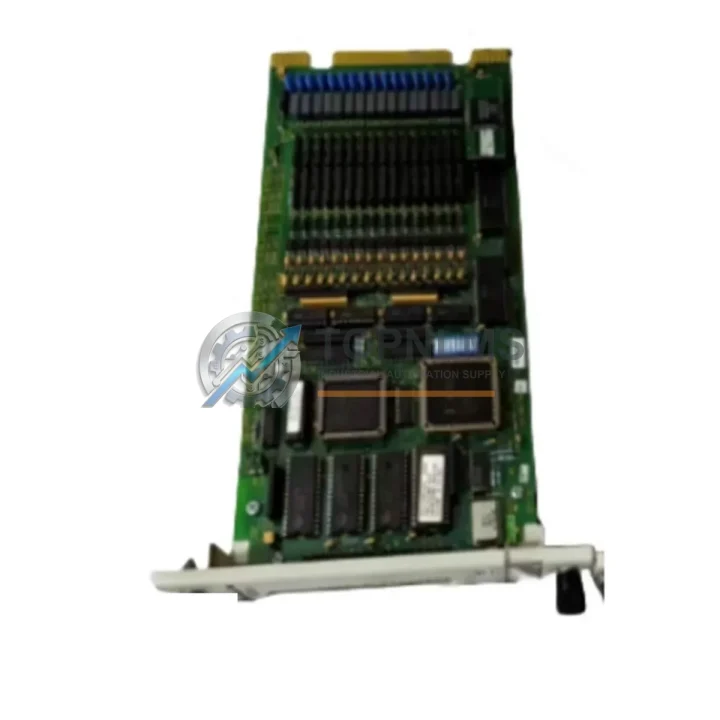
Send this exact part number, quantity and destination country. TOPNLMS will confirm availability, condition and export lead time before quotation.
In modern industrial automation, the reliability of every I/O module directly determines the uptime of the entire control system. The ABB SPSED01 is a 16-channel, 24VDC digital input module engineered for the ABB AC500 PLC platform and its S500 distributed I/O family. As a genuine original spare part, the SPSED01 is a critical component for maintenance engineers managing AC500-based control cabinets across manufacturing, process automation, energy, and infrastructure sectors. Whether you are responding to an unplanned shutdown or executing a scheduled preventive maintenance cycle, having a verified SPSED01 in your spare parts inventory is a direct investment in system continuity and operational resilience.
The AC500 platform is widely deployed in applications where signal integrity and deterministic response times are non-negotiable. The SPSED01 handles 16 discrete 24VDC input channels, providing the controller with real-time field-level status from sensors, limit switches, push buttons, and proximity detectors. When this module degrades or fails, the controller loses visibility into critical process states — triggering faults, halting production lines, or forcing unsafe manual overrides. Sourcing an original SPSED01 replacement rather than a counterfeit or incompatible substitute ensures that the module integrates seamlessly with the AC500 CPU and S500 I/O bus without requiring firmware patches, parameter re-mapping, or extended commissioning time.
| Parameter | Specification |
|---|---|
| Model / SKU | SPSED01 |
| Brand | ABB |
| Series | AC500 / S500 I/O |
| Module Type | Digital Input Module (DI) |
| Number of Channels | 16 Channels |
| Input Voltage | 24VDC |
| Signal Standard | IEC 61131-2 Type 1 / Type 3 |
| Input Current (per channel) | Approx. 4 mA @ 24VDC |
| Isolation | Optocoupler isolation between field and logic side |
| Compatibility | ABB AC500 CPU modules (PM5xx series); S500 I/O bus; TB5xx terminal bases |
| Mounting | Snap-on to S500 terminal base (TB511, TB521, TB541 compatible) |
| Operating Temperature | -25°C to +60°C |
| Protection Rating | IP20 |
| Country of Origin | Germany |
| Weight | Approx. 400 g |
| Certifications | CE, UL (per AC500 platform standards) |
| Warranty | 12 Months from date of shipment |
| Maintenance Recommendation | Inspect every 12–24 months; replace on first sign of channel fault or LED anomaly |
A disciplined preventive maintenance program for AC500-based control cabinets goes well beyond replacing a single I/O module. When a maintenance team identifies a degraded or failed SPSED01, it is a strong signal to conduct a comprehensive inspection of the entire I/O rack and associated electrical infrastructure. Experienced automation engineers know that module failures rarely occur in isolation — thermal stress, power quality issues, and connector wear affect all components in the same cabinet simultaneously.
During a scheduled inspection or emergency replacement of the SPSED01, it is advisable to simultaneously verify the condition of the ABB SPFEC21 or SPFEC22 communication field bus coupler, which manages data exchange between the S500 I/O station and the AC500 CPU over PROFIBUS or Modbus. A degraded coupler can cause intermittent input data loss that mimics a faulty DI module, leading to misdiagnosis and repeated module replacements. Similarly, the TB511 or TB521 terminal base on which the SPSED01 is mounted should be inspected for cracked housing, corroded contacts, or loose field wiring terminations — issues that can cause false input signals even with a new module installed.
The AC500 CPU module (PM554, PM564, or PM583 series) should also be checked for firmware currency and diagnostic log entries that may indicate recurring I/O bus errors. If the CPU has been logging communication faults with the S500 I/O station, replacing only the SPSED01 without addressing the root cause will result in repeat failures. Alongside the CPU, the 24VDC power supply module feeding the I/O rack — typically an ABB CP-E or equivalent industrial DIN-rail PSU — should be load-tested to confirm it is delivering stable voltage within the ±5% tolerance required by the S500 bus.
Field wiring integrity is another critical factor. The 16 input channels of the SPSED01 connect to field devices through the terminal base. During replacement, technicians should inspect all field signal cables and shielded instrumentation cables for insulation damage, moisture ingress, and proper grounding. In high-noise environments, unshielded or improperly grounded cables can inject false signals into digital input channels, causing nuisance trips. If the control cabinet includes signal isolators or signal conditioners between field sensors and the DI module, these should be tested for output accuracy and response time.
For cabinets that also include analog I/O, the ABB SPAEA01 or SPAEA02 analog input modules in the same S500 rack should be inspected for drift and calibration status. Analog modules in the same thermal environment as a failed digital module are often subject to the same degradation mechanisms. Additionally, if the system uses ABB SPDOA16 or SPDOB16 digital output modules to drive actuators, solenoids, or motor starters, their output channel status LEDs and load current should be verified — output modules driving inductive loads are particularly susceptible to contact wear and surge damage.
Finally, the cabinet-level fuse modules and circuit protection devices protecting the 24VDC field supply to the input channels should be inspected and tested. A blown or weakened fuse on the field supply rail can cause an entire group of input channels to read LOW regardless of field device status, which is a common source of misdiagnosis. Replacing the SPSED01 as part of a structured, cabinet-wide inspection — rather than as a reactive single-component swap — dramatically reduces the probability of repeat failures and unplanned downtime.
The SPSED01 is designed as a direct plug-in replacement for any S500 I/O station using a compatible terminal base. No hardware modification, re-wiring, or special tools are required for a field swap. The module’s configuration parameters — channel enable/disable, input filter times, and diagnostic settings — are stored in the AC500 CPU project and are automatically downloaded to the replacement module upon power-up, provided the CPU project is current and the I/O configuration has not been altered.
For facilities managing aging AC500 installations originally commissioned 10 or more years ago, the SPSED01 represents a cost-effective path to extending system life without migrating to a new PLC platform. The AC500 architecture has maintained strong backward compatibility across hardware generations, meaning a current-production SPSED01 will operate correctly in an older S500 I/O station alongside legacy modules. This compatibility is a significant advantage for maintenance managers who need to minimize engineering change orders and re-validation costs.
Procurement teams should consider maintaining a minimum stock of one to two SPSED01 units per AC500 installation site, particularly in facilities where the AC500 controls critical processes such as compressor stations, water treatment, or continuous manufacturing lines. The cost of a spare module is negligible compared to the production loss and emergency logistics costs associated with a multi-day wait for an expedited replacement. Sourcing from a verified distributor with pre-shipment testing and a 12-month warranty — as offered by TOPNLMS — provides additional assurance that the replacement unit will perform correctly from the first power-on.
Q1: Is the SPSED01 compatible with all AC500 CPU generations?
The SPSED01 is compatible with the ABB AC500 platform CPUs including the PM554, PM564, PM572, PM581, PM582, and PM583 series when used with a compatible S500 terminal base (TB511, TB521, TB541). Always verify the terminal base part number before ordering to ensure mechanical and electrical compatibility with your existing rack configuration.
Q2: What pre-shipment testing does TOPNLMS perform on the SPSED01?
Each SPSED01 unit undergoes functional verification prior to shipment, including channel continuity checks, LED status verification, and visual inspection for physical damage. Units are shipped in anti-static packaging with protective end caps. A 12-month warranty from the date of shipment covers defects in materials and workmanship under normal operating conditions.
Q3: How do I confirm the SPSED01 is the root cause of my AC500 I/O fault before ordering a replacement?
In the AC500 programming environment (Automation Builder), navigate to the I/O configuration and check the diagnostic buffer for the affected S500 station. A persistent “Module missing” or “Module type mismatch” error on the DI slot confirms a hardware fault. You can also swap the suspect SPSED01 to a known-good slot on the same terminal base to isolate whether the fault follows the module or remains at the original slot (which would indicate a terminal base or wiring issue).
Q4: What is the recommended spare parts lifecycle strategy for SPSED01 in a multi-site operation?
For multi-site operations, a centralized spare parts pool with one SPSED01 per two to three AC500 installations is a practical starting point. Modules should be stored in a climate-controlled environment, rotated into service on a first-in, first-out basis, and replaced in the spare pool within 30 days of use. Annual inventory audits should verify that stored spares have not exceeded their recommended shelf life and that part numbers remain current with the installed base.
ABB D0910S ruggedized 10-channel 24VDC PNP transistor output module for Freelance DCS. In stock, tested, 12-month warranty. Fast global shipping from TOPNLMS.
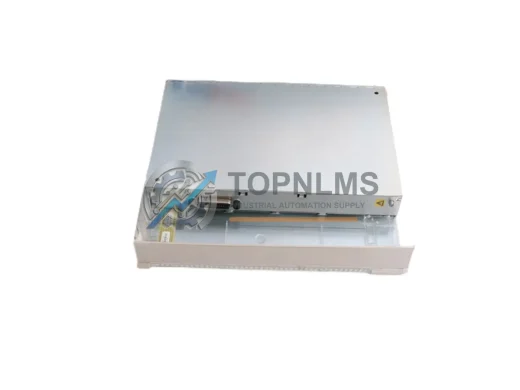
ABB CI610 3BHT300003R1 original I/O bus extender for Advant OCS systems. Tested, 12-month warranty, fast worldwide shipping. Industrial spare in stock.
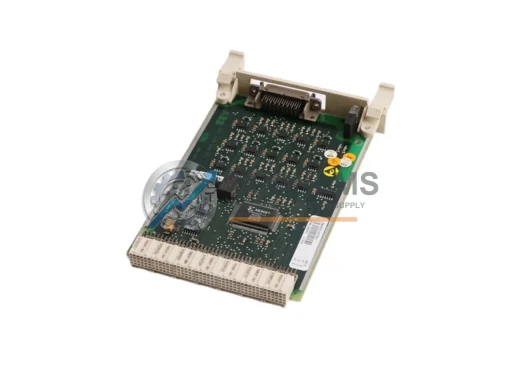
ABB CI540 3BSE001077R1 S100 I/O Bus Extension Module for Advant OCS DCS. In stock, tested, 12-month warranty. Fast global shipping from TOPNLMS.
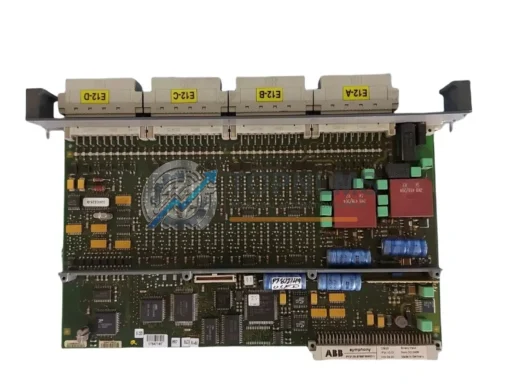
ABB CBI21 replacement for AC500 PLC systems. 16-channel 24VDC DI module, wiring-compatible upgrade. In stock, 12-month warranty, fast global shipping.
Click Quote This Model and the Part Number field will auto-fill with SPSED01.