
ABB
ABB D0910S Ruggedized Transistor Output Module
D0910SABB D0910S ruggedized 10-channel 24VDC PNP transistor output module for Freelance DCS. In stock, tested, 12-month warranty. Fast global shipping from TOPNLMS.
Request availability, condition, lead time and export shipping details for 35AE92A.
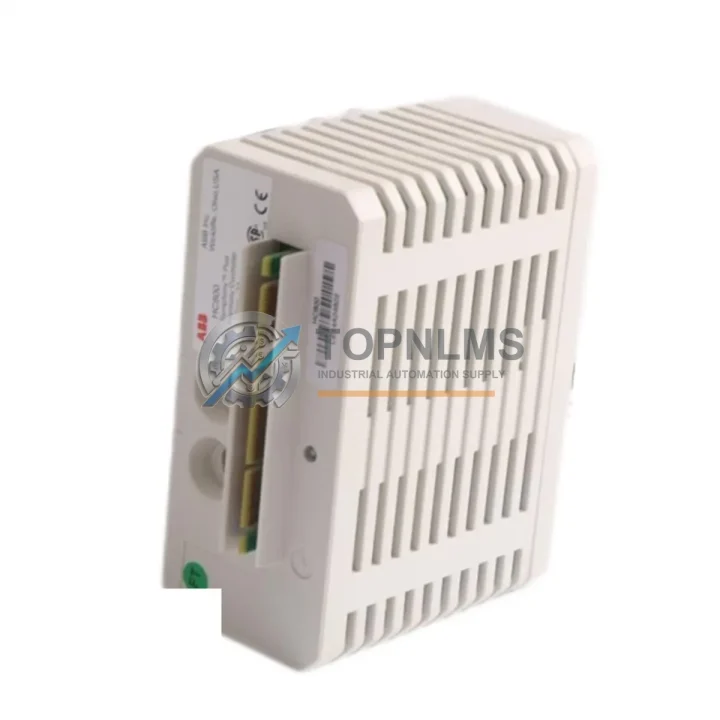
Send this exact part number, quantity and destination country. TOPNLMS will confirm availability, condition and export lead time before quotation.
The ABB 35AE92A is a 4-channel isolated analog output module designed for the Advant OCS and MOD 300 distributed control system platforms. As ABB progressively phases out legacy Advant OCS hardware, many process plants, power utilities, and manufacturing facilities face the critical challenge of sourcing reliable, tested replacements without disrupting ongoing production. The 35AE92A remains one of the most sought-after analog output modules in the MOD 300 ecosystem, and TOPNLMS maintains verified stock to support your migration and maintenance requirements.
Whether you are executing a planned DCS modernization, responding to an unplanned module failure, or building a strategic spare-parts inventory, the 35AE92A integrates directly into your existing Advant OCS rack infrastructure. Its 4-channel isolated 4–20 mA analog output architecture is fully compatible with the MOD 300 controller backplane, eliminating the need for signal conditioning adapters or wiring modifications during replacement. Each channel operates with galvanic isolation, protecting field instruments and reducing ground-loop interference in demanding industrial environments.
For facilities running the Advant OCS platform alongside the AC 450 or AC 410 process controllers, the 35AE92A slots directly into the S100 I/O bus rack without firmware reconfiguration. Engineers migrating from earlier MOD 300 analog output cards such as the 35AE91A will find that the channel mapping, terminal block pinout, and configuration parameters remain consistent, allowing control logic in the MOD 300 engineering workstation to be reused with minimal adjustment. This compatibility significantly reduces commissioning time and the risk of process interruption during the swap.
In larger DCS architectures where the 35AE92A operates alongside digital output modules such as the 35DC52A or 35DC53A, and digital input modules such as the 35DI52A, the replacement procedure follows the same hot-swap protocol supported by the MOD 300 I/O subsystem. The S100 bus communication between the I/O modules and the AC 450 controller is maintained during module extraction, provided the controller is placed in the appropriate maintenance mode via the MOD 300 operator station. This minimizes process disturbance and allows field technicians to complete the replacement within a standard maintenance window.
For plants that have partially migrated to the ABB System 800xA platform while retaining legacy MOD 300 I/O nodes, the 35AE92A continues to function within the S100 I/O network connected through the CI858 DNALink communication interface. This hybrid architecture is common in phased modernization projects where full DCS replacement is deferred, and the 35AE92A provides a cost-effective bridge solution that preserves existing field wiring and instrument calibration data. The module’s analog output range and resolution remain consistent with the specifications expected by the 800xA asset management layer, ensuring that historian data continuity is maintained across the migration boundary.
Power supply compatibility is another key consideration during replacement. The 35AE92A operates from the standard 24 VDC S100 rack power supply, typically sourced from an ABB SD831 or SD832 power supply unit mounted in the same or adjacent rack. No additional power derating or supply upgrade is required when substituting the 35AE92A for an equivalent legacy module, provided the rack’s total power budget is within specification. Field engineers should verify the rack power budget using the MOD 300 hardware configuration tool before installation, particularly in densely populated I/O racks where multiple analog output modules share a common power rail.
Communication protocol compatibility is fully preserved. The 35AE92A communicates over the S100 I/O bus using the proprietary ABB Advant fieldbus protocol, which is natively supported by the AC 450 and AC 410 controllers without any gateway or protocol converter. For facilities that have introduced PROFIBUS DP or FOUNDATION Fieldbus segments into their control architecture, the 35AE92A continues to serve the hardwired 4–20 mA instrument loops that are not yet migrated to digital fieldbus, providing a stable analog backbone during the transition period.
| Parameter | ABB 35AE92A (This Module) | Legacy / Predecessor Models |
|---|---|---|
| Platform Compatibility | Advant OCS, MOD 300, 800xA (via CI858) | MOD 300 only (35AE91A and earlier) |
| Output Channels | 4 channels, isolated | 4 channels, non-isolated (35AE91A) |
| Output Signal | 4–20 mA, 0–20 mA selectable | 4–20 mA fixed |
| Bus Interface | S100 I/O Bus | S100 I/O Bus |
| Power Supply | 24 VDC (S100 rack, SD831/SD832) | 24 VDC (S100 rack) |
| Terminal Block | Compatible with existing MOD 300 wiring | Same pinout — no rewiring required |
| Controller Compatibility | AC 450, AC 410 | AC 450, AC 410 |
| Installation Space | Standard S100 rack slot (1 slot) | Standard S100 rack slot (1 slot) |
| Galvanic Isolation | Yes — channel-to-channel and channel-to-bus | No (35AE91A) |
| Replacement Recommendation | Direct drop-in for 35AE91A and equivalent | Upgrade recommended for improved isolation |
| Warranty | 12 months from shipment date | N/A (end-of-life / used stock) |
A successful 35AE92A replacement is rarely a standalone action — it is part of a broader I/O subsystem maintenance or modernization effort. In most MOD 300 installations, the analog output module operates alongside a range of complementary hardware that may also require attention during the same maintenance window.
The S100 rack itself, which houses the 35AE92A alongside digital I/O modules such as the 35DC52A digital output module and the 35DI52A digital input module, should be inspected for backplane connector wear and rack power integrity. If the rack power supply — typically an ABB SD831 or SD832 — shows signs of aging or voltage drift, replacing it concurrently with the 35AE92A eliminates a common root cause of intermittent analog output errors and avoids a second maintenance intervention.
For facilities that need to re-establish communication between the MOD 300 I/O nodes and a modernized 800xA supervisory layer, the CI858 DNALink communication interface module is the standard bridge component. Ensuring the CI858 firmware is current before installing the 35AE92A prevents compatibility issues that can manifest as sporadic channel faults in the 800xA asset monitor.
Field wiring termination should be verified at the terminal unit connected to the 35AE92A. ABB’s S100 system uses dedicated terminal units that mate with the module’s front connector; confirming that the terminal unit locking mechanism is secure and that the 4–20 mA loop wiring is within the module’s load resistance specification (typically 0–600 Ω per channel) is a prerequisite for stable post-replacement operation.
In control cabinets where the 35AE92A drives valve positioners, variable frequency drives, or current-to-pneumatic converters, verifying the loop power source and checking for ground faults before module insertion prevents nuisance trips. A signal isolator or loop-powered barrier may be appropriate for channels driving instruments in hazardous areas, and these should be sourced and tested as part of the same procurement package.
For engineers who need to re-download or verify the MOD 300 control application after the replacement, the MOD 300 programming workstation connection — typically via a dedicated Ethernet or serial engineering port on the AC 450 controller — should be confirmed operational before the maintenance window begins. Having a verified backup of the controller database and the I/O configuration file on hand ensures that any unexpected configuration loss can be recovered without extended downtime.
Q: Can the 35AE92A replace the 35AE91A without rewiring?
A: Yes. The terminal block pinout and S100 bus connector are identical. The 4–20 mA field wiring connects to the same terminal positions. No wiring modifications are required.
Q: Does the MOD 300 controller require reconfiguration after the swap?
A: In most cases, no. The AC 450 or AC 410 controller recognizes the 35AE92A as a compatible replacement for the 35AE91A. The I/O configuration in the MOD 300 engineering database does not need to be modified, and the control application does not require recompilation. A forced I/O scan or module re-initialization from the operator station may be performed as a precaution.
Q: Is the 35AE92A compatible with the ABB System 800xA platform?
A: Yes, when connected via the CI858 DNALink interface. The 35AE92A operates as a standard S100 I/O module within the 800xA I/O topology, and its channel data is accessible through the 800xA asset management and historian functions without additional configuration.
Q: What is the physical installation space requirement?
A: The 35AE92A occupies one standard S100 rack slot. No additional space or mounting hardware is required beyond what the predecessor module occupied.
Q: Can the module be installed while the rack is powered?
A: The MOD 300 S100 I/O system supports module replacement with the rack powered, provided the AC 450 controller is placed in the appropriate maintenance mode. Consult the MOD 300 hardware installation manual and your site safety procedures before performing a live swap.
Q: What communication protocols does the 35AE92A support?
A: The module communicates exclusively over the S100 I/O bus using the ABB Advant proprietary protocol. It does not natively support PROFIBUS, FOUNDATION Fieldbus, or HART. For HART-capable analog output, a different module family is required.
Q: How do I verify the module is functioning correctly after installation?
A: Use the MOD 300 operator station or 800xA engineering workspace to perform a channel-by-channel output test, stepping each channel through 4 mA, 12 mA, and 20 mA and verifying the corresponding field instrument response. Log the results as part of your maintenance record.
Every ABB 35AE92A shipped by TOPNLMS is covered by a 12-month warranty from the date of shipment. Before dispatch, each module undergoes a functional verification process that includes power-on testing, S100 bus communication check, and analog output channel verification across the full 4–20 mA range. Modules that do not meet ABB’s original performance specifications are quarantined and not offered for sale.
In the event of a confirmed module defect within the warranty period, TOPNLMS provides a replacement unit or full refund, subject to return inspection. Our technical support team is available to assist with installation questions, compatibility verification, and post-installation troubleshooting to ensure your replacement project proceeds without delay.
Shipping is handled via DHL Express, FedEx International Priority, or equivalent tracked air freight from our Xiamen warehouse, with typical transit times of 3–7 business days to most destinations. Expedited shipping options are available for urgent breakdown situations. All shipments include a commercial invoice, packing list, and test report for customs clearance and incoming inspection purposes.
For volume procurement, spare-parts program inquiries, or technical pre-sales consultation, contact our industrial automation team directly.
ABB D0910S ruggedized 10-channel 24VDC PNP transistor output module for Freelance DCS. In stock, tested, 12-month warranty. Fast global shipping from TOPNLMS.
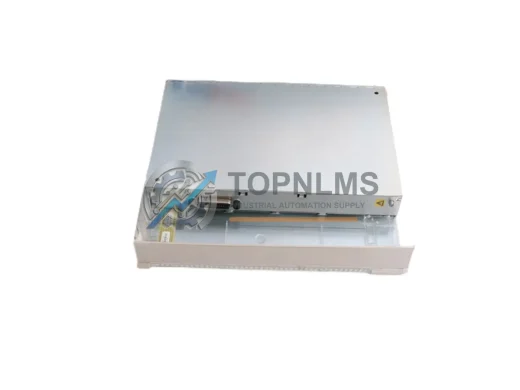
ABB CI610 3BHT300003R1 original I/O bus extender for Advant OCS systems. Tested, 12-month warranty, fast worldwide shipping. Industrial spare in stock.
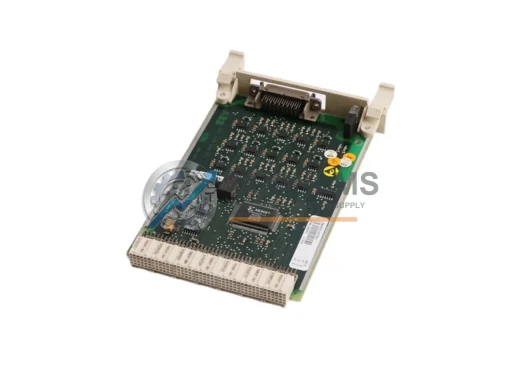
ABB CI540 3BSE001077R1 S100 I/O Bus Extension Module for Advant OCS DCS. In stock, tested, 12-month warranty. Fast global shipping from TOPNLMS.
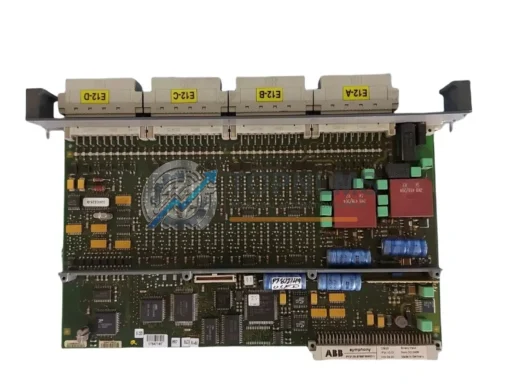
ABB CBI21 replacement for AC500 PLC systems. 16-channel 24VDC DI module, wiring-compatible upgrade. In stock, 12-month warranty, fast global shipping.
Click Quote This Model and the Part Number field will auto-fill with 35AE92A.