
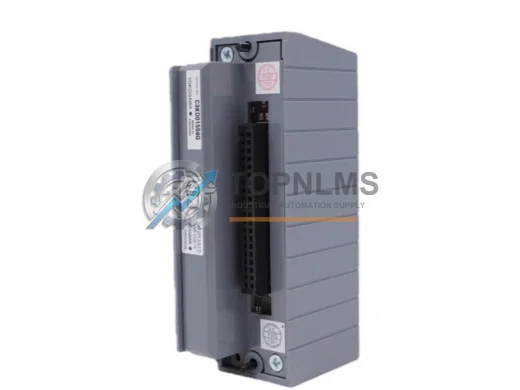
Yokogawa
Yokogawa ATA4S-10S2 Replacement for CENTUM VP DCS
ATA4S-10S2Yokogawa ATA4S-10S2 analog input module replacement for CENTUM VP DCS. Compatible upgrade, 12-month warranty, fast global shipping from stock.
Request availability, condition, lead time and export shipping details for SDV541-S63/PRP S3.
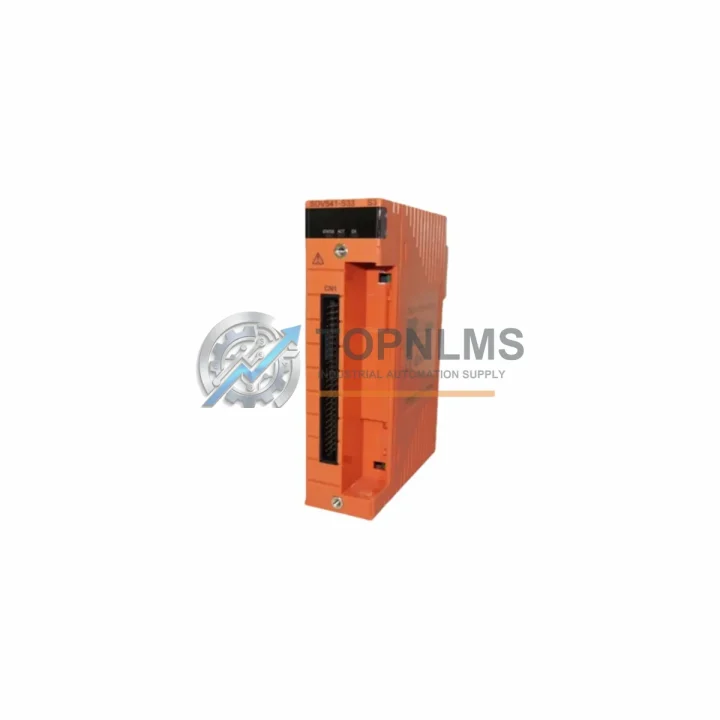
Send this exact part number, quantity and destination country. TOPNLMS will confirm availability, condition and export lead time before quotation.
The Yokogawa SDV541-S63/PRP S3 is a 32-channel digital output module engineered for the CENTUM CS 3000 Distributed Control System — one of the most widely deployed DCS platforms in petrochemical, power generation, pulp and paper, and continuous process manufacturing facilities worldwide. As aging CENTUM CS 3000 installations continue to operate well beyond their original design lifecycle, maintaining a reliable inventory of original spare modules such as the SDV541-S63/PRP S3 has become a cornerstone of any credible plant maintenance strategy.
When a digital output channel fails in a CENTUM CS 3000 cabinet, the consequences extend far beyond a single I/O point. Field devices — solenoid valves, motor starters, alarm annunciators, and actuator control circuits — lose their command signals. In process-critical environments, this can trigger emergency shutdowns, production losses measured in thousands of dollars per hour, and safety incidents that require regulatory reporting. Having a verified original SDV541-S63/PRP S3 on the shelf eliminates the most dangerous variable in unplanned downtime: sourcing time.
| Parameter | Specification |
|---|---|
| Model / SKU | SDV541-S63/PRP S3 |
| Brand | Yokogawa Electric Corporation |
| Series / Platform | CENTUM CS 3000 DCS |
| Module Type | 32-Channel Digital Output (DO) Module |
| Output Channels | 32 points |
| Output Type | Transistor (sink/source, model-dependent) |
| Rated Load Voltage | 24 VDC (typical) |
| Isolation | Optical isolation between field and system bus |
| Communication | V-net / ESB bus (CENTUM CS 3000 native) |
| Redundancy Support | Yes — /PRP suffix denotes pair redundancy |
| Mounting | Node Unit (NU) / Field Control Station (FCS) backplane |
| Operating Temperature | 0°C to 55°C |
| Humidity | 10% to 90% RH (non-condensing) |
| Weight | Approx. 1,380 g |
| Country of Origin | Japan |
| Compatibility | CENTUM CS 3000 R3 / CS 3000 Small / CS 1000 |
| Warranty | 12 Months — tested before shipment |
A scheduled inspection of your CENTUM CS 3000 Field Control Station should never focus on a single module in isolation. The SDV541-S63/PRP S3 operates within an interconnected electrical environment where the health of adjacent components directly affects its reliability and longevity. During any planned maintenance window or annual shutdown, maintenance engineers should simultaneously inspect the following components to prevent cascading failures:
The SDV141 or SDV241 Digital Input Module paired in the same node unit provides the feedback loop that confirms field device status — if the DO module commands a valve open but the DI module cannot confirm the position, the root cause may be in either module or the wiring harness between them. Similarly, the SAI143 or SAI533 Analog Input Module monitoring process variables upstream of the controlled actuators should be verified for drift or channel faults during the same inspection cycle.
The SCP451 or SCP461 Field Control Station CPU module governs all I/O communication within the FCS. A degraded CPU module can manifest as intermittent DO channel faults that are incorrectly attributed to the output module itself — always cross-check CPU diagnostics before replacing the SDV541-S63/PRP S3. The SB301 or SB302 ESB Bus Interface Module and the SB401 V-net Interface Module are equally critical: bus communication errors will cause the DO module to lose its command data, producing false output failures.
Power supply integrity is foundational. The PW481 or PW482 Power Supply Module feeding the node unit should be load-tested and its output voltage verified at the backplane connectors. Voltage sag under load is a common cause of intermittent digital output misfires. If your installation uses redundant power, verify that the automatic switchover function of the redundant power supply pair is operational.
Field wiring termination at the TB series terminal blocks and the ADM (Analog/Digital Marshalling) panels should be inspected for loose connections, corrosion, and insulation degradation — particularly in high-humidity or chemically aggressive environments. The KS1 or KS2 relay output modules used for high-current field device switching downstream of the SDV541-S63/PRP S3 are wear items that should be included in any DO module replacement cycle. Finally, if your facility uses CENTUM CS 3000 HIS (Human Interface Station) workstations for alarm management, verify that the HIS software version is compatible with the firmware revision of the replacement module to avoid alarm display anomalies post-swap.
The SDV541-S63/PRP S3 is a direct original replacement for aging or failed 32-channel digital output modules within the CENTUM CS 3000 architecture. Because Yokogawa designed the CS 3000 platform with backward compatibility across its R2 and R3 revisions, a new or refurbished SDV541-S63/PRP S3 can be installed into an existing node unit without requiring software reconfiguration, provided the firmware baseline of the FCS is maintained. This plug-and-play compatibility is a critical advantage over third-party alternatives, which may require I/O mapping changes, engineering hours, and system re-validation — costs that frequently exceed the price of the original spare module many times over.
For facilities managing end-of-life CENTUM CS 3000 systems where Yokogawa factory support has been discontinued, maintaining a strategic buffer stock of SDV541-S63/PRP S3 modules is the most cost-effective approach to extending system life by 5–10 years without a full DCS migration. Each module sourced through TOPNLMS is individually tested under load conditions prior to shipment, with full functional verification of all 32 output channels, redundancy switching, and bus communication integrity. This pre-shipment testing protocol ensures that the module arriving on your site is ready for immediate installation — eliminating the risk of receiving a latent-fault unit that fails within weeks of deployment.
Our global logistics network supports express delivery to major industrial hubs across Asia, Europe, the Middle East, and the Americas, with typical lead times of 3–7 business days for in-stock units. Emergency same-day dispatch is available for critical shutdown situations. All units ship with a 12-month warranty covering manufacturing defects and functional failures under normal operating conditions.
Q1: Is the SDV541-S63/PRP S3 compatible with both CENTUM CS 3000 and CS 1000 systems?
A: The SDV541-S63/PRP S3 is primarily designed for CENTUM CS 3000 Field Control Stations. Compatibility with CS 1000 depends on the specific node unit configuration and firmware revision. We recommend providing your FCS model number and software version for a compatibility confirmation before ordering.
Q2: What does the /PRP suffix indicate, and is it required for my installation?
A: The /PRP suffix denotes Pair Redundancy support, meaning the module is designed to operate in a redundant pair configuration for high-availability applications. If your existing installation uses redundant DO modules, you must replace with a /PRP variant. Installing a non-redundant module in a redundant slot will disable the redundancy function and may generate system alarms.
Q3: How is the module tested before shipment, and what does the 12-month warranty cover?
A: Every SDV541-S63/PRP S3 unit undergoes functional testing of all 32 output channels, bus communication verification, and redundancy switchover testing prior to dispatch. The 12-month warranty covers failures attributable to manufacturing defects or latent faults under normal operating conditions. It does not cover damage resulting from incorrect installation, overvoltage events, or physical mishandling.
Q4: What is the recommended spare parts inventory strategy for CENTUM CS 3000 digital output modules?
A: For facilities with 10 or more SDV541-S63/PRP S3 modules installed, we recommend maintaining a minimum buffer of 2 spare units on-site. For critical process lines where a DO module failure would trigger a plant shutdown, a 1:5 spare ratio (one spare per five installed modules) is the industry-standard benchmark. Centralizing spare procurement through a single verified supplier reduces lead time variability and ensures firmware consistency across replacement units.
Yokogawa ATA4S-10S2 analog input module replacement for CENTUM VP DCS. Compatible upgrade, 12-month warranty, fast global shipping from stock.
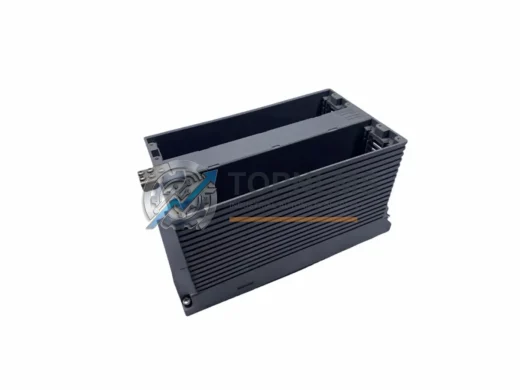
YOKOGAWA AMN32 S1 original DCS I/O module for CENTUM VP systems. Verified spare, 12-month warranty, fast global shipping. Reduce downtime now.
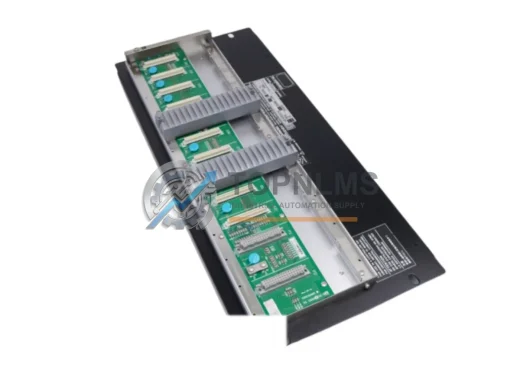
Yokogawa ANB10D-421 original 4-ch 4–20mA analog output module for CENTUM VP & CS 3000. Industrial spare, 12-month warranty, tested before shipment.
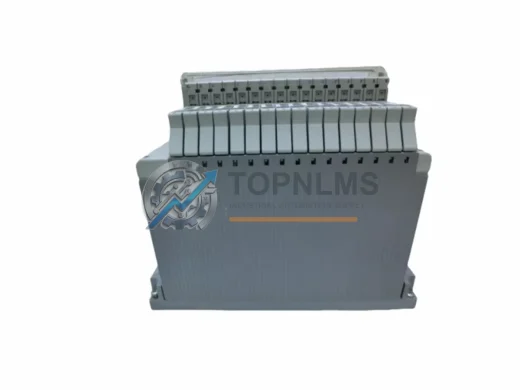
YOKOGAWA AMN21 replacement & upgrade solution for CENTUM CS3000/VP DCS. Compatible wiring, 12-month warranty, fast shipping. Contact: [email protected]
Click Quote This Model and the Part Number field will auto-fill with SDV541-S63/PRP S3.