
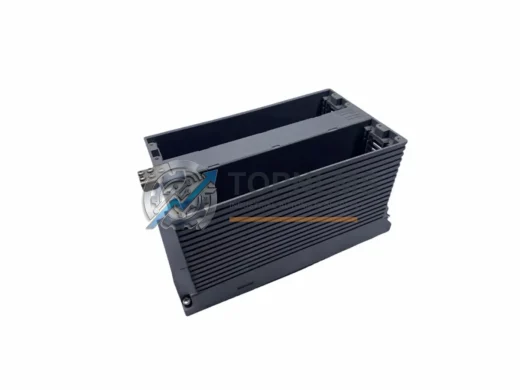
Yokogawa
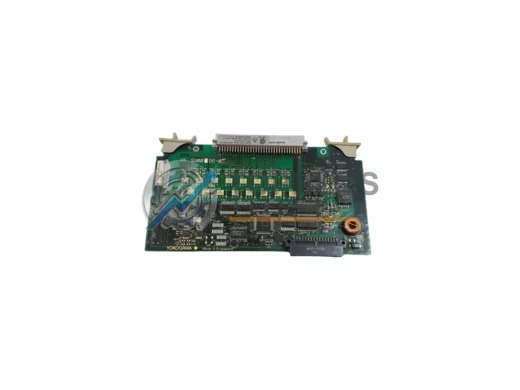
YOKOGAWA AMN32 S1 Original Industrial Spare CENTUM VP Compatible
AMN32 S1YOKOGAWA AMN32 S1 original DCS I/O module for CENTUM VP systems. Verified spare, 12-month warranty, fast global shipping. Reduce downtime now.
Request availability, condition, lead time and export shipping details for SDV144-S33 S2.
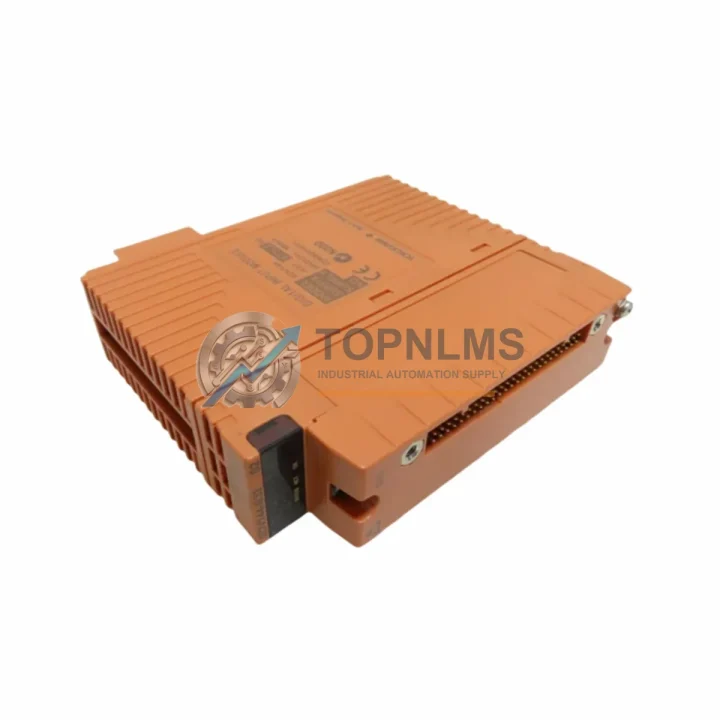
Send this exact part number, quantity and destination country. TOPNLMS will confirm availability, condition and export lead time before quotation.
The Yokogawa SDV144-S33 S2 is a 32-channel digital input module engineered for the CENTUM VP distributed control system platform. As legacy CENTUM CS 3000 and early CENTUM VP installations approach end-of-life or face discontinued spare-part availability, plant engineers and procurement teams are actively seeking verified replacement and upgrade paths that minimize engineering rework, preserve existing field wiring, and reduce unplanned downtime. The SDV144-S33 S2 is the authoritative drop-in solution for these migration scenarios, offering full backward compatibility with the CENTUM VP I/O bus architecture, identical terminal block pinout, and native support for the Vnet/IP communication backbone that underpins modern Yokogawa DCS topologies.
When migrating from an older SDV144 variant or from a CENTUM CS 3000 digital input card, the SDV144-S33 S2 slots directly into the existing SB401 or SB301 I/O nest without mechanical modification. Field wiring connected to the existing terminal assembly — typically 24 VDC dry-contact or wet-contact discrete signals — requires no re-termination, dramatically cutting commissioning time on brownfield projects. The module’s 32-channel density matches the legacy footprint, so control cabinet space allocation, cable tray routing, and marshalling panel layouts remain unchanged.
From a software perspective, the SDV144-S33 S2 is fully recognized by Yokogawa’s CENTUM VP Engineering Environment (ENG). Existing function block definitions, I/O assignments, and alarm tag databases created under CENTUM CS 3000 or earlier CENTUM VP revisions can be imported and validated without rewriting control logic. This is a critical advantage for facilities running complex safety-instrumented loops or regulatory-compliant batch sequences where re-validation costs are prohibitive. The module communicates over the high-speed ESB bus within the field control station (FCS), and its diagnostic data — including channel-level open-circuit detection and power supply status — is surfaced natively in the CENTUM VP HIS (Human Interface Station) without additional configuration.
Power supply compatibility is another key consideration in DCS migration projects. The SDV144-S33 S2 draws its operating power from the FCS backplane, which is fed by the PW481 or PW482 dual-redundant power supply modules. No separate field-side power wiring is required for the module itself, simplifying the upgrade bill of materials. For facilities that are simultaneously upgrading their power infrastructure, the module is fully compatible with both the standard and redundant power configurations supported across the CENTUM VP FCS family.
Communication protocol continuity is guaranteed. The SDV144-S33 S2 operates within the Vnet/IP domain, Yokogawa’s deterministic Ethernet-based control network, ensuring that upstream integration with the CENTUM VP domain controllers, the Exaopc OPC server, and third-party SCADA or MES systems via OPC DA/UA remains uninterrupted. For plants that have deployed the ProSafe-RS safety controller alongside their CENTUM VP process controller, the digital input data from the SDV144-S33 S2 can be shared across the integrated safety and process control architecture without gateway hardware.
In multi-FCS architectures — common in large refinery, petrochemical, or power generation facilities — the SDV144-S33 S2 can be deployed across multiple field control stations simultaneously, with each unit independently addressable within the CENTUM VP domain. This scalability makes it equally suitable for single-loop replacement in a small skid controller and for large-scale I/O expansion projects involving hundreds of digital input points distributed across multiple control rooms.
For procurement teams evaluating total cost of ownership, the SDV144-S33 S2 eliminates the engineering hours associated with re-wiring, re-programming, and re-commissioning that would be required if migrating to a competing DCS platform. When compared against a full platform migration to a third-party system, the module-level replacement approach using the SDV144-S33 S2 — alongside companion components such as the ALR111 alarm module, the AMN11 node interface module, and the SCP401 sequence control processor — delivers a measurably lower total project cost and a faster return to normal production.
| Parameter | Legacy / Replaced Model | SDV144-S33 S2 (Replacement) |
|---|---|---|
| Model / SKU | SDV144 (earlier suffix variants), CENTUM CS 3000 DI cards | SDV144-S33 S2 |
| Platform | CENTUM CS 3000 / Early CENTUM VP | CENTUM VP (all revisions) |
| Channel Count | 32 DI channels | 32 DI channels |
| Input Signal Type | 24 VDC dry/wet contact | 24 VDC dry/wet contact |
| Terminal Block / Wiring | Existing field wiring retained | Drop-in compatible — no re-termination required |
| I/O Nest Compatibility | SB401 / SB301 nest | SB401 / SB301 nest — direct slot replacement |
| Communication Bus | ESB bus (FCS internal) | ESB bus (FCS internal) — fully compatible |
| Control Network | Vnet / Vnet/IP | Vnet/IP — backward compatible |
| Engineering Software | CENTUM CS 3000 ENG / CENTUM VP ENG | CENTUM VP Engineering Environment — full support |
| Power Supply | FCS backplane (PW481/PW482) | FCS backplane (PW481/PW482) — no change |
| Physical Dimensions | Standard CENTUM VP module form factor | Identical form factor — no cabinet modification |
| Warranty | — | 12-Month Warranty (see Warranty Assurance section) |
A successful CENTUM VP digital input migration rarely involves a single module in isolation. In practice, the SDV144-S33 S2 replacement is most effective when coordinated with the broader I/O and control infrastructure. During field surveys on brownfield upgrade projects, engineers commonly identify concurrent replacement needs across several module categories within the same FCS cabinet.
On the analog side, the AAI141-S03 and AAI143-S03 analog input modules share the same SB401 nest and ESB bus architecture, making them natural candidates for simultaneous replacement when aging I/O cards are found across multiple slot positions. For digital output functions, the SDV541-S33 digital output module mirrors the SDV144-S33 S2’s form factor and wiring compatibility, allowing mixed DI/DO nest configurations to be upgraded in a single maintenance window.
Communication infrastructure upgrades frequently accompany module replacements. The ALR111 Vnet/IP router and the AMN11 node interface module are commonly refreshed alongside I/O cards to ensure the control network operates at current firmware revisions and supports the diagnostic features available in the latest CENTUM VP software releases. For facilities integrating field devices via FOUNDATION Fieldbus or HART, the AFV10D fieldbus interface module and the AAI835-S50 HART multiplexer are often part of the same upgrade scope.
Power supply redundancy is a standard requirement in continuous-process industries. The PW481 and PW482 dual-redundant power supply modules are frequently replaced as part of a planned maintenance cycle that coincides with I/O module upgrades, ensuring that the entire FCS cabinet meets current reliability standards. For marshalling and signal conditioning, the TB805 terminal board and signal isolators from the Yokogawa MTL or RKC range are commonly specified to maintain signal integrity on long cable runs from field instruments to the I/O nest.
Finally, for projects that include HMI modernization alongside DCS I/O upgrades, the CENTUM VP HIS workstation and the Exaopc OPC server software are the standard integration points, ensuring that the digital input data from the SDV144-S33 S2 is immediately visible in updated operator displays without additional driver configuration.
Q: Can I replace the legacy SDV144 with the SDV144-S33 S2 without modifying field wiring?
A: Yes. The SDV144-S33 S2 uses the same terminal block pinout and 24 VDC input signal specification as earlier SDV144 variants. Existing field cables can be reconnected directly to the replacement module without any re-termination or signal conditioning changes.
Q: Do I need to rewrite my CENTUM VP control logic after installing the SDV144-S33 S2?
A: No. The module is fully recognized by the CENTUM VP Engineering Environment. Existing I/O tag assignments, function block configurations, and alarm definitions remain valid. A download of the existing database to the new module is all that is required to restore normal operation.
Q: Is the SDV144-S33 S2 compatible with both Vnet and Vnet/IP communication architectures?
A: The SDV144-S33 S2 is designed for the Vnet/IP architecture used in current CENTUM VP systems. For legacy Vnet installations, please confirm the FCS firmware revision and domain controller compatibility with your Yokogawa system integrator before ordering.
Q: Will the module fit in the existing SB401 or SB301 I/O nest without mechanical modification?
A: Yes. The SDV144-S33 S2 conforms to the standard CENTUM VP module form factor and slots directly into SB401 and SB301 nests. No bracket modifications, spacers, or cabinet rework are required.
Q: How long does commissioning typically take after installing the SDV144-S33 S2?
A: For a direct replacement of a like-for-like module with no wiring changes, commissioning typically involves a database download, channel verification, and loop check — a process that experienced CENTUM VP engineers complete in under two hours per FCS cabinet. Downtime is further minimized when the replacement is performed during a scheduled maintenance window.
Q: Can the SDV144-S33 S2 be used in a redundant FCS configuration?
A: Yes. The module supports deployment in both simplex and redundant FCS configurations. In redundant setups, the primary and secondary FCS units each require their own SDV144-S33 S2 module installed in the corresponding I/O nest slot.
Every SDV144-S33 S2 unit supplied by TOPNLMS is backed by a 12-month warranty covering manufacturing defects and functional failures under normal operating conditions. Prior to shipment, each module undergoes a multi-point outgoing inspection that includes power-on functional verification, channel-level continuity testing, and firmware revision confirmation against the CENTUM VP compatibility matrix.
In the event of a warranty claim, TOPNLMS provides a direct replacement dispatch within 3 business days of fault confirmation, with no requirement to return the defective unit before the replacement is shipped — minimizing the impact on plant operations. Our after-sales response team is available via email and phone to support installation queries, compatibility verification, and commissioning guidance throughout the warranty period.
For procurement teams operating under vendor qualification requirements, TOPNLMS can provide inspection reports, test certificates, and shipment documentation upon request. All units are shipped with original manufacturer packaging where available, and with anti-static protective packaging as standard. Export documentation, including commercial invoices, packing lists, and certificates of origin, is prepared for all international shipments to facilitate customs clearance.
Stock availability is confirmed at time of order. Standard lead time for in-stock units is 3–7 business days for international air freight. Expedited shipping options are available for urgent plant breakdown scenarios. Contact our team to confirm current stock levels and arrange priority dispatch.
© 2026 TOPNLMS. All rights reserved.
Original Source: https://topnlms.com
Contact: [email protected] | +86 18359293191
YOKOGAWA AMN32 S1 original DCS I/O module for CENTUM VP systems. Verified spare, 12-month warranty, fast global shipping. Reduce downtime now.
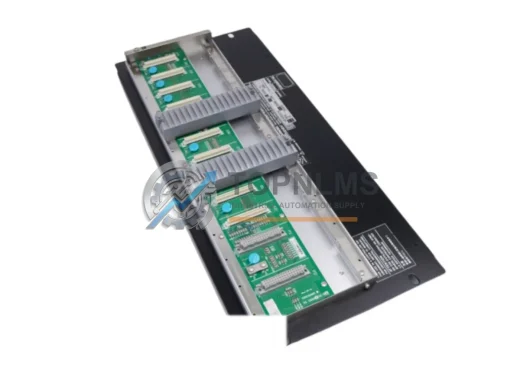
Yokogawa ANB10D-421 original 4-ch 4–20mA analog output module for CENTUM VP & CS 3000. Industrial spare, 12-month warranty, tested before shipment.
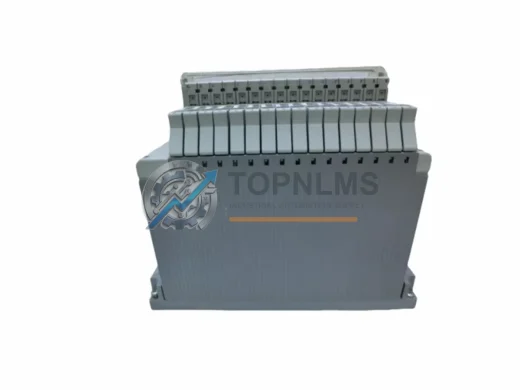
YOKOGAWA AMN21 replacement & upgrade solution for CENTUM CS3000/VP DCS. Compatible wiring, 12-month warranty, fast shipping. Contact: [email protected]
Yokogawa AMM12-S2 original analog input module for CENTUM DCS systems. Tested, 12-month warranty, fast worldwide shipping. Reduce downtime with genuine spares.
Click Quote This Model and the Part Number field will auto-fill with SDV144-S33 S2.