
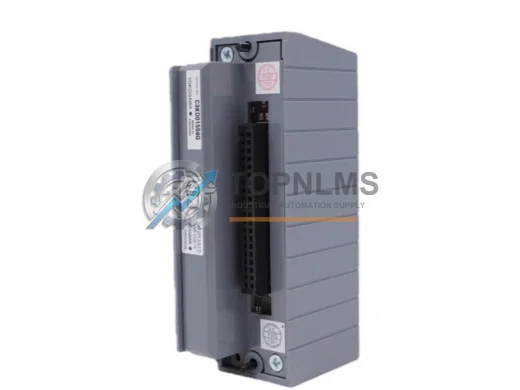
Yokogawa
Yokogawa ATA4S-10S2 Replacement for CENTUM VP DCS
ATA4S-10S2Yokogawa ATA4S-10S2 analog input module replacement for CENTUM VP DCS. Compatible upgrade, 12-month warranty, fast global shipping from stock.
Request availability, condition, lead time and export shipping details for SAI143-HE3 S3.
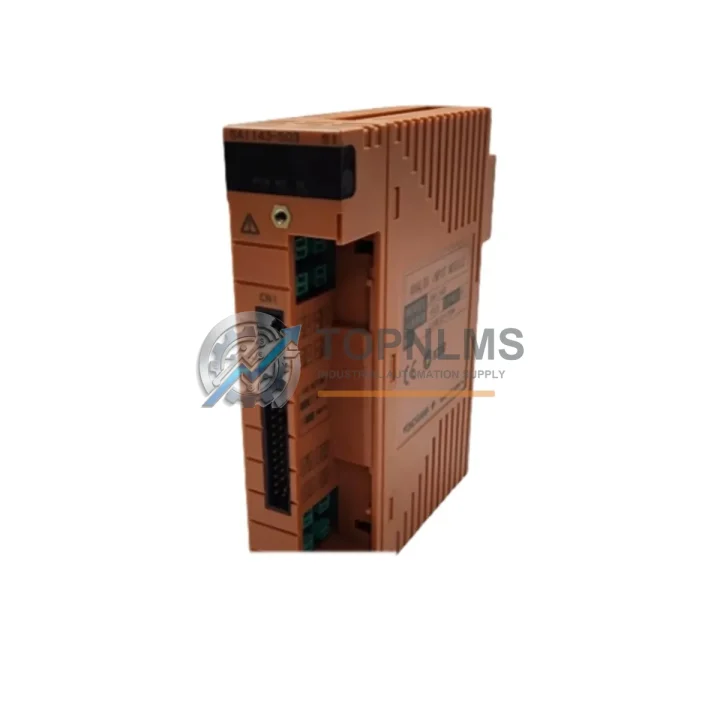
Send this exact part number, quantity and destination country. TOPNLMS will confirm availability, condition and export lead time before quotation.
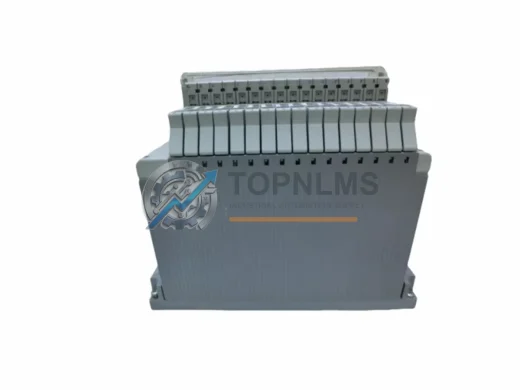
The Yokogawa SAI143-HE3 S3 is an original analog input signal amplifier module designed for the CENTUM VP Distributed Control System (DCS). In process industries where continuous uptime is non-negotiable — refining, petrochemical, power generation, pulp and paper, and pharmaceutical manufacturing — the integrity of every I/O module in the control cabinet directly determines plant reliability. Sourcing a genuine, tested SAI143-HE3 S3 replacement is not simply a procurement decision; it is a risk management strategy that protects production schedules, personnel safety, and capital assets.
The SAI143-HE3 S3 occupies a critical position in the CENTUM VP signal chain. It receives low-level analog signals from field transmitters — pressure, temperature, flow, and level — amplifies and conditions them, and delivers clean, scaled values to the controller for real-time process decisions. When this module degrades or fails, the consequences cascade: erratic PV readings, spurious alarms, controller fallback to manual mode, and ultimately unplanned shutdown. Keeping a verified spare on the shelf eliminates that risk entirely.
| Parameter | Specification |
|---|---|
| Model | SAI143-HE3 S3 |
| Brand | Yokogawa Electric Corporation |
| Series | CENTUM VP DCS |
| Module Type | Analog Input Signal Amplifier |
| Input Channels | Multi-channel analog input (4–20 mA / 1–5 V) |
| Signal Type | 4–20 mA current loop / voltage input |
| Isolation | Channel-to-channel and channel-to-bus isolation |
| Communication | CENTUM VP internal V-net / ESB bus |
| Power Supply | Supplied via CENTUM VP field control station backplane |
| Operating Temperature | 0 °C to 55 °C |
| Storage Temperature | −25 °C to 70 °C |
| Humidity | 5% to 95% RH (non-condensing) |
| Mounting | CENTUM VP I/O nest / field control station slot |
| Country of Origin | Japan |
| Compatibility | CENTUM VP, CENTUM CS 3000 (with adapter verification) |
| Warranty | 12 Months — tested and verified before shipment |
Experienced maintenance engineers know that analog input module failures rarely occur in isolation. The SAI143-HE3 S3 operates within a tightly integrated signal chain, and a disciplined preventive maintenance program should treat the entire chain as a single reliability unit.
During scheduled shutdowns or annual turnarounds, the inspection scope should extend beyond the SAI143-HE3 S3 itself. The field wiring termination assemblies — specifically the Yokogawa TB820V or equivalent terminal board — should be checked for corrosion, loose screws, and insulation degradation. Signal cables running from field junction boxes to the marshalling cabinet are a common source of intermittent faults; any cable showing abrasion, moisture ingress, or shield continuity loss should be replaced proactively.
The power supply modules feeding the field control station — such as the Yokogawa PW481 or PW482 series — should be load-tested and their output ripple measured. A marginal power supply will cause subtle analog accuracy drift long before it triggers a hard fault, making it one of the most deceptive failure modes in a CENTUM VP system. Replacing aging power supply modules on a fixed cycle, rather than waiting for failure, is a best practice adopted by high-availability plants worldwide.
Within the same I/O nest, companion modules such as the SAI143-HE3 S3’s neighboring analog output modules (e.g., SAO143 series) and digital I/O modules (SDV144, SDV541) should be visually inspected for discoloration, swollen capacitors, or connector wear. If the control station hosts communication modules — for example, an ALF111 FOUNDATION Fieldbus module or an ALR121 PROFIBUS-DP module — their diagnostic LEDs and communication statistics should be reviewed at the same time, since a degraded fieldbus segment can produce symptoms that mimic analog input errors.
For plants running legacy CENTUM CS 3000 hardware alongside newer CENTUM VP stations, the migration boundary deserves particular attention. Modules at the interface between old and new systems experience higher thermal cycling stress due to differences in cabinet ventilation design. Stocking verified spares for both platforms — including the SAI143-HE3 S3 and its CS 3000 predecessors — ensures that a single-module failure does not force an unplanned platform migration under production pressure.
Finally, the CENTUM VP field control station backplane connectors should be inspected for gold-plating wear and debris contamination. A backplane showing connector fatigue is a leading indicator of future module seating failures and should be scheduled for replacement before it causes a multi-module outage.
The SAI143-HE3 S3 is a direct replacement for earlier CENTUM VP analog input amplifier variants. Plants that have been operating CENTUM VP systems for more than a decade will find that original modules are approaching the end of their rated service life — typically 10 to 15 years for active electronic components in industrial environments. Proactive replacement with a genuine SAI143-HE3 S3 spare, rather than waiting for in-service failure, eliminates the risk of an unplanned shutdown during peak production.
For maintenance teams managing a mixed fleet of CENTUM VP and CENTUM CS 3000 systems, the SAI143-HE3 S3 provides a stable, compatible solution that preserves existing I/O wiring, marshalling layouts, and engineering database configurations. There is no need to re-engineer the control loop, reconfigure the HIS (Human Interface Station) faceplates, or retrain operators — the module slots in, the system recognizes it, and production resumes. This plug-and-play compatibility is the single most important factor in reducing mean time to repair (MTTR) during a live plant emergency.
Procurement teams are encouraged to evaluate a multi-unit purchase strategy. Holding two to three SAI143-HE3 S3 units in the plant spare parts room — alongside matched spares for the SAO143 analog output module and the SDV144 digital input module — creates a self-sufficient maintenance buffer that eliminates dependence on spot-market availability during a shutdown. Given the global supply chain volatility affecting industrial automation components, a pre-positioned inventory of verified, warranted spares is a measurable competitive advantage for any continuous-process facility.
Q1: Is the SAI143-HE3 S3 compatible with both CENTUM VP and CENTUM CS 3000 systems?
The SAI143-HE3 S3 is natively designed for CENTUM VP field control stations. Compatibility with CENTUM CS 3000 I/O nests should be verified against the specific nest revision and firmware version. Our technical team can assist with compatibility confirmation prior to purchase.
Q2: What testing is performed before shipment?
Every SAI143-HE3 S3 unit is powered on, functionally tested for all analog input channels, and inspected for connector integrity and component condition before dispatch. A test report is available upon request. The module ships with a 12-month warranty covering manufacturing defects and functional failure under normal operating conditions.
Q3: How should I manage spare parts inventory for a CENTUM VP system?
Best practice is to maintain at least one spare for every module type installed in a critical control loop, with two spares for modules in single-point-of-failure positions. For a CENTUM VP station, this typically means stocking spares for the analog input modules (SAI143 series), analog output modules (SAO143 series), digital I/O modules, the power supply module, and the field control unit processor card. Review and rotate stock every three years to prevent shelf-life degradation.
Q4: What is the lead time and shipping arrangement?
In-stock units ship within 1–3 business days. International shipments are dispatched via DHL Express or FedEx International Priority with full tracking. Export documentation, including commercial invoice and packing list, is provided for customs clearance. Contact us for urgent same-day dispatch arrangements.
Yokogawa ATA4S-10S2 analog input module replacement for CENTUM VP DCS. Compatible upgrade, 12-month warranty, fast global shipping from stock.
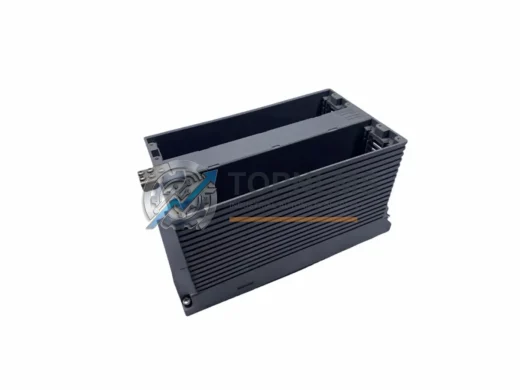
YOKOGAWA AMN32 S1 original DCS I/O module for CENTUM VP systems. Verified spare, 12-month warranty, fast global shipping. Reduce downtime now.
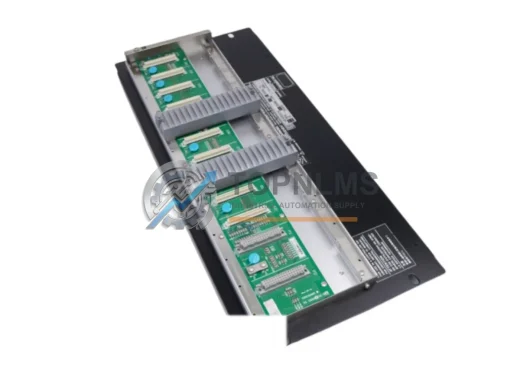
Yokogawa ANB10D-421 original 4-ch 4–20mA analog output module for CENTUM VP & CS 3000. Industrial spare, 12-month warranty, tested before shipment.
YOKOGAWA AMN21 replacement & upgrade solution for CENTUM CS3000/VP DCS. Compatible wiring, 12-month warranty, fast shipping. Contact: [email protected]
Click Quote This Model and the Part Number field will auto-fill with SAI143-HE3 S3.