
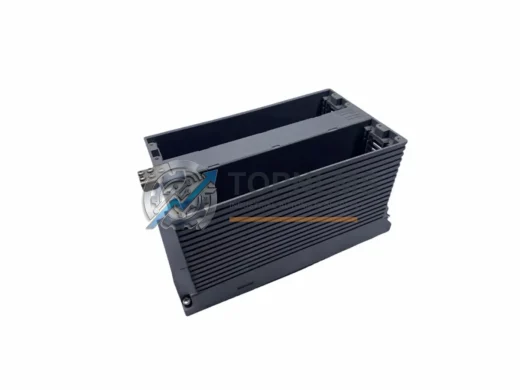
Yokogawa
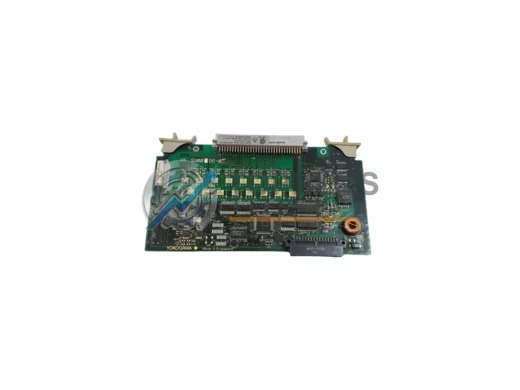
YOKOGAWA AMN32 S1 Original Industrial Spare CENTUM VP Compatible
AMN32 S1YOKOGAWA AMN32 S1 original DCS I/O module for CENTUM VP systems. Verified spare, 12-month warranty, fast global shipping. Reduce downtime now.
Request availability, condition, lead time and export shipping details for SAI143-H33.
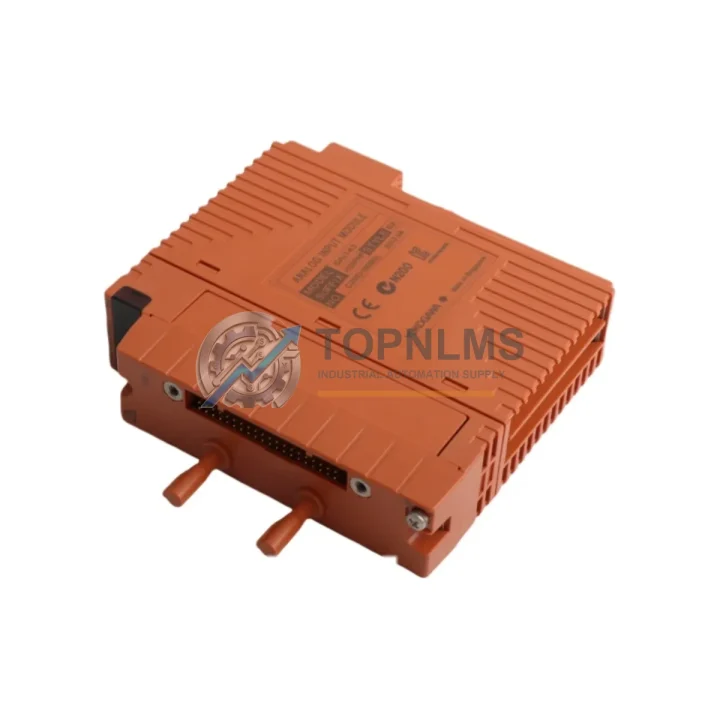
Send this exact part number, quantity and destination country. TOPNLMS will confirm availability, condition and export lead time before quotation.
The Yokogawa SAI143-H33 S2 is a high-density analog input module designed for the CENTUM VP Distributed Control System (DCS) platform. As industrial facilities worldwide face the challenge of aging DCS infrastructure, discontinued spare parts, and escalating maintenance costs, the SAI143-H33 S2 serves as a direct replacement and upgrade solution for legacy CENTUM CS 3000 and early CENTUM VP analog input modules. Whether your plant is executing a phased migration, responding to an emergency module failure, or proactively building a critical spare inventory, this module delivers the electrical compatibility, signal accuracy, and physical form factor required for a smooth, low-risk transition.
Engineered for 4–20 mA and voltage signal inputs across multiple channels, the SAI143-H33 S2 integrates directly into existing CENTUM VP field control stations (FCS) without requiring rewiring of field junction boxes or marshalling cabinets. The module slots into standard Yokogawa I/O nest assemblies, preserving your existing cabinet layout and minimizing the physical footprint changes that typically drive up retrofit costs and downtime.
| Parameter | Legacy / Replaced Model | SAI143-H33 S2 (This Unit) |
|---|---|---|
| Platform Compatibility | CENTUM CS 3000, Early CENTUM VP | CENTUM VP (all revisions) |
| Signal Type | 4–20 mA / 1–5 V analog input | 4–20 mA / 1–5 V analog input |
| Channel Count | Typically 8–16 ch per module | 16 channels (H33 configuration) |
| Wiring Interface | Terminal block (field-side) | Compatible terminal block — no rewiring required |
| I/O Nest Mounting | Standard Yokogawa I/O nest | Direct drop-in to existing I/O nest |
| Communication Protocol | Vnet/IP (internal FCS bus) | Vnet/IP — fully compatible |
| Power Supply | 24 VDC from I/O nest backplane | 24 VDC from I/O nest backplane — no change |
| FCS Tag Reassignment | Required if slot position changes | Not required if same slot position retained |
| CENTUM VP Builder Config | Existing IOM definition reusable | Fully compatible — no re-engineering needed |
| Physical Dimensions | Standard Yokogawa module form factor | Identical form factor — cabinet space unchanged |
| Replacement Recommendation | Discontinued / EOL models | Direct replacement — recommended upgrade path |
| Warranty | — | 12-Month Warranty included |
A successful CENTUM VP analog input module replacement rarely involves a single component in isolation. In practice, field engineers executing a live system migration or emergency spare swap will also need to verify the condition and compatibility of adjacent modules and infrastructure. During the replacement of an SAI143-H33 S2, it is common to simultaneously inspect or replace the associated Yokogawa ANB10D I/O nest assembly, which provides the backplane power and communication bus that the analog input module relies on. If the nest itself has accumulated years of thermal cycling, the replacement module’s performance will only be as reliable as the nest it sits in.
For plants running multi-node CENTUM VP architectures, the Yokogawa ACM11 communication module and ACF11 field communication module are frequently part of the same upgrade scope. These modules manage the Vnet/IP traffic between the field control station and the human interface station (HIS), and their firmware versions must be compatible with the I/O modules installed in the same FCS. Engineers should confirm that the ACM11 firmware revision supports the SAI143-H33 S2 module definition before completing the swap.
On the field wiring side, the Yokogawa TB820V terminal board or equivalent marshalling terminal assemblies connect field instrument cables to the I/O module’s terminal block. When replacing an analog input module after years of service, it is good practice to inspect terminal board screw torque, check for oxidation on signal terminals, and verify that the 4–20 mA loop power supply — often sourced from a dedicated Yokogawa PW481 or PW482 power supply module — is within specification. A degraded loop power supply can cause erratic readings even after a successful module replacement.
For facilities that are simultaneously upgrading their operator interface layer, the Yokogawa FAST/TOOLS SCADA or a Yokogawa ProSafe-RS Safety Instrumented System integration may also be in scope. In these cases, the analog input data from the SAI143-H33 S2 feeds into safety logic or advanced process control (APC) applications, and the tag mapping must be validated end-to-end after the module swap. Similarly, plants using Yokogawa Exaopc OPC server for third-party SCADA connectivity should verify that the OPC tag definitions remain intact after the FCS configuration is downloaded following the module replacement.
Finally, for sites that require a temporary bypass or signal simulation during the hot-swap procedure, a Yokogawa CA71 or CA150 process calibrator is the recommended tool for injecting a known 4–20 mA signal to verify channel-by-channel accuracy before returning the loop to automatic control. This step is critical for high-consequence process loops such as reactor temperature, pressure vessel level, or compressor surge control.
Q: Can I replace the SAI143-H33 S2 without modifying the CENTUM VP Builder configuration?
A: Yes, provided the replacement module is installed in the same I/O nest slot position. CENTUM VP identifies I/O modules by their FCS node number, nest address, and slot number. If these remain unchanged, the existing IOM (I/O Module) definition in the Builder project is valid and no re-download of the FCS configuration is required. However, if the slot position changes for any reason, a partial download targeting only the affected FCS node is necessary.
Q: Is field wiring modification required?
A: No. The SAI143-H33 S2 uses the same terminal block interface as its predecessors in the CENTUM VP I/O family. Field cables connected to the terminal board on the marshalling side do not need to be re-terminated. This is one of the primary advantages of replacing within the same Yokogawa platform family versus cross-platform migration.
Q: What communication protocol does this module use internally?
A: The SAI143-H33 S2 communicates with the field control station processor via the Vnet/IP internal bus on the I/O nest backplane. This is a proprietary Yokogawa protocol and is not exposed to external networks. No additional protocol configuration is required during replacement.
Q: How much physical space does the module require in the control cabinet?
A: The SAI143-H33 S2 occupies a single slot in a standard Yokogawa I/O nest. Its physical dimensions are identical to other modules in the SAI/SAO/SDV series, so no cabinet modifications, DIN rail adjustments, or cable management changes are needed.
Q: What is the recommended procedure for replacing the module on a live system?
A: Yokogawa CENTUM VP supports hot-standby and redundant I/O configurations on select module types. For non-redundant analog input modules, the standard procedure involves placing the affected process loops in manual mode at the HIS operator station, physically removing the failed module, inserting the replacement, and verifying channel readings against field instrument values using a calibrator before returning loops to automatic. Total replacement time for a single module is typically under 30 minutes for a prepared maintenance team.
Q: Are there any firmware or hardware revision compatibility concerns?
A: The SAI143-H33 S2 is compatible with CENTUM VP R5.xx and later revisions. For systems running earlier CENTUM VP releases or CENTUM CS 3000, please contact our technical team to confirm compatibility before ordering. We maintain detailed cross-reference records for legacy Yokogawa DCS hardware.
Every Yokogawa SAI143-H33 S2 shipped from TOPNLMS is covered by a 12-month warranty from the date of delivery. Prior to shipment, each module undergoes a functional verification process that includes visual inspection, connector integrity check, and where applicable, power-on testing to confirm the module initializes correctly and reports no hardware fault codes.
In the event of a confirmed hardware defect within the warranty period, TOPNLMS will arrange a replacement unit or issue a full refund — whichever resolution best minimizes your operational disruption. Our after-sales response target is within 24 hours of a warranty claim submission. For emergency situations involving unplanned plant shutdowns, we prioritize expedited shipping from our Xiamen warehouse to minimize your total downtime exposure.
We maintain stock of critical Yokogawa CENTUM VP spare modules specifically to support emergency procurement scenarios. Orders placed before 3:00 PM CST on business days are typically processed and dispatched the same day. International shipments are supported via DHL Express, FedEx International Priority, and air freight consolidation, with tracking provided at the time of dispatch.
For procurement teams requiring documentation, we can provide a commercial invoice, packing list, certificate of origin (Japan), and a test report upon request. All units are shipped in anti-static packaging with appropriate cushioning for international transit.
To place an order, request a quotation, or discuss your specific migration requirements, please contact our technical sales team directly.
YOKOGAWA AMN32 S1 original DCS I/O module for CENTUM VP systems. Verified spare, 12-month warranty, fast global shipping. Reduce downtime now.
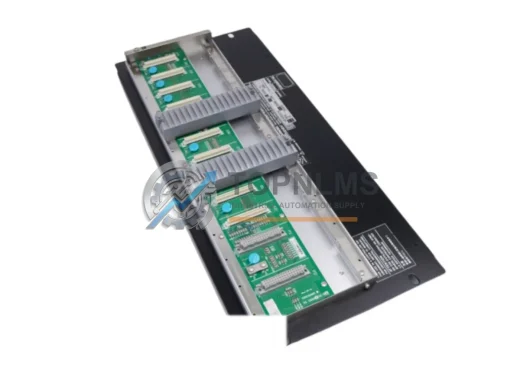
Yokogawa ANB10D-421 original 4-ch 4–20mA analog output module for CENTUM VP & CS 3000. Industrial spare, 12-month warranty, tested before shipment.
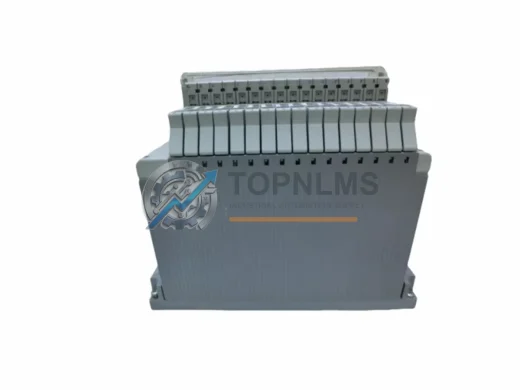
YOKOGAWA AMN21 replacement & upgrade solution for CENTUM CS3000/VP DCS. Compatible wiring, 12-month warranty, fast shipping. Contact: [email protected]
Yokogawa AMM12-S2 original analog input module for CENTUM DCS systems. Tested, 12-month warranty, fast worldwide shipping. Reduce downtime with genuine spares.
Click Quote This Model and the Part Number field will auto-fill with SAI143-H33.