
Yokogawa
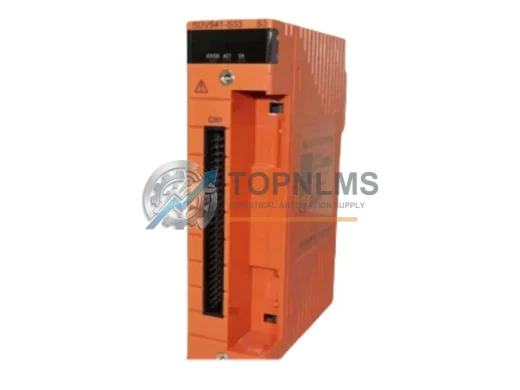
Yokogawa STB4D-00 S2 Ruggedized Terminal Module
STB4D-00 S2Yokogawa STB4D-00 S2 spring-cage terminal block for STARDOM SCF I/O. Ruggedized for harsh environments. Original spare, 12-month warranty, fast global shipping.
Request availability, condition, lead time and export shipping details for NNFTA4S-00-S2.
Send this exact part number, quantity and destination country. TOPNLMS will confirm availability, condition and export lead time before quotation.
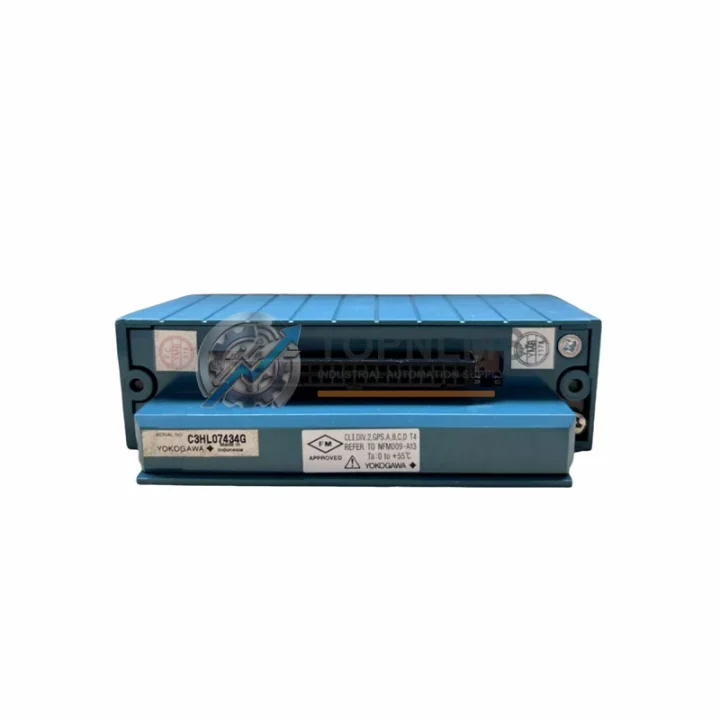
The Yokogawa NNFTA4S-00-S2 is a field wiring terminal block module designed for the CENTUM VP Distributed Control System platform. As aging CENTUM CS 3000 and early CENTUM VP installations approach end-of-life, plant engineers and procurement teams are actively sourcing verified replacement units to maintain system continuity without triggering a full DCS migration. This module serves as a direct drop-in replacement for deteriorated or discontinued terminal block assemblies within the CENTUM VP I/O subsystem, preserving existing field wiring layouts, marshalling cabinet configurations, and signal routing without requiring re-engineering of the control loop architecture.
The NNFTA4S-00-S2 interfaces directly with Yokogawa’s Node Unit (NU) and Field Control Unit (FCU) architecture. It provides the physical termination layer between field instruments — including transmitters, solenoid valves, RTDs, and thermocouples — and the I/O modules mounted on the CENTUM VP node unit baseplate. When replacing a failed or degraded terminal block, engineers can retain the existing field cable schedule, avoiding costly re-labelling and re-termination work that would otherwise extend planned maintenance windows.
| Parameter | Legacy / Outgoing Unit | NNFTA4S-00-S2 (Replacement) |
|---|---|---|
| Series | CENTUM CS 3000 / Early CENTUM VP | CENTUM VP (current generation) |
| Module Type | Terminal Block / Field Wiring Interface | Terminal Block Module (direct replacement) |
| Mounting | Node Unit baseplate / marshalling rail | Compatible with existing NU baseplate and DIN rail marshalling |
| Field Wiring | Screw-type terminals, existing cable schedule retained | Identical terminal pitch and wiring layout — no re-termination required |
| Signal Types | AI/AO/DI/DO field signals, RTD, TC | Supports same signal categories per CENTUM VP I/O specification |
| Communication | Internal CENTUM VP backplane bus | Fully compatible with CENTUM VP backplane — no protocol change |
| Power Supply | Powered via node unit backplane (no separate PSU) | Same backplane-powered architecture — no additional power wiring |
| Physical Dimensions | Standard CENTUM VP terminal block form factor | Identical form factor — fits existing cabinet cutout and rail spacing |
| Installation Space | Existing marshalling cabinet / junction box | No cabinet modification required |
| Replacement Scope | 1-for-1 module swap | Direct replacement — no firmware or configuration change needed |
| Warranty | OEM warranty expired (legacy unit) | 12-Month Warranty from TOPNLMS |
A successful CENTUM VP terminal block replacement rarely occurs in isolation. During planned maintenance or emergency swap-outs, site engineers typically audit adjacent components within the same node unit or marshalling cabinet to pre-empt cascading failures. The NNFTA4S-00-S2 is commonly sourced alongside the Yokogawa AMN11 Node Unit, which houses the I/O modules and terminal blocks in a unified backplane assembly. Where the node unit itself shows signs of backplane corrosion or connector wear, replacing the AMN11 in conjunction with the terminal block eliminates the risk of intermittent signal faults after the maintenance window closes.
Field engineers working on CENTUM VP I/O expansions or loop re-assignments frequently pair this terminal block with Yokogawa AAI141-S00 Analog Input Modules and AAI543-H00 Analog Output Modules, which plug directly into the node unit baseplate and rely on the terminal block for their field-side wiring interface. Ensuring the terminal block is in verified condition before commissioning new I/O modules prevents nuisance alarms and loop calibration errors during startup.
For sites migrating from CENTUM CS 3000 to CENTUM VP, the field wiring infrastructure — including marshalling panels, junction boxes, and cable trays — is typically retained to minimize civil and electrical rework. In these scenarios, the Yokogawa NFTA4S terminal block family provides the continuity layer that allows CS 3000-era field cables to connect cleanly into the CENTUM VP node unit without adapter wiring. The NNFTA4S-00-S2 fits within this migration strategy as a verified, in-stock component that bridges legacy field infrastructure with the current DCS generation.
Communication integrity across the CENTUM VP system depends on the health of the ESB (Enhanced Signal Bus) communication modules and Yokogawa ACM12 Communication Modules that manage data exchange between the FCU and the operator station. When performing a terminal block replacement as part of a broader system health check, verifying the ACM12 communication module status ensures that the restored I/O loop is correctly polled by the control system after the swap. Sites running Vnet/IP as their plant network backbone should also confirm that the Yokogawa AIP588 Vnet/IP Interface Module firmware is current, as outdated firmware can cause loop recognition delays following hardware changes in the node unit.
For control cabinets where power distribution is shared across multiple node units, the Yokogawa PW481 Power Supply Module should be inspected during the same maintenance cycle. A degraded power supply delivering marginal voltage to the node unit backplane can cause intermittent terminal block faults that are misdiagnosed as wiring or module failures. Replacing the terminal block without addressing an underlying power supply issue will result in repeat failures within the same maintenance interval.
Finally, sites that use Yokogawa CENTUM VP Engineering Workstation (EWS) software for loop configuration and diagnostic downloads should verify that the replacement terminal block is correctly mapped in the system database before returning the loop to automatic control. The EWS provides the configuration interface for I/O assignment, tag mapping, and alarm limit verification — all of which should be confirmed after any hardware change in the field I/O subsystem.
Q: Can I replace the NNFTA4S-00-S2 without shutting down the entire node unit?
A: In most CENTUM VP installations, individual terminal blocks can be swapped during a planned loop isolation without taking the entire node unit offline. However, this depends on your site’s safety procedures and whether the affected loops are in manual or automatic control. Always consult your site’s MOC (Management of Change) procedure before performing hot-swap operations on live I/O.
Q: Will the existing field wiring connect directly to the replacement terminal block?
A: Yes. The NNFTA4S-00-S2 uses the same terminal pitch, screw type, and wiring layout as the original CENTUM VP terminal block specification. No adapter cables, re-termination, or cable schedule changes are required. Field cables can be transferred directly from the failed unit to the replacement.
Q: Does replacing the terminal block require any changes to the CENTUM VP control program or tag database?
A: No. The terminal block is a passive wiring interface component. It does not contain firmware, configuration data, or addressable logic. The CENTUM VP control program, tag assignments, and I/O module configuration remain unchanged after the swap.
Q: Is the NNFTA4S-00-S2 compatible with both CENTUM CS 3000 and CENTUM VP node units?
A: The NNFTA4S-00-S2 is specified for the CENTUM VP platform. Compatibility with CS 3000 node units depends on the specific baseplate revision and terminal block mounting standard used at your site. Contact our technical team with your node unit model number for a confirmed cross-reference before ordering.
Q: What communication protocols are supported through this terminal block?
A: The terminal block itself is protocol-agnostic — it provides the physical wiring termination layer. The communication protocol (FOUNDATION Fieldbus, HART, or conventional 4–20 mA) is determined by the I/O module connected to the same node unit slot. The NNFTA4S-00-S2 supports field wiring for all signal types compatible with the CENTUM VP I/O module range.
Q: How do I verify the replacement unit before installation?
A: Each unit shipped by TOPNLMS undergoes pre-shipment inspection including visual inspection, terminal continuity check, and connector integrity verification. A test report is available upon request. We recommend performing a loop check after installation using your site’s standard commissioning procedure before returning the loop to automatic control.
Every Yokogawa NNFTA4S-00-S2 Terminal Block Module shipped by TOPNLMS is covered by a 12-Month Warranty from the date of delivery. This warranty covers manufacturing defects, terminal failure, and connector integrity issues identified under normal operating conditions consistent with the CENTUM VP system environment.
Prior to shipment, each unit undergoes a structured pre-delivery inspection: visual examination for physical damage, terminal block continuity verification, connector pin inspection, and packaging integrity check. Units that do not pass inspection are quarantined and not shipped. A pre-shipment inspection report is available upon request for quality-assurance documentation purposes.
In the event of a warranty claim, TOPNLMS provides replacement unit dispatch within 3–5 business days of claim confirmation. Our technical team will work with your procurement and maintenance contacts to coordinate the replacement logistics, minimizing the impact on your planned maintenance schedule. Warranty claims are processed via email at [email protected] with supporting documentation including order reference, installation date, and fault description.
For urgent replacement requirements — including emergency shutdowns, unplanned outages, or critical loop failures — TOPNLMS maintains in-stock inventory of the NNFTA4S-00-S2 and can arrange expedited shipping from our Xiamen warehouse. Lead times for standard orders are 3–7 business days internationally. Express shipping options are available upon request.
Our procurement guarantee includes: verified unit authenticity, pre-shipment inspection, 12-month warranty coverage, post-sale technical support, and responsive after-sales communication. We serve plant engineers, MRO procurement teams, system integrators, and DCS maintenance contractors across Asia-Pacific, the Middle East, and Europe.
Yokogawa STB4D-00 S2 spring-cage terminal block for STARDOM SCF I/O. Ruggedized for harsh environments. Original spare, 12-month warranty, fast global shipping.
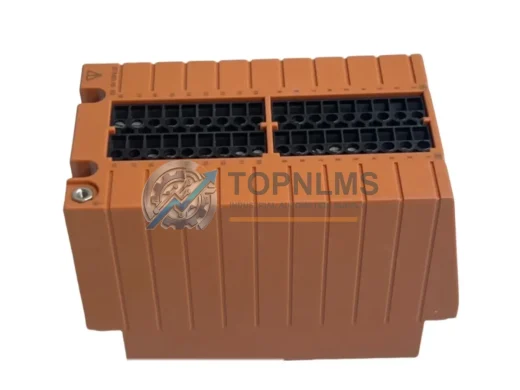
Yokogawa STA4D-10 S2 dual-level spring-clamp terminal block, STA Series, DIN rail mount. Original industrial spare for replacement & preventive maintenance. 12-month warranty.
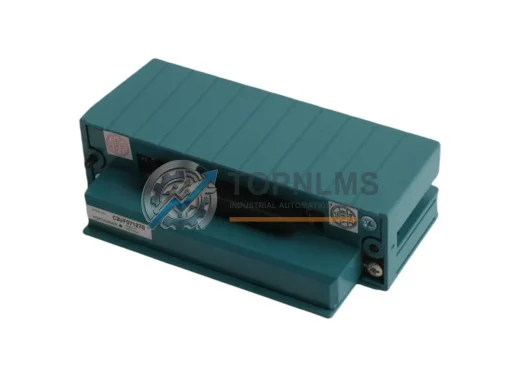
YOKOGAWA NFTI3S-00 S2 CENTUM VP ruggedized field terminal block. In stock, tested, 12-month warranty. Fast shipping. Contact: [email protected]
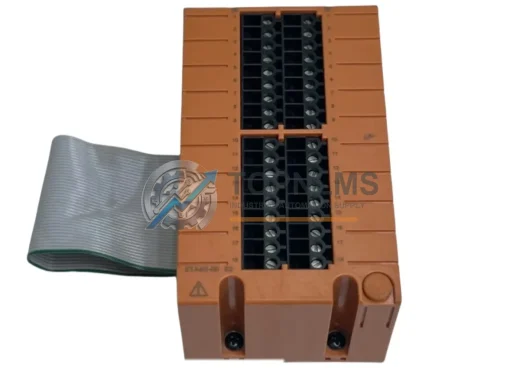
Yokogawa STA4D-00-S2 replacement terminal block for CENTUM VP & CS 3000. Drop-in upgrade, 12-month warranty, fast global shipping from stock.
Click Quote This Model and the Part Number field will auto-fill with NNFTA4S-00-S2.