
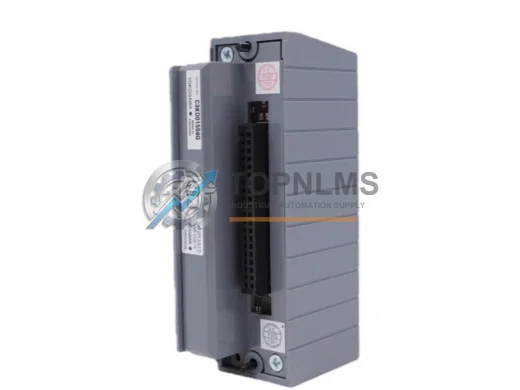
Yokogawa
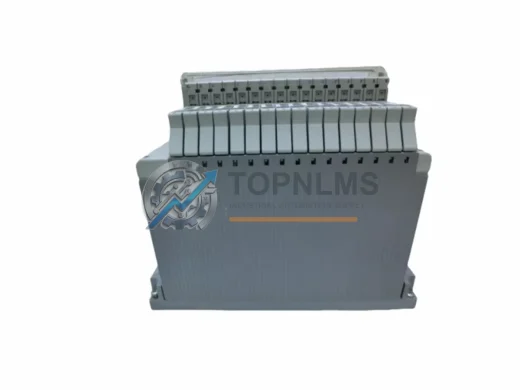
Yokogawa ATA4S-10S2 Replacement for CENTUM VP DCS
ATA4S-10S2Yokogawa ATA4S-10S2 analog input module replacement for CENTUM VP DCS. Compatible upgrade, 12-month warranty, fast global shipping from stock.
Request availability, condition, lead time and export shipping details for NFAI143-S01.
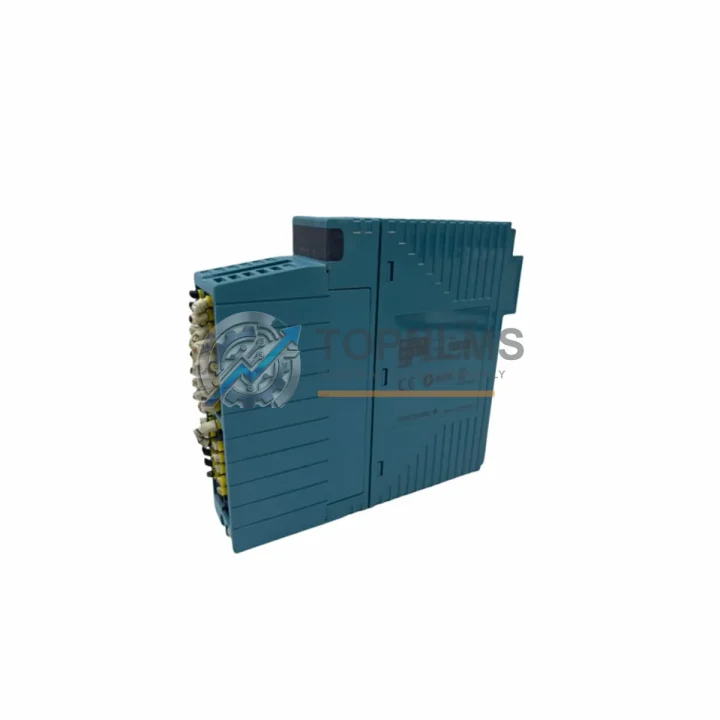
Send this exact part number, quantity and destination country. TOPNLMS will confirm availability, condition and export lead time before quotation.
The Yokogawa NFAI143-S01 is a 16-channel isolated analog input module engineered for the CENTUM VP and CS 3000 Distributed Control Systems — two of the most widely deployed DCS platforms in process industries worldwide. For maintenance engineers managing aging control infrastructure, this module represents a critical line of defense against unplanned downtime. Whether you are executing a scheduled turnaround, responding to a field fault, or building a strategic spare parts inventory, the NFAI143-S01 delivers the signal integrity, channel density, and system compatibility required to keep your process running without interruption.
In high-availability plants — refineries, chemical facilities, power generation stations, and pharmaceutical manufacturing lines — the analog input layer is the nervous system of the control loop. A failed AI module can blind operators to critical process variables: temperature, pressure, flow, and level signals that drive safety interlocks and regulatory control. The NFAI143-S01 provides 16 fully isolated channels, meaning a fault on one channel does not propagate to adjacent signals. This isolation architecture is essential in environments where ground loops, electrical noise, and legacy field wiring create chronic signal quality challenges.
| Parameter | Specification |
|---|---|
| Model / SKU | NFAI143-S01 |
| Brand | Yokogawa Electric Corporation |
| Series | CENTUM VP / CS 3000 |
| Module Type | 16-Channel Isolated Analog Input Module |
| Input Signal Range | 4–20 mA DC / 1–5 V DC (field-selectable per channel) |
| Channel Isolation | Full channel-to-channel and channel-to-bus isolation |
| Resolution | 16-bit A/D conversion |
| Accuracy | ±0.1% of full scale (at 25°C) |
| Scan Cycle | Configurable; compatible with CENTUM VP FCS scan periods |
| Power Consumption | Per CENTUM VP node bus specification |
| Operating Temperature | 0°C to 55°C |
| Storage Temperature | -25°C to 70°C |
| Humidity | 5% to 95% RH (non-condensing) |
| Mounting | CENTUM VP / CS 3000 node unit slot (hot-swap capable) |
| Country of Origin | Japan |
| Compatibility | CENTUM VP R4.x–R6.x, CS 3000 R3.x; backward compatible with legacy node configurations |
| Certifications | CE, UL (per Yokogawa product certification documentation) |
| Warranty | 12 Months — covers manufacturing defects; full functional test prior to shipment |
Experienced DCS maintenance teams know that a module replacement event is never truly isolated. When the NFAI143-S01 is pulled for inspection or replacement, it is best practice to treat the surrounding node unit as a complete maintenance zone. Begin by verifying the health of the node bus backplane and the CENTUM VP Field Control Station (FCS) processor card — a degraded FCS can cause intermittent AI faults that are misdiagnosed as module failures. Simultaneously, inspect the NFAI143-S01’s companion analog output modules (such as the NFAO141 or NFAO143 series) that share the same control loop; a failing AO module can create feedback anomalies that stress the AI input layer.
Field wiring termination is another common failure point. During the same maintenance window, inspect the terminal assembly units (TAU) and marshalling cabinet terminal blocks connected to the NFAI143-S01’s field channels. Corroded or loose terminals introduce resistance that shifts 4–20 mA readings and triggers spurious alarms. If your plant uses FOUNDATION Fieldbus or HART-enabled instruments on these loops, verify that the HART communication module (such as the Yokogawa LFHM or compatible HART multiplexer) is functioning correctly — HART pass-through faults are frequently traced back to degraded AI module firmware or corrupted channel configuration.
Power supply integrity is equally critical. The CENTUM VP node unit draws regulated DC power from dedicated power supply modules (such as the Yokogawa NFPS series). A power supply operating near its rated load ceiling will cause intermittent resets of AI modules — symptoms that are difficult to distinguish from module hardware faults. Proactively stocking a spare NFPS power supply module alongside the NFAI143-S01 is a low-cost insurance policy against extended downtime. Similarly, the node unit’s communication bus coupler and the optical fiber interface modules connecting the node to the FCS cabinet should be inspected for signal degradation, especially in plants where the DCS infrastructure is more than ten years old.
For plants running hybrid architectures — where CENTUM VP coexists with legacy CS 3000 nodes — the NFAI143-S01’s backward compatibility is a significant operational advantage. Maintenance planners can consolidate spare parts inventory around a single AI module SKU rather than maintaining separate stocks for each generation. This consolidation strategy should extend to related components: the CS 3000 AMN11 and AMN21 node units, the CENTUM VP AFV10 and AFV30 field control units, and the associated I/O module carrier cards. A well-structured spare parts kit for a CENTUM VP / CS 3000 hybrid plant should include at minimum one NFAI143-S01, one analog output module, one power supply module, one communication coupler, and a set of pre-tested terminal assembly units — all verified against the plant’s current DCS revision level before being placed in the spare parts cabinet.
Preventive maintenance intervals for the NFAI143-S01 should align with your plant’s turnaround schedule. During each planned shutdown, remove the module, perform a bench calibration check against a certified current source, verify channel-to-channel isolation resistance, and inspect the module connector pins for oxidation. Modules that pass bench testing should be reinstalled with a calibration sticker and logged in your CMMS. Modules showing drift beyond ±0.2% of full scale should be flagged for replacement regardless of visible physical condition — analog drift is an early indicator of capacitor aging in the A/D conversion circuit.
The NFAI143-S01 is a direct replacement for earlier Yokogawa CENTUM CS 3000 analog input modules, including legacy variants that may no longer be available through standard distribution channels. For plants operating CS 3000 systems installed in the late 1990s and early 2000s, sourcing original spare modules has become increasingly difficult as Yokogawa has transitioned its primary support focus to the CENTUM VP platform. The NFAI143-S01’s cross-generation compatibility means that maintenance teams can upgrade individual node slots from legacy CS 3000 AI modules to the NFAI143-S01 without requiring FCS firmware changes or I/O database reconfiguration — a critical advantage when plant management cannot approve a full DCS migration project.
Replacement lead times for DCS analog input modules from OEM channels can range from 8 to 20 weeks, particularly for modules that are classified as slow-moving inventory. For plants with zero-tolerance downtime requirements — continuous process units, safety-critical loops, or facilities operating under regulatory inspection — this lead time is operationally unacceptable. Maintaining a minimum of two NFAI143-S01 modules in on-site spare parts inventory eliminates this risk entirely. The carrying cost of two spare modules is negligible compared to the production loss from a single unplanned shutdown event caused by an unavailable AI module.
When planning a strategic replacement, verify the module’s hardware revision against your FCS configuration database. CENTUM VP systems track module hardware revisions in the system configuration builder (SCB), and a revision mismatch can trigger a configuration alarm on first insertion. This is resolved by updating the SCB module definition — a five-minute procedure — but it must be planned for in advance if the replacement is being performed during a live production window. Our team can provide hardware revision documentation for each NFAI143-S01 unit prior to shipment upon request.
Q1: Is the NFAI143-S01 compatible with both CENTUM VP and CS 3000 systems?
Yes. The NFAI143-S01 is designed for use in CENTUM VP node units and is backward compatible with CS 3000 node configurations. It supports CENTUM VP R4.x through R6.x and CS 3000 R3.x. For specific revision compatibility, provide your FCS firmware version and we will confirm compatibility before shipment.
Q2: What pre-shipment testing is performed on each unit?
Every NFAI143-S01 unit undergoes a full functional test prior to shipment, including channel-by-channel signal verification across the 4–20 mA input range, isolation resistance testing, and connector integrity inspection. A test report is available upon request. Units are shipped in anti-static packaging with individual serial number documentation.
Q3: What does the 12-month warranty cover?
The 12-month warranty covers manufacturing defects and functional failures under normal operating conditions as specified in the Yokogawa NFAI143-S01 hardware manual. It does not cover damage resulting from incorrect installation, overvoltage events, or physical mishandling. Warranty claims are processed within 5 business days of receipt of the returned unit.
Q4: How quickly can the NFAI143-S01 be shipped, and what regions do you serve?
In-stock units are typically dispatched within 1–3 business days. We serve customers globally, including Asia-Pacific, Europe, the Middle East, and the Americas. Express shipping options are available for emergency maintenance situations. Contact us directly for urgent order processing and freight arrangements.
Yokogawa ATA4S-10S2 analog input module replacement for CENTUM VP DCS. Compatible upgrade, 12-month warranty, fast global shipping from stock.
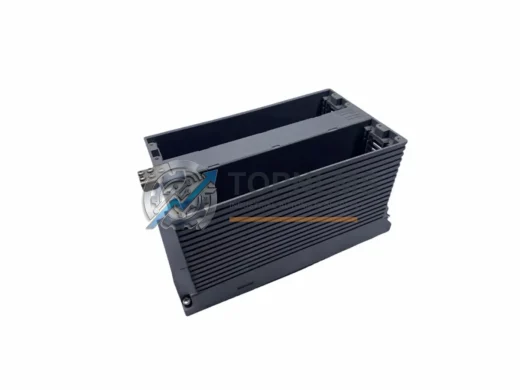
YOKOGAWA AMN32 S1 original DCS I/O module for CENTUM VP systems. Verified spare, 12-month warranty, fast global shipping. Reduce downtime now.
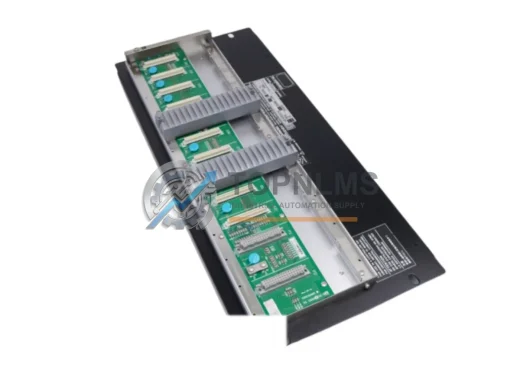
Yokogawa ANB10D-421 original 4-ch 4–20mA analog output module for CENTUM VP & CS 3000. Industrial spare, 12-month warranty, tested before shipment.
YOKOGAWA AMN21 replacement & upgrade solution for CENTUM CS3000/VP DCS. Compatible wiring, 12-month warranty, fast shipping. Contact: [email protected]
Click Quote This Model and the Part Number field will auto-fill with NFAI143-S01.