
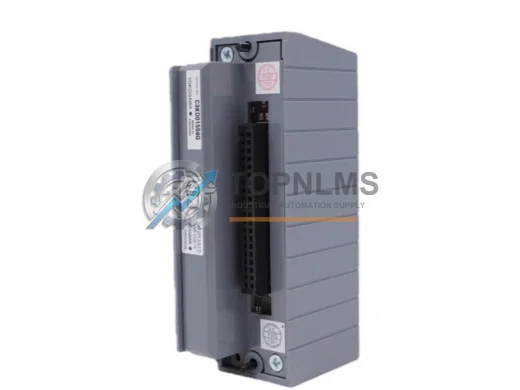
Yokogawa
Yokogawa ATA4S-10S2 Replacement for CENTUM VP DCS
ATA4S-10S2Yokogawa ATA4S-10S2 analog input module replacement for CENTUM VP DCS. Compatible upgrade, 12-month warranty, fast global shipping from stock.
Request availability, condition, lead time and export shipping details for F3YD64-1P.
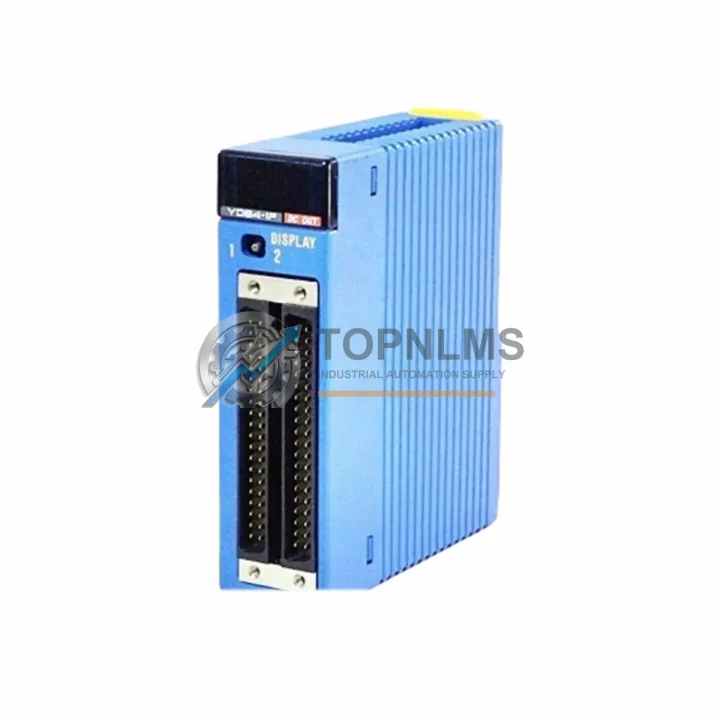
Send this exact part number, quantity and destination country. TOPNLMS will confirm availability, condition and export lead time before quotation.
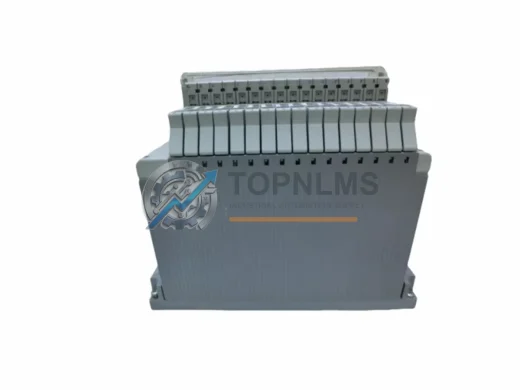
The YOKOGAWA F3YD64-1P is a 64-channel transistor digital output module engineered for the STARDOM FCN and FCJ autonomous controllers — Yokogawa’s field-proven platform for process automation, utility management, and distributed control in demanding industrial environments. As a genuine original spare part, the F3YD64-1P is the definitive replacement choice for maintenance engineers managing aging STARDOM-based control systems, ensuring full hardware compatibility, validated firmware interoperability, and uninterrupted process continuity without costly system redesign.
In facilities where STARDOM FCN/FCJ controllers govern critical loops — from compressor sequencing and pump control to valve actuation and conveyor management — the digital output module is among the highest-wear components in the I/O subsystem. Transistor outputs cycle thousands of times per day under load, and over time, output channels degrade, causing intermittent faults, nuisance trips, or complete channel failure. Stocking the F3YD64-1P as a certified spare eliminates mean-time-to-repair uncertainty and protects production uptime.
| Model | F3YD64-1P |
| Manufacturer | YOKOGAWA Electric Corporation |
| Module Type | 64-Channel Transistor Digital Output (DO) |
| Compatible Systems | STARDOM FCN, STARDOM FCJ Autonomous Controllers |
| Output Channels | 64 channels (transistor sink/source, model-dependent) |
| Output Voltage Range | DC 10.8 V – 26.4 V (24 VDC nominal) |
| Max Load Current per Channel | 0.1 A per channel |
| Isolation | Photocoupler isolation between field and logic circuits |
| Module Form Factor | FCN/FCJ I/O slot-mount, DIN-rail base unit compatible |
| Operating Temperature | 0°C to 55°C |
| Storage Temperature | -25°C to 70°C |
| Relative Humidity | 5% to 95% RH (non-condensing) |
| Origin | Japan |
| Weight | Approx. 290 g |
| Certifications | CE, UL (per STARDOM system certification) |
| Warranty | 12 Months from shipment date |
A scheduled maintenance inspection of the STARDOM FCN/FCJ control cabinet should treat the F3YD64-1P not in isolation, but as part of an integrated I/O health review. When a digital output module shows signs of channel degradation — evidenced by inconsistent field device response, elevated diagnostic fault codes, or failed self-test routines — experienced maintenance teams know that adjacent modules in the same base unit are subject to the same operational age and thermal stress cycles.
During the same maintenance window, it is best practice to inspect the F3AD08-0N analog input module and F3DA04-0N analog output module installed in neighboring slots, as these share the same backplane power distribution and are equally susceptible to long-term drift or contact fatigue. The FCN base unit (NFBU05) itself should be checked for backplane connector integrity and slot locking mechanism wear — a loose module seat is a common root cause of intermittent I/O faults that are misdiagnosed as module failure.
Power supply health is equally critical. The FCN power supply module (NFPS05) should be load-tested during any planned outage; an aging power supply delivering marginal voltage under full I/O load will cause erratic output behavior across all installed DO modules, including the F3YD64-1P. Simultaneously, inspect the 24 VDC field power distribution terminals and associated fuse modules feeding the output field circuits — blown or weakened fuses are a frequent silent failure mode in high-density 64-channel output configurations.
For STARDOM systems integrated into larger DCS or SCADA architectures, the FCN communication module (NFCP100) handling Ethernet or FOUNDATION Fieldbus connectivity should be verified for firmware currency and link stability. A communication module fault can mask genuine I/O module health by preventing diagnostic data from reaching the engineering workstation. Where the STARDOM FCJ is used as a compact standalone controller, the FCJ I/O expansion module connections and ribbon cable assemblies should be inspected for oxidation or mechanical stress.
Relay output modules such as the F3YR16-0N installed in the same cabinet for high-current switching duties should also be included in the inspection cycle — relay contacts have a finite mechanical life and often reach end-of-life on a similar timeline to transistor output modules in continuous-duty applications. Finally, any signal isolators or loop-powered barriers in the field wiring circuits connected to F3YD64-1P outputs should be tested for isolation resistance and signal fidelity, as degraded isolators can cause false output states that are incorrectly attributed to the DO module itself.
The F3YD64-1P is a direct, slot-compatible replacement for any failed or end-of-life 64-channel digital output module in the STARDOM FCN/FCJ platform. Because YOKOGAWA maintains backward hardware compatibility across STARDOM generations, the F3YD64-1P can be installed without controller firmware upgrades or I/O configuration changes in the vast majority of field applications — reducing replacement time from hours to minutes and eliminating the need for a controls engineer on-site during the swap.
For facilities operating legacy STARDOM systems originally commissioned in the early 2000s, the F3YD64-1P represents a cost-effective alternative to full controller migration. Rather than replacing the entire FCN/FCJ rack — which would require re-engineering field wiring, updating SCADA tag databases, and revalidating control logic — targeted I/O module replacement extends system service life by five to ten years at a fraction of the capital cost. This approach is particularly valuable in industries with long equipment qualification cycles, such as pharmaceuticals, water treatment, and power generation, where system change management is resource-intensive.
Procurement teams managing multi-site operations are advised to establish a minimum stock level of one F3YD64-1P per active STARDOM FCN/FCJ installation. Given typical lead times for original YOKOGAWA spare parts through standard distribution channels, on-hand inventory eliminates the risk of extended production downtime while awaiting replenishment. All units supplied by TOPNLMS are sourced as original YOKOGAWA components, individually tested prior to shipment, and covered by a 12-month warranty — providing procurement confidence equivalent to factory-direct supply.
Q1: Is the F3YD64-1P compatible with both STARDOM FCN and FCJ controllers?
Yes. The F3YD64-1P is designed for the STARDOM FCN/FCJ I/O slot architecture and is compatible with both controller variants. Always verify the base unit slot count and power budget against your specific FCN or FCJ configuration before installation.
Q2: What pre-shipment testing is performed on each unit?
Every F3YD64-1P unit undergoes functional output channel verification and visual inspection before dispatch. Units are shipped in anti-static packaging with individual test records available on request. A 12-month warranty from the shipment date covers all verified defects.
Q3: Can this module replace an older F3YD64 variant without reconfiguring the controller?
In most cases, yes. YOKOGAWA’s STARDOM platform maintains I/O module backward compatibility within the same series. However, we recommend confirming the FCN/FCJ firmware version against the module’s hardware revision compatibility matrix in the YOKOGAWA F3YD64-1P hardware manual before hot-swap replacement in a live system.
Q4: What is the recommended inventory strategy for multi-site STARDOM installations?
For facilities with three or more STARDOM FCN/FCJ systems, maintaining a centralized spare pool of two F3YD64-1P modules — rotated on a first-in, first-out basis — provides adequate coverage for unplanned failures while minimizing carrying cost. Annual inventory audits should cross-reference installed module serial numbers against procurement records to identify units approaching ten years of continuous service.
Yokogawa ATA4S-10S2 analog input module replacement for CENTUM VP DCS. Compatible upgrade, 12-month warranty, fast global shipping from stock.
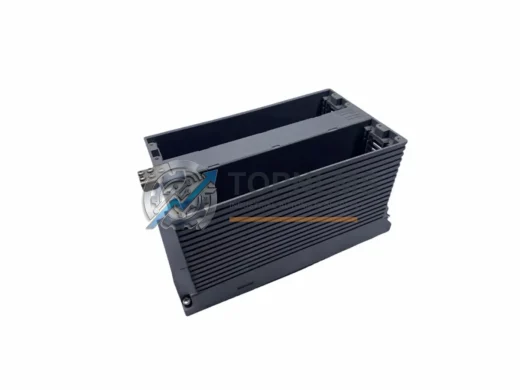
YOKOGAWA AMN32 S1 original DCS I/O module for CENTUM VP systems. Verified spare, 12-month warranty, fast global shipping. Reduce downtime now.
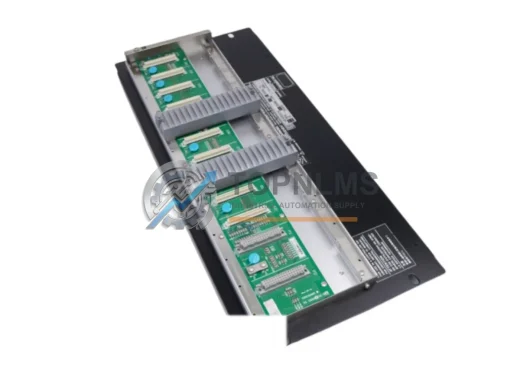
Yokogawa ANB10D-421 original 4-ch 4–20mA analog output module for CENTUM VP & CS 3000. Industrial spare, 12-month warranty, tested before shipment.
YOKOGAWA AMN21 replacement & upgrade solution for CENTUM CS3000/VP DCS. Compatible wiring, 12-month warranty, fast shipping. Contact: [email protected]
Click Quote This Model and the Part Number field will auto-fill with F3YD64-1P.