
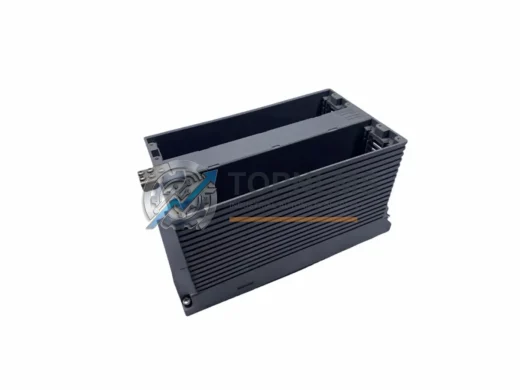
Yokogawa
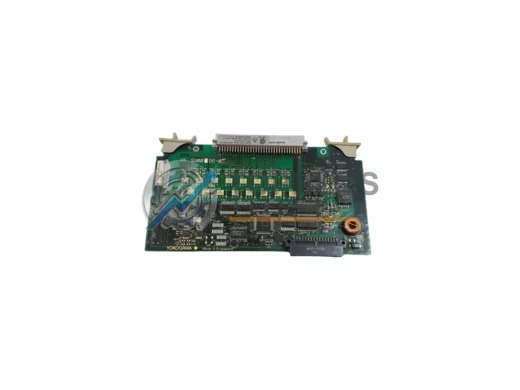
YOKOGAWA AMN32 S1 Original Industrial Spare CENTUM VP Compatible
AMN32 S1YOKOGAWA AMN32 S1 original DCS I/O module for CENTUM VP systems. Verified spare, 12-month warranty, fast global shipping. Reduce downtime now.
Request availability, condition, lead time and export shipping details for EP3*A.
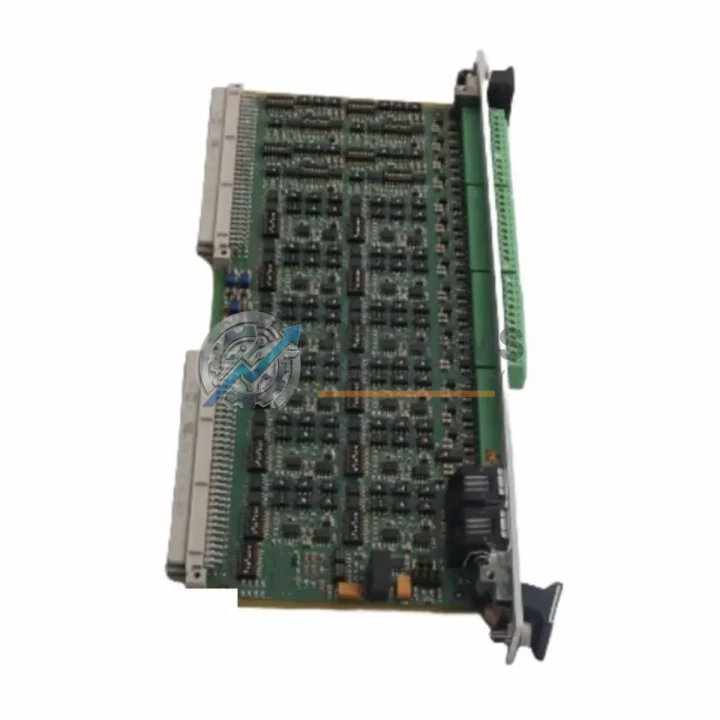
Send this exact part number, quantity and destination country. TOPNLMS will confirm availability, condition and export lead time before quotation.
The YOKOGAWA EP3*A is a multi-channel analog input module engineered for the CENTUM series Distributed Control System (DCS) platform — one of the most widely deployed process control architectures in petrochemical, power generation, pharmaceutical, and water treatment facilities worldwide. As original EP3*A units reach end-of-life, become discontinued, or grow increasingly difficult to source through standard OEM channels, plant engineers and maintenance managers face a critical decision: accept extended downtime while waiting for OEM supply, or pursue a verified drop-in replacement that restores full system functionality without disrupting the existing control architecture.
TOPNLMS supplies tested EP3*A replacement modules that enable a smooth, low-risk transition from aging or failed units. Whether your facility operates a CENTUM CS, CENTUM CS 1000, CENTUM CS 3000, or is in the process of migrating toward CENTUM VP, the EP3*A replacement available from TOPNLMS is functionally verified, wiring-compatible, and ready to deploy into your existing I/O rack without mechanical modification, rewiring, or control logic reprogramming.
Our inventory supports both emergency breakdown replacement — where minimizing mean time to repair (MTTR) is the overriding priority — and planned maintenance windows where a phased modernization strategy allows for more deliberate commissioning and documentation. In either scenario, TOPNLMS provides the procurement documentation, test records, and after-sales support required to satisfy your incoming inspection and asset management processes.
| Parameter | Legacy / Outgoing Unit | EP3*A Replacement (TOPNLMS) |
|---|---|---|
| Module SKU | EP3*A (original OEM / discontinued) | EP3*A (verified replacement unit) |
| Platform Compatibility | CENTUM CS / CS 1000 / CS 3000 | CENTUM CS / CS 1000 / CS 3000 / VP (with adapter where applicable) |
| Signal Type | Analog Input — 4–20 mA / 1–5 V DC | Analog Input — 4–20 mA / 1–5 V DC (identical specification) |
| Wiring Interface | OEM terminal block (marshalling or direct) | Direct-compatible terminal block — no field rewiring required |
| Communication Protocol | CENTUM internal ESB / V-net bus (proprietary) | Fully compatible with CENTUM ESB and V-net/IP bus architecture |
| Rack / Backplane Fit | CENTUM standard I/O rack (RM series) | Direct slot-in replacement — no mechanical modification required |
| Power Supply | 24 VDC rack-supplied | 24 VDC rack-supplied — identical power draw and connector |
| Programming / Configuration | CENTUM Engineering Environment (CEW) | No reprogramming required for direct like-for-like replacement |
| Cabinet Space | Standard CENTUM I/O slot (single-width) | Identical form factor — no cabinet or rack modification needed |
| Replacement Recommendation | OEM warranty expired / unit discontinued | Verified drop-in replacement with full functional test |
| Warranty | OEM warranty unavailable | 12-Month Warranty from TOPNLMS (from delivery date) |
A successful EP3*A migration rarely involves a single module in isolation. In operational CENTUM DCS environments, the analog input module functions as part of a tightly integrated I/O subsystem, and a thorough upgrade plan must account for the adjacent components that share the same rack, backplane, power bus, and communication infrastructure.
On the field wiring side, the EP3*A interfaces with marshalling terminals and, in many installations, with signal isolators or barriers positioned between field transmitters and the DCS I/O rack. If your existing terminal blocks show signs of contact oxidation or mechanical wear — common in installations exceeding 10 years of continuous service — replacing them concurrently with the EP3*A module eliminates a frequent source of intermittent signal drift and nuisance alarms. Signal conditioners and galvanic isolators installed upstream of the module should also be verified for input impedance compatibility with the replacement unit.
Within the CENTUM I/O rack itself, the EP3*A shares backplane resources with companion modules including analog output modules such as the AAM10 and AAM11, digital input modules such as the ADV151, and digital output modules such as the ADV161. If the rack’s power supply module — for example the PW481 or PW482 — is approaching its rated service life, coordinating its replacement during the same planned outage avoids a second unscheduled shutdown. The RM series I/O rack backplane connector integrity should be inspected before the new EP3*A is seated, particularly in high-vibration or high-humidity environments.
For facilities running CENTUM CS 3000 and planning a migration toward CENTUM VP, the Field Control Station (FCS) and its associated ESB bus interface cards must remain fully operational to support the replaced I/O module. Engineering teams executing this type of phased modernization frequently source the AAI141 multi-channel analog input module as a forward-compatible alternative for slots where the EP3*A is being retired, allowing a gradual transition without a full FCS cutover. In parallel, the AFV10S and AFV30S function block libraries can be preserved across the migration, reducing re-engineering effort.
Where HART-enabled field instruments are present, confirming whether the EP3*A replacement variant supports HART pass-through is an essential pre-commissioning step. In installations where native HART support is absent, a HART multiplexer integrated at the marshalling level provides secondary instrument access without modifying the DCS configuration or the EP3*A slot assignment.
Engineering teams executing broader DCS modernization programs often pair the EP3*A replacement with an updated Human Machine Interface (HMI) workstation running CENTUM VP’s FAST/TOOLS historian or the Exaopc OPC DA/UA server, enabling improved process data visibility and integration with plant-level MES or SCADA systems — without altering the underlying control strategy or requiring a full FCS replacement. Procurement teams in these programs frequently consolidate spare parts orders to include companion modules such as the AAI543 analog input module and the ALR111 alarm module, building a structured spare parts inventory that reduces future lead-time exposure and supports long-term site maintenance planning.
TOPNLMS maintains stock across YOKOGAWA CENTUM-compatible I/O, communication, power, and controller module categories, allowing customers to consolidate multi-line procurement into a single order and reduce logistics complexity for both planned and emergency sourcing scenarios.
Q: Do I need to rewire field cables when replacing the EP3*A?
A: No. The replacement EP3*A module uses the same terminal block interface as the original OEM unit. Field wiring connected to the marshalling panel or directly to the module terminal block does not require modification. Verify terminal torque specifications per the CENTUM wiring manual before re-energizing the circuit.
Q: Will my existing CENTUM control logic and function blocks require reprogramming?
A: For a direct like-for-like replacement, no reprogramming is required. The module’s I/O tag assignments, engineering unit scaling, and alarm setpoints stored in the FCS database remain valid and do not need to be re-entered. If you are migrating from an older CENTUM CS revision to CS 3000 or VP, a partial re-engineering of the I/O assignment may be necessary — TOPNLMS can provide technical documentation to support this process.
Q: Is the EP3*A compatible with HART field instruments?
A: Compatibility depends on the specific EP3*A variant and firmware revision. Confirm the HART pass-through capability of your target module against your field instrument list before installation. Where native HART support is absent, a HART multiplexer can be integrated at the marshalling level without modifying the DCS configuration or the EP3*A slot assignment.
Q: What communication protocol does the EP3*A use internally?
A: The EP3*A communicates over YOKOGAWA’s proprietary CENTUM internal ESB (Enhanced Signal Bus) or V-net/IP bus, depending on the FCS generation installed at your site. The replacement module supplied by TOPNLMS is fully compatible with the bus architecture of your existing CENTUM installation and does not require bus configuration changes.
Q: How do I verify physical fit before installation?
A: The EP3*A occupies a standard CENTUM I/O slot in the RM series rack. Confirm the slot designation in your FCS I/O assignment drawing. The module’s form factor is identical to the original OEM unit, requiring no mechanical modification to the rack or control cabinet. Inspect the rack backplane connector pins for cleanliness and mechanical integrity before inserting the replacement module.
Q: Can the EP3*A replacement be used in a CENTUM VP system?
A: In most CENTUM VP installations that retain legacy I/O racks from a CS 3000 migration, the EP3*A replacement is compatible with the existing rack and backplane. For new CENTUM VP FCS configurations using the KFCS2 or PFCS controller, verify the I/O module compatibility list against your specific FCS hardware revision before ordering.
Q: What is the typical lead time for EP3*A from TOPNLMS?
A: In-stock units ship within 1–3 business days from our Xiamen warehouse. Express international shipping options are available for urgent downtime recovery scenarios. Contact us at [email protected] or +86 18359293191 for real-time stock confirmation and expedited freight quotations.
Every EP3*A module shipped by TOPNLMS is covered by a 12-month warranty from the date of confirmed delivery. Prior to dispatch, each unit undergoes a structured functional verification process including power-on testing, per-channel signal integrity checks across the full 4–20 mA input range, and communication bus handshake confirmation against a reference CENTUM rack. Modules that do not meet our outgoing quality criteria are quarantined and removed from available inventory.
In the event of a warranty claim, TOPNLMS provides a replacement unit or full refund based on the fault assessment outcome. Our after-sales response target is 24 hours for initial fault acknowledgment and 72 hours for replacement dispatch on confirmed warranty cases. For customers facing active process downtime, replacement units can be dispatched before the faulty module is returned — subject to prior written agreement with our sales team.
Procurement documentation including functional test reports, packing lists, and certificates of conformance is available upon request to support your incoming inspection, asset registration, and maintenance management system (MMS) update processes. TOPNLMS serves industrial customers across manufacturing, petrochemical, power generation, pharmaceutical, and water treatment sectors, with established export logistics to Southeast Asia, the Middle East, South Asia, and Europe.
For volume orders, blanket purchase agreements, or consignment stock arrangements to support long-term site maintenance planning, contact our sales team directly to discuss terms aligned with your maintenance budget cycle and capital expenditure planning requirements.
YOKOGAWA AMN32 S1 original DCS I/O module for CENTUM VP systems. Verified spare, 12-month warranty, fast global shipping. Reduce downtime now.
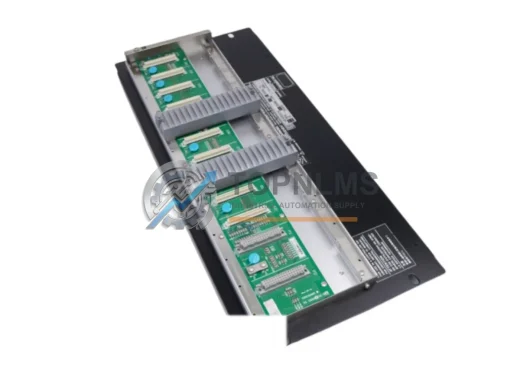
Yokogawa ANB10D-421 original 4-ch 4–20mA analog output module for CENTUM VP & CS 3000. Industrial spare, 12-month warranty, tested before shipment.
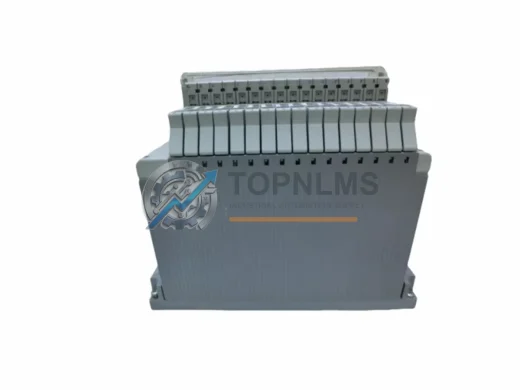
YOKOGAWA AMN21 replacement & upgrade solution for CENTUM CS3000/VP DCS. Compatible wiring, 12-month warranty, fast shipping. Contact: [email protected]
Yokogawa AMM12-S2 original analog input module for CENTUM DCS systems. Tested, 12-month warranty, fast worldwide shipping. Reduce downtime with genuine spares.
Click Quote This Model and the Part Number field will auto-fill with EP3*A.