
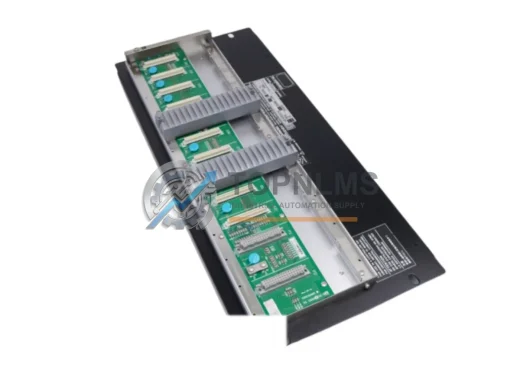
Yokogawa
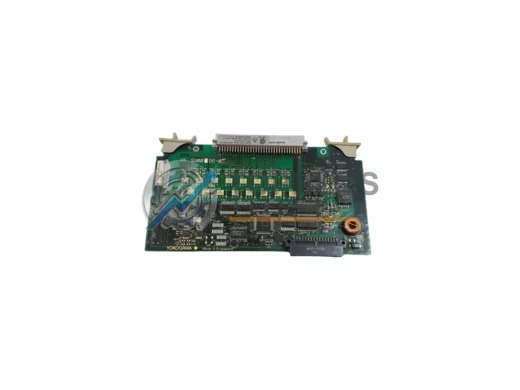
Yokogawa ANB10D-421 Original Industrial Spare CENTUM VP Compatible
ANB10D-421Yokogawa ANB10D-421 original 4-ch 4–20mA analog output module for CENTUM VP & CS 3000. Industrial spare, 12-month warranty, tested before shipment.
Request availability, condition, lead time and export shipping details for ADV161-P50 S2.
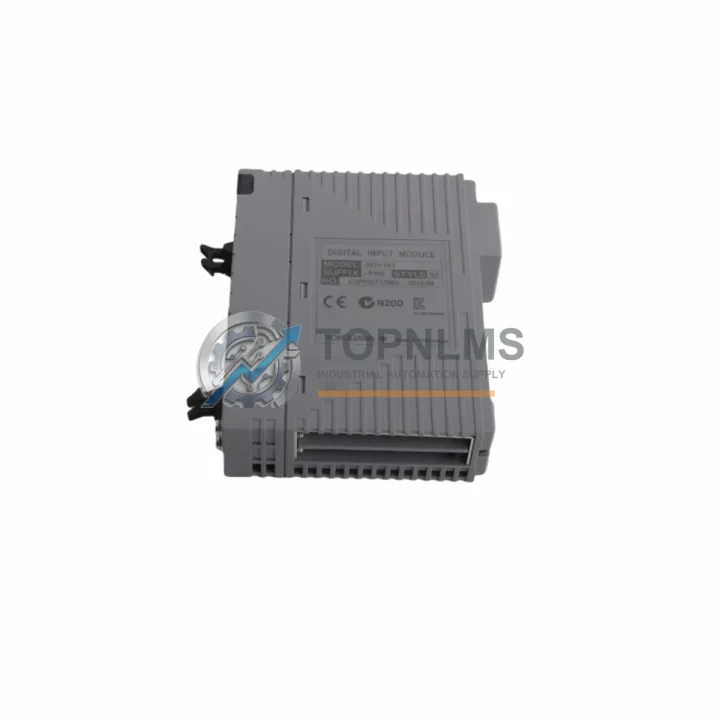
Send this exact part number, quantity and destination country. TOPNLMS will confirm availability, condition and export lead time before quotation.
Migrating an aging CENTUM VP or CENTUM CS 3000 distributed control system to a modern, reliable configuration is one of the most critical decisions a plant engineer faces. The Yokogawa ADV161-P50 S2 Digital Input Module is a proven, field-tested component that enables a smooth, low-risk transition from discontinued or end-of-life I/O hardware without requiring a full system overhaul. Whether you are replacing a failed card, upgrading a legacy rack, or executing a phased DCS modernization project, this module delivers the compatibility, signal integrity, and installation simplicity your team needs to minimize downtime and protect your capital investment.
The ADV161-P50 S2 is a 16-channel digital input module designed for the CENTUM VP field control station (FCS) environment. It accepts dry contact and voltage-level discrete signals from field devices including limit switches, proximity sensors, push-button stations, and relay outputs from motor control centers. The module slots directly into standard Yokogawa I/O nest assemblies, sharing the same mechanical footprint and connector pinout as earlier CENTUM CS 3000 digital input cards such as the ADV151 and ADV161 series, making it an ideal drop-in replacement in mixed-generation racks where older modules have reached end-of-life.
During a typical retrofit project, engineers often discover that the existing field wiring — marshalled through terminal blocks and junction boxes — can be retained without modification. The ADV161-P50 S2 preserves the same 50-pin connector interface used across the CENTUM VP I/O subsystem, meaning your existing field cable assemblies, marshalling panels, and signal conditioners remain fully compatible. This dramatically reduces the scope of field work, eliminates the need for rewiring, and allows the replacement to be completed during a planned maintenance window rather than an extended shutdown.
From a system architecture perspective, the ADV161-P50 S2 communicates with the field control station processor over the internal Vnet/IP or ESB bus, depending on your FCS generation. It is fully recognized by CENTUM VP R5 and later engineering environments, and its I/O builder configuration is identical to predecessor modules, so existing control logic, function blocks, and alarm setpoints require no modification. Engineers migrating from a CENTUM CS 3000 platform will find that the module’s tag database structure maps cleanly into the CENTUM VP project, reducing re-engineering effort and validation time.
In practice, a complete I/O nest upgrade often involves replacing not just the digital input cards but also companion modules within the same rack. The ADV161-P50 S2 is frequently deployed alongside the ADV551 Digital Output Module for discrete control loops, the AAI141 Analog Input Module for 4–20 mA process variable acquisition, and the AAI543 Analog Output Module for final control element positioning. Power distribution within the nest is handled by the AVR10D Node Power Supply, which provides regulated 24 VDC to the I/O modules and supports hot-swap replacement without de-energizing the rack. The ACM11 Communication Module manages Vnet/IP traffic between the FCS and the I/O nest, and should be verified for firmware compatibility when upgrading I/O cards in a mixed-revision installation.
For sites running hybrid architectures — where a CENTUM VP FCS supervises both legacy CENTUM CS 3000 remote I/O nodes and newer ESB-connected nests — the ADV161-P50 S2 can be installed in either environment, provided the appropriate nest type (RIO or ESB) is selected at the time of order. The ANB10S ESB Bus Node and ANR10S Remote I/O Node are the two primary nest controllers used in these configurations, and both support the ADV161-P50 S2 without firmware modification. Signal isolation between field circuits and the control bus is maintained by the module’s internal optocoupler array, providing 500 V AC isolation and protecting the FCS backplane from field-side transients — a critical consideration when replacing modules in petrochemical, power generation, or water treatment environments where ground loops and induced voltages are common.
Installation is straightforward: the module is inserted into an available I/O slot, secured with the standard captive screw, and the 50-pin field connector is re-attached from the previous module. The CENTUM VP engineering station automatically detects the new card during the next FCS download cycle. No special programming cable or handheld configurator is required. For sites using the CENTUM VP Integrated Development Environment (IDE) with the PRM (Plant Resource Manager) asset management package, the ADV161-P50 S2 will appear in the device inventory automatically, supporting predictive maintenance workflows and calibration record-keeping.
Procurement teams will appreciate that TOPNLMS maintains verified stock of the ADV161-P50 S2, sourced through authorized distribution channels and subject to incoming inspection before dispatch. Each unit is tested for power-on functionality, channel continuity, and communication handshake with a reference FCS prior to shipment. Units are packed in anti-static ESD shielding with foam cushioning to protect the PCB and connector during international freight. Standard lead time from order confirmation to dispatch is 1–3 business days, with DHL Express, FedEx International Priority, and sea freight options available depending on urgency and destination.
| Parameter | Legacy (ADV151 / ADV161 CS3000) | ADV161-P50 S2 (CENTUM VP) |
|---|---|---|
| Platform | CENTUM CS 3000 | CENTUM VP (R5+) |
| Input Channels | 16 DI | 16 DI |
| Connector Type | 50-pin MIL connector | 50-pin MIL connector (compatible) |
| Signal Type | Dry contact / 24 VDC | Dry contact / 24 VDC |
| Bus Interface | RIO / ESB | RIO / ESB (selectable) |
| Isolation | 500 V AC optocoupler | 500 V AC optocoupler |
| Hot-Swap Support | Yes (with AVR10D) | Yes (with AVR10D) |
| Engineering Tool | CENTUM CS 3000 Builder | CENTUM VP IDE (no re-tag required) |
| Replacement Fit | — | Direct drop-in, same slot & wiring |
| Warranty | N/A (EOL) | 12-Month Warranty (TOPNLMS) |
A successful CENTUM VP I/O modernization project rarely involves a single module. The ADV161-P50 S2 is most effective when deployed as part of a coordinated upgrade that addresses the full I/O nest. Companion components commonly sourced alongside this module include the ADV551 Digital Output Module for solenoid valve and relay control, the AAI141 Analog Input Module for thermocouple and 4–20 mA transmitter inputs, and the AAI543 Analog Output Module for control valve positioner signals. Power integrity is maintained by the AVR10D Node Power Supply, while bus communication is managed by the ACM11 Communication Module. For sites with remote I/O architectures, the ANR10S Remote I/O Node Controller and ANB10S ESB Bus Node provide the infrastructure backbone. Signal conditioning between field instruments and the I/O nest can be handled by DIN-rail-mounted signal isolators and terminal multipliers, which preserve existing field wiring while adapting signal levels to CENTUM VP specifications. HMI integration is typically maintained through the existing CENTUM VP HIS (Human Interface Station), which requires no modification when I/O module types are preserved within the same functional category.
Q: Can I reuse existing field wiring when replacing an ADV151 with the ADV161-P50 S2?
A: Yes. Both modules use the same 50-pin MIL connector and identical channel-to-pin mapping. Field cables can be transferred directly without modification.
Q: Do I need to modify my CENTUM VP control logic after installing this module?
A: No. The ADV161-P50 S2 uses the same I/O builder tag structure as predecessor DI modules. Existing function blocks, interlock logic, and alarm configurations remain valid after an FCS download.
Q: Is the module compatible with both RIO and ESB nest architectures?
A: Yes, subject to correct nest type selection at order. Confirm your nest controller type (ANR10S for RIO, ANB10S for ESB) before ordering to ensure the correct variant is supplied.
Q: What is the physical installation space requirement?
A: The ADV161-P50 S2 occupies a single I/O slot in a standard Yokogawa I/O nest. No additional DIN rail space or panel cutout is required.
Q: How is the module powered?
A: Power is supplied by the nest’s AVR10D Node Power Supply via the backplane bus. No separate field power connection to the module is required.
Q: What communication protocol does this module use?
A: The module communicates over the internal ESB or RIO bus to the FCS processor. It does not require a separate fieldbus configuration (PROFIBUS, FOUNDATION Fieldbus, or Modbus) as it is a native CENTUM VP I/O card.
Every Yokogawa ADV161-P50 S2 supplied by TOPNLMS is covered by a 12-month warranty from the date of shipment. Prior to dispatch, each unit undergoes a multi-point inspection including power-on self-test, channel continuity verification, and communication handshake confirmation. Units that do not pass inspection are quarantined and not shipped. In the event of a warranty claim, TOPNLMS provides a replacement unit or full refund within the warranty period, with return freight covered for verified defective units. Our technical team is available via email and phone to support installation, commissioning, and troubleshooting queries. We understand that unplanned downtime in a process plant carries significant operational cost, and our logistics team prioritizes urgent orders with same-day dispatch for in-stock items confirmed before 14:00 CST.
© 2026 TOPNLMS. All rights reserved.
Original Source: https://topnlms.com
Contact: [email protected] | +86 18359293191
Yokogawa ANB10D-421 original 4-ch 4–20mA analog output module for CENTUM VP & CS 3000. Industrial spare, 12-month warranty, tested before shipment.
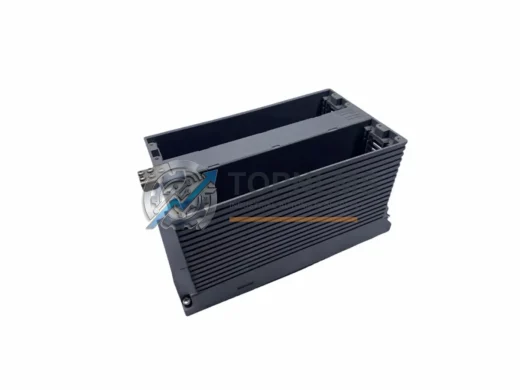
YOKOGAWA AMN32 S1 original DCS I/O module for CENTUM VP systems. Verified spare, 12-month warranty, fast global shipping. Reduce downtime now.
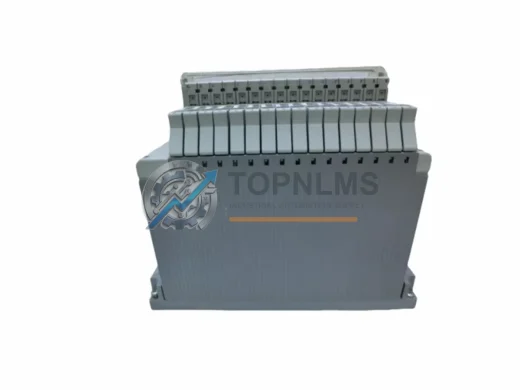
YOKOGAWA AMN21 replacement & upgrade solution for CENTUM CS3000/VP DCS. Compatible wiring, 12-month warranty, fast shipping. Contact: [email protected]
Yokogawa AMM12-S2 original analog input module for CENTUM DCS systems. Tested, 12-month warranty, fast worldwide shipping. Reduce downtime with genuine spares.
Click Quote This Model and the Part Number field will auto-fill with ADV161-P50 S2.