
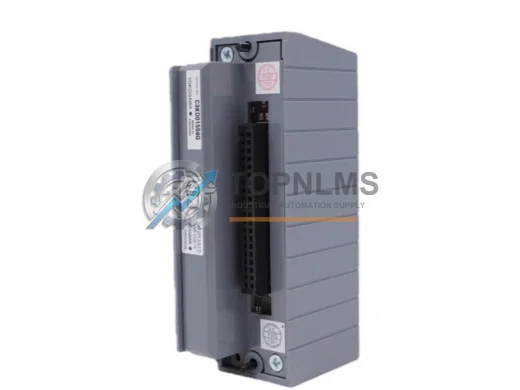
Yokogawa
Yokogawa ATA4S-10S2 Replacement for CENTUM VP DCS
ATA4S-10S2Yokogawa ATA4S-10S2 analog input module replacement for CENTUM VP DCS. Compatible upgrade, 12-month warranty, fast global shipping from stock.
Request availability, condition, lead time and export shipping details for ADV151-P60 S2.
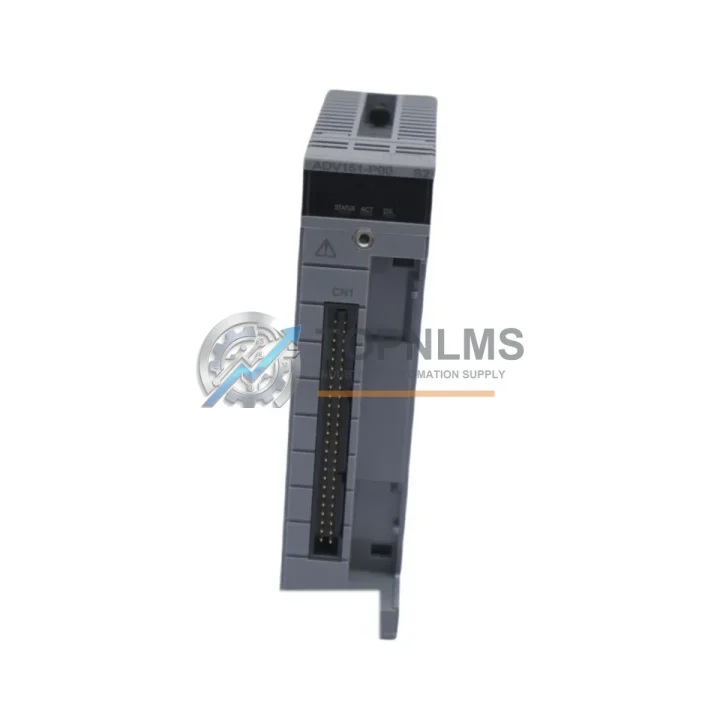
Send this exact part number, quantity and destination country. TOPNLMS will confirm availability, condition and export lead time before quotation.
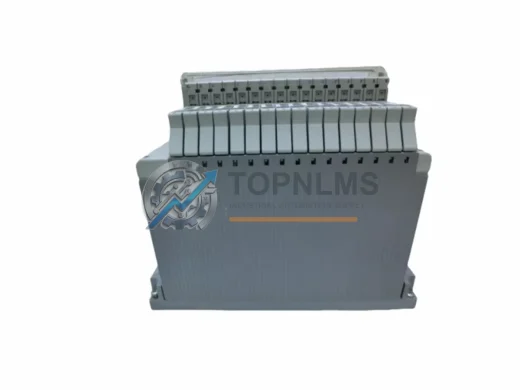
The Yokogawa ADV151-P60 S2 is a 60-channel redundant digital input module engineered for the CENTUM VP Distributed Control System platform — one of the most widely deployed DCS architectures in refining, petrochemical, power generation, and continuous process manufacturing. As a genuine original spare part sourced directly from authorized supply chains, this module delivers the signal integrity, redundancy architecture, and firmware compatibility that plant engineers and maintenance teams depend on to sustain uninterrupted production.
In high-availability process environments, a single failed digital input module can cascade into unplanned shutdowns, safety system activations, or regulatory non-compliance events. Stocking the ADV151-P60 S2 as a verified on-shelf spare eliminates the critical lead-time gap that often extends emergency downtime from hours into days. With 60 discrete input channels and built-in redundancy support, this module is designed to maintain full system visibility even under fault conditions — a non-negotiable requirement in SIL-rated and continuous-operation facilities.
| Parameter | Specification |
|---|---|
| Model / SKU | ADV151-P60 S2 |
| Brand | Yokogawa Electric Corporation |
| Series | CENTUM VP (Versatile Production) |
| Module Type | Digital Input (DI) Module |
| Channel Count | 60 Channels |
| Redundancy | Dual-redundant configuration supported |
| Input Signal Type | Dry contact / Wet contact discrete signals |
| Isolation | Optical isolation per channel group |
| Communication Bus | CENTUM VP internal V-net/IP or ESB bus |
| Power Supply | Supplied via field control station backplane |
| Operating Temperature | 0°C to 55°C (32°F to 131°F) |
| Humidity | 10% to 90% RH, non-condensing |
| Country of Origin | Japan |
| Compatibility | CENTUM VP FCS (Field Control Station), compatible with AFV10D, AFV30D, and related FCS units |
| Installation | Slide-in module, node unit backplane mount |
| Certifications | CE, UL (per Yokogawa CENTUM VP system certification) |
| Warranty | 12 Months — tested prior to shipment |
Effective DCS maintenance is never limited to a single module. When scheduling a planned inspection or responding to a fault alarm on the ADV151-P60 S2, experienced maintenance engineers treat the event as an opportunity to audit the entire field control station and associated I/O infrastructure. A 60-channel digital input module of this density typically interfaces with motor control center (MCC) status signals, valve position feedback, pump run/stop confirmations, and safety interlock inputs — all of which depend on the health of surrounding components.
During a module swap or annual shutdown inspection, it is standard practice to simultaneously verify the condition of the corresponding digital output modules such as the ADV551-P60 or ADV561-P60, which handle command outputs to the same field devices. If the ADV151-P60 S2 is installed in a redundant FCS pair, the partner node’s equivalent DI module should be inspected and function-tested at the same time to confirm redundancy switchover integrity.
Power supply modules feeding the node unit — typically the Yokogawa PW481 or PW482 series — should be checked for output voltage stability and capacitor aging, as power ripple is a leading cause of intermittent digital input misreads. The ESB bus coupler modules (e.g., ESB Bus Master and Slave units) connecting the FCS to extended I/O nodes warrant inspection for connector oxidation and firmware version alignment.
Field terminal assemblies and marshalling cabinets connected to the ADV151-P60 S2’s 60 input channels should be audited for terminal block torque, wire insulation condition, and shield grounding continuity. Yokogawa’s dedicated terminal boards (e.g., TB series) and signal cables linking the module to field junction boxes are common wear items that are frequently overlooked until a nuisance trip occurs. Signal isolators or barriers installed in intrinsically safe (IS) circuits feeding these inputs should also be tested for drift.
For facilities running legacy CENTUM CS 3000 alongside CENTUM VP, maintaining cross-compatible spare inventory — including modules like the ADV151-P60 alongside CS 3000 equivalents such as the AAI141 analog input module — reduces the total number of unique SKUs required in the storeroom while covering a broader range of system generations. Communication modules such as the ACM12 or CP461 controller processors should be included in the annual spare parts review, as their failure directly impacts the ability of any I/O module to report to the operator station.
The ADV151-P60 S2 is a direct replacement for earlier CENTUM VP digital input modules that have reached end-of-production or are exhibiting age-related degradation. Plants that originally commissioned CENTUM VP systems in the 2008–2015 period are now entering the phase where first-generation I/O modules require proactive replacement before field failures occur.
Unlike third-party or remanufactured alternatives, the original ADV151-P60 S2 maintains full firmware handshake compatibility with the CENTUM VP system builder configuration, eliminating the risk of I/O address mapping errors or diagnostic suppression that can occur with non-OEM substitutes. The module slots directly into the existing node unit backplane without requiring hardware modification, cable re-termination, or system reconfiguration — minimizing replacement time to under 30 minutes for a trained technician in a non-redundant configuration, and under 60 minutes for a bumpless switchover in a redundant FCS pair.
For plants managing aging DCS infrastructure under capital expenditure constraints, stocking two to four units of the ADV151-P60 S2 provides a cost-effective buffer against both random hardware failures and the increasing scarcity of OEM new-stock modules as the product lifecycle matures. Procurement teams are advised to consolidate orders across related module types — including analog input modules, digital output modules, and communication cards — to optimize freight costs and simplify incoming inspection workflows.
All units supplied by TOPNLMS are tested for functional integrity prior to shipment. Each module undergoes power-on verification, channel continuity checks, and communication bus handshake testing. Units are shipped in anti-static packaging with individual serial number documentation to support your incoming QC process and asset management records.
Q1: Is the ADV151-P60 S2 compatible with all CENTUM VP field control station variants?
The ADV151-P60 S2 is designed for use within the CENTUM VP platform and is compatible with standard FCS node units that accept the P60-form-factor I/O modules. Compatibility with specific FCS hardware revisions (AFV10D, AFV30D, etc.) should be confirmed against your system builder configuration file. Contact our technical team with your FCS model and system revision for pre-purchase compatibility verification.
Q2: What is the warranty coverage and what does pre-shipment testing include?
Every ADV151-P60 S2 unit carries a 12-month warranty from the date of shipment. Pre-shipment testing includes power-on functional verification, all-channel input continuity testing, and communication bus handshake confirmation. A test report is available upon request. Warranty claims are processed with priority turnaround to minimize your operational exposure.
Q3: How many units should we stock as on-shelf spares?
Industry best practice for high-density DI modules in continuous-process facilities is a minimum of one spare per four installed units, with a floor of two units regardless of installed quantity. For redundant FCS configurations, we recommend stocking spares in pairs to maintain redundancy during a replacement event. Lead times for OEM new-stock modules can extend to 8–16 weeks; on-shelf inventory eliminates this risk entirely.
Q4: Can this module be used to replace a failed unit in a running system without a full shutdown?
In a redundant CENTUM VP FCS configuration, the ADV151-P60 S2 supports online replacement (hot-swap) of the standby module without interrupting the active control path. In a non-redundant configuration, a controlled process hold or safe-state transition is required before module extraction. Always follow your site’s Management of Change (MOC) and Permit to Work (PTW) procedures before performing any live panel work.
Yokogawa ATA4S-10S2 analog input module replacement for CENTUM VP DCS. Compatible upgrade, 12-month warranty, fast global shipping from stock.
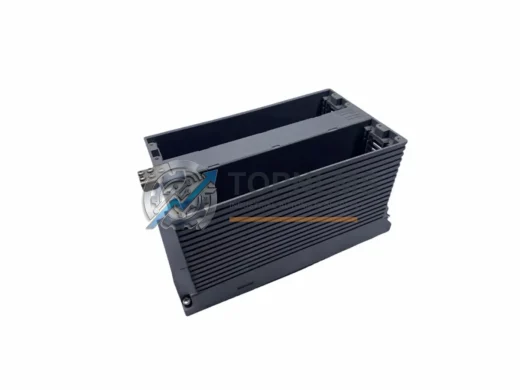
YOKOGAWA AMN32 S1 original DCS I/O module for CENTUM VP systems. Verified spare, 12-month warranty, fast global shipping. Reduce downtime now.
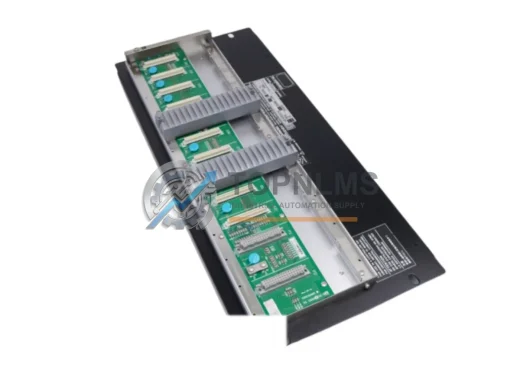
Yokogawa ANB10D-421 original 4-ch 4–20mA analog output module for CENTUM VP & CS 3000. Industrial spare, 12-month warranty, tested before shipment.
YOKOGAWA AMN21 replacement & upgrade solution for CENTUM CS3000/VP DCS. Compatible wiring, 12-month warranty, fast shipping. Contact: [email protected]
Click Quote This Model and the Part Number field will auto-fill with ADV151-P60 S2.