
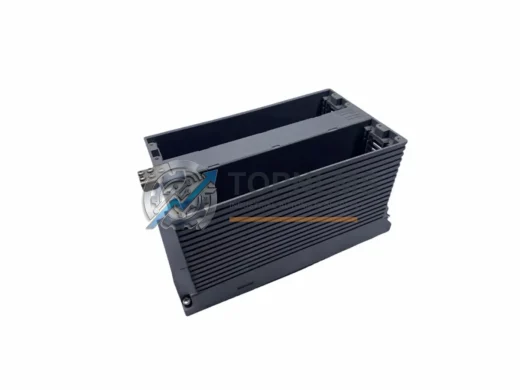
Yokogawa
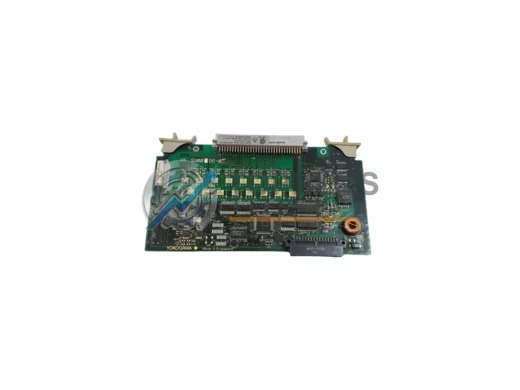
YOKOGAWA AMN32 S1 Original Industrial Spare CENTUM VP Compatible
AMN32 S1YOKOGAWA AMN32 S1 original DCS I/O module for CENTUM VP systems. Verified spare, 12-month warranty, fast global shipping. Reduce downtime now.
Request availability, condition, lead time and export shipping details for ADV141-P13 S1.
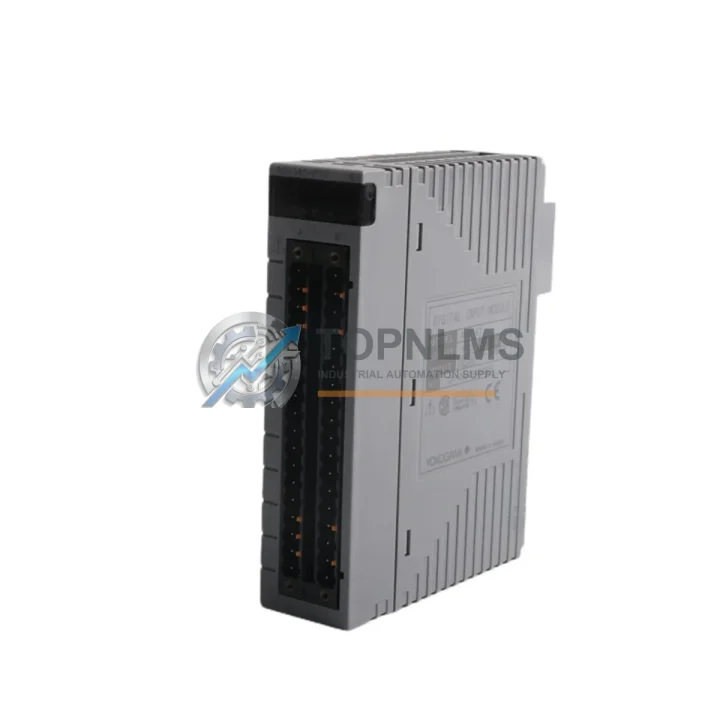
Send this exact part number, quantity and destination country. TOPNLMS will confirm availability, condition and export lead time before quotation.
The YOKOGAWA ADV141-P13 S1 is a 32-channel Digital Input (DI) module engineered for the CENTUM VP and CS 3000 Distributed Control System platforms. As legacy CENTUM CS 3000 installations approach end-of-life and spare-part availability tightens, plant engineers and procurement teams are actively sourcing verified replacement units to sustain production continuity without committing to a full DCS overhaul. This module provides a direct, wiring-compatible upgrade path that preserves existing field wiring, marshalling cabinets, and I/O bus architecture while restoring full system redundancy and diagnostic capability.
The ADV141-P13 S1 accepts 32 discrete dry-contact or voltage-level digital input signals, interfacing directly with the CENTUM VP I/O bus via the standard node unit backplane. Its compact form factor fits the existing ESB bus node unit without requiring additional rail space or cabinet modification, making it the preferred choice for brownfield retrofit projects where control-cabinet real estate is constrained. The module is fully compatible with the CENTUM VP R6 engineering environment, allowing engineers to retain existing tag databases, function block assignments, and alarm configurations without reprogramming.
| Parameter | ADV141-P13 S1 (This Unit) | Legacy CS 3000 DI Module |
|---|---|---|
| Platform | CENTUM VP / CS 3000 | CS 3000 |
| Channel Count | 32 DI Channels | 32 DI Channels |
| Input Type | Dry contact / Voltage level | Dry contact / Voltage level |
| Bus Interface | ESB Bus (Node Unit Backplane) | ESB Bus (Node Unit Backplane) |
| Field Wiring | Direct drop-in — no rewiring required | Existing terminal block layout |
| Engineering Tool | CENTUM VP R6 / CS 3000 Builder | CS 3000 Builder |
| Tag / FB Retention | Full retention — no reprogramming | N/A (original) |
| Communication Protocol | Proprietary Vnet/IP (ESB) | Proprietary ESB |
| Physical Dimensions | Standard CENTUM VP I/O module form factor | Same form factor |
| Installation | Hot-swap capable on supported node units | Requires shutdown on older nodes |
| Replacement Recommendation | ✅ Direct 1:1 replacement | — |
| Warranty | ✅ 12-Month Warranty Included | — |
A successful migration from a degraded or end-of-life CS 3000 node to a fully operational CENTUM VP I/O subsystem typically involves more than a single module swap. In practice, field engineers coordinate the replacement of the ADV141-P13 S1 alongside several interdependent components to ensure system integrity from the marshalling cabinet to the controller level.
The node unit that houses the ADV141-P13 S1 — typically an ANB10S or ANB11S node unit — must be confirmed operational before module insertion. If the node unit itself is suspect, a concurrent replacement of the node unit backplane prevents latent faults from masking the new module’s diagnostic output. Similarly, the ESB bus coupler connecting the node unit to the field control station (FCS) should be inspected; a degraded ESB coupler such as an AIP829 or AIP835 can generate spurious I/O errors that are incorrectly attributed to the DI module.
On the field wiring side, the ADV141-P13 S1 connects to field devices through a terminal block assembly. Where existing terminal blocks show signs of corrosion or loose terminations — common in installations exceeding 10 years — replacing the terminal block unit alongside the DI module eliminates a frequent source of intermittent input faults. For plants running mixed signal types, a signal isolator or signal conditioner inserted between the field device and the DI module input protects the new module from voltage transients common in motor control center (MCC) environments.
At the controller level, the Field Control Station processor card — such as the ACF11 or ACF12 — manages all I/O communication across the ESB bus. If the FCS processor is running firmware below the minimum version required for CENTUM VP R6 compatibility, a firmware update or processor card replacement is recommended before commissioning the new DI module. The CENTUM VP engineering workstation running the system builder software must also be confirmed at a compatible revision to download the updated I/O configuration to the FCS.
For plants migrating from CS 3000 to CENTUM VP in stages, the AIP588 Vnet/IP interface card enables the new CENTUM VP FCS to communicate with legacy CS 3000 I/O nodes during the transition period, allowing phased replacement without a full cutover outage. Power supply modules — such as the PW481 or PW482 — feeding the node unit should be load-tested prior to adding the replacement DI module, as aging power supplies operating near rated capacity are a common cause of unexplained module resets after installation.
Finally, for sites that require a programming cable to perform on-site configuration verification or firmware download, the YOKOGAWA AKB331 or compatible USB-to-serial programming cable provides direct access to the FCS maintenance port, enabling engineers to confirm tag assignments and I/O mapping before returning the loop to automatic control.
Q: Can I replace the ADV141-P13 S1 without rewiring the field terminal block?
A: Yes. The ADV141-P13 S1 uses the same terminal block interface as the original CS 3000 DI module. Existing field wiring connects to the terminal block assembly without modification. Only the module itself is swapped.
Q: Do I need to reprogram the FCS after installing the replacement module?
A: In most cases, no. If the replacement module is the same model (ADV141-P13 S1), the FCS recognizes it automatically using the existing I/O configuration. A configuration download is only required if the node address or slot assignment has changed.
Q: Is the ADV141-P13 S1 compatible with both CENTUM VP and CS 3000?
A: Yes. The module is designed for the CENTUM VP platform and is backward-compatible with CS 3000 node units using the ESB bus interface. Confirm the node unit firmware version supports the module revision before installation.
Q: What communication protocol does this module use?
A: The ADV141-P13 S1 communicates via the proprietary YOKOGAWA ESB (Extended Serial Bus) protocol within the node unit. At the FCS level, communication uses Vnet/IP over the control network. No third-party fieldbus (PROFIBUS, FOUNDATION Fieldbus, Modbus) is involved at the I/O module level.
Q: How much cabinet space does the replacement require?
A: The ADV141-P13 S1 occupies a single I/O module slot in the standard CENTUM VP node unit. No additional DIN rail space or cabinet modification is required. The module dimensions are identical to the original, ensuring a direct physical fit.
Q: Can this module be hot-swapped during plant operation?
A: Hot-swap capability depends on the node unit type and FCS configuration. On node units that support online module replacement, the ADV141-P13 S1 can be replaced without shutting down the FCS, provided the affected I/O channels are placed in manual mode and field devices are isolated per site safety procedures.
Q: What should I check if the module shows a fault LED after installation?
A: Verify the ESB bus coupler connection, confirm the node unit power supply is within rated voltage, check the FCS I/O configuration for correct slot assignment, and review the CENTUM VP alarm log for specific fault codes. A firmware mismatch between the module and the FCS is the most common cause of post-installation faults.
Every YOKOGAWA ADV141-P13 S1 unit supplied by TOPNLMS is covered by a 12-month warranty from the date of shipment. Prior to dispatch, each module undergoes a functional verification check to confirm power-on status, bus communication, and channel integrity. Units that do not pass inspection are not shipped.
In the event of a confirmed module defect within the warranty period, TOPNLMS provides a replacement unit or full refund based on the customer’s preference. Our technical team responds to warranty claims within 1 business day. Replacement units are dispatched from our Xiamen warehouse with priority shipping to minimize plant downtime.
For procurement teams requiring documentation, we provide a test report, packing list, and commercial invoice with each shipment. Export compliance documentation for cross-border shipments is prepared upon request. Bulk orders for maintenance stock programs are supported with volume pricing and reserved inventory agreements.
Contact our industrial automation parts team for availability confirmation, lead time, and technical pre-sales support:
© 2026 TOPNLMS. All rights reserved. Original Source: https://topnlms.com | Contact: [email protected] | +86 18359293191
YOKOGAWA AMN32 S1 original DCS I/O module for CENTUM VP systems. Verified spare, 12-month warranty, fast global shipping. Reduce downtime now.
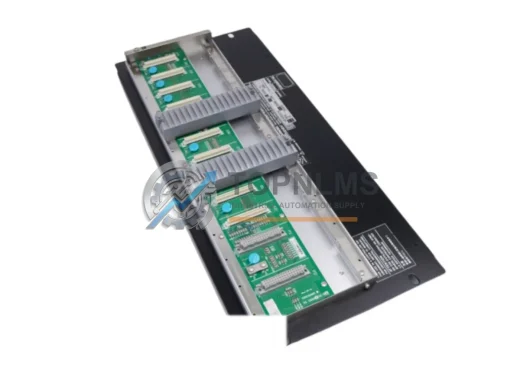
Yokogawa ANB10D-421 original 4-ch 4–20mA analog output module for CENTUM VP & CS 3000. Industrial spare, 12-month warranty, tested before shipment.
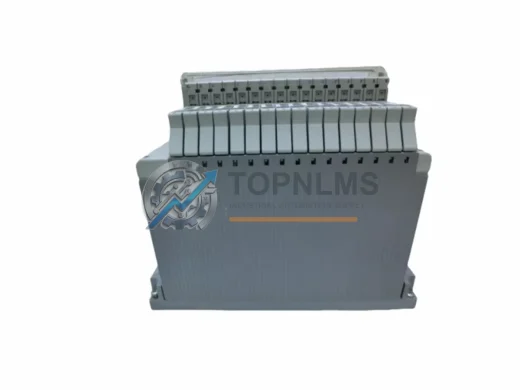
YOKOGAWA AMN21 replacement & upgrade solution for CENTUM CS3000/VP DCS. Compatible wiring, 12-month warranty, fast shipping. Contact: [email protected]
Yokogawa AMM12-S2 original analog input module for CENTUM DCS systems. Tested, 12-month warranty, fast worldwide shipping. Reduce downtime with genuine spares.
Click Quote This Model and the Part Number field will auto-fill with ADV141-P13 S1.