
Yokogawa
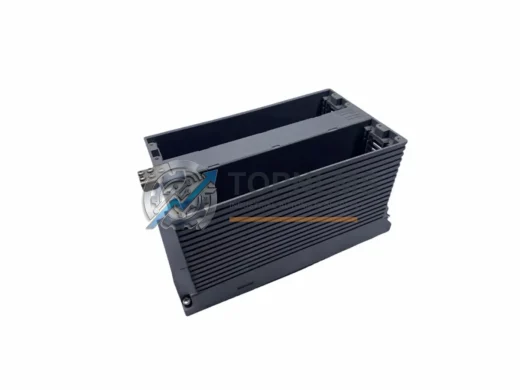
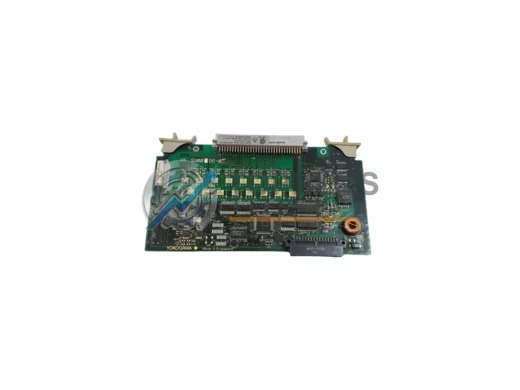
YOKOGAWA AMN32 S1 Original Industrial Spare CENTUM VP Compatible
AMN32 S1YOKOGAWA AMN32 S1 original DCS I/O module for CENTUM VP systems. Verified spare, 12-month warranty, fast global shipping. Reduce downtime now.
Request availability, condition, lead time and export shipping details for ADM52C-2 S3.
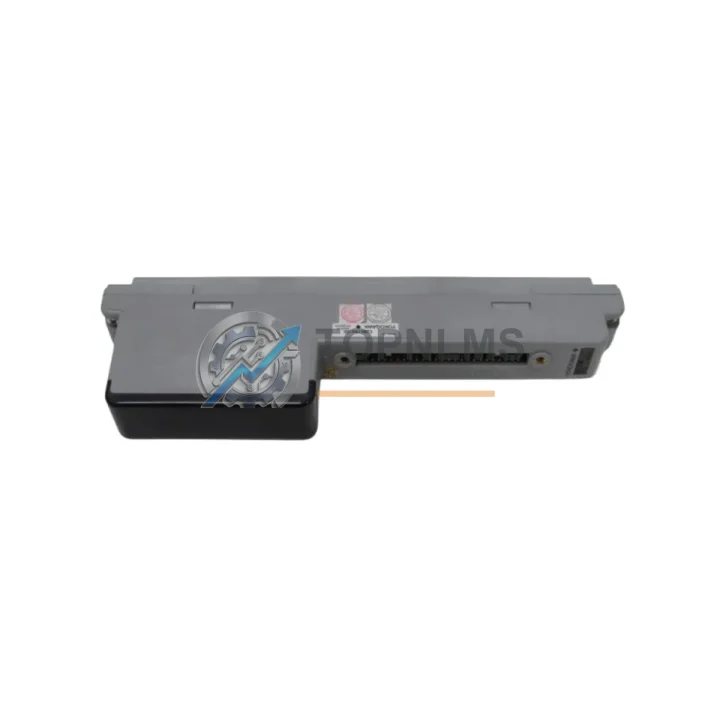
Send this exact part number, quantity and destination country. TOPNLMS will confirm availability, condition and export lead time before quotation.
The YOKOGAWA ADM52C-2 S3 is an original analog output module engineered for the CENTUM CS 3000 Distributed Control System (DCS) platform — one of the most widely deployed process automation architectures in the petrochemical, power generation, pulp and paper, and pharmaceutical industries. As aging CENTUM CS 3000 installations continue to operate well beyond their original design lifecycles, sourcing verified original spare modules such as the ADM52C-2 S3 has become a critical element of any plant’s long-term maintenance and reliability strategy.
Whether you are managing a scheduled turnaround, responding to an unplanned module failure, or building a strategic spare parts inventory to reduce future downtime exposure, the ADM52C-2 S3 delivers the electrical performance, firmware compatibility, and mechanical form factor required for a direct, no-configuration replacement in existing CENTUM CS 3000 control cabinets. Every unit shipped from TOPNLMS is individually tested, verified against original YOKOGAWA specifications, and backed by a 12-month warranty — giving procurement engineers and maintenance managers the confidence to stock and deploy with minimal risk.
| Parameter | Specification |
|---|---|
| Model | ADM52C-2 S3 |
| Brand | YOKOGAWA Electric Corporation |
| Series | CENTUM CS 3000 |
| Module Type | Analog Output Module (DCS) |
| Output Channels | Multi-channel analog output (4–20 mA standard) |
| Output Signal | 4–20 mA DC (current output) |
| Resolution | 16-bit D/A conversion |
| Isolation | Channel-to-channel and channel-to-bus isolation |
| Power Supply | Supplied via CENTUM CS 3000 backplane bus |
| Communication | Internal V-net / ESB bus (CENTUM CS 3000 native) |
| Mounting | Direct slot insertion into CENTUM CS 3000 node unit |
| Operating Temperature | 0°C to 55°C |
| Humidity | 10% to 90% RH (non-condensing) |
| Country of Origin | Japan |
| Compatibility | CENTUM CS 3000 R3 / R3.08 and compatible node units |
| Warranty | 12 Months from date of shipment |
| Pre-shipment Testing | Full functional and electrical verification performed |
In a CENTUM CS 3000 control environment, the ADM52C-2 S3 analog output module does not operate in isolation. It is one component within a tightly integrated node architecture, and its reliable performance depends on the health of the surrounding hardware. A proactive maintenance approach — rather than a purely reactive break-fix model — is the most effective way to extend system uptime and protect production continuity.
When inspecting or replacing an ADM52C-2 S3, maintenance engineers should simultaneously audit the condition of adjacent I/O modules within the same node unit. Analog input modules such as the AAI141-S and AAI543-S are frequently installed alongside analog output modules in mixed-signal control loops, and a fault in one module can mask or trigger symptoms in another. Verifying the integrity of the entire I/O slot row during a planned outage is far more cost-effective than returning to the same cabinet for a second intervention weeks later.
The node unit’s power supply module — typically an YOKOGAWA PW481 or equivalent — should be checked for output voltage stability and ripple. A degraded power supply is one of the most common root causes of intermittent analog output errors and unexplained module faults. If the power supply has not been replaced within the last five to seven years of continuous operation, proactive replacement during the same maintenance window as the ADM52C-2 S3 swap is strongly recommended.
Communication integrity between the node unit and the field control station (FCS) depends on the V-net or ESB bus coupler modules. Inspecting the bus coupler — such as the YOKOGAWA EB401 or equivalent ESB bus interface — for connector oxidation, loose seating, and firmware version alignment is a standard step in any CENTUM CS 3000 node-level maintenance procedure. A marginal bus connection can cause the newly installed ADM52C-2 S3 to report communication errors even when the module itself is fully functional.
Terminal blocks and field wiring connections at the marshalling cabinet level are another common failure point in aging DCS installations. Loose or corroded terminal connections on the analog output field wiring can introduce loop resistance errors that appear as calibration drift or output deviation on the ADM52C-2 S3. Torque-checking all field terminal connections and inspecting for insulation degradation should be part of the same work order. If the installation uses signal isolators between the DCS output and the final control element — such as a control valve positioner — the isolator modules should also be tested for output accuracy and replaced if they show signs of drift.
For plants running CENTUM CS 3000 alongside YOKOGAWA STARDOM or CENTUM VP systems in a hybrid architecture, ensuring that the engineering workstation (EWS) and operator station (HIS) software versions are compatible with the S3 hardware revision of the ADM52C-2 is an important pre-installation verification step. Maintaining a spare HIS keyboard and display unit in the control room spare parts inventory is also a low-cost measure that prevents operator interface downtime from delaying a module replacement procedure.
The ADM52C-2 S3 is a direct original replacement for earlier ADM52C revisions installed in CENTUM CS 3000 node units. Plants that have been operating with first-generation ADM52C modules — some of which have accumulated over 15 years of continuous service — can upgrade to the S3 revision without any changes to the node unit wiring, slot configuration, or FCS software parameters. The S3 designation reflects a hardware revision that incorporates improved component reliability and extended mean time between failures (MTBF), making it the preferred replacement choice for long-term system stabilization.
For maintenance teams managing multiple CENTUM CS 3000 nodes across a large facility, establishing a minimum stock level of two to four ADM52C-2 S3 modules per site is a widely adopted best practice. This buffer inventory eliminates the lead time risk associated with emergency procurement and ensures that a module failure during a critical production period can be resolved within hours rather than days. TOPNLMS maintains ready stock of the ADM52C-2 S3 and can support both single-unit emergency orders and bulk procurement for planned spare parts programs.
Plants considering a phased migration from CENTUM CS 3000 to CENTUM VP should note that maintaining a healthy inventory of CS 3000 original spare modules — including the ADM52C-2 S3 — is essential during the transition period. Migration projects frequently extend beyond their original timelines, and a single unplanned module failure during a migration window can force an unscheduled production halt. Sourcing original spares from a verified supplier with pre-shipment testing and warranty coverage is the lowest-risk approach to bridging the gap between legacy system maintenance and new platform commissioning.
Q1: Is the ADM52C-2 S3 compatible with all CENTUM CS 3000 node unit revisions?
The ADM52C-2 S3 is designed for use in CENTUM CS 3000 node units and is compatible with R3 and R3.08 system revisions. If you are operating an earlier CS 3000 release or a hybrid node configuration, please contact our technical team with your FCS model and software version for a compatibility confirmation before ordering.
Q2: What testing is performed before shipment?
Every ADM52C-2 S3 unit shipped by TOPNLMS undergoes full functional and electrical verification, including analog output channel accuracy testing, bus communication verification, and visual inspection for component and connector integrity. A test report is available upon request for quality assurance documentation purposes.
Q3: What does the 12-month warranty cover?
The 12-month warranty covers manufacturing defects and functional failures under normal operating conditions consistent with YOKOGAWA’s published environmental and electrical specifications for the ADM52C-2 S3. Warranty claims are processed with priority support, and replacement units are dispatched promptly to minimize site downtime.
Q4: Can I order multiple units for a planned spare parts inventory program?
Yes. TOPNLMS supports both single-unit emergency orders and bulk procurement for planned maintenance programs. Volume pricing is available for orders of five or more units. Lead times for in-stock units are typically one to three business days for international shipment, with express options available for urgent requirements.
YOKOGAWA AMN32 S1 original DCS I/O module for CENTUM VP systems. Verified spare, 12-month warranty, fast global shipping. Reduce downtime now.
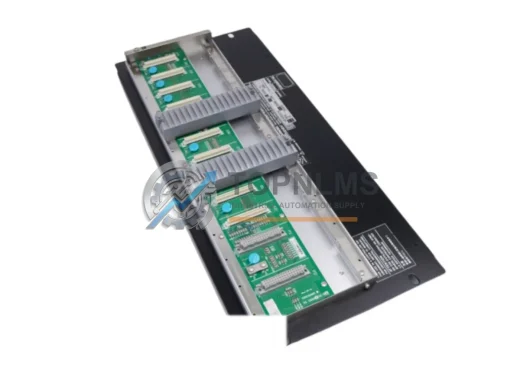
Yokogawa ANB10D-421 original 4-ch 4–20mA analog output module for CENTUM VP & CS 3000. Industrial spare, 12-month warranty, tested before shipment.
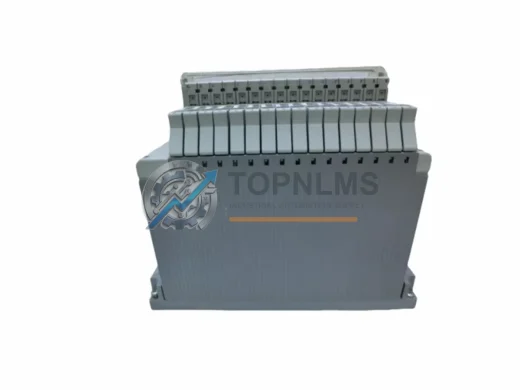
YOKOGAWA AMN21 replacement & upgrade solution for CENTUM CS3000/VP DCS. Compatible wiring, 12-month warranty, fast shipping. Contact: [email protected]
Yokogawa AMM12-S2 original analog input module for CENTUM DCS systems. Tested, 12-month warranty, fast worldwide shipping. Reduce downtime with genuine spares.
Click Quote This Model and the Part Number field will auto-fill with ADM52C-2 S3.