
Yokogawa
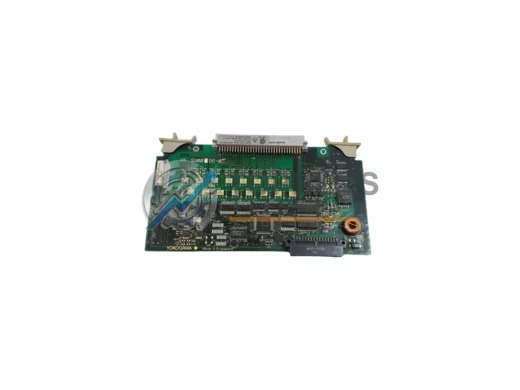
YOKOGAWA AMN32 S1 Original Industrial Spare CENTUM VP Compatible
AMN32 S1YOKOGAWA AMN32 S1 original DCS I/O module for CENTUM VP systems. Verified spare, 12-month warranty, fast global shipping. Reduce downtime now.
Request availability, condition, lead time and export shipping details for AAP135-S50.
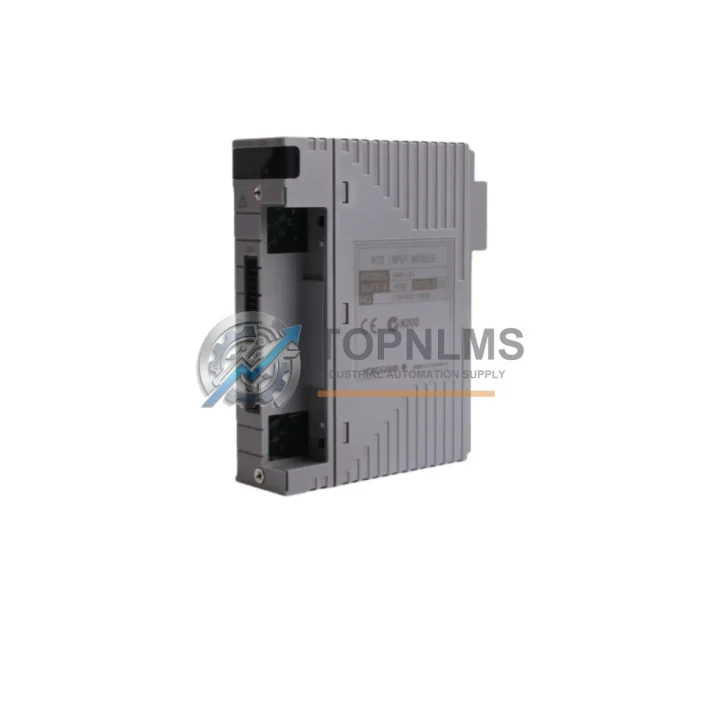
Send this exact part number, quantity and destination country. TOPNLMS will confirm availability, condition and export lead time before quotation.
Upgrading or replacing a legacy distributed control system is one of the most operationally sensitive tasks in industrial automation. The YOKOGAWA AAP135-S50 is a high-precision pulse input module designed for the CENTUM VP and CS 3000 DCS platforms — two of the most widely deployed process control architectures in refining, petrochemical, power generation, and pharmaceutical manufacturing. Whether you are replacing a failed unit, building a spare parts inventory, or executing a phased migration from an end-of-life CS 3000 system to a modern CENTUM VP environment, the AAP135-S50 provides a verified drop-in upgrade path with minimal engineering intervention.
At TOPNLMS, every AAP135-S50 unit is sourced, inspected, and dispatched from our Xiamen warehouse with a 12-month replacement warranty. We serve engineering procurement teams, system integrators, and plant maintenance departments across Asia, the Middle East, and Europe who require fast, reliable access to genuine YOKOGAWA DCS components without the lead times associated with OEM channels.
| Parameter | Legacy / Replaced Model | AAP135-S50 (Current) |
|---|---|---|
| Platform Compatibility | CS 3000 (R3.xx), CENTUM CS | CENTUM VP (R4.xx–R6.xx), CS 3000 (R3.xx) |
| Module Function | Pulse / Frequency Input | Pulse / Frequency Input (50 kHz max) |
| Channel Count | Varies by legacy model | Single-channel, isolated |
| Input Signal Range | Contact / voltage pulse | Contact closure, 24 VDC voltage pulse, open collector |
| Rack / Slot Interface | CENTUM CS / CS 3000 I/O bus | CENTUM VP / CS 3000 I/O bus (direct slot replacement) |
| Communication Protocol | Proprietary YOKOGAWA I/O bus (Vnet/IP compatible) | Proprietary YOKOGAWA I/O bus (Vnet/IP compatible) |
| Power Supply | Supplied via I/O rack backplane | Supplied via I/O rack backplane (no external PSU required) |
| Wiring Termination | Terminal block (field wiring retained) | Terminal block (field wiring retained — no rewiring required) |
| Physical Dimensions | Standard CENTUM I/O module form factor | Standard CENTUM I/O module form factor (direct fit) |
| Installation Requirement | Hot-swap capable (rack-dependent) | Hot-swap capable on supported CENTUM VP racks |
| Replacement Recommendation | End-of-life CS 3000 pulse input modules | Direct replacement — no hardware modification required |
| Warranty | — | 12-Month Replacement Warranty (TOPNLMS) |
A successful migration from a CS 3000 or legacy CENTUM CS architecture to a current CENTUM VP system rarely involves a single module swap. In practice, plant engineers must evaluate the entire I/O subsystem, field wiring infrastructure, controller redundancy configuration, and communication backbone before committing to a replacement schedule. The AAP135-S50 is typically deployed alongside a broader set of YOKOGAWA DCS components that together enable a smooth, low-risk transition.
On the controller side, the YOKOGAWA CP451-10 and CP461-50 field control units are the most common pairing with AAP135-S50 in CENTUM VP installations. These controllers manage the I/O bus polling cycle and determine the scan rate at which pulse accumulation data is read from the module. When migrating from a CS 3000 system, engineers often retain the existing EB401 or EB501 I/O expansion bus units to preserve rack infrastructure, reducing capital expenditure and installation downtime significantly.
Field wiring from legacy flowmeters, turbine meters, and proximity switches typically connects to the AAP135-S50 via a TB805 or TB810 terminal block assembly, which clips directly onto the module’s front connector. In most CS 3000-to-CENTUM VP migrations, the existing field cable terminations can be retained without modification, provided the signal type (contact closure or voltage pulse) matches the AAP135-S50’s input configuration. This eliminates the need for panel rewiring — one of the most time-consuming and error-prone aspects of any DCS upgrade project.
For installations where the pulse source is a HART-enabled flow transmitter or a Modbus RTU device, the YOKOGAWA AAI141-S03 analog input module or the ALR111 HART multiplexer may be required in parallel to handle the analog 4–20 mA signal path, while the AAP135-S50 handles the high-speed pulse train independently. This dual-module architecture is common in custody transfer metering applications where both totalised flow and instantaneous rate must be captured simultaneously.
Power distribution within the I/O cabinet is typically managed by the YOKOGAWA PW481 or PW482 power supply modules, which provide the 24 VDC backplane voltage required by the AAP135-S50 and adjacent I/O modules. When upgrading a CS 3000 cabinet to CENTUM VP, it is advisable to verify that the existing power supply modules are rated for the expanded I/O load, particularly if additional modules such as the AAI543 multi-channel analog input or ADV151 digital output modules are being added to the same rack during the migration.
Communication between the CENTUM VP field control station and the human-machine interface layer is handled via Vnet/IP, YOKOGAWA’s proprietary real-time Ethernet protocol. No changes to the Vnet/IP network configuration are required when replacing a CS 3000 pulse input module with the AAP135-S50, as the module address and I/O builder tag assignments are preserved through the CENTUM VP engineering environment. This means that existing function block diagrams, PID loops referencing pulse-derived flow totals, and historian tags linked to the AAP135-S50’s output can be retained without modification.
Q: Can I replace a CS 3000 pulse input module with the AAP135-S50 without modifying field wiring?
A: In the majority of cases, yes. The AAP135-S50 uses the same terminal block interface as its CS 3000 predecessors. Provided the field device output type (contact closure, open collector, or 24 VDC voltage pulse) is within the AAP135-S50’s input specification, no rewiring is required. Always verify the pulse amplitude and frequency against the module’s datasheet before installation.
Q: Is the AAP135-S50 compatible with both CENTUM VP and CS 3000 racks simultaneously?
A: The AAP135-S50 is designed for use in CENTUM VP and CS 3000 I/O racks that share the same physical bus interface. It cannot be installed in older CENTUM CS (pre-CS 3000) racks without an adapter. Confirm your rack generation before ordering.
Q: Do I need to re-download the I/O builder configuration after replacing the module?
A: If the replacement module is the same model (AAP135-S50 for AAP135-S50), no I/O builder download is required. The CENTUM VP system will recognise the module automatically upon hot-swap or cold restart. If migrating from a different pulse input model, a partial download of the affected field control station may be required.
Q: What communication protocols does the AAP135-S50 support?
A: The AAP135-S50 communicates exclusively via the YOKOGAWA proprietary I/O bus within the CENTUM VP / CS 3000 architecture. It does not support HART, FOUNDATION Fieldbus, PROFIBUS, or Modbus natively. For field devices requiring these protocols, a dedicated communication module such as the ALF111 FOUNDATION Fieldbus or ALP111 PROFIBUS-DP module should be used in conjunction.
Q: How much physical space does the AAP135-S50 require in the control cabinet?
A: The AAP135-S50 occupies a single slot in a standard CENTUM VP or CS 3000 I/O rack. No additional panel space is required beyond the existing slot allocation. Cabinet depth and ventilation requirements are unchanged from the legacy module.
Q: Can the AAP135-S50 be used in a redundant I/O configuration?
A: Pulse input modules in the CENTUM VP architecture are typically deployed in simplex (non-redundant) configurations due to the nature of pulse counting. Redundancy at the field device level (dual-pulse output flowmeters) is the recommended approach for critical metering applications.
Every YOKOGAWA AAP135-S50 unit supplied by TOPNLMS is covered by a 12-month replacement warranty from the date of shipment. Our pre-shipment inspection process includes visual examination, connector integrity verification, and functional bench testing where applicable. Units that fail to perform as specified within the warranty period will be replaced at no additional cost, subject to standard return merchandise authorisation (RMA) procedures.
We maintain bonded stock of AAP135-S50 and related CENTUM VP / CS 3000 components in our Xiamen warehouse, enabling same-day or next-day dispatch for in-stock orders. International shipments are handled via DHL Express, FedEx International Priority, or air freight consolidation depending on order volume and destination. Export documentation, including commercial invoices, packing lists, and certificates of origin, is prepared in compliance with Chinese customs regulations and destination country import requirements.
For procurement teams requiring factory test reports, serialisation records, or third-party inspection certificates, these can be arranged upon request prior to shipment. We work with SGS, BV, and TÜV-accredited inspection bodies for orders requiring independent verification.
Our technical support team is available to assist with compatibility queries, installation guidance, and post-delivery commissioning questions. Response time for technical enquiries is within 24 hours on business days.
YOKOGAWA AMN32 S1 original DCS I/O module for CENTUM VP systems. Verified spare, 12-month warranty, fast global shipping. Reduce downtime now.
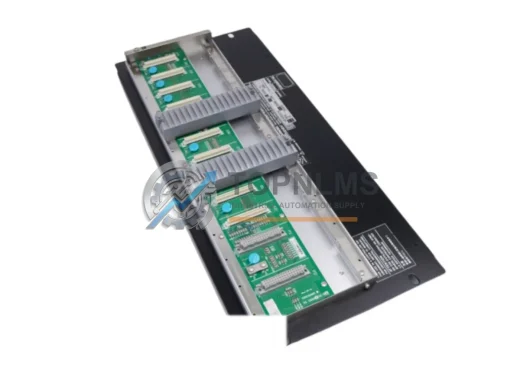
Yokogawa ANB10D-421 original 4-ch 4–20mA analog output module for CENTUM VP & CS 3000. Industrial spare, 12-month warranty, tested before shipment.
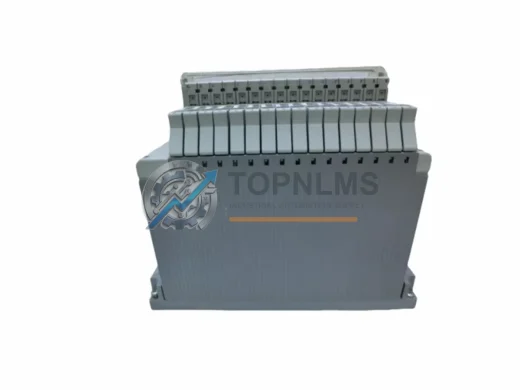
YOKOGAWA AMN21 replacement & upgrade solution for CENTUM CS3000/VP DCS. Compatible wiring, 12-month warranty, fast shipping. Contact: [email protected]
Yokogawa AMM12-S2 original analog input module for CENTUM DCS systems. Tested, 12-month warranty, fast worldwide shipping. Reduce downtime with genuine spares.
Click Quote This Model and the Part Number field will auto-fill with AAP135-S50.