
Yokogawa
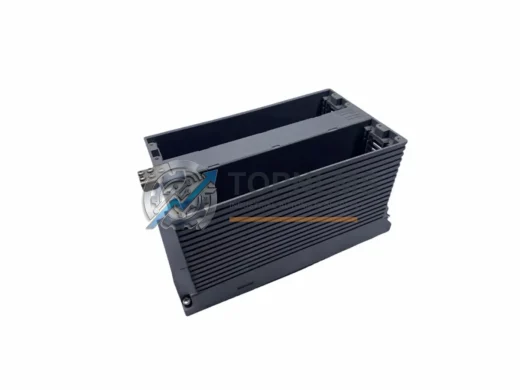
YOKOGAWA AMN32 S1 Original Industrial Spare CENTUM VP Compatible
AMN32 S1YOKOGAWA AMN32 S1 original DCS I/O module for CENTUM VP systems. Verified spare, 12-month warranty, fast global shipping. Reduce downtime now.
Request availability, condition, lead time and export shipping details for AAM50.
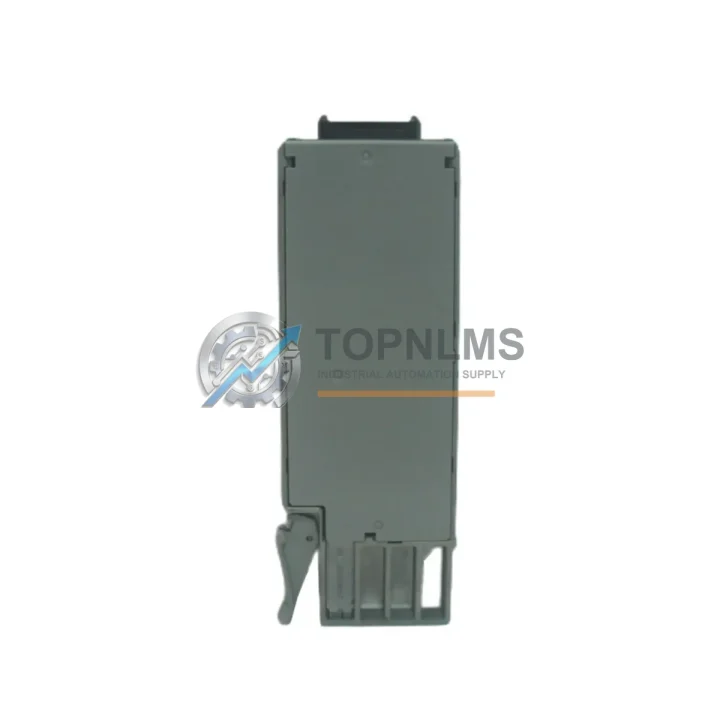
Send this exact part number, quantity and destination country. TOPNLMS will confirm availability, condition and export lead time before quotation.
The YOKOGAWA AAM50 is an 8-channel analog output module designed for use within the CENTUM distributed control system (DCS) platform. As a genuine original spare part, the AAM50 plays a critical role in maintaining the signal integrity and process control continuity of industrial facilities operating CENTUM CS, CENTUM CS 3000, and CENTUM VP architectures. Whether your plant is managing a scheduled turnaround, responding to an unplanned module failure, or building a strategic spare parts inventory, the AAM50 represents a high-priority procurement item for any site running YOKOGAWA DCS infrastructure.
In process industries — including oil refining, petrochemical production, power generation, and pharmaceutical manufacturing — analog output modules are the backbone of final control element communication. The AAM50 converts digital control signals from the CENTUM controller into 4–20 mA analog outputs that drive control valves, variable-speed drives, and positioners. A failed or degraded AAM50 can directly impact loop control, causing process deviations, safety system activations, or unplanned shutdowns. Maintaining at least one verified spare on-site is a fundamental requirement of any responsible maintenance strategy.
| Parameter | Specification |
|---|---|
| Model | AAM50 |
| Manufacturer | YOKOGAWA Electric Corporation |
| Compatible Platform | CENTUM CS / CS 3000 / VP |
| Module Type | Analog Output Module |
| Number of Channels | 8 Channels |
| Output Signal | 4–20 mA DC (current output) |
| Output Load Resistance | Max. 600 Ω per channel |
| Resolution | 13-bit (including sign bit) |
| Isolation | Channel-to-channel and channel-to-bus isolation |
| Power Supply | Supplied via CENTUM node unit / field control station bus |
| Mounting | CENTUM-compatible I/O nest / node unit rack |
| Operating Temperature | 0°C to 55°C |
| Storage Temperature | -20°C to 70°C |
| Humidity | 5% to 95% RH (non-condensing) |
| Country of Origin | Japan |
| Warranty | 12 Months from date of shipment |
| Condition | Original, tested, ready to ship |
Effective DCS maintenance is never reactive — it is built on a foundation of proactive inspection cycles, verified spare inventories, and systematic module health monitoring. The AAM50 analog output module should be included in every CENTUM site’s critical spare parts list, alongside a carefully selected set of companion components that share the same control cabinet, I/O nest, or field control station.
During scheduled maintenance windows, engineers inspecting the AAM50 should simultaneously verify the condition of the AAI141 analog input modules installed in the same node unit, as input and output modules in the same control loop are subject to similar thermal and electrical stress cycles. The AMM12 multi-point monitor module, where installed, should also be checked for calibration drift, as it directly affects the accuracy of the analog signals the AAM50 is transmitting.
Power integrity is a frequently overlooked factor in analog output module reliability. The APS10 power supply module feeding the field control station should be inspected for output voltage stability and capacitor aging — a degraded power supply is one of the most common root causes of intermittent analog output errors. If the site uses redundant power configurations, both the primary and secondary APS10 units should be tested under load conditions during the same maintenance cycle.
Communication health between the CENTUM controller and the I/O modules depends on the integrity of the ESB10 or ESB11 enhanced signal bus coupler modules. These bus interface components should be inspected for connector wear and firmware version compatibility whenever analog output modules are replaced or reseated. Similarly, the ACM12 communication module, which manages data exchange between the field control station and the engineering workstation, should be verified for error-free operation.
At the field wiring level, the terminal assembly connected to the AAM50 — typically a TB820 or equivalent CENTUM-compatible terminal board — should be inspected for loose connections, corrosion, and insulation integrity. Loose field wiring at the terminal board is a common cause of 4–20 mA signal instability that is often misdiagnosed as a module fault. Including terminal boards and field wiring connectors in the same inspection scope as the AAM50 significantly reduces diagnostic time during fault events.
For sites that have not yet migrated to CENTUM VP, the FCS0103 field control station and its associated I/O nest components should be assessed for end-of-life risk. YOKOGAWA’s product lifecycle policies mean that older CENTUM CS and CS 3000 hardware is increasingly difficult to source. Maintaining a buffer stock of AAM50 modules — along with companion analog input modules, power supplies, and bus couplers — is a cost-effective strategy for extending the operational life of existing DCS infrastructure without committing to a full system migration.
The AAM50 is a direct replacement for failed or degraded analog output modules within the CENTUM CS, CS 3000, and VP platforms. Because the module uses a standardized CENTUM I/O nest form factor and communicates over the CENTUM enhanced signal bus, replacement does not require changes to field wiring, loop configuration, or controller programming — provided the replacement module is an original YOKOGAWA AAM50 with matching firmware compatibility.
For sites transitioning from CENTUM CS to CENTUM VP, the AAM50 remains compatible with VP-generation field control stations when installed in the appropriate I/O nest configuration. This backward compatibility significantly reduces the cost and complexity of partial system upgrades, allowing maintenance teams to replace failed modules with verified original spares rather than committing to a full I/O subsystem replacement.
TOPNLMS supplies the AAM50 as a tested, original YOKOGAWA module. Each unit undergoes pre-shipment functional verification to confirm channel output accuracy, bus communication integrity, and physical connector condition. Modules are shipped in anti-static packaging with full documentation support. Standard lead time is 3–7 business days for in-stock units, with expedited shipping available for urgent maintenance requirements. All units are covered by a 12-month warranty from the date of shipment, with direct after-sales support from our technical team.
Q1: How do I verify that an AAM50 replacement module is compatible with my existing CENTUM system?
The AAM50 is compatible with CENTUM CS, CS 3000, and VP field control stations that use the standard CENTUM I/O nest architecture. Compatibility is determined by the node unit type and firmware version of the field control station. TOPNLMS can assist with compatibility verification based on your FCS model number and system software version prior to shipment.
Q2: Can the AAM50 be replaced online without shutting down the entire field control station?
Hot-swap capability depends on the specific CENTUM system configuration and whether the node unit supports online module replacement. In most CENTUM CS 3000 and VP configurations with redundant I/O, the AAM50 can be replaced with minimal process disruption. For non-redundant configurations, a controlled loop hold or manual override is recommended before module removal. Always consult the CENTUM hardware manual and your site safety procedures before performing online replacements.
Q3: What is the recommended spare quantity of AAM50 modules for a typical CENTUM DCS installation?
Industry best practice for critical analog output modules in continuous process plants is to maintain a minimum of one spare per 10 installed modules, with a floor of two spares per site regardless of installation size. For facilities with extended lead times from their primary supplier, or those operating in remote locations, a higher buffer of three to five units is advisable. TOPNLMS offers volume pricing for multi-unit spare part orders.
Q4: What does the 12-month warranty cover, and what is the after-sales support process?
The 12-month warranty covers manufacturing defects, functional failures under normal operating conditions, and any issues identified during incoming inspection at the customer’s facility. Warranty claims are processed through direct communication with the TOPNLMS technical team. Failed units are assessed within 5 business days of receipt, with replacement or repair options provided based on the failure analysis. Expedited replacement is available for critical production environments.
© 2026 TOPNLMS. All rights reserved.
Original Source: https://topnlms.com
Contact: [email protected] | +86 18359293191
YOKOGAWA AMN32 S1 original DCS I/O module for CENTUM VP systems. Verified spare, 12-month warranty, fast global shipping. Reduce downtime now.
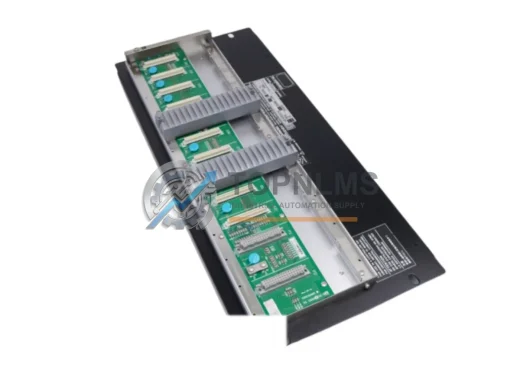
Yokogawa ANB10D-421 original 4-ch 4–20mA analog output module for CENTUM VP & CS 3000. Industrial spare, 12-month warranty, tested before shipment.
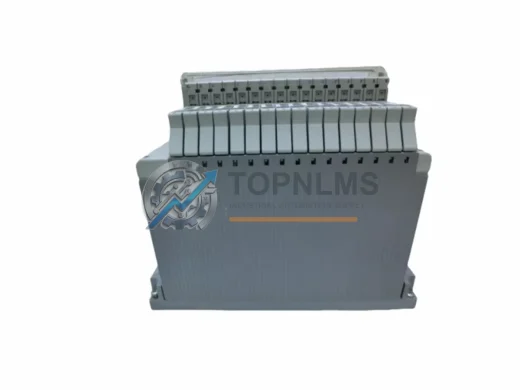
YOKOGAWA AMN21 replacement & upgrade solution for CENTUM CS3000/VP DCS. Compatible wiring, 12-month warranty, fast shipping. Contact: [email protected]
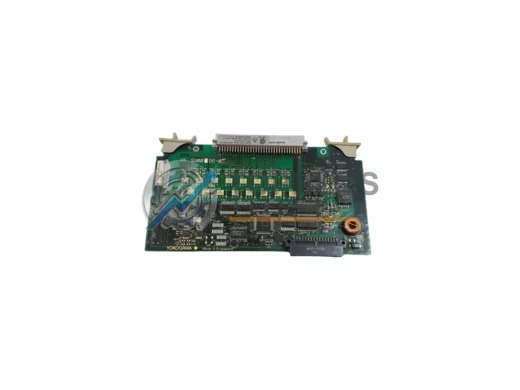
Yokogawa AMM12-S2 original analog input module for CENTUM DCS systems. Tested, 12-month warranty, fast worldwide shipping. Reduce downtime with genuine spares.
Click Quote This Model and the Part Number field will auto-fill with AAM50.