
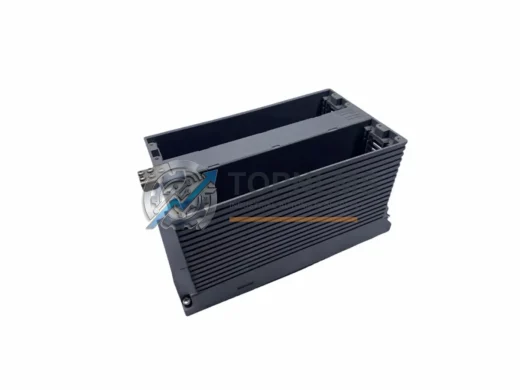
Yokogawa
YOKOGAWA AMN32 S1 Original Industrial Spare CENTUM VP Compatible
AMN32 S1YOKOGAWA AMN32 S1 original DCS I/O module for CENTUM VP systems. Verified spare, 12-month warranty, fast global shipping. Reduce downtime now.
Request availability, condition, lead time and export shipping details for AAI135-S00 S2.
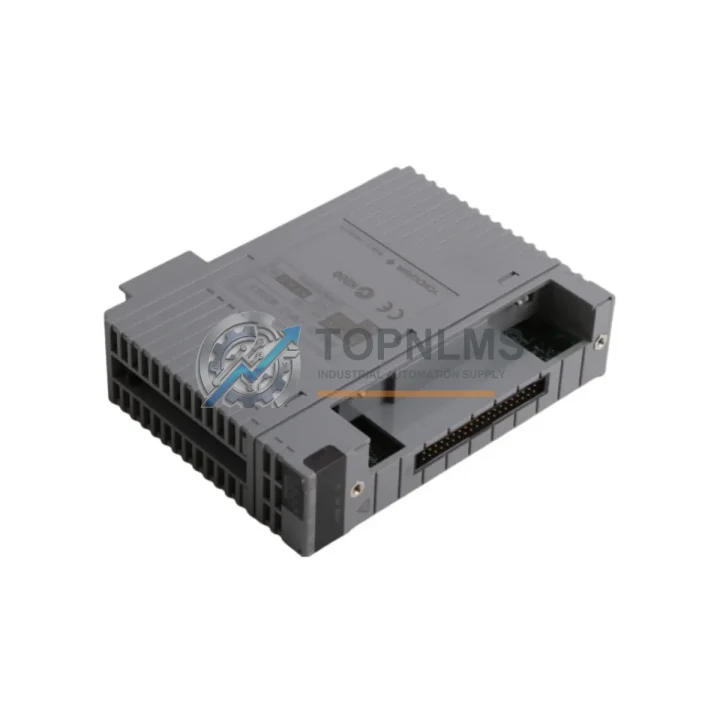
Send this exact part number, quantity and destination country. TOPNLMS will confirm availability, condition and export lead time before quotation.
The YOKOGAWA AAI135-S00 S2 is a high-density analog input module designed for the CENTUM VP and CS 3000 distributed control systems. As legacy CS 3000 installations approach end-of-life and CENTUM VP systems require spare-part replenishment, sourcing a verified, drop-in-compatible AAI135-S00 S2 becomes a critical procurement decision. TOPNLMS supplies this module from tested inventory, enabling plant engineers and system integrators to execute seamless field replacements, scheduled maintenance swaps, and full DCS migration projects with minimal disruption to production continuity.
The AAI135-S00 S2 provides 16-channel analog input capability with 4–20 mA and 1–5 V signal support, integrating directly into the CENTUM VP field control station (FCS) architecture. Its I/O signal wiring is fully compatible with existing marshalling cabinets and terminal boards used in CS 3000 installations, meaning field wiring does not need to be re-terminated during a like-for-like replacement. The module slots into standard YOKOGAWA I/O unit racks without mechanical modification, preserving cabinet space allocation and DIN rail layouts that were engineered for the original system.
For sites migrating from CS 3000 to CENTUM VP R6, the AAI135-S00 S2 is a validated cross-compatible module. Engineering teams can retain existing CENTUM CS 3000 function block logic and re-import it into CENTUM VP’s engineering environment with minimal rework, since the I/O addressing schema and channel configuration parameters remain structurally consistent. This dramatically reduces the software re-engineering effort compared to migrations that involve third-party DCS platforms.
| Parameter | Legacy: CS 3000 AAI135-S00 | Replacement: AAI135-S00 S2 |
|---|---|---|
| Input Channels | 16 CH Analog Input | 16 CH Analog Input |
| Signal Range | 4–20 mA / 1–5 V DC | 4–20 mA / 1–5 V DC |
| Communication Bus | ESB Bus (CS 3000 FCS) | ESB Bus / ER Bus (CENTUM VP FCS) |
| Rack Compatibility | YOKOGAWA I/O Unit (CS 3000) | YOKOGAWA I/O Unit (CENTUM VP / CS 3000) |
| Field Wiring | Terminal board via marshalling cabinet | Identical terminal board pinout — no re-wiring required |
| Power Supply | Supplied via I/O unit backplane (24 V DC) | Supplied via I/O unit backplane (24 V DC) |
| Installation Space | Standard YOKOGAWA I/O slot | Same slot form factor — direct plug-in replacement |
| Engineering Tool | CENTUM CS 3000 Builder | CENTUM VP Engineering Environment (backward-compatible import) |
| Replacement Recommendation | End-of-life / discontinued | ✅ Direct drop-in replacement — recommended upgrade path |
| Warranty | — | ✅ 12-Month Warranty from TOPNLMS |
A successful CENTUM VP or CS 3000 migration rarely involves a single module swap. In practice, plant engineers replacing the AAI135-S00 S2 are simultaneously evaluating the broader I/O infrastructure, communication backbone, and power distribution within the field control station. TOPNLMS supports complete system-level procurement for these projects.
When replacing analog input modules, the associated terminal assembly units — such as the YOKOGAWA ATD series terminal boards — must be verified for compatibility with the new module revision. In many CS 3000 to CENTUM VP migrations, the existing terminal boards can be retained, but the connecting cables between the I/O unit and the marshalling cabinet should be inspected for signal integrity. For sites adding new measurement loops during the upgrade, YOKOGAWA AAI141 or AAI143 multi-range analog input modules offer expanded signal type support and can be installed in the same I/O rack alongside the AAI135-S00 S2.
Communication infrastructure is equally critical. The CENTUM VP FCS relies on Vnet/IP as its primary control network, and sites migrating from CS 3000 must ensure that the field control station’s communication module — typically the YOKOGAWA ACF11 or ACF12 Vnet/IP interface card — is present and correctly configured. For legacy installations still using the older ESB bus topology, the migration plan should include a phased transition to Vnet/IP to take full advantage of CENTUM VP’s redundancy and diagnostics capabilities.
Power supply modules within the I/O unit, such as the YOKOGAWA APS11 or APS12 power supply units, should be inspected during any module replacement campaign. A degraded power supply can cause intermittent faults that are misdiagnosed as module failures, so proactive replacement of aging power supply units alongside the AAI135-S00 S2 is a best practice for minimizing future unplanned downtime.
For sites that include YOKOGAWA STARDOM or ProSafe-RS safety instrumented systems in the same control room, the migration scope may also extend to reviewing the interface between the DCS and the SIS. YOKOGAWA’s standard approach uses hardwired I/O or OPC-based data exchange between CENTUM VP and ProSafe-RS, and the analog input signals processed by the AAI135-S00 S2 may feed into safety logic that requires re-validation after the module swap. Engaging the site’s functional safety engineer early in the project timeline is strongly recommended.
Finally, for sites that require on-site commissioning support or remote diagnostics, YOKOGAWA’s PRM (Plant Resource Manager) asset management software can be used to verify the AAI135-S00 S2’s channel calibration and signal health after installation, without requiring a full FCS restart. This capability significantly reduces the commissioning window and allows the replacement to be completed during a short maintenance window rather than a full plant shutdown.
Q: Can I replace the AAI135-S00 (original revision) with the AAI135-S00 S2 without modifying field wiring?
A: Yes. The S2 revision maintains the same terminal board pinout and signal range as the original AAI135-S00. Field wiring connected to the marshalling cabinet does not need to be re-terminated. Only the module itself needs to be swapped in the I/O unit slot.
Q: Is the AAI135-S00 S2 compatible with both CS 3000 and CENTUM VP field control stations?
A: The AAI135-S00 S2 is designed for CENTUM VP FCS but is backward-compatible with CS 3000 I/O unit racks. Confirm your FCS firmware version with YOKOGAWA’s compatibility matrix before installation if you are running an early CS 3000 revision.
Q: Do I need to re-download the I/O module configuration after replacement?
A: In most cases, the FCS will automatically recognize the replacement module and restore its configuration from the controller database. A manual download of the I/O module definition may be required if the FCS does not auto-detect the new module revision. This can be performed online without stopping the FCS in CENTUM VP environments.
Q: What communication protocol does the AAI135-S00 S2 use?
A: The module communicates via the ESB (Enhanced Signal Bus) or ER Bus within the YOKOGAWA I/O unit, which connects to the FCS backplane. It does not use HART, FOUNDATION Fieldbus, or PROFIBUS directly — those protocols are handled by dedicated YOKOGAWA fieldbus interface modules such as the AAB841 or ALF111.
Q: How much physical space does the module require in the control cabinet?
A: The AAI135-S00 S2 occupies a single I/O slot in the YOKOGAWA I/O unit. No additional DIN rail space or cabinet modification is required for a like-for-like replacement. If you are adding new I/O capacity, ensure the I/O unit has available slots before ordering additional modules.
Q: Can the module be replaced while the plant is running (hot-swap)?
A: CENTUM VP supports online module replacement for I/O modules in redundant FCS configurations. For non-redundant FCS installations, a brief I/O interruption will occur during the swap. Consult your site’s change management procedure and YOKOGAWA’s online replacement guidelines before performing the swap in a live process environment.
Every YOKOGAWA AAI135-S00 S2 module supplied by TOPNLMS is covered by a 12-month warranty from the date of shipment. Prior to dispatch, each unit undergoes a functional verification check to confirm power-up integrity, channel continuity, and communication bus response. Modules that do not pass pre-shipment testing are not dispatched.
In the event of a warranty claim, TOPNLMS provides a replacement unit or full refund based on the fault assessment. Our after-sales response target is within 24 business hours of a warranty claim submission. We maintain buffer stock of critical YOKOGAWA DCS modules — including the AAI135-S00 S2 — to support rapid replacement dispatch without extended lead times.
For procurement teams requiring documentation, TOPNLMS can provide a shipment inspection report, module serial number record, and warranty certificate upon request. All modules are shipped with appropriate ESD-protective packaging and export compliance documentation for international freight.
TOPNLMS ships globally from Xiamen, China. Standard lead time for in-stock modules is 3–7 business days to most destinations. Express shipping options are available for emergency plant maintenance scenarios. Contact our team to confirm current stock availability and lead time before raising a purchase order.
© 2026 TOPNLMS. All rights reserved.
Original Source: https://topnlms.com
Contact: [email protected] | +86 18359293191
YOKOGAWA AMN32 S1 original DCS I/O module for CENTUM VP systems. Verified spare, 12-month warranty, fast global shipping. Reduce downtime now.
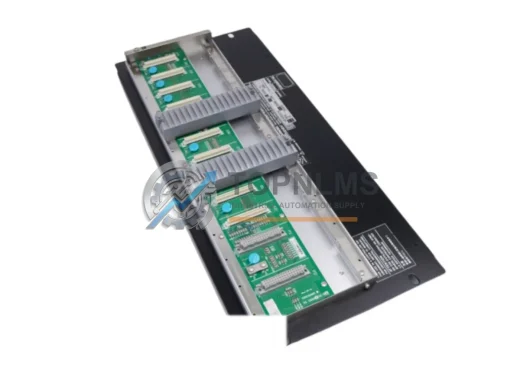
Yokogawa ANB10D-421 original 4-ch 4–20mA analog output module for CENTUM VP & CS 3000. Industrial spare, 12-month warranty, tested before shipment.
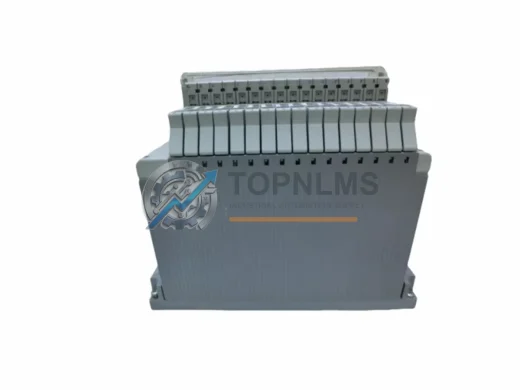
YOKOGAWA AMN21 replacement & upgrade solution for CENTUM CS3000/VP DCS. Compatible wiring, 12-month warranty, fast shipping. Contact: [email protected]
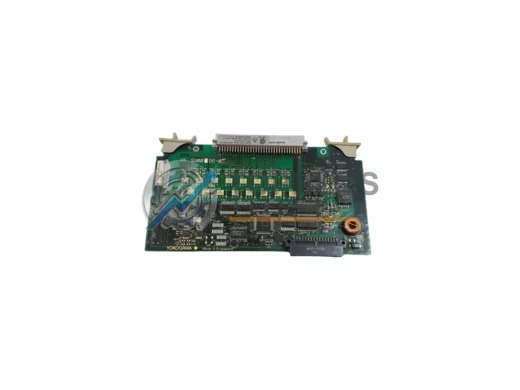
Yokogawa AMM12-S2 original analog input module for CENTUM DCS systems. Tested, 12-month warranty, fast worldwide shipping. Reduce downtime with genuine spares.
Click Quote This Model and the Part Number field will auto-fill with AAI135-S00 S2.