
Yaskawa
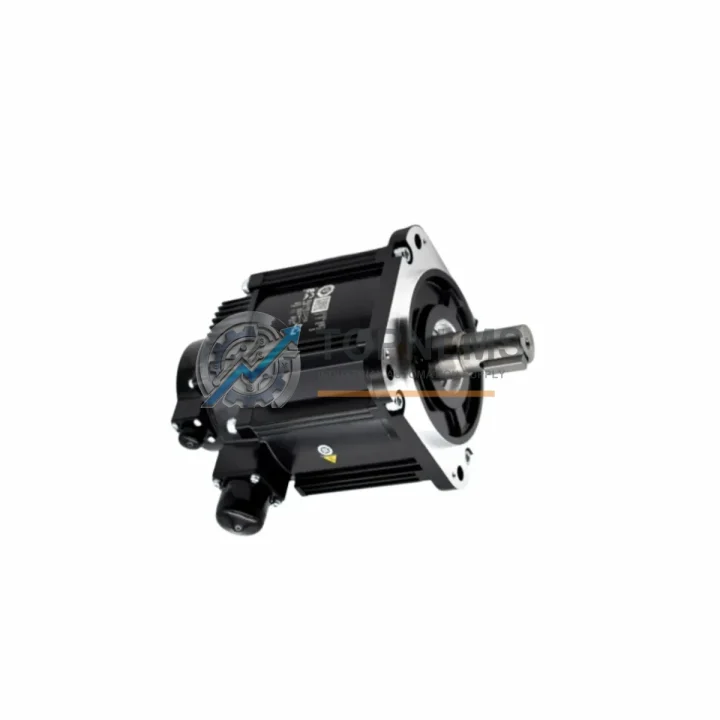
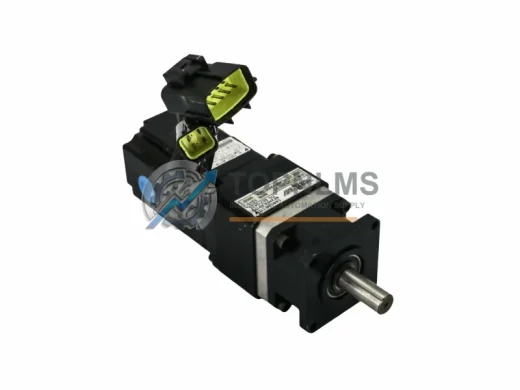
Yaskawa SGMRV-13ANA-YR1D Original Industrial Spare Sigma-7 Compatible
SGMRV-13ANA-YR1DOriginal Yaskawa SGMRV-13ANA-YR1D Sigma-7 AC Servo Motor 1.3kW IP67. Industrial spare for fast replacement, system compatibility & 12-month warranty.
Request availability, condition, lead time and export shipping details for SGM7G-44APK-YR11.
Send this exact part number, quantity and destination country. TOPNLMS will confirm availability, condition and export lead time before quotation.
The Yaskawa SGM7G-44APK-YR11 is a 4.4 kW medium-inertia AC servo motor from the Sigma-7 series, engineered for high-precision motion control in demanding industrial automation environments. Whether you are replacing a failed unit, upgrading from an aging Sigma-5 or Sigma-II servo system, or executing a planned modernization of your machine tool, packaging line, or robotic cell, this motor delivers a smooth, low-risk migration path with minimal rewiring and zero PLC reprogramming in most retrofit scenarios.
The SGM7G-44APK-YR11 is fully compatible with the Yaskawa SGDV and SGDH series servo drives when used with appropriate adapter cables, and is the direct native drive pairing for the Yaskawa SGDV-470A servo amplifier within the Sigma-7 platform. Its 24-bit absolute encoder eliminates the need for homing routines on power-up, reducing commissioning time and improving system reliability in multi-axis configurations. For facilities currently operating Sigma-5 SGM7G or SGM7J motors, the mechanical footprint, shaft dimensions, and connector pinout are largely preserved, allowing direct physical substitution in most OEM machine frames without modification to the motor mounting bracket or cable conduit routing.
When migrating from older Sigma-II SGM-44A or SGM-44AFK motors, the primary change involves upgrading the feedback cable from the legacy 17-bit incremental encoder to the Sigma-7 absolute encoder wiring harness. The Yaskawa JZSP-CVP02 or JZSP-CVP06 encoder extension cables are recommended for this transition and are available as separate line items. Power wiring — U, V, W, and PE — follows the same terminal sequence, so existing motor power cables can typically be reused with a connector adapter, significantly reducing field labor hours during the cutover window.
| Parameter | Legacy: SGM-44AFK (Sigma-II) | Replacement: SGM7G-44APK-YR11 (Sigma-7) |
|---|---|---|
| Rated Output | 4.4 kW | 4.4 kW |
| Encoder Type | 17-bit Incremental | 24-bit Absolute (Multi-turn) |
| Feedback Cable | JZSP-CMP09 series | JZSP-CVP02 / JZSP-CVP06 series |
| Compatible Drive | SGDH-50AE (Sigma-II) | SGDV-470A / SGDV-550A (Sigma-7) |
| Mounting Flange | 130 mm square flange | 130 mm square flange (same) |
| Shaft Diameter | 22 mm (straight key) | 22 mm (straight key, same) |
| Power Connector | MS3102A series | MS3102A series (compatible) |
| Communication Protocol | Analog / Pulse train | MECHATROLINK-III / Analog / Pulse |
| IP Rating | IP55 | IP67 (improved) |
| Holding Brake | Optional (suffix B) | Optional (suffix YR11 = no brake) |
| Warranty | N/A (legacy/EOL) | 12 Months from shipment date |
| Replacement Recommendation | Direct drop-in with encoder cable upgrade. Drive upgrade to SGDV-470A recommended for full Sigma-7 feature set. | |
A complete Sigma-7 servo axis upgrade typically involves more than the motor itself. During the migration process, engineers commonly source the Yaskawa SGDV-470A servo amplifier as the matched drive unit for this motor, replacing the older SGDH-50AE or SGDH-45AE amplifiers that may have reached end-of-life. The SGDV-470A supports MECHATROLINK-III, enabling high-speed synchronous communication with Yaskawa MP3300 or MP2600 machine controllers, which is a significant upgrade over the pulse-train interface used in earlier Sigma-II installations.
For multi-axis systems, the Yaskawa SGDV-COA converter unit and SGDV-OSA01A option card are frequently installed alongside the new amplifier to support shared DC bus configurations and safety I/O integration. In cabinet-constrained retrofits, the compact footprint of the Sigma-7 SGDV amplifier series — approximately 15% narrower than equivalent Sigma-II SGDH units — often allows engineers to add an additional axis within the existing control panel without expanding the enclosure.
On the feedback side, the Yaskawa JZSP-CVP06-03 encoder cable (3-meter) is the most commonly specified harness for this motor in standard machine tool applications. For longer cable runs in gantry or transfer line installations, the JZSP-CVP06-10 (10-meter) variant is available. These cables carry the 24-bit absolute encoder signal and are not interchangeable with the legacy JZSP-CMP09 series used on Sigma-II motors.
When the host controller is a Mitsubishi MELSEC Q-series or iQ-R PLC communicating via SSCNET III/H, a Yaskawa SGDV-OCA03A SSCNET III option card enables direct integration without a gateway device, preserving the existing ladder program and axis parameter structure. This is a common scenario in automotive body shop and press transfer line upgrades where the PLC infrastructure is retained but the servo hardware is refreshed.
For installations requiring signal isolation between the servo drive and legacy analog I/O modules — particularly in older DCS environments using 4–20 mA position feedback — a DIN-rail signal isolator (such as the Phoenix Contact MINI MCR-SL series or equivalent) is recommended between the SGDV analog monitor output and the DCS analog input card. This prevents ground loop interference that can cause erratic position feedback readings during the transition period when old and new hardware coexist on the same control bus.
Finally, for commissioning and parameter backup, the Yaskawa JZSP-CVS06-02 USB setup cable paired with SigmaWin+ software provides full parameter upload/download, auto-tuning, and waveform monitoring capability. Retaining a parameter backup file before decommissioning the old SGDH drive is strongly recommended as part of the site migration checklist.
Q: Can I reuse my existing motor power cable from the SGM-44AFK?
A: In most cases, yes. The U/V/W/PE terminal sequence is identical. You will need to verify the connector shell type at the motor end — if the legacy cable uses an MS3102A20-18S connector, it is directly compatible. If the cable uses a straight-wire terminal block connection, a new connector must be crimped to the existing cable conductors.
Q: Do I need to modify my PLC program after replacing the motor?
A: For pulse-train or analog command interfaces, no PLC program changes are required. The SGM7G-44APK-YR11 accepts the same command signals as its Sigma-II predecessor. If you are upgrading to MECHATROLINK-III communication simultaneously, axis parameter re-mapping in the motion controller will be required, but the core motion logic remains unchanged.
Q: Will the Sigma-7 motor fit in the same mounting space as my Sigma-II motor?
A: Yes. The SGM7G frame size for 4.4 kW uses the same 130 mm square flange and shaft dimensions as the equivalent Sigma-II SGM-44A series. No mechanical modification to the machine frame, coupling, or motor bracket is required.
Q: What communication protocols does the SGM7G-44APK-YR11 support?
A: The motor itself is protocol-agnostic — communication is handled by the paired SGDV servo amplifier. The SGDV-470A supports MECHATROLINK-III natively, with option cards available for MECHATROLINK-II, analog/pulse, EtherCAT, PROFINET, and SSCNET III/H, covering the full range of PLC and motion controller platforms in use across industrial sites.
Q: Is the 24-bit absolute encoder backward compatible with my existing Sigma-5 drive?
A: No. The Sigma-7 absolute encoder uses a different communication protocol than the Sigma-5 encoder interface. A Sigma-7 SGDV amplifier is required. Attempting to connect a Sigma-7 motor to a Sigma-5 SGDV-R drive will result in an encoder fault and the drive will not operate.
Q: How do I handle the homing sequence after replacing the motor?
A: The 24-bit multi-turn absolute encoder retains position data through power cycles (with battery backup on the SGDV amplifier). After initial installation and encoder initialization, no homing routine is required on subsequent power-ups, which is a significant operational improvement over the incremental encoder systems used in Sigma-II.
Every Yaskawa SGM7G-44APK-YR11 unit shipped by TOPNLMS carries a 12-month warranty from the date of shipment. Prior to dispatch, each unit undergoes a pre-shipment functional inspection covering insulation resistance, encoder signal integrity, shaft runout, and nameplate verification against the order specification. Units are packed in anti-static foam with original or equivalent OEM packaging to prevent transit damage.
In the event of a warranty claim, TOPNLMS provides a replacement unit dispatch within 3 business days of fault confirmation, with return freight covered for verified manufacturing defects. Our technical support team is available to assist with installation verification, parameter setup guidance, and fault diagnosis via email and phone throughout the warranty period.
For procurement teams managing planned maintenance budgets, we offer advance exchange arrangements — a replacement unit is shipped before the faulty unit is returned — to minimize production downtime in critical applications. Volume pricing and consignment stock agreements are available for OEM customers and system integrators managing multi-site servo refresh programs.
Stock is maintained in Xiamen, China, with standard lead time of 1–3 business days for in-stock units. Express international shipping via DHL, FedEx, or UPS is available to all major industrial markets. Export documentation including commercial invoice, packing list, and certificate of origin is provided with every shipment.
Original Yaskawa SGMRV-13ANA-YR1D Sigma-7 AC Servo Motor 1.3kW IP67. Industrial spare for fast replacement, system compatibility & 12-month warranty.
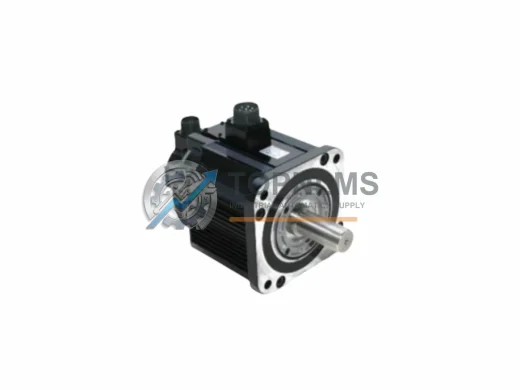
YASKAWA SGMG-30ASA 3kW AC Servo Motor, IP55, 1500RPM, Sigma-II series. Ruggedized for harsh industrial environments. In stock, tested, 12-month warranty.
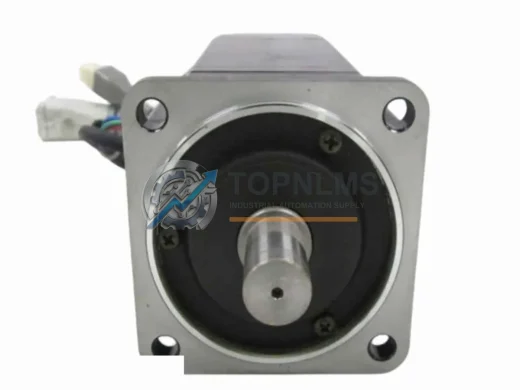
YASKAWA SGM-08A3FJ62 750W AC Servo Motor replacement for Sigma Series. Compatible upgrade with brake, 12-month warranty. Fast shipping from stock.
YASKAWA SGM-02U3B4L 200W Sigma Series AC Servo Motor. Original industrial spare, drop-in compatible replacement. 12-month warranty. Fast global shipping.
Click Quote This Model and the Part Number field will auto-fill with SGM7G-44APK-YR11.