Product Overview
Yaskawa PCU-ETHIO-EI Replacement for MOTOMAN DX Series: Seamless Transition & Compatibility Upgrade
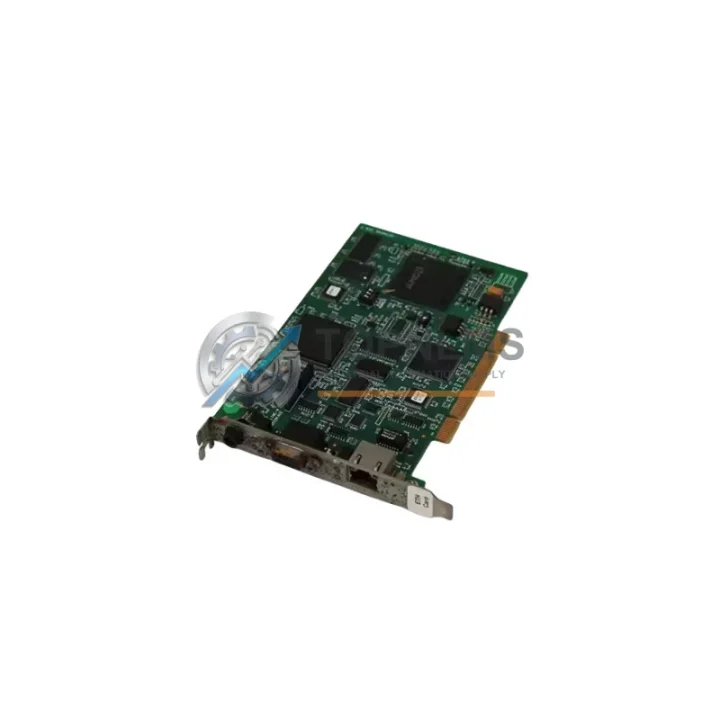
The Yaskawa PCU-ETHIO-EI is the dedicated Ethernet I/O Network Card designed for MOTOMAN robot controllers, specifically the DX100 and DX200 series. As industrial facilities face increasing pressure to maintain uptime while managing aging automation infrastructure, the PCU-ETHIO-EI has become a critical replacement and upgrade component for engineers tasked with modernizing robot communication architecture without full system overhauls.
This card enables high-speed Ethernet I/O communication between the MOTOMAN robot controller and field devices, PLCs, and supervisory systems. Whether you are replacing a failed card in an existing DX100 cabinet or upgrading a DX200 controller to support expanded I/O network capacity, the PCU-ETHIO-EI provides a direct, drop-in solution that preserves your existing wiring topology, program logic, and cabinet layout.
For facilities running legacy MOTOMAN UP series or XRC-era controllers, migration to the DX100 or DX200 platform often involves replacing the entire communication stack. The PCU-ETHIO-EI is the network interface layer that bridges your robot controller to EtherNet/IP or proprietary Yaskawa Ethernet I/O networks, eliminating the need to rewire field I/O panels or reprogram PLC-side communication blocks. Engineers migrating from older DeviceNet or CC-Link I/O configurations will find that the PCU-ETHIO-EI supports a clean protocol transition with minimal changes to the robot teach pendant program structure.
In multi-robot cells where a YRC1000 or DX200 controller coordinates multiple MOTOMAN arms, the PCU-ETHIO-EI handles the I/O synchronization layer that keeps cell timing accurate. Replacing a degraded or failed card in this environment requires a unit that matches the original firmware compatibility profile — our stock units are sourced and verified against DX100 and DX200 system software revisions to ensure plug-and-play installation.
Retrofit projects that involve replacing a JZNC-YIU01-E I/O unit or upgrading from a JANCD-YIO21-E I/O board will often require the PCU-ETHIO-EI as the network communication interface when transitioning to Ethernet-based I/O architecture. The card installs into the designated slot within the DX100 or DX200 controller rack, requires no additional power supply modification, and communicates via standard RJ45 Ethernet cabling — compatible with existing plant network infrastructure.
For system integrators managing a fleet of MOTOMAN robots across multiple production lines, maintaining a spare PCU-ETHIO-EI in inventory is a standard risk mitigation practice. A failed network card can halt an entire robot cell within seconds. With our in-stock availability and same-day dispatch capability, your replacement unit can be on-site within 24–72 hours depending on destination, significantly reducing mean time to repair (MTTR) for critical automation assets.
Applications where the PCU-ETHIO-EI is commonly deployed include automotive body welding lines, arc welding cells, material handling systems, and assembly automation where MOTOMAN robots interface with Siemens S7, Allen-Bradley ControlLogix, or Mitsubishi MELSEC PLCs via Ethernet I/O. The card’s compatibility with standard industrial Ethernet protocols means it integrates cleanly into mixed-vendor control architectures without requiring gateway devices or protocol converters.
Compatibility Comparison Table
| Parameter |
Legacy / Replaced Component |
PCU-ETHIO-EI (This Unit) |
| Compatible Controller |
MOTOMAN XRC, NX100 (via adapter) |
MOTOMAN DX100, DX200 |
| Communication Protocol |
DeviceNet, CC-Link, Profibus |
Ethernet I/O (EtherNet/IP compatible) |
| Physical Interface |
Proprietary bus connector |
RJ45 Ethernet (standard Cat5e/Cat6) |
| Installation Slot |
Dedicated fieldbus slot |
PCU slot in DX100/DX200 rack |
| Power Supply Requirement |
Separate fieldbus power supply required |
Powered via controller backplane — no external PSU needed |
| Wiring Modification |
Requires rewiring to fieldbus terminal blocks |
Standard Ethernet patch cable — no panel rewiring |
| Program Compatibility |
Requires I/O address remapping |
Compatible with existing DX100/DX200 I/O variable assignments |
| Replacement Complexity |
High — protocol and hardware change |
Low — direct slot replacement, same SKU |
| Warranty |
N/A (legacy / discontinued) |
12-Month Warranty included |
Seamless Upgrade Solutions
A successful PCU-ETHIO-EI replacement or migration project rarely involves a single component. In practice, engineers working on DX100 or DX200 controller upgrades will also evaluate the condition of adjacent hardware. The JANCD-YCP01-E CPU board is the processing core of the DX100 controller and is frequently assessed alongside the network card during planned maintenance windows. Similarly, the JANCD-YIF01-E interface board manages the internal communication bus between the CPU and peripheral cards — a degraded interface board can cause intermittent network card faults that are misdiagnosed as PCU-ETHIO-EI failures.
For I/O expansion during the upgrade, the JANCD-YIO21-E I/O board provides additional digital I/O capacity within the DX100 rack, while the JZNC-YIU01-E remote I/O unit extends I/O to field junction boxes without additional cabling runs. Power integrity is critical in any controller retrofit — the JZNC-YPS01-E power supply unit should be inspected and replaced if the controller has been in service for more than five years, as power supply degradation is a leading cause of network card instability.
For programming and commissioning, the JZRCR-YPP01-1 programming pendant cable is required to connect a laptop running MotoSim EG or FSU software to the DX100 or DX200 controller for I/O parameter configuration and network address assignment after card replacement. Facilities upgrading from NX100 to DX200 architecture will also need to evaluate the JANCD-YSF21-E safety board, as the safety I/O mapping changes between controller generations. For HMI integration, the GP2600-TC41-24V Pro-face HMI or equivalent Yaskawa-compatible panel can be reconfigured to communicate with the updated Ethernet I/O network without hardware replacement, provided the IP addressing scheme is updated in the HMI project.
Retrofit Guidance FAQ
Q: Can I replace the PCU-ETHIO-EI without modifying the robot program?
A: Yes, in most cases. If you are replacing a failed PCU-ETHIO-EI with an identical unit in the same DX100 or DX200 controller, the I/O variable assignments and network parameters are stored in the controller’s non-volatile memory. After card replacement, restore the system parameters from backup using the teach pendant’s parameter restore function. No program modification is required if the replacement card matches the original firmware revision.
Q: Is the PCU-ETHIO-EI compatible with both DX100 and DX200 controllers?
A: The PCU-ETHIO-EI is designed for the MOTOMAN DX series platform. Compatibility with specific controller revisions depends on the system software version installed. Please provide your controller’s system software version (visible on the teach pendant under System > Version) when placing your order so we can confirm firmware compatibility before dispatch.
Q: What wiring changes are required during installation?
A: The PCU-ETHIO-EI connects to the plant Ethernet network via a standard RJ45 patch cable. No changes to the robot’s internal wiring harness or I/O terminal blocks are required for a like-for-like replacement. If you are migrating from a DeviceNet or CC-Link I/O architecture, the field wiring to the I/O terminal blocks will need to be rerouted to an Ethernet-capable remote I/O unit.
Q: How do I configure the IP address after replacement?
A: IP address assignment is performed via the DX100 or DX200 teach pendant under the Ethernet I/O network settings menu. The default IP address is factory-set; you will need to assign a static IP address that matches your plant network subnet. Refer to the Yaskawa DX100/DX200 Ethernet I/O Function Manual (document number RE-CSO-A059) for step-by-step configuration instructions.
Q: Can the PCU-ETHIO-EI communicate with non-Yaskawa PLCs?
A: Yes. The PCU-ETHIO-EI supports standard Ethernet I/O communication that is compatible with EtherNet/IP-capable PLCs including Allen-Bradley ControlLogix, Siemens S7-1200/S7-1500 (via EtherNet/IP adapter), and Mitsubishi MELSEC iQ-R series with Ethernet I/O modules. PLC-side configuration requires adding the MOTOMAN controller as an EtherNet/IP adapter device using the appropriate EDS file.
Q: What physical space is required in the controller cabinet?
A: The PCU-ETHIO-EI occupies a single PCU slot in the DX100 or DX200 controller rack. No additional DIN rail space or cabinet modifications are required. The card dimensions and mounting mechanism are identical to the original unit, ensuring a direct physical replacement without cabinet rework.
Warranty Assurance
Every PCU-ETHIO-EI unit shipped by TOPNLMS is covered by a 12-month warranty from the date of dispatch. Prior to shipment, each unit undergoes functional verification including power-on testing, communication interface check, and visual inspection for component integrity. Units that do not pass our pre-shipment test protocol are not dispatched.
In the event of a warranty claim, TOPNLMS provides a replacement unit dispatch within 3 business days of claim confirmation. Our after-sales response team is available via email at [email protected] and by phone at +86 18359293191 to support fault diagnosis, installation guidance, and warranty processing. We maintain stock of the PCU-ETHIO-EI to ensure replacement availability throughout the warranty period.
For procurement teams, our standard shipping terms include DHL Express, FedEx International Priority, and sea freight consolidation for bulk orders. Export documentation including commercial invoice, packing list, and certificate of origin (Japan) is provided with every shipment. Lead time for in-stock units is 1–3 business days from order confirmation.
TOPNLMS serves industrial automation engineers, MRO procurement teams, and system integrators across Asia-Pacific, the Middle East, and Europe. Our catalog covers Yaskawa, Siemens, Allen-Bradley, Mitsubishi, Fanuc, ABB, and Schneider Electric automation components, with a focus on hard-to-source and discontinued part numbers that are critical to keeping production lines operational.