Product Overview
Yaskawa YRC1000 Original Industrial Spare Motoman Compatible: System Stability & Industrial Spare Maintenance Value
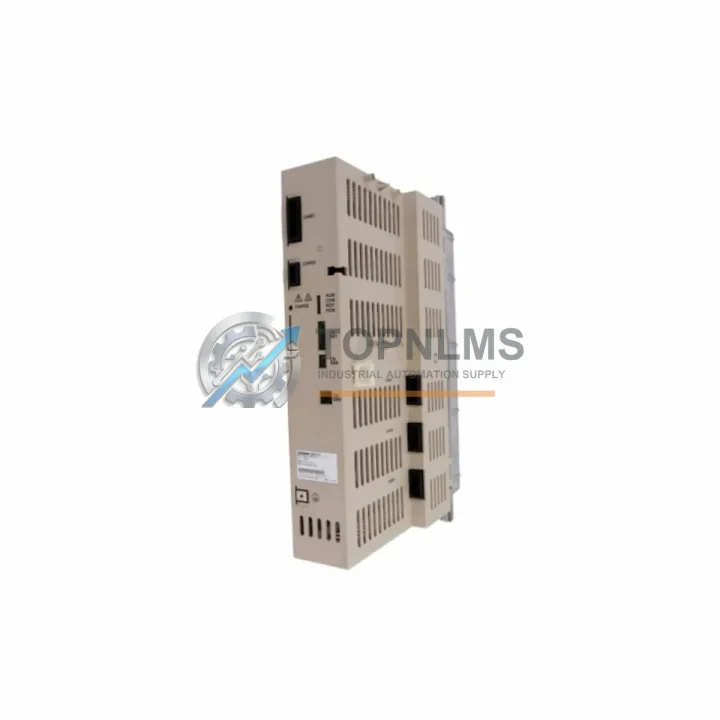
The Yaskawa YRC1000 is the compact, high-performance robot controller at the heart of Motoman industrial robot systems deployed across automotive assembly, electronics manufacturing, food processing, and general-purpose factory automation worldwide. When a YRC1000 controller fails or reaches end-of-service life, the downstream impact is immediate: production lines halt, robot arms go offline, and maintenance teams face intense pressure to restore operations. Stocking a verified original YRC1000 spare unit is the single most effective measure a maintenance engineer can take to protect system uptime and eliminate unplanned downtime risk.
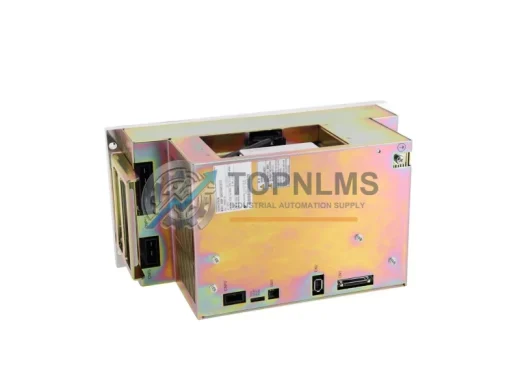
This listing provides a genuine original Yaskawa YRC1000 robot controller — not a refurbished substitute or third-party clone — sourced, inspected, and dispatched with full traceability. Each unit undergoes pre-shipment functional verification and ships with a 12-month warranty, giving procurement teams and plant managers the confidence to integrate it directly into active Motoman robot cells without additional qualification delays.
Critical Technical Specs
| Parameter |
Specification |
| Model / SKU |
YRC1000 |
| Brand |
Yaskawa Electric Corporation |
| Series |
Motoman YRC Series |
| Product Type |
Industrial Robot Controller |
| Applicable Robots |
Motoman 6-axis, 7-axis robots (GP, MH, MA, MPL, MPK series) |
| Control Axes |
Up to 8 axes (standard configuration) |
| Power Supply |
Single-phase / Three-phase 200–480 VAC, 50/60 Hz |
| Operating Temperature |
0°C to 45°C |
| Storage Temperature |
-10°C to 60°C |
| Protection Rating |
IP54 (controller cabinet) |
| Communication Interfaces |
Ethernet, DeviceNet, EtherNet/IP, PROFIBUS (option) |
| Programming Language |
INFORM III |
| Country of Origin |
Japan |
| Compatibility |
Direct drop-in replacement for existing YRC1000 installations |
| Installation |
Floor-mount cabinet; standard DIN rail internal wiring |
| Warranty |
12 Months — covers manufacturing defects and functional failure |
| Condition |
Original / New |
Preventive Maintenance Strategy
A YRC1000 controller sits at the nerve center of your robot cell, but its reliability is only as strong as the surrounding electrical and mechanical ecosystem. Experienced maintenance engineers know that when a robot controller is pulled for inspection or replacement, it is the optimal moment to audit the entire control cabinet and associated subsystems — catching latent faults before they cascade into the next unplanned outage.
During a YRC1000 replacement or scheduled overhaul, the servo drive modules (such as the Yaskawa SGDV or SGDH series) should be inspected for capacitor aging and thermal stress, as servo drives share the same power bus and are subject to identical duty cycles. The teach pendant cable assembly (YRC1000-compatible DX200/YRC1000 pendant) is a high-flex component that accumulates wear at the strain relief points and should be replaced proactively if cracking or intermittent communication faults are observed.
The I/O interface boards inside the YRC1000 cabinet — including digital input/output modules and analog signal boards — should be cleaned and re-seated during any controller swap. Loose connector seating on I/O modules is a leading cause of phantom fault codes after reinstallation. Similarly, the power supply unit (PSU) within the controller cabinet should be load-tested; a marginal PSU that passes idle checks may fail under full servo load, causing nuisance trips that are difficult to diagnose remotely.
For facilities running multiple Motoman robots on a shared network, the Ethernet communication switch and fieldbus gateway modules (EtherNet/IP or PROFIBUS adapters) connecting the YRC1000 to the PLC or SCADA layer deserve attention. A degraded network switch port can introduce latency that manifests as robot positioning errors or E-stop faults, masking the true root cause. Replacing aging managed switches in the control room during a planned robot maintenance window eliminates this variable.
The battery backup unit for program and parameter retention is a consumable that Yaskawa recommends replacing on a defined interval — typically every 3 years under standard operating conditions. Failing to replace the backup battery before a controller swap risks losing all job programs and calibration data stored in the original unit. Procure a replacement battery alongside the YRC1000 spare to ensure a complete, zero-data-loss changeover.
Finally, the cooling fan assemblies within the YRC1000 cabinet are another wear item. Fan bearing failure is a silent threat: the controller may continue operating until thermal shutdown occurs during peak production. Stocking one set of OEM replacement fans alongside the controller spare is a low-cost insurance policy against heat-related failures. Pair this with a review of the cabinet air filter mats, which accumulate industrial dust and restrict airflow — a common contributor to premature controller aging in foundry, welding, and machining environments.
Strategic Replacement Solutions
The YRC1000 was introduced as the successor to the Yaskawa DX200 controller platform, offering a more compact footprint, improved energy efficiency, and enhanced network connectivity. For facilities still operating DX200-based robot cells, the YRC1000 represents a validated upgrade path that preserves robot mechanical hardware investment while modernizing the control layer. The transition requires job program conversion using Yaskawa’s migration tools, but the long-term benefit — access to current firmware support, expanded I/O options, and improved diagnostics — justifies the one-time migration effort.
For plants managing aging Motoman robot fleets where original YRC1000 units are approaching end-of-support, maintaining a dedicated spare controller inventory is the most operationally sound strategy. A single unplanned robot outage in an automotive body shop or electronics SMT line can cost tens of thousands of dollars per hour in lost production. The cost of a stocked YRC1000 spare is recovered within minutes of the first emergency deployment.
Our pre-shipment verification process includes power-on functional testing, communication interface validation, and parameter baseline checks. Units are packed in anti-static, shock-absorbing packaging suitable for international air freight and sea freight. Lead time from order confirmation to dispatch is typically 1–3 business days for in-stock units, with express courier options available for emergency maintenance scenarios.
Support FAQ
Q1: Is this YRC1000 a genuine original unit or a refurbished/repaired part?
This is a genuine original Yaskawa YRC1000 — not refurbished, repaired, or third-party manufactured. Each unit is sourced through verified industrial supply channels and undergoes pre-shipment functional testing before dispatch.
Q2: What does the 12-month warranty cover?
The 12-month warranty covers manufacturing defects and functional failure under normal operating conditions. It does not cover damage resulting from incorrect installation, overvoltage events, or physical impact. Warranty claims are processed with full technical support from our team.
Q3: Can this YRC1000 replace my existing unit without reprogramming?
A direct swap requires restoring your job programs and system parameters from backup (CF card or USB). The YRC1000 hardware is a drop-in replacement for existing YRC1000 installations. If migrating from a DX200, program conversion is required. We recommend backing up all robot data before any controller replacement.
Q4: How do I verify compatibility with my specific Motoman robot model?
The YRC1000 is compatible with a wide range of Motoman GP, MH, MA, MPL, and MPK series robots. Compatibility is determined by the robot’s axis configuration and servo drive specifications. Please provide your robot model number and we will confirm compatibility before order confirmation.