Product Overview
YASKAWA HW0388706-A Original Industrial Spare Motoman Compatible: Ensuring System Stability in Robotic Automation
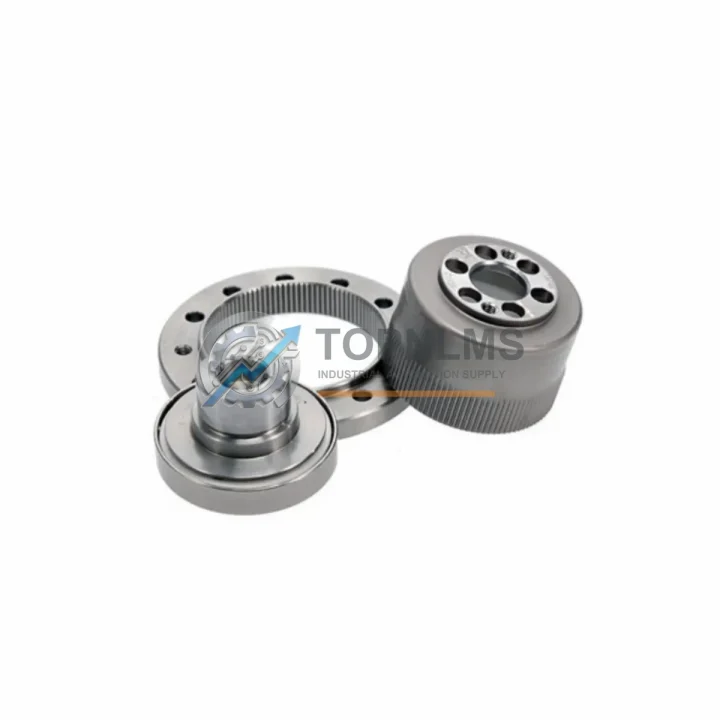
In high-throughput manufacturing environments, the harmonic drive reducer is one of the most mechanically demanding components in any articulated robot arm. The YASKAWA HW0388706-A, HW0388708-A, and HW0388710-A are original joint reducers engineered specifically for the Motoman series of industrial robots — covering a range of joint axes and torque ratings across multiple robot models. When a reducer fails or approaches end-of-life, the consequences are immediate: unplanned downtime, production loss, and the risk of cascading mechanical damage to adjacent drivetrain components. Stocking a verified original replacement is not a luxury — it is a core element of any responsible maintenance strategy.
Critical Technical Specifications
| Parameter |
Details |
| Part Numbers |
HW0388706-A / HW0388708-A / HW0388710-A |
| Brand |
YASKAWA Electric Corporation |
| Series Compatibility |
Motoman (MA, MH, HP, ES, SK, UP series — verify axis and torque rating against robot model) |
| Component Type |
Harmonic Drive Joint Reducer (Wave Generator / Flexspline / Circular Spline assembly) |
| Reduction Ratio |
Model-dependent; consult YASKAWA robot maintenance manual for axis specification |
| Lubrication |
Pre-greased; re-lubrication interval per YASKAWA PM schedule (typically 12,000–20,000 hours) |
| Installation |
Direct bolt-on replacement; torque values per YASKAWA service documentation |
| Operating Environment |
Industrial factory floor; IP rating per robot enclosure class |
| Country of Origin |
Japan |
| Part Condition |
Original New (OEM) |
| Pre-shipment Testing |
Functional inspection and dimensional verification prior to dispatch |
| Warranty |
12 Months from date of delivery |
Preventive Maintenance Strategy: Protecting Your Motoman Robot Investment
A harmonic drive reducer does not fail in isolation. In a Motoman robot, each joint axis operates as part of an integrated mechanical and electrical system. When scheduling a reducer replacement — whether corrective or preventive — experienced maintenance engineers treat the intervention as an opportunity to audit the entire joint assembly and surrounding subsystems.
During a reducer changeout on a Motoman MA1400 or MH5 robot, for example, the servo motor coupled to the affected axis should be inspected for bearing wear and encoder signal integrity. The YASKAWA servo motor (such as the SGMRS or SGMGV series) drives the wave generator directly, and any axial play or contamination in the motor shaft will accelerate wear on the new reducer. If the motor has accumulated significant runtime hours, replacing it concurrently with the reducer eliminates a second planned outage within months.
The servo amplifier or drive unit — typically a YASKAWA SGDV or CACR-series drive — should also be checked for alarm history, capacitor condition, and cooling fan operation. A degraded drive delivering inconsistent torque commands will stress the new reducer prematurely. While the cabinet is open, inspect the robot controller battery pack (JZRCR-NPP01B or equivalent) for voltage and replace if within 12 months of its rated service life, as battery failure causes encoder data loss and requires full robot re-mastering — a costly and time-consuming procedure.
Wiring integrity is equally critical. The encoder cable harness running from the joint motor to the controller (YASKAWA part series JZSP-CHP or equivalent flex cables) should be inspected for chafing, connector corrosion, and continuity. Flex cable failures are a leading cause of intermittent encoder faults that are frequently misdiagnosed as reducer or motor issues. Replacing a worn cable harness during a planned reducer swap costs a fraction of the labor involved in a second unplanned intervention.
For robots operating in welding, painting, or high-cycle assembly applications, the brake unit integrated into the servo motor should be tested for holding torque. A slipping brake on a vertical axis can cause the arm to drift under gravity load, placing abnormal stress on the new reducer during powered-off states. Similarly, the I/O interface module in the robot controller — responsible for safety interlock signals and peripheral device communication — should be verified for correct operation before returning the robot to production.
Maintenance planners managing a multi-robot cell should also consider the condition of the teach pendant cable and connector, the NX100 or DX200 controller backplane board condition, and the integrity of the power supply unit within the controller cabinet. These components share operational hours with the mechanical drivetrain and are logical candidates for concurrent inspection or replacement during any major mechanical intervention.
Finally, for facilities running legacy Motoman UP or ES series robots, sourcing a spare CPU board or axis control card for the controller is a prudent inventory decision. As these platforms age out of active production, controller-level component availability becomes the primary constraint on system longevity — not the mechanical drivetrain, which can be sustained with original spare reducers like the HW0388706-A series.
Strategic Replacement Solutions: Extending Motoman System Life
The HW0388706-A, HW0388708-A, and HW0388710-A reducers are direct OEM replacements that maintain full mechanical and kinematic compatibility with the original robot design. Unlike aftermarket alternatives, original YASKAWA reducers preserve the factory-calibrated backlash and stiffness characteristics that the robot’s motion controller was tuned to expect. Substituting a non-OEM reducer with different compliance characteristics can introduce positioning errors, vibration, and premature wear — particularly in high-precision welding or assembly applications where path accuracy is critical.
For facilities managing aging Motoman fleets, a proactive reducer replacement program — based on operating hours rather than failure events — is the most cost-effective approach. YASKAWA’s published maintenance intervals provide a baseline, but high-cycle applications (>100 cycles/minute) or environments with elevated temperature or contamination may warrant earlier intervention. Establishing a minimum on-hand inventory of one reducer per robot model in the fleet eliminates the lead-time risk associated with emergency procurement and keeps mean time to repair (MTTR) within acceptable production targets.
Each unit dispatched from our inventory undergoes pre-shipment functional inspection and dimensional verification. Orders are processed and shipped within 1–3 business days, with express logistics options available for urgent maintenance requirements. All units are covered by a 12-month warranty from the date of delivery.
Support FAQ
Q1: How do I confirm which part number (HW0388706-A, HW0388708-A, or HW0388710-A) applies to my robot?
Each part number corresponds to a specific joint axis and torque rating within the Motoman series. Cross-reference the robot model number and axis designation against the YASKAWA spare parts list or maintenance manual. If you provide your robot model and axis number, our technical team can confirm the correct part number before order placement.
Q2: Is this an original YASKAWA part or an aftermarket equivalent?
This is an original OEM part manufactured by YASKAWA Electric Corporation. It is not an aftermarket, remanufactured, or compatible substitute. Original parts preserve factory kinematic specifications and are required for warranty-compliant maintenance on YASKAWA robots.
Q3: What is the recommended inventory quantity for a production facility?
For facilities operating 3 or more Motoman robots of the same model, we recommend maintaining a minimum of one reducer per joint axis type as on-hand safety stock. For single-robot installations in critical production roles, one spare reducer per robot is the standard recommendation to eliminate emergency lead-time exposure.
Q4: What does the 12-month warranty cover, and what is the claims process?
The 12-month warranty covers manufacturing defects and functional failures under normal operating conditions. It does not cover damage resulting from improper installation, contamination, or operation outside YASKAWA’s specified parameters. To initiate a warranty claim, contact us with the order reference, installation date, and a description of the failure mode. Replacement or refund is processed upon verification.