
SST
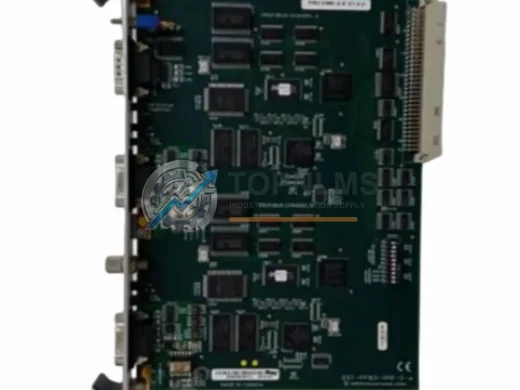
SST SST-PB3-VME-2 Ruggedized PROFIBUS DP VME Module
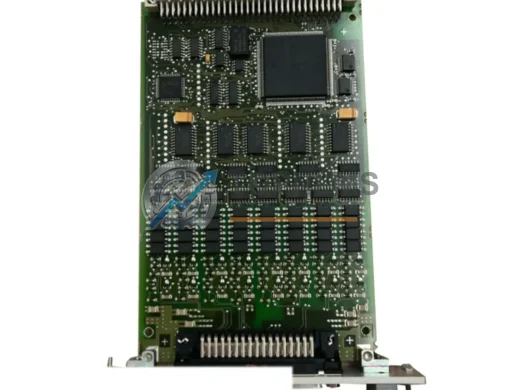
SST-PB3-VME-2SST SST-PB3-VME-2 Dual-Port PROFIBUS DP VME card. Rugged, field-proven reliability for harsh industrial environments. In stock, tested, 12-month warranty.
Request availability, condition, lead time and export shipping details for SST-DNP-PCI-4.
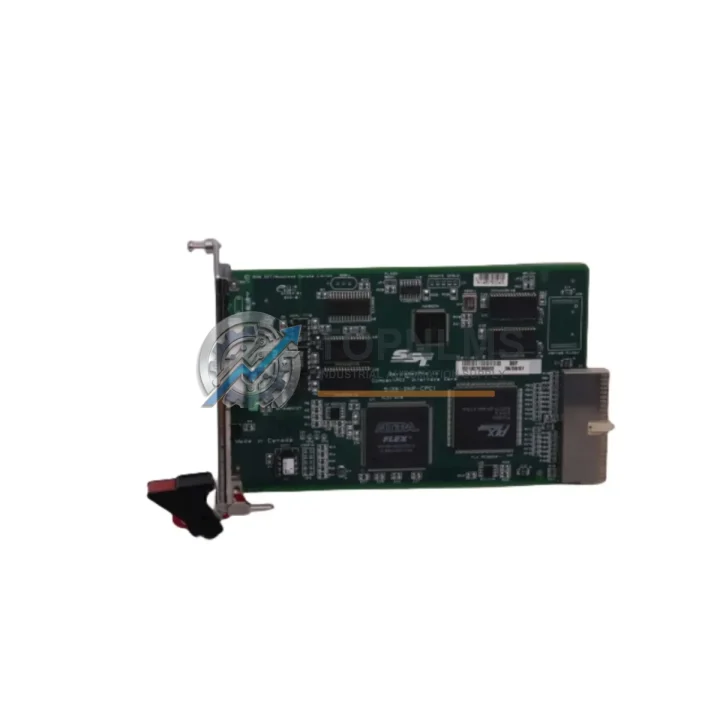
Send this exact part number, quantity and destination country. TOPNLMS will confirm availability, condition and export lead time before quotation.
Upgrading or replacing a legacy DeviceNet PCI interface card is one of the most common—and most time-sensitive—tasks in industrial control system modernization. The SST SST-DNP-PCI-4 is a four-port DeviceNet PCI interface card engineered for seamless migration from discontinued or aging DNP-PCI Series hardware. Whether your existing system relies on an older SST-DN3-PCI-2 two-port card, a single-port SST-DN3-PCI card, or a third-party DeviceNet master that has reached end-of-life, the SST-DNP-PCI-4 provides a direct upgrade path with minimal disruption to your production environment.
The SST-DNP-PCI-4 supports up to four independent DeviceNet channels on a single PCI slot, making it ideal for consolidating multiple legacy interface cards into one compact footprint. This is particularly valuable in control cabinets where rack space is at a premium and cable management complexity must be reduced. The card is compatible with standard PCI bus architectures found in industrial PCs and embedded controllers, and it integrates directly with RSNetWorx for DeviceNet, Studio 5000 Logix Designer, and other Rockwell Automation software environments commonly used alongside Allen-Bradley PLC-5, SLC 500, ControlLogix, and CompactLogix platforms.
During migration from a legacy SST-DN3-PCI-2 or similar two-port card, field wiring to the DeviceNet trunk line and drop cables does not require modification. The DNP-PCI-4’s DB9 connectors maintain the same pinout convention as the predecessor series, allowing technicians to reconnect existing cables without rewiring the DeviceNet segment. This dramatically reduces commissioning time and the risk of wiring errors during a live system cutover.
For facilities running mixed DeviceNet and EtherNet/IP architectures, the SST-DNP-PCI-4 can coexist in the same industrial PC chassis alongside EtherNet/IP interface cards such as the SST-PNIO-PCI or third-party EtherNet/IP adapters, enabling a phased migration strategy where DeviceNet segments are maintained while newer EtherNet/IP nodes are gradually introduced. This approach is common in automotive assembly, food and beverage processing, and material handling applications where full network replacement is not feasible in a single maintenance window.
The card’s driver stack supports Windows-based SCADA and HMI platforms, including FactoryTalk View SE and FactoryTalk View ME, as well as third-party HMI systems communicating via OPC DA or OPC UA gateways. When replacing a legacy card in a system that uses a Moxa NPort serial device server or a ProSoft Technology MVI56-DNP communication module for bridging DeviceNet to Modbus or PROFIBUS, the SST-DNP-PCI-4 can serve as the primary DeviceNet master while the bridging module continues to handle protocol translation on the secondary network segment.
Power requirements for the SST-DNP-PCI-4 are drawn entirely from the PCI bus (3.3 V / 5 V), eliminating the need for external power supplies or auxiliary wiring to the card itself. This simplifies installation in existing control cabinets and reduces the risk of ground loop issues that can affect signal integrity on DeviceNet segments operating at 125 kbps, 250 kbps, or 500 kbps baud rates.
For applications where the legacy system includes a Woodhead SST-DN3-104 ISA-bus DeviceNet card or an older PCI card from the SST-DN3 family, the SST-DNP-PCI-4 provides a direct architectural upgrade. The DNP-PCI driver API is backward-compatible with the DN3-PCI API for most standard messaging functions, reducing the scope of software changes required during migration. In many cases, existing ladder logic programs in Allen-Bradley ControlLogix or PLC-5 controllers that communicate with DeviceNet I/O modules—such as Allen-Bradley 1769-SDN or 1747-SDN scanner modules—require no modification, as the network topology and node addressing remain unchanged.
| Parameter | Legacy Model (SST-DN3-PCI-2 / SST-DN3-PCI) | Replacement: SST-DNP-PCI-4 |
|---|---|---|
| DeviceNet Channels | 1–2 ports | 4 ports (independent) |
| Bus Interface | PCI (32-bit, 33 MHz) | PCI (32-bit, 33/66 MHz) |
| Connector Type | DB9 (per channel) | DB9 (per channel) — same pinout |
| Baud Rates Supported | 125 / 250 / 500 kbps | 125 / 250 / 500 kbps |
| Power Source | PCI bus (3.3 V / 5 V) | PCI bus (3.3 V / 5 V) |
| OS Support | Windows XP / 7 (32-bit) | Windows 7 / 10 / Server (32 & 64-bit) |
| Software Compatibility | RSNetWorx, FactoryTalk | RSNetWorx, FactoryTalk, OPC DA/UA |
| API Compatibility | DN3-PCI API | DNP-PCI API (backward-compatible) |
| Wiring Change Required | — | None (same DB9 pinout) |
| Physical Form Factor | Half-length PCI card | Half-length PCI card |
| Replacement Recommendation | End-of-life / discontinued | Direct drop-in upgrade |
| Warranty | — | 12-Month Warranty included |
A successful DeviceNet network migration rarely involves replacing a single card in isolation. In most retrofit projects, the SST-DNP-PCI-4 is deployed alongside a broader set of components to ensure end-to-end system integrity. During the upgrade process, technicians typically audit the DeviceNet trunk cable and termination resistors, verify node addressing on all connected I/O modules, and confirm that the DeviceNet power supply—often a dedicated 24 VDC DeviceNet power tap—is correctly sized for the expanded node count enabled by the four-port card.
In systems where the industrial PC is also being refreshed, the SST-DNP-PCI-4 is commonly installed alongside a new Allen-Bradley 1756-L85E ControlLogix controller or a CompactLogix L33ER, with the DeviceNet scanner function handled by a 1756-DNB DeviceNet bridge module in the ControlLogix rack. The SST card then serves as the PC-side interface for configuration, diagnostics, and explicit messaging, while the 1756-DNB manages real-time I/O polling on the DeviceNet segment.
For facilities that are simultaneously upgrading their HMI infrastructure, the SST-DNP-PCI-4 integrates cleanly with Rockwell Automation PanelView Plus 7 terminals and FactoryTalk View SE distributed servers. In cases where a ProSoft Technology MVI56E-MNET Modbus TCP/IP communication module is present in the same ControlLogix rack, the DeviceNet and Modbus segments can be managed independently without interference, preserving existing Modbus device configurations on legacy variable frequency drives and motor starters.
When the retrofit scope includes replacing aging DeviceNet I/O blocks—such as Allen-Bradley 1794-ADN FLEX I/O DeviceNet adapters or Turck BL20 DeviceNet gateway nodes—the SST-DNP-PCI-4’s four independent channels allow each I/O segment to be isolated and tested individually before full system commissioning, significantly reducing the risk of a network fault cascading across the entire DeviceNet installation. Signal isolators and DeviceNet repeaters may also be introduced at this stage to extend segment length or improve noise immunity in high-EMI environments such as welding cells or large motor drive rooms.
Q: Do I need to rewire my DeviceNet trunk cable when replacing an SST-DN3-PCI-2 with the SST-DNP-PCI-4?
A: No. The SST-DNP-PCI-4 uses the same DB9 connector pinout as the DN3-PCI series. Existing trunk and drop cables can be reconnected directly without modification.
Q: Will my existing RSNetWorx for DeviceNet configuration files work with the new card?
A: Yes. RSNetWorx configuration files (.dnt) are network-topology-based and are not tied to the host interface card. Your existing node configurations, EDS files, and I/O mapping tables remain valid after the card swap.
Q: Does the SST-DNP-PCI-4 support 64-bit Windows operating systems?
A: Yes. The DNP-PCI driver package includes certified 64-bit drivers for Windows 7, Windows 10, and Windows Server 2012/2016/2019, addressing a common limitation of older DN3-PCI cards that were restricted to 32-bit environments.
Q: Can I use all four DeviceNet channels simultaneously as independent masters?
A: Yes. Each of the four ports operates as an independent DeviceNet master or slave, with its own node address, baud rate setting, and I/O scan list. This allows a single industrial PC to manage up to four separate DeviceNet segments concurrently.
Q: What is the maximum cable length per DeviceNet channel?
A: Maximum trunk cable length depends on baud rate: 500 m at 125 kbps, 250 m at 250 kbps, and 100 m at 500 kbps, per the DeviceNet specification. These limits are unchanged from the legacy card and apply to each channel independently.
Q: Is the card compatible with third-party DeviceNet devices from vendors such as Turck, Balluff, or Pepperl+Fuchs?
A: Yes. The SST-DNP-PCI-4 is fully compliant with the ODVA DeviceNet specification and communicates with any certified DeviceNet device regardless of manufacturer.
Q: How much physical space does the card require in the industrial PC chassis?
A: The SST-DNP-PCI-4 is a half-length PCI card and occupies a single PCI slot. Its physical dimensions are identical to the legacy DN3-PCI-2, so no chassis modification is required.
Every SST-DNP-PCI-4 unit shipped by TOPNLMS is covered by a 12-month warranty from the date of delivery. Prior to shipment, each card undergoes functional verification including PCI bus enumeration testing, DeviceNet channel continuity checks, and driver installation validation on a reference industrial PC. Units that do not pass all pre-shipment checks are not dispatched.
In the event of a confirmed hardware defect within the warranty period, TOPNLMS provides a replacement unit or full refund at the buyer’s discretion. Our technical support team is available to assist with driver installation, RSNetWorx configuration, and commissioning questions via email at [email protected] or by phone at +86 18359293191. Most technical inquiries receive a response within one business day.
Stock is maintained in Xiamen, China, with standard international shipping via DHL Express, FedEx International Priority, or UPS Worldwide Expedited. Typical transit time to North America and Europe is 3–5 business days. Expedited same-day dispatch is available for orders confirmed before 14:00 CST.
For procurement teams requiring documentation, we provide a commercial invoice, packing list, certificate of conformance, and—upon request—a test report for each unit. All export documentation complies with applicable customs regulations for industrial electronic components.
SST SST-PB3-VME-2 Dual-Port PROFIBUS DP VME card. Rugged, field-proven reliability for harsh industrial environments. In stock, tested, 12-month warranty.
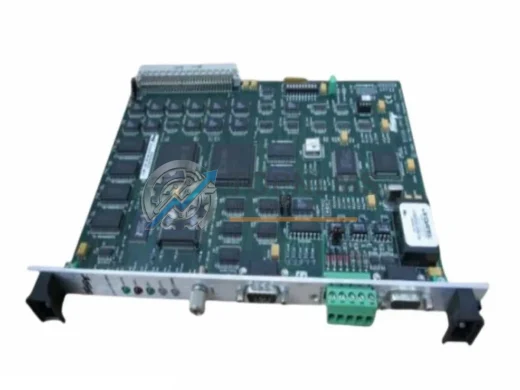
SST 5136-DNP-CPCI CompactPCI DeviceNet Master/Slave interface card. Original industrial spare, 5136 series compatible, tested & shipped with 12-month warranty.
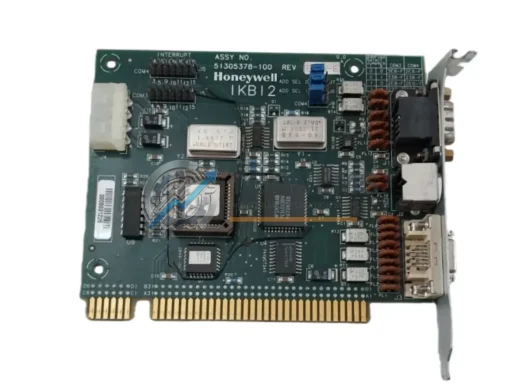
Honeywell 51305378-100 IKBI2 Printer Interface Board replacement for TDC 3000 DCS. Original spare, 12-month warranty, fast global shipping. Upgrade legacy systems now.
Siemens 6AR1302-0AA00-0AA0 CP51M1 SIMATIC TDC communication processor. Ruggedized for harsh environments. In stock, tested, 12-month warranty. Fast shipping.
Click Quote This Model and the Part Number field will auto-fill with SST-DNP-PCI-4.