
SST
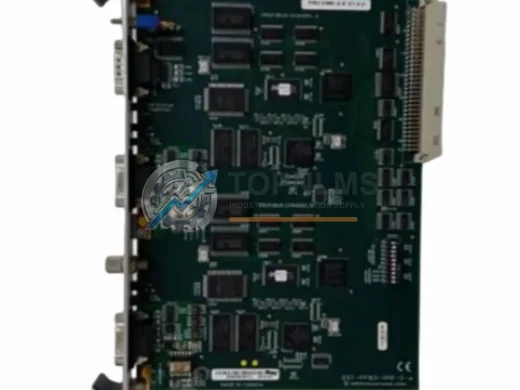
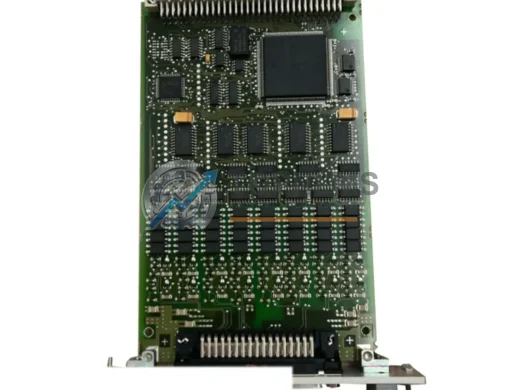
SST SST-PB3-VME-2 Ruggedized PROFIBUS DP VME Module
SST-PB3-VME-2SST SST-PB3-VME-2 Dual-Port PROFIBUS DP VME card. Rugged, field-proven reliability for harsh industrial environments. In stock, tested, 12-month warranty.
Request availability, condition, lead time and export shipping details for 5136-DNP-CPCI.
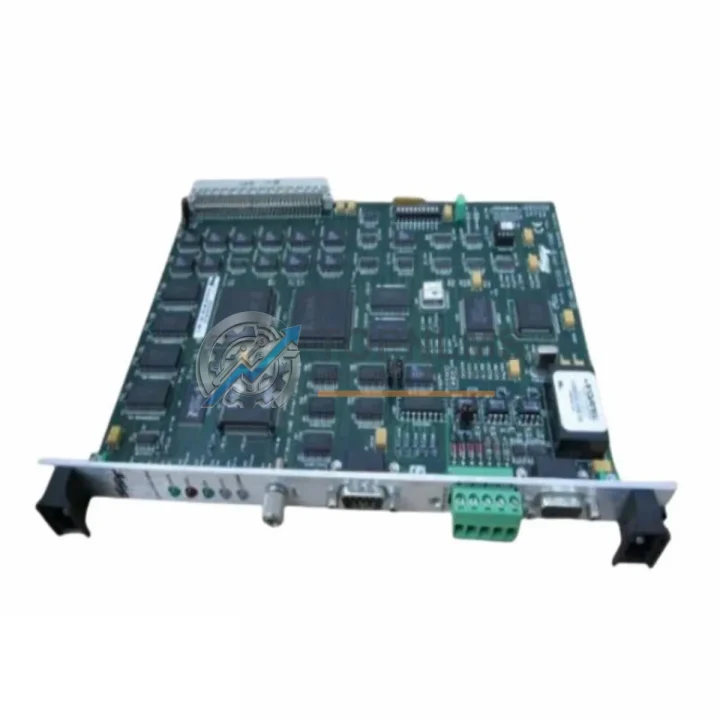
Send this exact part number, quantity and destination country. TOPNLMS will confirm availability, condition and export lead time before quotation.
In modern industrial automation environments, fieldbus communication integrity is the backbone of reliable machine control. The SST 5136-DNP-CPCI — a CompactPCI-format DeviceNet Master/Slave interface card from SST (now Molex) — is a mission-critical component in distributed control systems where DeviceNet networks connect PLCs, drives, sensors, and actuators across the factory floor. When this card fails or degrades, the entire DeviceNet segment it manages can go offline, triggering unplanned downtime that cascades across production lines.
Sourced as an original industrial spare, the 5136-DNP-CPCI is designed for direct drop-in replacement in CompactPCI chassis environments. Its dual Master/Slave capability allows it to serve both as a network master — polling and commanding field devices — and as a slave node responding to upstream controllers. This flexibility makes it indispensable in legacy system maintenance, where exact functional equivalence is required to avoid re-engineering the network topology.
At TOPNLMS, every 5136-DNP-CPCI unit undergoes pre-shipment functional verification, including DeviceNet communication initialization testing, before dispatch. Each unit ships with a 12-month warranty, providing procurement teams and maintenance engineers with the confidence needed for both emergency replacement and planned spare inventory builds.
| Parameter | Specification |
|---|---|
| Model | SST 5136-DNP-CPCI |
| Brand | SST / Molex |
| Series | SST 5136 |
| Form Factor | CompactPCI (cPCI), 3U |
| Protocol | DeviceNet (CAN-based, ISO 11898) |
| Node Capability | Master and/or Slave (configurable) |
| Max Network Nodes | 64 nodes per DeviceNet segment |
| Data Rate | 125 kbps / 250 kbps / 500 kbps (auto/selectable) |
| Bus Interface | CompactPCI 32-bit / 33 MHz |
| Operating Voltage | 3.3 V / 5 V (via cPCI backplane) |
| Operating Temperature | 0°C to +60°C |
| Storage Temperature | -40°C to +85°C |
| Compatibility | SST 5136 Series cPCI chassis; DeviceNet-compliant networks |
| Driver Support | Windows, VxWorks, QNX, Linux (SST SDK) |
| Origin | United States |
| Warranty | 12 Months (TOPNLMS) |
| Pre-shipment Test | DeviceNet communication initialization verified |
A DeviceNet segment failure rarely occurs in isolation. When the 5136-DNP-CPCI is flagged for replacement during a scheduled shutdown or emergency repair, experienced maintenance engineers treat the event as an opportunity to audit the entire communication chain and associated control cabinet components.
Begin with the CompactPCI backplane and chassis power supply — the cPCI backplane delivers both power and bus signals to the 5136-DNP-CPCI, and any degraded backplane connector or unstable 5 V rail will cause intermittent card failures that are difficult to diagnose. Inspect the chassis power module (such as the SST or compatible cPCI PSU) for output ripple and voltage stability before inserting the replacement card.
Next, inspect the DeviceNet trunk cable and drop cables. DeviceNet uses a thick or thin trunk with T-taps for node drops; aged or improperly terminated cables introduce reflections that corrupt CAN frames. Replace any trunk segments showing insulation cracking or connector corrosion, and verify termination resistors (120 Ω) are present at both ends of the trunk. While the cable plant is exposed, check DeviceNet power tap modules — these supply 24 VDC to the network — for correct output voltage and current capacity.
The field devices connected to the DeviceNet segment also warrant inspection. DeviceNet-capable I/O modules (such as Allen-Bradley 1769-SDN or equivalent scanner modules) and DeviceNet drive adapters on variable frequency drives should be checked for firmware currency and node address conflicts. A node address collision on the network will prevent the new 5136-DNP-CPCI master from completing its node scan, mimicking a card fault.
Within the same control cabinet, review the 24 VDC control power supply feeding the PLC rack and I/O modules. Unstable control power is a leading cause of fieldbus card resets and communication timeouts. If the cabinet also houses a Profibus DP interface card or EtherNet/IP communication module for upstream SCADA connectivity, verify those cards are seated firmly and their network indicators show healthy status — a simultaneous multi-bus audit during a planned outage is far more cost-effective than repeated single-card interventions.
Finally, document the DeviceNet node map — listing each node address, device type, and EDS file version — before closing the cabinet. This living document becomes the foundation of your spare parts planning: knowing exactly which nodes are on the network allows procurement to pre-position critical spares such as DeviceNet photoelectric sensor nodes, DeviceNet valve manifold controllers, and SST 5136-series replacement cards before the next scheduled maintenance window.
The SST 5136-DNP-CPCI addresses one of the most persistent challenges in industrial maintenance: sustaining DeviceNet communication in aging CompactPCI-based control systems without redesigning the network architecture.
Many plants running DeviceNet networks installed in the late 1990s and 2000s face a common dilemma — the original interface cards are discontinued, and modern replacements often require new drivers, new chassis, or network reconfiguration. The 5136-DNP-CPCI, as an original-specification spare, eliminates this risk entirely. It installs into the existing cPCI slot, uses the same SST SDK drivers already deployed on the host system, and resumes network master/slave operation without any changes to the DeviceNet node configuration or EDS files.
For maintenance teams managing multiple sites or production lines, holding one or two 5136-DNP-CPCI units in the spare parts room reduces mean time to repair (MTTR) from days — the typical lead time for sourcing obsolete industrial cards — to under an hour. This single inventory decision can prevent production losses that far exceed the cost of the spare card itself.
When the host system is eventually migrated to a newer platform, the 5136-DNP-CPCI can serve as a bridge: the existing DeviceNet field network remains unchanged while the host controller is upgraded, protecting the investment in field wiring, device configuration, and operator training. This phased migration approach is widely adopted in automotive, food and beverage, and discrete manufacturing environments where full network replacement is cost-prohibitive.
Q1: Is the 5136-DNP-CPCI compatible with my existing SST SDK software and EDS configuration?
Yes. The 5136-DNP-CPCI is an original-specification card that is fully compatible with SST’s published SDK for Windows, VxWorks, QNX, and Linux. No driver updates or EDS file changes are required for a like-for-like replacement in an existing installation.
Q2: What pre-shipment testing is performed on each unit?
Every 5136-DNP-CPCI shipped by TOPNLMS undergoes DeviceNet communication initialization testing to verify the card’s CAN controller, onboard firmware, and cPCI bus interface are fully functional. A test report is available upon request.
Q3: How should I manage spare inventory for DeviceNet interface cards?
For facilities with two or more DeviceNet segments, we recommend holding at least one 5136-DNP-CPCI as a hot spare. Given the card’s role as a network master, its failure immediately disables all nodes on the segment. A pre-positioned spare eliminates sourcing delays and limits downtime to the physical swap and network re-initialization time.
Q4: What is the warranty coverage and return policy?
All units carry a 12-month warranty from the date of shipment. If the card fails under normal operating conditions within the warranty period, TOPNLMS will provide a replacement or full refund. Units are inspected and tested before any warranty claim is processed.
SST SST-PB3-VME-2 Dual-Port PROFIBUS DP VME card. Rugged, field-proven reliability for harsh industrial environments. In stock, tested, 12-month warranty.
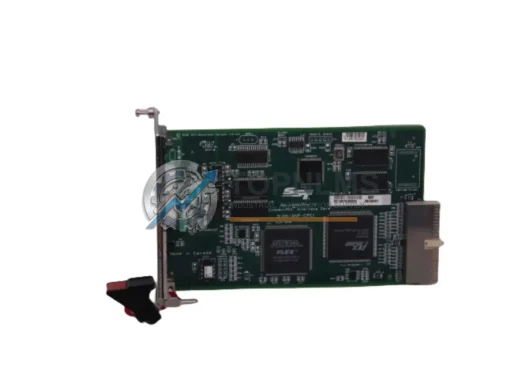
SST SST-DNP-PCI-4 four-port DeviceNet PCI interface card. Drop-in replacement for DNP-PCI Series. Compatible wiring, protocol & rack. 12-month warranty. Ships from Xiamen.
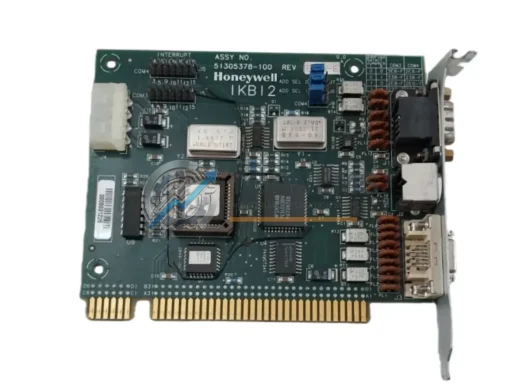
Honeywell 51305378-100 IKBI2 Printer Interface Board replacement for TDC 3000 DCS. Original spare, 12-month warranty, fast global shipping. Upgrade legacy systems now.
Siemens 6AR1302-0AA00-0AA0 CP51M1 SIMATIC TDC communication processor. Ruggedized for harsh environments. In stock, tested, 12-month warranty. Fast shipping.
Click Quote This Model and the Part Number field will auto-fill with 5136-DNP-CPCI.