
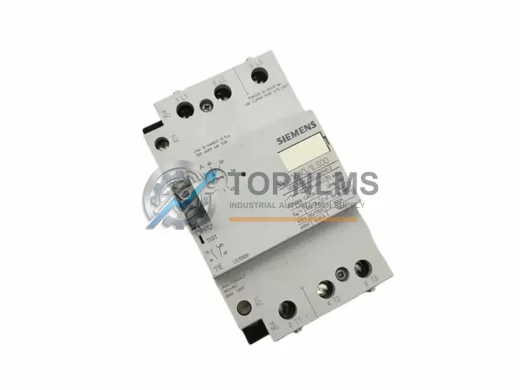
Siemens
Siemens 3VU1640-1MJ00 Ruggedized Motor Protection Module
3VU1640-1MJ00Siemens 3VU1640-1MJ00 SIRIUS motor protection circuit breaker. Rugged, reliable, IEC-rated. In stock, tested, 12-month warranty. Fast global shipping.
Request availability, condition, lead time and export shipping details for 7UT6125-5EB20-1AA0/BB.
Send this exact part number, quantity and destination country. TOPNLMS will confirm availability, condition and export lead time before quotation.
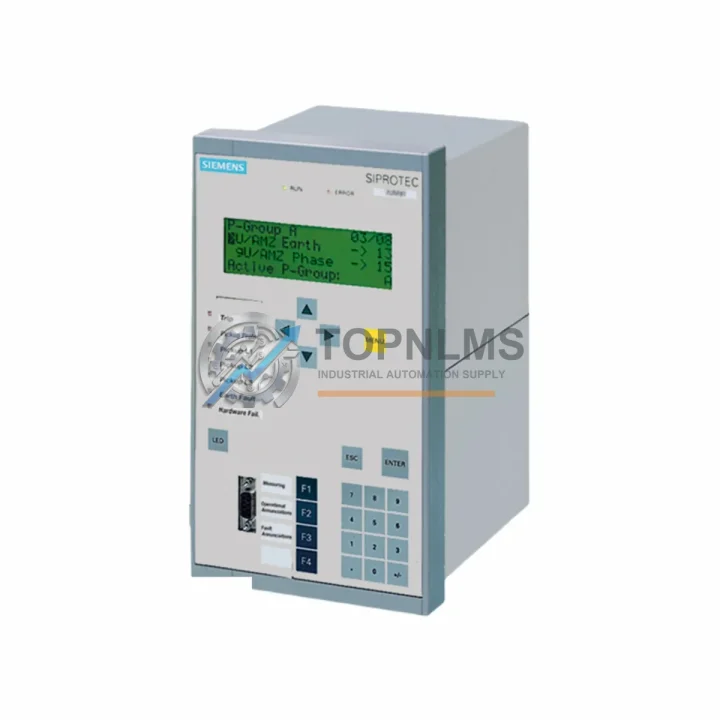
The Siemens 7UT6125-5EB20-1AA0/BB is a numerical differential protection relay from the SIPROTEC 4 family, engineered for transformer, generator, motor, and busbar protection in medium- and high-voltage substations. For facilities currently operating aging SIPROTEC 3 relays, first-generation 7UT5 series units, or discontinued electromechanical protection devices, this relay represents the most technically sound and operationally safe upgrade path available today.
Migrating from legacy protection hardware to the 7UT6125-5EB20-1AA0/BB does not require a full substation overhaul. The relay fits standard 19-inch rack or flush-panel mounting configurations, and its terminal layout is compatible with the wiring conventions used across the SIPROTEC 4 platform. Engineers transitioning from older 7UT513 or 7UT523 units will find that current transformer secondary circuits, voltage transformer inputs, and binary I/O wiring can be adapted with minimal retermination work — significantly reducing outage windows during retrofit and lowering total migration cost.
For procurement teams, every unit supplied by TOPNLMS is tested prior to shipment, covered by a 12-month warranty, and traceable to manufacturing batch and firmware version. Stock is held in our Xiamen warehouse for same-day or next-business-day dispatch on urgent outage requirements.
| Parameter | Legacy / Replaced Models | 7UT6125-5EB20-1AA0/BB |
|---|---|---|
| Typical Replaced Units | 7UT513, 7UT523, 7UT612 (earlier firmware), electromechanical relays | 7UT6125-5EB20-1AA0/BB (SIPROTEC 4) |
| Protection Functions | Differential (87T), overcurrent backup | Differential (87T/87M/87G), overcurrent, earth fault, thermal overload |
| CT Input Rated Current | 1 A / 5 A (fixed) | 1 A / 5 A (selectable per input) |
| Communication Protocol | PROFIBUS, IEC 60870-5-103 (legacy) | IEC 61850, PROFIBUS DP, IEC 60870-5-103, DNP3 (optional) |
| Mounting Format | Flush panel / 19″ rack | Flush panel / 19″ rack (same footprint class) |
| Auxiliary Supply Voltage | 110 V DC / 220 V DC (fixed) | 24–250 V DC / 100–230 V AC (wide-range auto-detect) |
| Configuration Tool | DIGSI 3 / DIGSI 4 (older versions) | DIGSI 4 (v4.70+) |
| Binary I/O Expansion | Limited fixed I/O | Expandable via 7XV5662 I/O extension modules |
| Disturbance Recording | Basic or none | Integrated COMTRADE-compatible fault recorder |
| Installation Space | Standard SIPROTEC 4 panel cutout | Same panel cutout — no structural modification required |
| Warranty (TOPNLMS Supply) | — | 12 Months from date of shipment |
A successful migration to the 7UT6125-5EB20-1AA0/BB typically involves coordinating several interdependent components within the protection and control cabinet. During the engineering phase, the existing DIGSI 4 parameter file from a prior 7UT612 installation can often be imported and adapted, dramatically reducing commissioning time. For sites where no digital parameter backup exists — common in facilities that operated 7UT513 units for over a decade — a full parameter rebuild using the relay’s factory default template as a baseline is the recommended approach.
On the communication side, substations migrating from IEC 60870-5-103 to IEC 61850 will need to update the station bus architecture. The 7UT6125-5EB20-1AA0/BB supports IEC 61850 Edition 1 and Edition 2 natively, enabling GOOSE messaging for inter-relay tripping and interlocking without additional hardwired logic. Sites retaining legacy SCADA systems over PROFIBUS DP can continue using that protocol in parallel during a phased migration, preserving SCADA connectivity throughout the transition period.
For the physical installation, the relay’s wide-range auxiliary power supply (24–250 V DC / 100–230 V AC) eliminates the need to reconfigure substation DC battery systems when replacing older units with fixed 110 V DC or 220 V DC requirements. The 7XV5662 binary I/O extension module can be added to the same mounting rail to replicate the I/O count of larger legacy relay panels, preserving existing wiring to circuit breaker trip coils, alarm annunciators, and interlock circuits.
Current transformer circuits from the protected transformer’s primary and secondary windings connect directly to the relay’s differential current inputs. The 7UT6125-5EB20-1AA0/BB supports both 1 A and 5 A CT secondaries on a per-input basis — particularly valuable in mixed-CT installations where the HV and LV sides of a power transformer use different CT ratios. Inrush restraint, overexcitation blocking, and cross-blocking functions are all configurable within DIGSI 4, allowing engineers to replicate the protection philosophy of the replaced relay while taking advantage of the improved sensitivity and selectivity of the SIPROTEC 4 platform.
For HMI integration, remote access is available via the 7XV5650 SIPROTEC communication module or through the integrated Ethernet port where fitted. Sites using Siemens SICAM PAS or WinCC SCADA platforms will find native driver support for the 7UT612 series, simplifying the engineering of new mimic diagrams and alarm lists. Signal conditioning between legacy 4–20 mA transducer outputs and the relay’s binary inputs can be handled by interposing 7XV5100 signal isolators, which are DIN-rail mountable and compatible with the same control cabinet layout.
For installations where the existing protection panel uses a 7SJ62 or 7SJ64 overcurrent relay as backup protection, the 7UT6125-5EB20-1AA0/BB can be coordinated via GOOSE or hardwired binary signals to achieve the required protection grading without modifying the backup relay’s settings. Where the substation uses a 6MD66 bay controller or 7SC80 merging unit for process bus integration, the relay’s IEC 61850 interface supports seamless data exchange within the same station automation architecture. Power supply redundancy within the control cabinet can be maintained using a 6EP1 SITOP power supply module on the same DIN rail, ensuring continuous auxiliary voltage to the relay during maintenance switching.
Q: Can I reuse the existing CT wiring when replacing a 7UT513 with the 7UT6125-5EB20-1AA0/BB?
A: In most cases, yes. The relay accepts 1 A and 5 A CT inputs on each differential current channel. Provided the existing CT secondary rating matches one of these values, the secondary wiring can be reconnected directly to the new relay’s terminals. A polarity check and CT secondary injection test are recommended before energization.
Q: Is DIGSI 3 compatible with the 7UT6125-5EB20-1AA0/BB?
A: No. The relay requires DIGSI 4 (version 4.70 or later) for parameterization and firmware management. DIGSI 3 parameter files from 7UT5 series relays cannot be directly imported but can be used as a reference for rebuilding the parameter set in DIGSI 4.
Q: What communication protocol changes are required when migrating from a legacy PROFIBUS-based system?
A: The relay supports PROFIBUS DP natively, so existing PROFIBUS wiring and GSD files can be retained during an initial migration phase. A parallel IEC 61850 configuration can be developed and tested offline before cutover, allowing a phased transition without disrupting SCADA connectivity.
Q: Does the relay fit the same panel cutout as the earlier 7UT612?
A: Yes. The 7UT6125 belongs to the same SIPROTEC 4 mechanical family as earlier 7UT612 variants. Panel cutout dimensions are consistent across the series, and the relay can typically be installed in the existing cutout with only minor modifications to the door gasket or front-plate labeling.
Q: How is the auxiliary supply voltage configured?
A: The 7UT6125-5EB20-1AA0/BB features a wide-range auxiliary supply input (24–250 V DC / 100–230 V AC). No hardware jumper or module change is required; the relay auto-detects the supply within its rated range, making it compatible with virtually all substation DC battery systems.
Q: What is the recommended commissioning procedure after installation?
A: After physical installation and wiring, load the DIGSI 4 parameter file, verify all binary input and output assignments, perform a secondary injection test on all differential and overcurrent elements, test GOOSE or hardwired intertrip signals, and conduct a final functional test with the circuit breaker in service. A disturbance recording test using the relay’s integrated fault recorder is also recommended to confirm correct CT polarity and phase rotation.
Q: What installation space is required in the control cabinet?
A: The relay uses a standard SIPROTEC 4 housing. No additional cabinet depth or width is required beyond the existing cutout. The 7XV5662 I/O extension module, if needed, mounts on the same DIN rail within the existing cabinet footprint.
Every 7UT6125-5EB20-1AA0/BB unit supplied by TOPNLMS is covered by a 12-month warranty from the date of shipment. Prior to dispatch, each relay undergoes a multi-point inspection that includes visual examination, firmware version verification, power-on functional test, and communication port check. Units are shipped in original or equivalent protective packaging with anti-static precautions appropriate for electronic protection equipment.
In the event of a confirmed hardware defect within the warranty period, TOPNLMS will arrange a replacement unit or repair at no additional cost to the buyer. Our technical support team is available to assist with installation queries, DIGSI 4 parameterization questions, and commissioning guidance throughout the warranty period. Replacement units for urgent outage situations are prioritized for same-day or next-business-day dispatch from our Xiamen warehouse, subject to stock availability.
For procurement teams requiring documentation, we can provide a test report, packing list, and certificate of conformity upon request. All units are traceable to their manufacturing batch and firmware version, supporting your site’s asset management and maintenance records. To place an order, request a quotation, or discuss technical compatibility for your specific installation, contact our team directly.
Siemens 3VU1640-1MJ00 SIRIUS motor protection circuit breaker. Rugged, reliable, IEC-rated. In stock, tested, 12-month warranty. Fast global shipping.
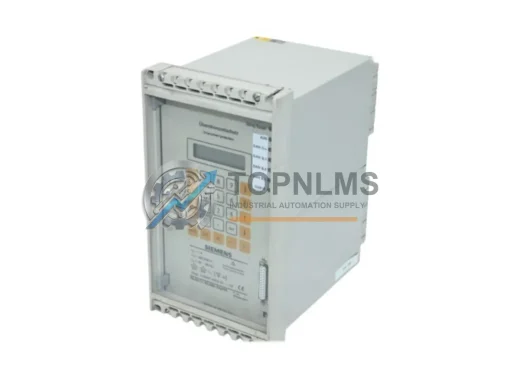
Drop-in replacement for Siemens 7SJ5115-5CA00-0A/HH SIPROTEC 4 overcurrent & earth-fault relay. Compatible wiring, IEC 61850, 12-month warranty. Fast ship.
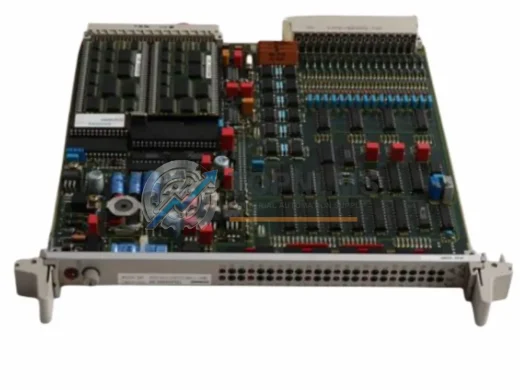
Siemens 7UT5121-4CB01-0AA0/LL SIPROTEC 4 differential protection relay. Compatible replacement & upgrade solution. 12-month warranty. Fast global shipping.
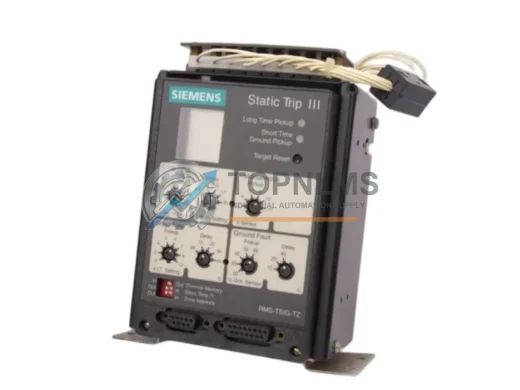
Siemens RMS-TSIG-TZ-C ruggedized electronic trip unit with zone-selective interlock for SENTRON 3WL ACBs. 12-month warranty. In stock. Fast global shipping.
Click Quote This Model and the Part Number field will auto-fill with 7UT6125-5EB20-1AA0/BB.