
Honeywell
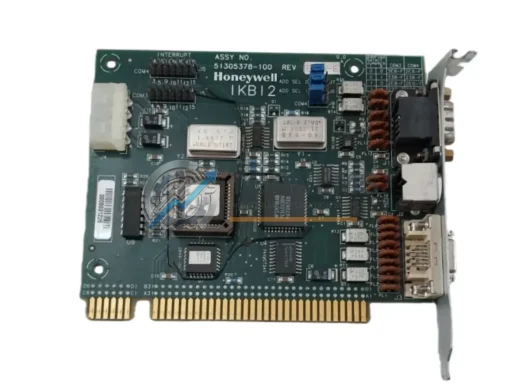
Honeywell 51305378-100 IKBI2 Replacement for TDC 3000
51305378-100Honeywell 51305378-100 IKBI2 Printer Interface Board replacement for TDC 3000 DCS. Original spare, 12-month warranty, fast global shipping. Upgrade legacy systems now.
Request availability, condition, lead time and export shipping details for TL4 1128-426.
Send this exact part number, quantity and destination country. TOPNLMS will confirm availability, condition and export lead time before quotation.
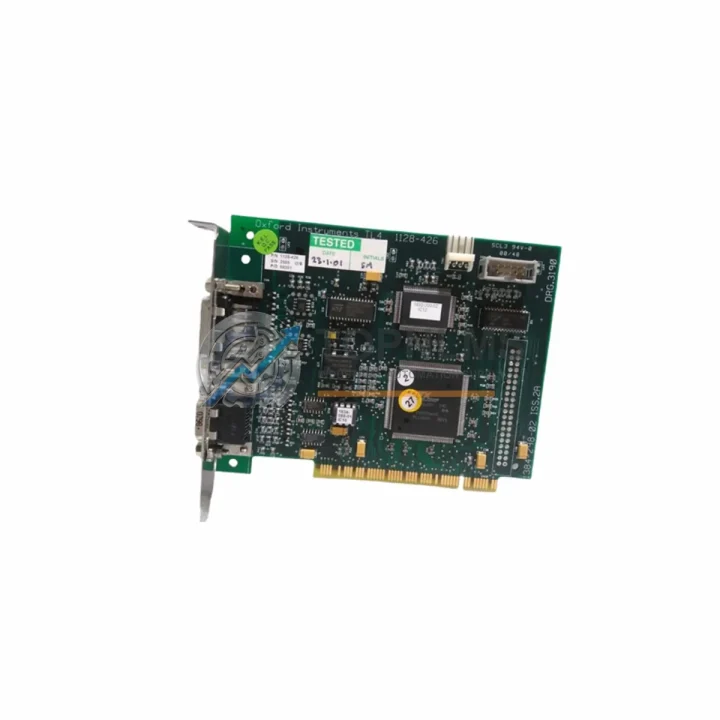
When your existing control architecture relies on the OXFORD TL4 1128-426 PCI Communication Card and the original unit reaches end-of-life or fails unexpectedly, the pressure to restore production continuity is immediate. TOPNLMS supplies verified replacement and upgrade units of the TL4 1128-426 specifically for engineers and procurement teams managing legacy PLC, DCS, and distributed I/O systems built around the OXFORD TL4 platform. Our stock is sourced, inspected, and dispatched from Xiamen, China, with full traceability documentation and a 12-month warranty covering every unit.
The TL4 1128-426 is a PCI-bus communication card designed for integration into industrial control cabinets where the OXFORD TL4 Series controller serves as the primary processing node. It provides the communication backbone between the host controller and field devices, supporting deterministic data exchange across the system bus. When this card fails or becomes unavailable through the original OEM channel, the downstream impact extends to the entire control loop — including connected I/O modules, operator HMI panels, and any remote terminal units sharing the same communication segment.
| Parameter | Original TL4 1128-426 | TOPNLMS Replacement Unit |
|---|---|---|
| Form Factor | PCI Card (full-height) | PCI Card (full-height) — direct fit |
| Bus Interface | PCI 32-bit / 33 MHz | PCI 32-bit / 33 MHz — pin-compatible |
| Communication Protocol | OXFORD TL4 proprietary bus | OXFORD TL4 proprietary bus — protocol-compatible |
| Mounting / Slot | Standard PCI slot in TL4 rack or PC-based controller chassis | Same slot — no chassis modification required |
| Wiring / Connector | OEM rear-panel connector | Identical connector pinout — existing cables reused |
| Firmware Compatibility | TL4 Series firmware baseline | Compatible with existing TL4 firmware — no re-flash required in most configurations |
| Power Supply | +5 V / +3.3 V via PCI slot | Same power draw — no additional PSU adjustment |
| Operating Temperature | 0–55 °C (industrial grade) | 0–55 °C — same thermal envelope |
| Replacement Recommendation | — | Direct drop-in replacement; verify firmware revision before commissioning |
| Warranty | OEM (expired / discontinued) | 12-Month TOPNLMS Warranty — full replacement support |
A successful migration from a failed or end-of-life TL4 1128-426 rarely involves only the card itself. In practice, field engineers replacing this communication card also evaluate the surrounding system components to ensure the entire control loop remains stable after the swap. During the commissioning phase, the TL4 Series controller backplane and its associated rack assembly must be inspected for slot integrity and bus continuity — any oxidation or mechanical damage to the PCI slot contacts can introduce intermittent faults even with a new card installed.
If the host system uses a PC-based controller chassis rather than a dedicated TL4 rack, the power supply module feeding the PCI bus should be verified against the card’s +5 V and +3.3 V draw specifications. In aging control cabinets, the PSU may already be operating near its rated capacity, and adding a replacement communication card without checking the power budget can cause instability across other installed cards, including any co-installed OXFORD TL4 analog I/O modules or digital I/O expansion cards sharing the same bus segment.
Communication continuity between the TL4 1128-426 and downstream field devices — such as remote I/O stations, distributed terminal blocks, or signal conditioning modules — depends on the integrity of the physical cabling and the protocol configuration stored in the host controller. When the replacement card is seated, the programming software used to configure the original TL4 Series system should be used to verify that the communication parameters, node addresses, and scan rates are correctly recognized. In many TL4 installations, the programming cable connecting the engineering workstation to the controller is a dedicated serial or USB-to-serial adapter specific to the OXFORD TL4 toolchain; having this cable available on-site before the swap begins eliminates a common source of commissioning delay.
For sites where the TL4 controller interfaces with an HMI panel — whether a standalone operator terminal or a SCADA workstation — the communication path through the TL4 1128-426 card is the link that sustains real-time data display and alarm management. Restoring this link with a verified replacement card means the HMI configuration requires no modification; tag mappings, screen logic, and alarm thresholds remain intact. Similarly, if the system includes a signal isolator or barrier module between the TL4 I/O bus and field instrumentation in hazardous areas, the replacement card’s protocol compatibility ensures those isolation devices continue to operate within their specified parameters without recalibration.
In multi-rack TL4 installations, the 1128-426 card may serve as the inter-rack communication bridge. Engineers should confirm that the replacement unit’s firmware revision aligns with the firmware running on the peer rack’s communication interface before powering up the system. Mismatched firmware revisions between communication cards in a multi-rack TL4 configuration are a known source of bus arbitration errors that can be mistaken for hardware faults. TOPNLMS technical support can assist with firmware revision identification based on the system’s existing documentation or nameplate data.
Q: Can I reuse the existing wiring and cable harness when installing the replacement TL4 1128-426?
A: Yes. The replacement unit uses an identical rear-panel connector and pinout to the original TL4 1128-426. Existing cables, including any shielded communication cables routed to field devices or inter-rack links, can be reconnected without modification. Inspect connector pins for corrosion before re-mating.
Q: Do I need to re-program the TL4 controller after replacing the communication card?
A: In most cases, no. The TL4 Series controller stores its communication configuration in the controller’s non-volatile memory, not on the card itself. After installing the replacement card, the controller should recognize the new hardware and resume normal operation. A cold-start cycle is recommended to confirm stable initialization. If the system uses a custom firmware build tied to a specific card revision, contact TOPNLMS for firmware compatibility guidance before proceeding.
Q: Is the replacement card compatible with the OXFORD TL4 proprietary communication protocol?
A: Yes. The TL4 1128-426 replacement unit is protocol-compatible with the OXFORD TL4 bus. It supports the same deterministic communication cycle and node addressing scheme as the original card, ensuring that connected I/O modules, HMI panels, and remote terminal units continue to operate without protocol-level changes.
Q: Will the replacement card fit in the same PCI slot without chassis modification?
A: Yes. The replacement is a full-height PCI card with the same physical dimensions as the original TL4 1128-426. It seats directly into the existing PCI slot in the TL4 rack or PC-based controller chassis. No bracket modification, slot adapter, or chassis rework is required.
Q: How do I verify the replacement card is functioning correctly after installation?
A: After seating the card and powering up the system, use the OXFORD TL4 programming software to perform a hardware scan. The card should appear in the I/O tree with its correct node address. Verify that all downstream devices — I/O modules, HMI, and any remote stations — are communicating normally. Check the system diagnostic log for any bus error codes before returning the system to production.
Q: What if the physical installation space in the control cabinet is constrained?
A: The TL4 1128-426 replacement card has the same physical footprint as the original. No additional clearance is required. If the cabinet has been modified since the original installation and slot access is restricted, standard PCI card extraction tools can be used to seat and remove the card without disturbing adjacent modules.
Every OXFORD TL4 1128-426 replacement unit supplied by TOPNLMS is covered by a 12-month warranty from the date of shipment. Before dispatch, each unit undergoes a functional verification check to confirm communication interface integrity, bus signaling, and connector condition. Units that do not meet our outgoing quality standard are quarantined and not shipped.
If a unit develops a fault within the warranty period under normal operating conditions, TOPNLMS will arrange a replacement dispatch or issue a credit, subject to a brief technical review of the fault condition. Our after-sales response target is one business day for warranty claims submitted with a fault description and order reference. We do not require the customer to return the faulty unit before dispatching a replacement in most cases — a photograph of the fault condition and the unit’s label is sufficient to initiate the process.
For procurement teams managing spare-parts inventories across multiple sites, TOPNLMS can supply multiple units under a single purchase order with staggered delivery schedules. All units in a batch shipment carry individual serial numbers and are traceable to their outgoing inspection records. Export documentation, including commercial invoices, packing lists, and certificates of origin, is prepared for every international shipment to support customs clearance in the destination country.
Contact our technical sales team before placing your order if you need to confirm compatibility with a specific TL4 system revision, request a firmware revision check, or discuss lead times for urgent replacement requirements. We maintain stock of the TL4 1128-426 and related OXFORD TL4 Series components and can confirm availability within one business day of inquiry.
Honeywell 51305378-100 IKBI2 Printer Interface Board replacement for TDC 3000 DCS. Original spare, 12-month warranty, fast global shipping. Upgrade legacy systems now.
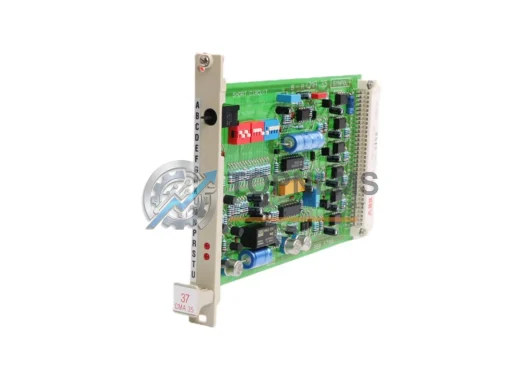
ABB CMA35 GVT3605799 original short circuit protection card for AC500 & ACS drive systems. Industrial replacement spare, tested, 12-month warranty, fast shipping.
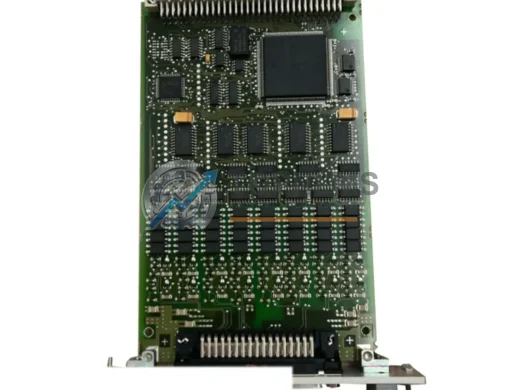
Siemens 6AR1302-0AA00-0AA0 CP51M1 SIMATIC TDC communication processor. Ruggedized for harsh environments. In stock, tested, 12-month warranty. Fast shipping.
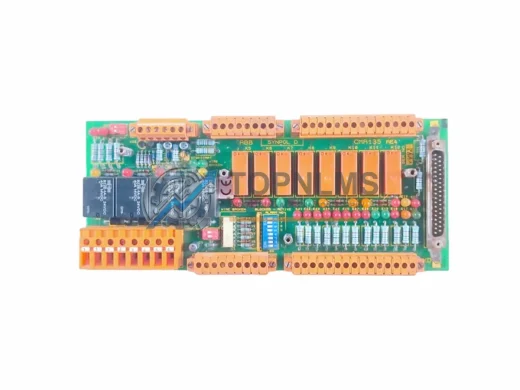
ABB CMA135 3DDE300415 UNITROL generator sequencing control module. Ruggedized for harsh environments. In stock, tested, 12-month warranty. Fast global shipping.
Click Quote This Model and the Part Number field will auto-fill with TL4 1128-426.