
Molex
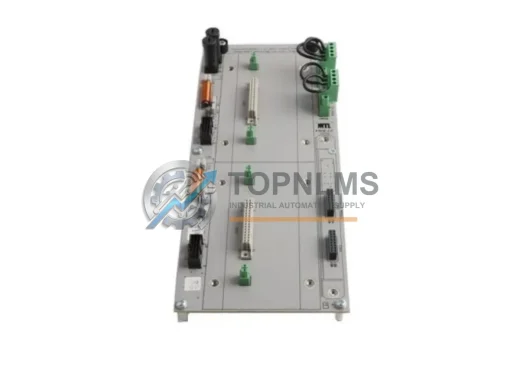
Molex PCU-DPI Ruggedized DeviceNet to DPI Gateway Module
PCU-DPIMolex PCU-DPI ruggedized DeviceNet-to-DPI gateway module. Reliable fieldbus communication for harsh industrial environments. 12-month warranty. In stock.
Request availability, condition, lead time and export shipping details for PCIE2000ETH-APP-EPB-PCIE.
Send this exact part number, quantity and destination country. TOPNLMS will confirm availability, condition and export lead time before quotation.
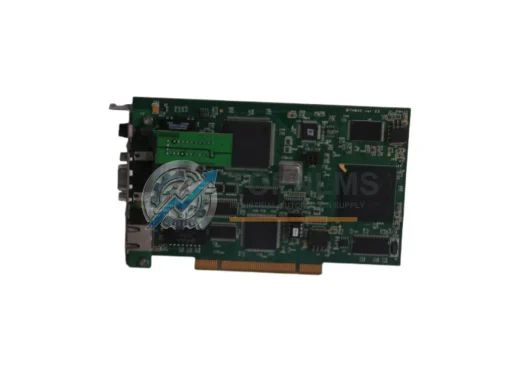
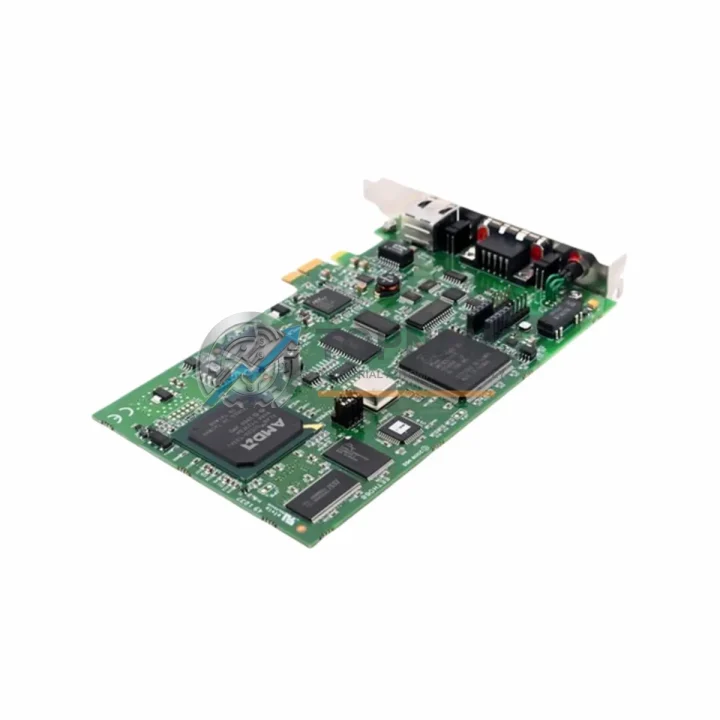
The Molex PCIE2000ETH-APP-EPB-PCIE is an original industrial-grade PCI Express Ethernet network interface card engineered for demanding automation environments. As part of the PCIE2000ETH series, this NIC delivers deterministic, low-latency Ethernet communication between industrial PCs, SCADA workstations, DCS operator stations, and field-level control networks. For maintenance engineers managing aging control infrastructure, sourcing a verified original spare of this card is a critical step in preserving system uptime and avoiding costly unplanned shutdowns.
Industrial facilities running continuous processes — chemical plants, power generation, automotive assembly, food & beverage, and discrete manufacturing — depend on stable Ethernet backbones to sustain real-time data exchange between PLCs, HMIs, and supervisory systems. When a network interface card fails, the entire communication chain between the control layer and the supervisory layer can collapse, triggering emergency stops and production losses that far exceed the cost of a spare card. Stocking the PCIE2000ETH-APP-EPB-PCIE as a ready-to-deploy replacement eliminates this risk entirely.
| Parameter | Specification |
|---|---|
| Part Number | PCIE2000ETH-APP-EPB-PCIE |
| Series | PCIE2000ETH |
| Manufacturer | Molex |
| Interface | PCI Express (PCIe) |
| Network Standard | IEEE 802.3 Ethernet (10/100/1000 Mbps) |
| Application | Industrial PC, SCADA Station, DCS Operator Console, IPC Rack |
| Operating Temperature | 0°C to +60°C (industrial grade) |
| Compatibility | PCIE2000ETH series industrial PCs and compatible PCIe slot systems |
| Installation | Standard PCIe x1/x4 slot, tool-free bracket mounting |
| Origin | USA (Molex LLC) |
| Condition | Original New / Tested Surplus |
| Warranty | 12 Months |
| Shipping | Worldwide, ESD-safe anti-static packaging |
| Pre-shipment Testing | Full functional verification prior to dispatch |
A network interface card failure rarely occurs in isolation. In most industrial control cabinets, the NIC is one node in a broader communication chain that includes managed industrial Ethernet switches, fiber optic media converters, and shielded Cat6/Cat6A patch cables. When scheduling a planned maintenance window to replace or inspect the PCIE2000ETH-APP-EPB-PCIE, maintenance teams should simultaneously audit the industrial Ethernet switch serving the same network segment — particularly port SFP modules and power supply rails — as switch degradation often precedes or accelerates NIC failures.
The IPC chassis housing this card should also be inspected for 24VDC power supply module health. Voltage ripple and transient spikes from an aging PSU are a leading cause of PCIe card damage in industrial environments. Replacing or testing the power supply alongside the NIC is a cost-effective preventive measure. Similarly, the PCIe riser card or backplane within the IPC rack should be checked for oxidized contacts and mechanical stress, as poor slot contact can cause intermittent communication faults that are difficult to diagnose remotely.
For facilities running Profinet or EtherNet/IP over this Ethernet backbone, the Profinet IO controller module or EtherNet/IP adapter module at the PLC end of the network should be included in the inspection cycle. Communication errors logged at the PLC — such as Siemens S7-300/S7-400 OB86 faults or Allen-Bradley ControlLogix connection timeouts — are often the first symptom of NIC degradation at the SCADA station. Keeping a spare CP343-1 or CP443-1 communications processor alongside the PCIE2000ETH-APP-EPB-PCIE ensures both ends of the Ethernet link can be restored rapidly.
Terminal blocks and DIN rail-mounted signal isolators in the same control cabinet should be inspected for loose connections and insulation degradation during the same maintenance visit. Vibration-induced terminal loosening is a common root cause of intermittent network faults in heavy industrial environments. Additionally, 24VDC fuse modules protecting the IPC power circuit should be tested and replaced on a scheduled basis — a blown fuse is often misdiagnosed as a NIC failure, wasting valuable downtime hours.
For legacy systems where the PCIE2000ETH-APP-EPB-PCIE interfaces with older RS-232/RS-485 serial communication modules via protocol converters, those converters and their associated serial isolation transformers should be included in the spare parts inventory. As industrial facilities extend the service life of proven control architectures, maintaining a complete spare set covering the NIC, the protocol converter, and the serial module eliminates single points of failure across the entire communication stack.
The PCIE2000ETH-APP-EPB-PCIE is a direct original replacement for aging or failed units within the PCIE2000ETH series. Unlike generic commercial NICs, this card is validated for industrial electromagnetic compatibility (EMC) requirements, ensuring reliable operation in environments with variable frequency drives (VFDs), servo amplifiers, and high-current switching equipment that generate significant electrical noise.
For facilities managing end-of-life IPC platforms, sourcing original Molex PCIE2000ETH series cards from a verified industrial spare parts supplier is significantly more cost-effective than platform migration. A full IPC replacement project — including software re-qualification, network reconfiguration, and operator retraining — can cost 20–50× the price of a spare NIC. Maintaining a buffer stock of one to two PCIE2000ETH-APP-EPB-PCIE units per production line is a proven strategy for reducing mean time to repair (MTTR) and protecting production continuity.
All units supplied by TOPNLMS undergo pre-shipment functional testing and are dispatched in ESD-safe anti-static packaging with full traceability documentation. A 12-month warranty covers all supplied parts, providing procurement teams with the confidence to plan spare parts budgets on an annual cycle.
Q1: Is the PCIE2000ETH-APP-EPB-PCIE a direct drop-in replacement for the existing card in my IPC?
A: Yes. As an original Molex PCIE2000ETH series card, it is a direct hardware replacement. No driver modifications or firmware updates are required when replacing a like-for-like unit in the same PCIe slot. Verify your IPC’s PCIe slot generation (Gen 1/2/3) for full compatibility confirmation.
Q2: How is the card tested before shipment?
A: Every PCIE2000ETH-APP-EPB-PCIE unit is functionally tested prior to dispatch, including link negotiation verification, packet transmission testing, and visual inspection for PCIe connector integrity. A test report is available upon request for quality-critical procurement processes.
Q3: What does the 12-month warranty cover?
A: The 12-month warranty covers manufacturing defects and functional failures under normal industrial operating conditions. It does not cover physical damage caused by incorrect installation, overvoltage events, or environmental contamination beyond the card’s rated operating range. Warranty claims are processed with priority turnaround to minimize your downtime exposure.
Q4: How should I manage spare parts inventory for this card?
A: For production-critical lines, we recommend maintaining a minimum of one spare PCIE2000ETH-APP-EPB-PCIE per IPC cluster. For facilities with multiple identical IPC stations, a shared pool of two to three units is typically sufficient. Given the long lead times associated with legacy industrial components, placing a standing order or blanket purchase order ensures availability without tying up excessive capital in safety stock.
Molex PCU-DPI ruggedized DeviceNet-to-DPI gateway module. Reliable fieldbus communication for harsh industrial environments. 12-month warranty. In stock.
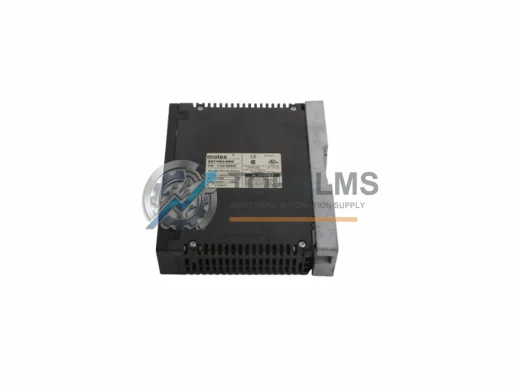
Buy MOLEX SST-PB3-REM original PROFIBUS DP/DP linking device. SST Series industrial spare, tested pre-shipment, 12-month warranty, fast global delivery.
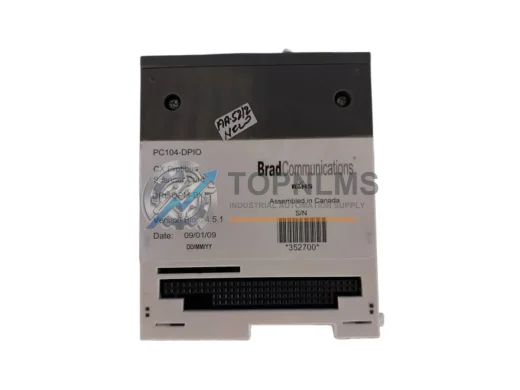
Molex DRL-DPM-BKF DeviceNet Master Network Interface Module. Drop-in replacement & upgrade solution. Compatible wiring, protocol & rack. 12-month warranty.
Honeywell 51305490-600 ruggedized I/O Link Interface Module for Experion PKS DCS. In stock, tested, 12-month warranty. Fast global shipping from TOPNLMS.
Click Quote This Model and the Part Number field will auto-fill with PCIE2000ETH-APP-EPB-PCIE.