Product Overview
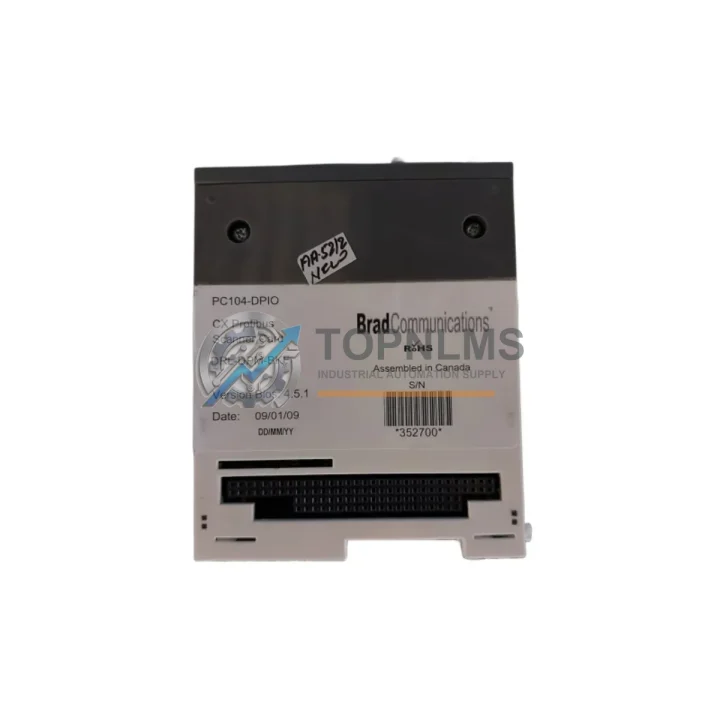
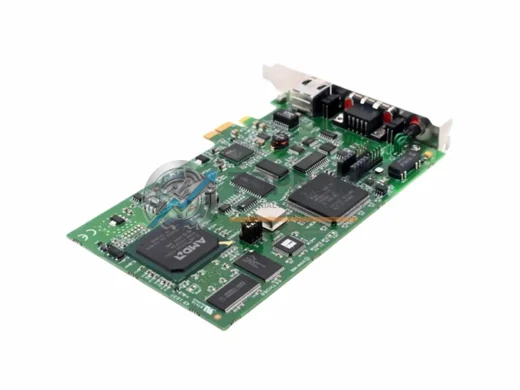
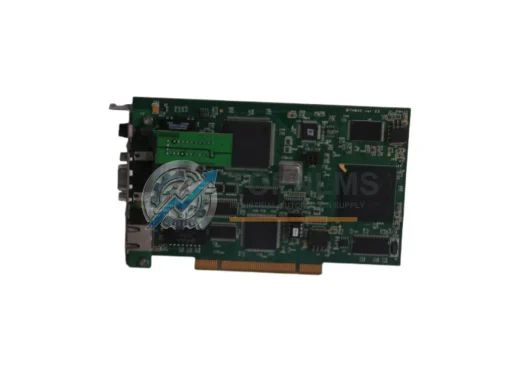
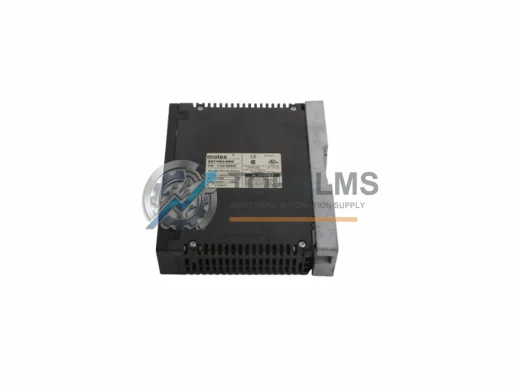
Molex DRL-DPM-BKF Replacement for DeviceNet Master Series: Seamless Migration & System Upgrade
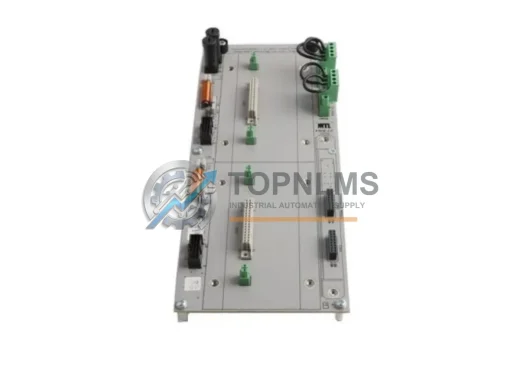
The Molex DRL-DPM-BKF is a DeviceNet Master Network Interface Module engineered for industrial control systems requiring reliable, high-speed field-bus communication. As legacy DeviceNet infrastructure ages and original modules reach end-of-life, plant engineers and system integrators face the critical challenge of sourcing a verified replacement that preserves existing wiring topology, PLC program logic, and cabinet space allocation — all while minimizing production downtime.
TOPNLMS maintains ready stock of the DRL-DPM-BKF and provides full migration support for facilities transitioning from discontinued or aging DeviceNet master modules. Whether your existing system is built around an older Molex DeviceNet scanner, a legacy Allen-Bradley 1747-SDN SLC DeviceNet Scanner, or a Rockwell 1756-DNB ControlLogix DeviceNet Bridge, the DRL-DPM-BKF offers a validated upgrade path that preserves your network architecture and reduces re-engineering costs.
Compatibility Comparison Table
| Parameter |
Legacy / Replaced Model |
Molex DRL-DPM-BKF |
| Network Protocol |
DeviceNet (CAN-based) |
DeviceNet Master (CAN-based, IEC 62026-3) |
| Module Role |
DeviceNet Scanner / Master |
DeviceNet Master Network Interface Module |
| Wiring Compatibility |
Standard 5-wire DeviceNet trunk/drop |
Direct compatible — no rewiring required |
| Installation Form Factor |
DIN-rail / backplane slot |
Equivalent form factor — fits existing cabinet space |
| Power Supply |
24 VDC bus power |
24 VDC — compatible with existing power distribution |
| Node Capacity |
Up to 63 nodes (typical) |
Up to 63 DeviceNet slave nodes |
| Communication Speed |
125 / 250 / 500 kbps |
125 / 250 / 500 kbps — selectable |
| PLC Program Changes |
Requires re-mapping if different vendor |
Minimal — same DeviceNet EDS-based configuration |
| Replacement Recommendation |
Direct drop-in for same-series Molex DeviceNet masters |
✔ Verified replacement |
| Warranty |
OEM warranty expired (legacy units) |
12-Month Warranty from TOPNLMS |
Seamless Upgrade Solutions
A successful DeviceNet master module migration rarely involves a single component swap. In practice, upgrading from a legacy DeviceNet scanner to the DRL-DPM-BKF typically involves a coordinated review of the surrounding system architecture. During commissioning, engineers commonly address the following adjacent components:
The DeviceNet trunk cable and drop connectors — including sealed micro-style and mini-style connectors — should be inspected and replaced if aged, as degraded cabling is a leading cause of intermittent CAN bus faults after a module swap. Alongside this, the DeviceNet power tap and bus termination resistors (typically 121 Ω) must be verified to ensure proper signal integrity across the updated network segment.
For systems where the DRL-DPM-BKF interfaces with a Rockwell Automation 1756-L series ControlLogix controller or a 1769-L CompactLogix processor, the EDS (Electronic Data Sheet) file for the replacement module must be imported into RSNetWorx for DeviceNet to re-establish the I/O mapping table. In many retrofit projects, the existing 1756-DNB DeviceNet Bridge module in the ControlLogix chassis can remain in service, with the DRL-DPM-BKF replacing only the field-side scanner — significantly reducing the scope of PLC program modification.
Where the legacy system includes Molex or Woodhead DeviceNet I/O blocks — such as distributed I/O modules mounted on machine frames or conveyor lines — these slave devices remain fully compatible with the DRL-DPM-BKF master, preserving the existing node address assignments and I/O data table structure. Similarly, DeviceNet-enabled variable frequency drives (VFDs) from brands such as Danfoss, ABB, or Yaskawa that are already configured as DeviceNet slaves will continue to operate without parameter changes after the master module is replaced.
In control cabinet retrofits, engineers should also evaluate the 24 VDC power supply module feeding the DeviceNet bus. If the existing supply is undersized or aging, replacing it concurrently with the DRL-DPM-BKF prevents nuisance faults during the post-migration commissioning phase. For systems with mixed communication architectures, a DeviceNet-to-Modbus or DeviceNet-to-PROFIBUS gateway module may be required to bridge legacy subsystems that cannot be upgraded in the same maintenance window.
Finally, for sites performing the migration without on-site Molex programming support, a USB-to-DeviceNet programming cable compatible with RSNetWorx for DeviceNet is essential for node commissioning, baud rate configuration, and I/O table verification before returning the line to production.
Retrofit Guidance FAQ
Q: Do I need to rewire the DeviceNet trunk when replacing with the DRL-DPM-BKF?
A: No. The DRL-DPM-BKF uses the standard 5-wire DeviceNet connector pinout (V+, V−, CAN_H, CAN_L, Shield). Existing trunk and drop wiring is fully compatible, provided cable condition is acceptable.
Q: Will my existing PLC program need to be rewritten?
A: In most cases, no full rewrite is required. The DeviceNet EDS file for the DRL-DPM-BKF must be loaded into your network configuration tool (e.g., RSNetWorx for DeviceNet), and the I/O mapping table should be verified. If the replacement module matches the original node address and I/O data size, the PLC program logic remains unchanged.
Q: Is the DRL-DPM-BKF compatible with my existing DeviceNet slave devices?
A: Yes. As a DeviceNet Master, the DRL-DPM-BKF communicates with any DeviceNet-compliant slave device regardless of manufacturer, including distributed I/O blocks, drives, sensors, and valve manifolds.
Q: What baud rates are supported, and do I need to reconfigure slave devices?
A: The DRL-DPM-BKF supports 125, 250, and 500 kbps. The baud rate must match the existing network setting. Slave devices do not need to be reconfigured if the baud rate is unchanged.
Q: How much physical space does the DRL-DPM-BKF require in the control cabinet?
A: The module’s form factor is equivalent to standard Molex DeviceNet master modules. In most retrofit scenarios, no cabinet modification or additional DIN-rail space is required.
Q: What if my legacy module used a proprietary backplane interface?
A: If the original module used a proprietary rack or backplane slot (e.g., in an older Molex or Woodhead chassis), consult the DRL-DPM-BKF datasheet for mounting options. TOPNLMS technical support can assist with compatibility assessment prior to order.
Warranty Assurance
Every Molex DRL-DPM-BKF unit shipped by TOPNLMS is covered by a 12-month warranty from the date of delivery. Prior to shipment, each module undergoes functional verification including power-on testing and communication interface checks to confirm operational integrity.
In the event of a confirmed defect within the warranty period, TOPNLMS provides direct replacement support with priority dispatch to minimize your system downtime. Our after-sales response team is reachable via email and phone for technical queries, warranty claims, and return merchandise authorization (RMA) processing.
For procurement teams, TOPNLMS issues a commercial invoice, packing list, and test report with each order. Expedited shipping options are available for urgent replacement requirements, with dispatch from Xiamen typically within 1–3 business days of order confirmation.
We understand that unplanned downtime in industrial environments carries significant operational cost. Our inventory management and quality control processes are designed to ensure that every replacement module you receive is ready for immediate installation and commissioning.