
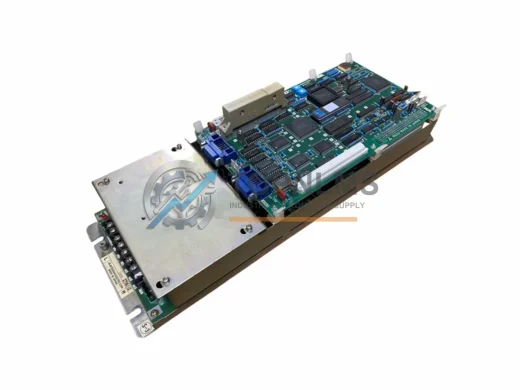
Mitsubishi
Mitsubishi MR-S12-02A-E01 Ruggedized Servo Amplifier Module
MR-S12-02A-E01Mitsubishi MR-S12-02A-E01 MR-S1 Series 200W AC Servo Amplifier. In stock, tested, 12-month warranty. Reliable replacement for harsh industrial environments.
Request availability, condition, lead time and export shipping details for MR-JN-20A.
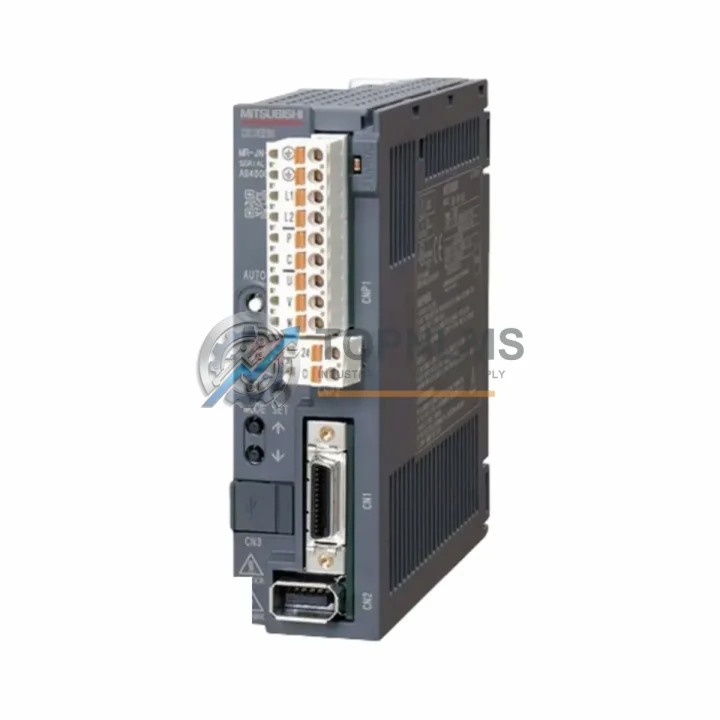
Send this exact part number, quantity and destination country. TOPNLMS will confirm availability, condition and export lead time before quotation.
When your existing servo drive infrastructure relies on the Mitsubishi Electric MR-JN-20A — a 200W single-axis AC servo amplifier from the compact MR-JN Series — sourcing a verified replacement or planning a controlled upgrade path is critical to maintaining production continuity. Whether you are dealing with an end-of-life unit, a fault-triggered emergency swap, or a planned modernization of an aging motion control system, the MR-JN-20A remains one of the most widely deployed compact servo amplifiers in light industrial, packaging, and assembly automation across Asia and beyond.
The MR-JN Series was engineered by Mitsubishi Electric as a cost-effective, space-saving servo solution for single-axis positioning applications. The MR-JN-20A specifically delivers 200W of rated output power, operates on single-phase 100–120V AC or 200–240V AC input, and communicates via RS-422 serial interface for pulse-train command input. Its compact DIN-rail-compatible form factor made it a popular choice for OEM machine builders integrating it alongside Mitsubishi MELSEC FX-series PLCs, GOT series HMIs, and FR-series inverters in coordinated motion and conveyor control panels.
For engineers managing a retrofit or emergency replacement, the key concern is always wiring compatibility. The MR-JN-20A uses a standard CN1 50-pin connector for I/O signals and a CN2 encoder feedback connector. When replacing a failed unit, the existing motor cable connected to an HF-KN series or HF-MP series servo motor can typically be reused without modification, provided the encoder cable pinout and shielding are intact. The CN3 RS-422 communication port wiring to the host controller — whether a MELSEC FX3U, FX3G, or a third-party motion controller — remains compatible with a direct replacement unit of the same SKU.
In upgrade scenarios where the MR-JN-20A is being replaced by a newer-generation amplifier such as the MR-J4-20A or MR-JE-20A, engineers must account for differences in the command interface. The MR-J4 series introduces SSCNET III/H fiber-optic network communication, which is incompatible with the pulse-train RS-422 interface of the MR-JN. In such cases, a phased migration approach is recommended: retain the existing HF-KN or HF-MP motor, replace only the amplifier, and update the host PLC program to accommodate any parameter mapping differences. The MR-JE-20A offers a closer functional match for pulse-train applications and is often the preferred drop-in upgrade target when the control cabinet space and power supply wiring are to be preserved.
Power supply compatibility is another migration checkpoint. The MR-JN-20A draws from a single-phase AC supply and does not require a separate 24VDC control power rail, simplifying cabinet wiring. When migrating to the MR-J4 or MR-JE platform, engineers should verify whether the new amplifier requires a dedicated 24VDC interface power supply — a common addition that affects cabinet layout and the sizing of the existing power distribution block. In many retrofit projects, a Mitsubishi Electric Q61P or Q62P series power supply module is already present in the MELSEC Q-series rack, and its 24VDC auxiliary output can be leveraged for the new servo amplifier’s control circuit.
Communication protocol compatibility is equally important in multi-axis or networked installations. The MR-JN-20A operates as a standalone pulse-train servo with no network node address — it receives position commands directly from the PLC’s built-in positioning output or a dedicated positioning module such as the QD75MH or LD75. When upgrading to an SSCNET III/H-based system, the entire servo network topology changes: each amplifier becomes a network node, and the motion controller — such as the Q172DSCPU or RD77MS — manages all axes over a single fiber loop. This architectural shift requires careful pre-migration planning, including axis parameter re-mapping, servo gain re-tuning, and verification of the regenerative brake resistor sizing for each axis.
For installations where the MR-JN-20A is mounted in a compact control cabinet alongside an FX3U-32MT PLC, a GOT1000 series HMI, and an FR-D700 series inverter, physical space constraints are a primary concern. The MR-JN-20A’s slim profile — approximately 40mm wide — is a key advantage in dense panel layouts. Any replacement unit must match or improve on this footprint. The MR-JE-20A maintains a similarly compact form factor and is the recommended physical replacement in space-constrained enclosures. Thermal management should also be reviewed: ensure the replacement unit’s heat dissipation requirements are met by the existing cabinet ventilation, particularly if the panel also houses a Mitsubishi FR-E700 or FR-F700 inverter generating additional heat load.
From a spare parts and inventory management perspective, stocking a verified MR-JN-20A replacement unit is a sound strategy for any facility running MR-JN Series servo systems. Mitsubishi Electric has progressively transitioned its servo product line toward the MR-J4 and MR-J5 platforms, and MR-JN Series availability through standard distribution channels has tightened. Sourcing from a specialist industrial automation supplier with documented testing procedures and a clear warranty policy is essential to avoid counterfeit or refurbished units that may fail prematurely in production environments.
| Parameter | MR-JN-20A (Current / Legacy) | MR-JE-20A (Recommended Upgrade) | MR-J4-20A (Advanced Upgrade) |
|---|---|---|---|
| Rated Output Power | 200W | 200W | 200W |
| AC Input Voltage | Single-phase 100–240V AC | Single-phase 100–240V AC | Single/Three-phase 200–240V AC |
| Command Interface | Pulse train (RS-422) | Pulse train / Analog / RS-422 | SSCNET III/H (fiber) / Pulse train |
| Compatible Motors | HF-KN, HF-MP Series | HG-KN, HG-MR Series | HG-KR, HG-MR Series |
| Encoder Type | Incremental (2500 p/r) | Incremental / Absolute | 22-bit Absolute |
| CN1 I/O Connector | 50-pin (CN1) | 50-pin (CN1) — compatible | 50-pin (CN1) — re-wiring required |
| Width (DIN Rail) | ~40mm | ~40mm | ~55mm |
| Auto-Tuning | Basic one-touch | Advanced one-touch | Advanced + vibration suppression |
| Replacement Recommendation | — | Direct upgrade, minimal rewiring | Full migration, program update needed |
| Warranty (TOPNLMS) | 12-Month Warranty on all units | Pre-shipment functional test included | ||
A successful MR-JN-20A replacement or system migration rarely involves the servo amplifier in isolation. In most field scenarios, the amplifier is one component in a tightly integrated motion control architecture, and adjacent components must be evaluated in parallel to ensure a smooth transition.
The servo motor paired with the MR-JN-20A is typically an HF-KN13 or HF-KN23 from Mitsubishi’s HF-KN Series — a compact, low-inertia motor designed for high-speed positioning. When replacing only the amplifier with a same-SKU unit, the existing motor and its encoder cable can be retained. However, if the motor itself shows signs of bearing wear or encoder degradation, replacing both the amplifier and motor as a matched set is strongly recommended to avoid a second unplanned downtime event shortly after the amplifier swap.
The host PLC in most MR-JN-20A installations is a Mitsubishi MELSEC FX3U or FX3G series controller. These PLCs generate pulse-train positioning commands via their built-in transistor outputs or via a dedicated FX3U-20SSC-H motion control module. When the amplifier is replaced with a direct MR-JN-20A equivalent, no PLC program changes are required. If the upgrade path leads to the MR-JE-20A, the FX3U’s positioning parameters — including electronic gear ratio settings and in-position width — may need minor adjustment to match the new amplifier’s default parameter set.
In installations where the MR-JN-20A operates alongside a GOT2000 series HMI for operator monitoring and alarm display, the HMI screen logic referencing servo status bits and alarm codes should be reviewed after any amplifier replacement. Alarm code mappings between the MR-JN and MR-JE platforms differ in several areas, and updating the GOT project file to reflect the new alarm table prevents operator confusion during commissioning.
Terminal block modules — such as the Mitsubishi Electric A6TBY or third-party DIN-rail terminal assemblies — are commonly used to break out the MR-JN-20A’s CN1 I/O signals to field wiring. These terminal blocks can be reused with a replacement MR-JN-20A without modification. For upgrades to the MR-JE platform, verify that the terminal block wiring matches the MR-JE’s CN1 pin assignment, as several signal pins are repositioned between the two series.
If the control cabinet also houses a Mitsubishi FR-D720 or FR-E720 inverter for auxiliary conveyor or fan motor control, ensure that the regenerative energy from the servo axis does not cause DC bus overvoltage on the inverter’s shared power rail. In high-cycle applications, adding a regenerative brake resistor — such as the MR-RB032 or MR-RB12 — to the servo amplifier circuit is a standard precaution that protects both the amplifier and adjacent power electronics during deceleration.
For facilities managing multiple servo axes, a programming cable such as the MR-J3USBCBL3M USB-to-servo communication cable and the MR Configurator2 software are essential tools for parameter backup, gain tuning, and diagnostic data capture before and after any amplifier replacement. Backing up the existing MR-JN-20A parameter set prior to removal ensures that the replacement unit can be configured to identical settings within minutes of installation, minimizing commissioning time.
Q: Can I replace a failed MR-JN-20A with a new unit without changing any wiring?
A: Yes. A direct MR-JN-20A replacement uses the same CN1, CN2, and CN3 connector pinouts. The existing motor cable, encoder cable, and RS-422 communication wiring to the host PLC can all be reused without modification. Verify that the replacement unit’s parameter settings match the original before powering up.
Q: Is the MR-JN-20A compatible with HF-KN series motors?
A: Yes. The MR-JN-20A is factory-matched to HF-KN and HF-MP series servo motors. The encoder feedback interface and motor power connector are designed for these motor families. Do not connect HG-KN or HG-MR series motors (designed for MR-JE/MR-J4) to an MR-JN-20A amplifier.
Q: What PLC program changes are needed when replacing the MR-JN-20A?
A: For a same-SKU direct replacement, no program changes are required. The pulse-train command interface and I/O signal mapping remain identical. If upgrading to the MR-JE-20A, review the electronic gear ratio parameters and in-position detection settings in the FX3U or FX3G positioning module configuration.
Q: Does the MR-JN-20A fit in the same DIN-rail slot as the original unit?
A: Yes. The MR-JN-20A has a standardized DIN-rail mounting profile approximately 40mm wide. A replacement unit of the same model occupies the same physical space. If upgrading to the MR-JE-20A, the footprint is similar and typically fits within the same cabinet section without panel modification.
Q: How do I back up parameters from the existing MR-JN-20A before replacement?
A: Use the MR Configurator2 software with a compatible USB-to-RS-422 communication cable connected to the CN3 port. Export all parameters to a file before removing the unit. After installing the replacement amplifier, import the saved parameter file to restore the original configuration.
Q: What communication protocol does the MR-JN-20A use?
A: The MR-JN-20A accepts pulse-train position commands via its CN1 interface (differential line driver or open-collector input) and uses RS-422 serial communication on CN3 for parameter setting and monitoring via MR Configurator2. It does not support SSCNET, CC-Link, or EtherCAT natively.
Every MR-JN-20A unit supplied by TOPNLMS is covered by a 12-month warranty from the date of shipment. Prior to dispatch, each unit undergoes a functional pre-shipment test to verify power-on operation, encoder feedback signal integrity, and basic drive response. Units that do not pass the pre-shipment test are not shipped.
In the event of a warranty claim, TOPNLMS provides a replacement unit or full refund based on the nature of the fault and the customer’s preference. Our after-sales response target is within 24 hours of a warranty claim submission. Customers are required to retain the original packaging and provide a brief fault description to initiate the warranty process.
We maintain stock of MR-JN-20A units to support emergency replacement orders. Standard orders are dispatched within 1–3 business days from our Xiamen warehouse. Express shipping options are available for urgent production-down situations. All units are shipped with appropriate ESD-protective packaging and export documentation.
For procurement inquiries, bulk pricing, or technical pre-sales consultation, contact our team directly:
📧 [email protected] | 📞 +86 18359293191
Mitsubishi MR-S12-02A-E01 MR-S1 Series 200W AC Servo Amplifier. In stock, tested, 12-month warranty. Reliable replacement for harsh industrial environments.
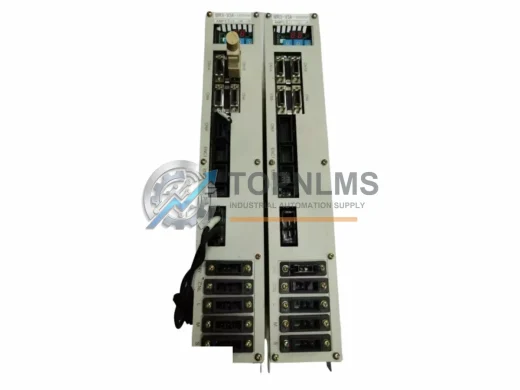
Mitsubishi MR3-V34-070701 original AC servo amplifier, MELSERVO-J3 series. Fast replacement, 12-month warranty. Reduces downtime for industrial automation systems.
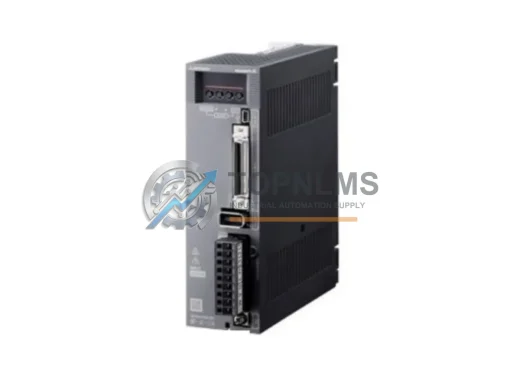
Buy Mitsubishi MR-JE-100A original MELSERVO-JE 1kW AC servo amplifier. Compatible replacement, 12-month warranty, fast global shipping. Industrial spare.
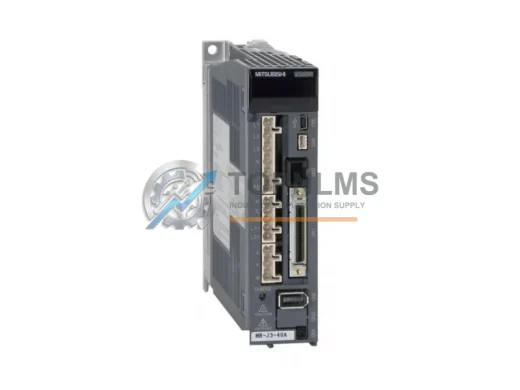
MR-J3-200AN replacement & upgrade solution for MELSERVO-J3 series. Compatible wiring, SSCNET III, 2kW. In stock, 12-month warranty. Ships from Xiamen.
Click Quote This Model and the Part Number field will auto-fill with MR-JN-20A.