
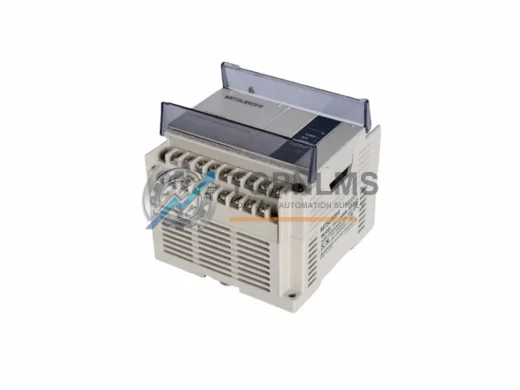
Mitsubishi
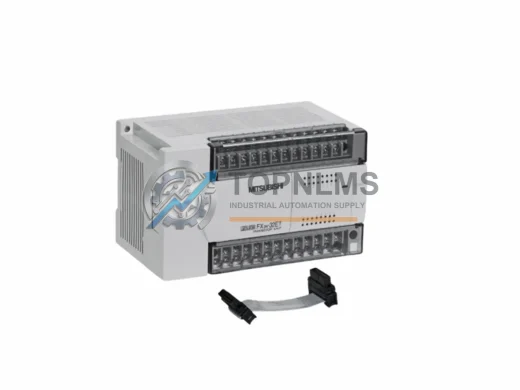
Mitsubishi FX1N-40MR-001 Replacement/Upgrade Solution
FX1N-40MR-001Drop-in replacement for Mitsubishi FX1N-40MR-001 PLC. 24 inputs, 16 relay outputs, FX1N Series compatible. 12-month warranty. Fast global shipping from Xiamen.
Request availability, condition, lead time and export shipping details for KCJ-120B.
Send this exact part number, quantity and destination country. TOPNLMS will confirm availability, condition and export lead time before quotation.
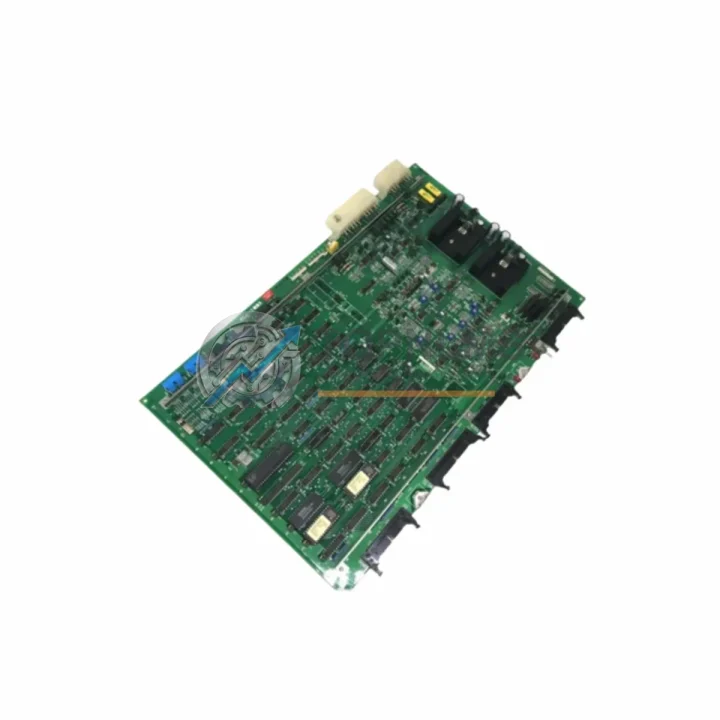
When a MITSUBISHI KCJ-120B PCB Control Board fails or reaches end-of-life in your MELDAS or MR Series drive system, every hour of unplanned downtime translates directly into production loss. The KCJ-120B is a critical servo drive control board used across a wide range of MITSUBISHI MELDAS CNC and MR Series servo amplifier platforms. TOPNLMS maintains verified stock of the KCJ-120B and offers a structured replacement and upgrade pathway designed to minimize retrofit complexity, reduce commissioning time, and protect your existing wiring infrastructure.
Whether you are replacing a failed board in a legacy MELDAS 500 or MELDAS 600 CNC controller, upgrading a servo amplifier in a multi-axis machining center, or consolidating spare parts inventory across a production line, the KCJ-120B replacement process is straightforward when approached with the right technical preparation. This guide covers wiring compatibility, communication protocol continuity, physical installation constraints, and the broader system context — including related modules you may need to source simultaneously.
| Parameter | Legacy / Outgoing Configuration | KCJ-120B Replacement |
|---|---|---|
| Compatible Platform | MELDAS 500 / MELDAS 600 / MR Series Servo Amplifier | MELDAS 500 / MELDAS 600 / MR Series (direct fit) |
| Board Function | Servo drive PCB control — axis command processing, feedback loop | Identical function; drop-in replacement |
| Connector Interface | OEM MITSUBISHI multi-pin board connectors | Identical connector layout; no rewiring required |
| Communication Protocol | SSCNET / SSCNET III (depending on amplifier generation) | Compatible with existing SSCNET / SSCNET III wiring |
| Installation Space | Standard MR Series amplifier PCB bay | Same PCB form factor; no mechanical modification needed |
| Power Supply Requirement | Internal amplifier DC bus supply | Powered by existing internal supply; no external PSU change |
| Parameter / Program Retention | Axis parameters stored in CNC controller or servo amplifier memory | Parameters re-loaded from CNC or backup; no re-programming of logic required |
| Replacement Recommendation | Replace on failure or as preventive spare | Recommended for immediate swap; test with servo enable before full production restart |
| Warranty | — | 12-Month Warranty | Pre-shipment functional test | Replacement support |
A KCJ-120B board replacement rarely occurs in isolation. In most MELDAS and MR Series servo drive systems, the control board interfaces directly with the servo amplifier power stage, the CNC controller backplane, and the machine’s I/O and feedback wiring. During a planned retrofit or emergency replacement, engineers frequently identify adjacent components that require simultaneous attention.
The MITSUBISHI MR-J2S series servo amplifier is one of the most common host units for the KCJ-120B. If the amplifier itself has sustained damage beyond the control board, a full MR-J2S amplifier replacement may be more cost-effective than board-level repair. Similarly, the MITSUBISHI MR-J3 and MR-J4 series amplifiers represent the natural upgrade path for sites looking to modernize beyond the MR-J2S generation, offering improved SSCNET III/H communication bandwidth and enhanced auto-tuning.
On the CNC controller side, the MELDAS 64 and MELDAS C6 controllers are frequently found in the same machine tool environment as the KCJ-120B. When upgrading the servo drive board, it is worth verifying that the CNC controller’s servo communication card — such as the MITSUBISHI FCU6-DX series I/O module — is also in serviceable condition, as a degraded I/O module can mask the root cause of servo faults and lead to repeat failures after board replacement.
Encoder feedback integrity is another critical factor. The MITSUBISHI OSA series absolute encoder and its associated battery backup unit should be inspected whenever a servo drive PCB is replaced. A failing encoder battery can corrupt absolute position data and trigger servo alarms immediately after a board swap, creating the false impression of a defective replacement board. Sourcing a fresh OSA encoder battery or a complete OSA encoder unit alongside the KCJ-120B is a standard precaution for experienced maintenance teams.
For sites running multi-axis systems, the MITSUBISHI MR-J2S-B SSCNET communication cable and the associated SSCNET fiber optic link between axes should be tested for continuity and signal integrity before commissioning the replacement board. A degraded SSCNET cable can prevent the new board from initializing correctly. Additionally, if the control cabinet houses a MITSUBISHI FR-A700 or FR-F700 series inverter drive on auxiliary axes, verifying that the inverter’s communication parameters remain synchronized with the CNC controller after the servo board replacement is essential for coordinated motion control.
Finally, for sites that require a programming interface during commissioning, the MITSUBISHI MR Configurator2 software combined with a USB-to-serial programming cable (such as the MR-J3USB or equivalent) allows engineers to read servo parameters, verify alarm history, and confirm axis tuning after the KCJ-120B is installed — without requiring a full machine restart cycle.
Q: Do I need to rewire the servo drive cabinet when replacing the KCJ-120B?
A: No. The KCJ-120B is a direct PCB replacement within the existing servo amplifier housing. All external wiring — including encoder feedback cables, motor power leads, and SSCNET communication cables — remains connected to the amplifier chassis. Only the internal board is swapped. Ensure the amplifier is fully de-energized and DC bus capacitors are discharged before opening the unit.
Q: Will my existing CNC program and axis parameters be lost?
A: Axis parameters are stored in the CNC controller (e.g., MELDAS 500/600) or in the servo amplifier’s non-volatile memory, not on the KCJ-120B board itself. Replacing the board does not erase CNC programs. However, servo-specific parameters stored in the amplifier memory may need to be reloaded from a backup file using MR Configurator2 after the board swap.
Q: Is the KCJ-120B compatible with both SSCNET and SSCNET III communication?
A: The KCJ-120B is designed for the SSCNET communication standard used in MR-J2S generation amplifiers. It is not directly interchangeable with SSCNET III/H boards used in MR-J3 and MR-J4 amplifiers. If your system uses SSCNET III, please confirm the exact amplifier model before ordering.
Q: How much physical space does the replacement board require?
A: The KCJ-120B matches the original PCB form factor exactly. No mechanical modification to the amplifier housing or control cabinet is required. Standard ESD precautions apply during handling and installation.
Q: What should I check if the servo alarm persists after installing the replacement board?
A: First, verify encoder battery voltage and absolute position data integrity. Second, check SSCNET cable continuity between axes. Third, reload servo parameters from backup using MR Configurator2 and perform a servo enable test at low speed before returning the axis to full production speed. If alarms persist, contact TOPNLMS technical support for remote diagnostic assistance.
Q: Can I use the KCJ-120B as a preventive spare?
A: Yes. Stocking one or two KCJ-120B boards as on-site spares is strongly recommended for production lines with high servo cycle rates or limited access to emergency procurement. TOPNLMS can supply multiple units with batch testing documentation upon request.
Every MITSUBISHI KCJ-120B PCB Control Board supplied by TOPNLMS is covered by a 12-Month Warranty from the date of shipment. Prior to dispatch, each unit undergoes a pre-shipment functional inspection to verify board integrity, connector condition, and component-level quality. Units that do not pass inspection are not shipped.
In the event of a warranty claim, TOPNLMS provides direct replacement support. Defective units returned within the warranty period are assessed within 3 business days of receipt, and replacement boards are dispatched with priority handling. Our after-sales response team is reachable via email and phone for technical queries related to installation, compatibility confirmation, and commissioning support.
For procurement teams, TOPNLMS issues a formal invoice, packing list, and test report with each shipment. Export documentation for international orders is prepared in compliance with standard customs requirements. Shipments originate from Xiamen, China, with DHL, FedEx, and UPS express options available for urgent orders. Lead time for in-stock units is typically 1–3 business days from order confirmation.
TOPNLMS specializes in industrial automation components for CNC, servo, PLC, DCS, and drive system applications. Our inventory is sourced through verified supply channels, and all products are subject to incoming quality inspection before being listed for sale.
Drop-in replacement for Mitsubishi FX1N-40MR-001 PLC. 24 inputs, 16 relay outputs, FX1N Series compatible. 12-month warranty. Fast global shipping from Xiamen.
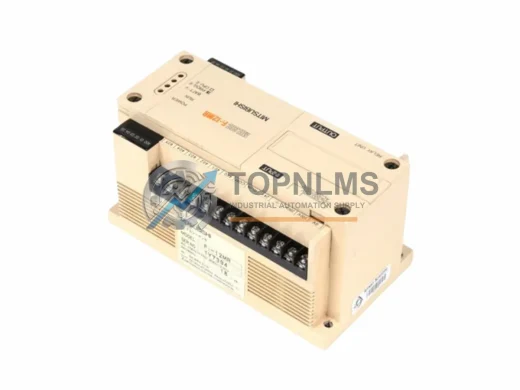
Mitsubishi F1-12MR MELSEC F1 Series relay output PLC base unit. Ruggedized for harsh industrial environments. 12-month warranty. Fast global shipping from TOPNLMS.
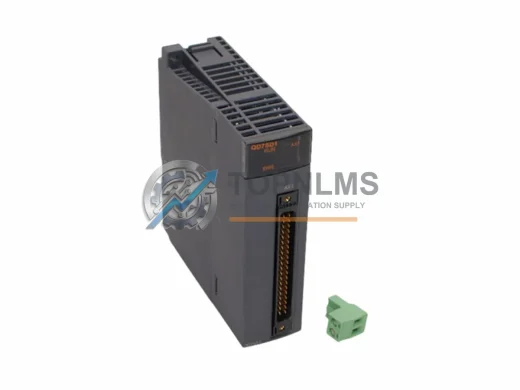
Mitsubishi SD1T0A-A SD-1T0A-08 1GB industrial SD memory card for MELSEC iQ-R & Q Series PLC. Rugged, EMI-resistant, 12-month warranty. In stock, fast shipping.
Buy Mitsubishi FX2N-48MT original PLC spare. 48-point transistor output, FX2N series compatible. Fast shipping, 12-month warranty. Industrial replacement.
Click Quote This Model and the Part Number field will auto-fill with KCJ-120B.