
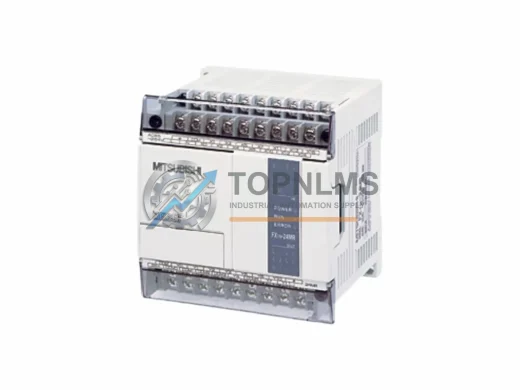
Mitsubishi
Mitsubishi FX1N-24MT-001 Replacement for MELSEC FX1N
FX1N-24MT-001FX1N-24MT-001 replacement & upgrade solution for MELSEC FX1N series. Full compatibility, 12-month warranty. Fast global shipping from TOPNLMS.
Request availability, condition, lead time and export shipping details for IFALM11.
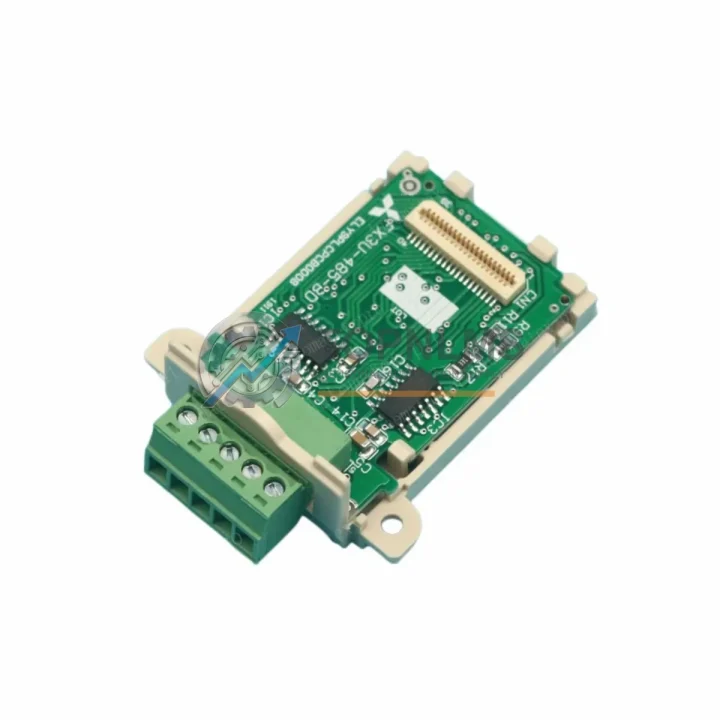
Send this exact part number, quantity and destination country. TOPNLMS will confirm availability, condition and export lead time before quotation.
The Mitsubishi IFALM11 is a dedicated alarm annunciator board designed for the MELSEC series programmable logic controller platform. As industrial facilities continue to modernize aging control architectures, the IFALM11 serves as a critical bridge component — enabling engineers to retire obsolete alarm relay panels and legacy annunciator systems while preserving existing wiring infrastructure, cabinet layouts, and MELSEC-compatible communication frameworks.
Whether your facility is migrating from an older MELSEC AnS-series or A-series control system, replacing a failed alarm board in a running production line, or consolidating a multi-panel DCS cabinet into a more compact MELSEC Q-series or iQ-R-series architecture, the IFALM11 provides a verified, drop-in compatible solution that minimizes engineering rework and reduces unplanned downtime.
| Parameter | Legacy / Replaced Model | IFALM11 (Replacement) |
|---|---|---|
| Product Type | Alarm Relay Panel / Annunciator Board | MELSEC Alarm Annunciator Module |
| Compatible Platform | MELSEC AnS / A Series, legacy relay logic | MELSEC Series (AnS, Q, iQ-R compatible rack) |
| Wiring Interface | Discrete terminal strip, relay output | Direct terminal-compatible; existing field wiring reusable |
| Communication Protocol | Hardwired relay / RS-232 (legacy) | MELSEC backplane bus; compatible with CC-Link and MELSECNET |
| Installation Space | Standalone panel or DIN rail mount | MELSEC standard rack slot; no additional cabinet space required |
| Power Supply | Dedicated 24VDC or 100–240VAC panel supply | Powered via MELSEC rack backplane (no separate PSU required) |
| Programming / Configuration | Hardware jumper / relay wiring | GX Works2 / GX Developer parameter configuration |
| Alarm Point Capacity | Varies by legacy panel (typically 8–32 points) | Expanded alarm point management via MELSEC CPU integration |
| Replacement Recommendation | Direct module swap; field wiring retained | ✔ Confirmed drop-in for MELSEC rack-based systems |
| Warranty | — | 12-Month Warranty | Pre-shipment functional test included |
A successful IFALM11 retrofit rarely involves a single module in isolation. In practice, upgrading or replacing an alarm annunciator board within a MELSEC-based control system typically requires coordinated changes across several interconnected components. Engineers migrating from legacy AnS-series or A-series racks to a modern MELSEC Q-series or iQ-R-series platform will commonly need to address the CPU module — such as the Q06UDEHCPU or R04CPU — which serves as the central processing unit governing alarm logic, scan cycles, and I/O polling. The CPU’s program memory and alarm handling routines must be verified for compatibility with the IFALM11’s annunciator output behavior.
On the I/O side, existing discrete input modules — for example QX40 or QX81 digital input modules — feed process status signals into the alarm logic. These modules typically retain their wiring during an IFALM11 swap, but terminal assignments should be cross-checked against the updated alarm map. Similarly, output modules such as the QY10 or QY41P may drive indicator lamps, horns, or relay coils that are triggered by the IFALM11’s alarm outputs; verifying their load ratings and wiring continuity is a standard commissioning step.
Power supply integrity is another key consideration. The Q61P or Q62P power supply modules within the MELSEC rack must provide sufficient current headroom after the IFALM11 is installed. In most cases, the IFALM11 draws power directly from the backplane, eliminating the need for a dedicated external 24VDC supply that legacy annunciator panels often required.
For facilities using CC-Link or MELSECNET/H as their plant-wide communication backbone, the IFALM11 integrates cleanly into the existing network topology. CC-Link master modules — such as the QJ61BT11N — continue to manage field device communication without modification, while the alarm annunciator data is handled internally through the MELSEC CPU’s alarm history registers.
In control cabinet environments where space is constrained, the IFALM11’s rack-slot form factor offers a significant advantage over standalone annunciator panels. Engineers decommissioning a legacy alarm panel can reclaim cabinet real estate, reduce wiring complexity, and consolidate alarm management into the existing MELSEC rack — often alongside terminal modules such as the A6TBY36 or A6CON1 connector assemblies that simplify field wiring termination during the retrofit.
For sites requiring HMI integration, GOT2000-series graphic operation terminals (e.g., GT2710-VTBA) can be configured to display IFALM11 alarm states directly via the MELSEC CPU’s device memory, providing operators with a unified alarm management interface without additional hardware.
Q: Can I reuse existing field wiring when replacing a legacy alarm panel with the IFALM11?
A: In most MELSEC rack-based installations, yes. The IFALM11 uses standard MELSEC terminal or connector interfaces. Field wiring from discrete input devices (limit switches, pressure contacts, temperature relays) can typically be re-terminated directly to the existing I/O modules in the rack without rewiring to the annunciator board itself. Alarm logic is handled in the CPU program rather than through hardwired relay paths.
Q: Do I need to rewrite my PLC program after installing the IFALM11?
A: Partial program modification is usually required. Legacy alarm relay panels operate on hardwired logic, while the IFALM11 integrates with the MELSEC CPU’s alarm annunciator (ALM) instructions. Engineers will need to map existing alarm conditions to the appropriate ALM instruction blocks in GX Works2 or GX Developer. Existing ladder logic for process control typically does not require modification.
Q: Is the IFALM11 compatible with CC-Link and MELSECNET/H communication systems?
A: Yes. The IFALM11 operates on the MELSEC backplane bus and does not interfere with CC-Link or MELSECNET/H network modules installed in the same rack. Alarm data is managed through the CPU’s internal device registers and is accessible to SCADA or HMI systems via the existing network infrastructure.
Q: What are the physical installation requirements?
A: The IFALM11 occupies a standard MELSEC rack slot. It is compatible with AnS-series and Q-series base units. No additional DIN rail mounting, external enclosure, or dedicated power supply is required. Verify available slot count and rack current capacity before installation.
Q: How do I handle the transition period between decommissioning the old alarm panel and commissioning the IFALM11?
A: Best practice is to bench-test the IFALM11 with a spare CPU and I/O configuration before the scheduled maintenance window. Pre-load the updated alarm program, verify alarm point mapping, and confirm output behavior under simulated fault conditions. This approach reduces live commissioning time and minimizes production interruption.
Q: What if my legacy system used a different communication protocol (e.g., RS-232 or Modbus)?
A: Legacy RS-232 or Modbus-based alarm systems will require a protocol gateway or communication module (such as the QJ71C24N serial communication module) to bridge existing field devices to the MELSEC backplane. The IFALM11 itself communicates natively via the MELSEC bus; external protocol conversion is handled at the network layer.
Every IFALM11 unit supplied by TOPNLMS undergoes a pre-shipment functional verification process. Each module is inspected for physical integrity, connector condition, and basic operational parameters before dispatch. Units are packaged in anti-static protective materials with appropriate cushioning to prevent transit damage.
12-Month Warranty Coverage: All IFALM11 modules carry a 12-month warranty from the date of shipment. This covers manufacturing defects and functional failures under normal operating conditions. Warranty claims are processed promptly — replacement units are dispatched upon confirmation of the defect, minimizing your system downtime.
Shipping & Lead Time: Stock units ship from our Xiamen warehouse. Standard international express delivery (DHL / FedEx / UPS) is available to most destinations. Expedited shipping options are available for urgent replacement requirements. Tracking information is provided upon dispatch.
After-Sales Support: Our technical team is available to assist with installation queries, compatibility verification, and commissioning guidance. Contact us before purchase if you require confirmation of compatibility with your specific MELSEC rack configuration or legacy system architecture.
Procurement Assurance: TOPNLMS maintains stock of hard-to-source MELSEC components including discontinued and long-lead-time modules. We source directly from verified supply channels and provide documentation upon request. Volume pricing is available for MRO procurement and system integrator accounts.
FX1N-24MT-001 replacement & upgrade solution for MELSEC FX1N series. Full compatibility, 12-month warranty. Fast global shipping from TOPNLMS.
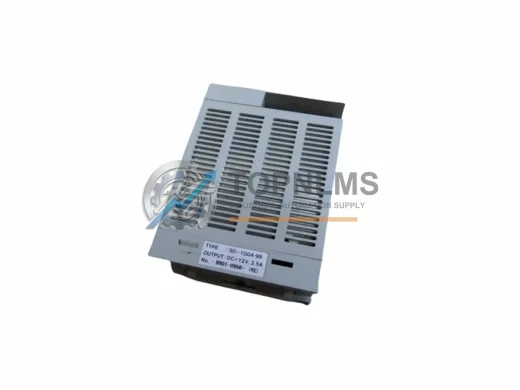
Mitsubishi SD-1G0A-99 original MELSEC-Q Series PLC CPU module. Fast replacement, 12-month warranty, tested before shipment. Reduce downtime now.
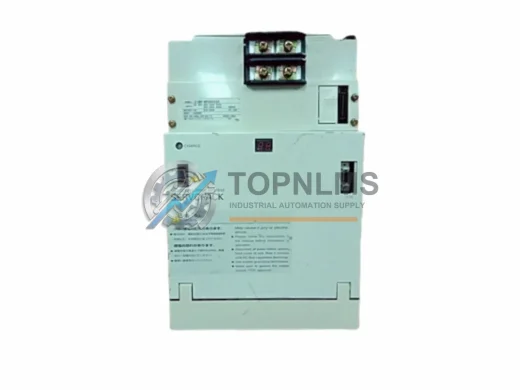
R612CPU-B: Original Mitsubishi MELSEC iQ-R Motion CPU Module. Fast replacement, 12-month warranty, tested before shipment. Reduce downtime now.
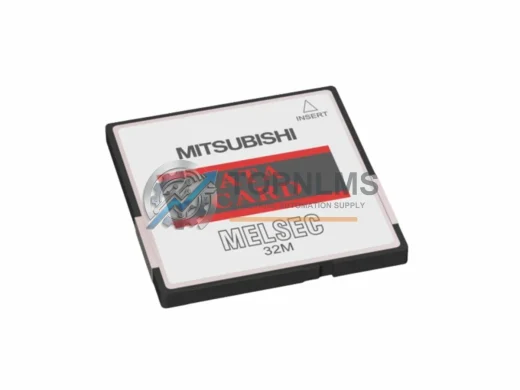
Mitsubishi Q2MEM-32MBA 32MB ruggedized flash memory for MELSEC-Q PLCs. Harsh-environment rated, 12-month warranty, tested stock. Fast global shipping.
Click Quote This Model and the Part Number field will auto-fill with IFALM11.