
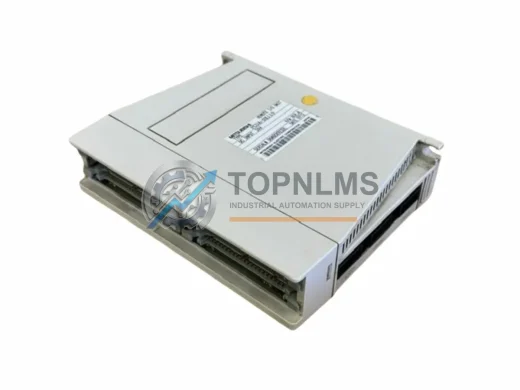
Mitsubishi
Mitsubishi FCUA-EX10 Ruggedized I/O Module for Harsh Environments
FCUA-EX10Mitsubishi FCUA-EX10 ruggedized digital I/O expansion module for MELDAS CNC. Harsh-environment rated, 12-month warranty, tested stock. Fast global shipping.
Request availability, condition, lead time and export shipping details for CR750-02VQ-1.
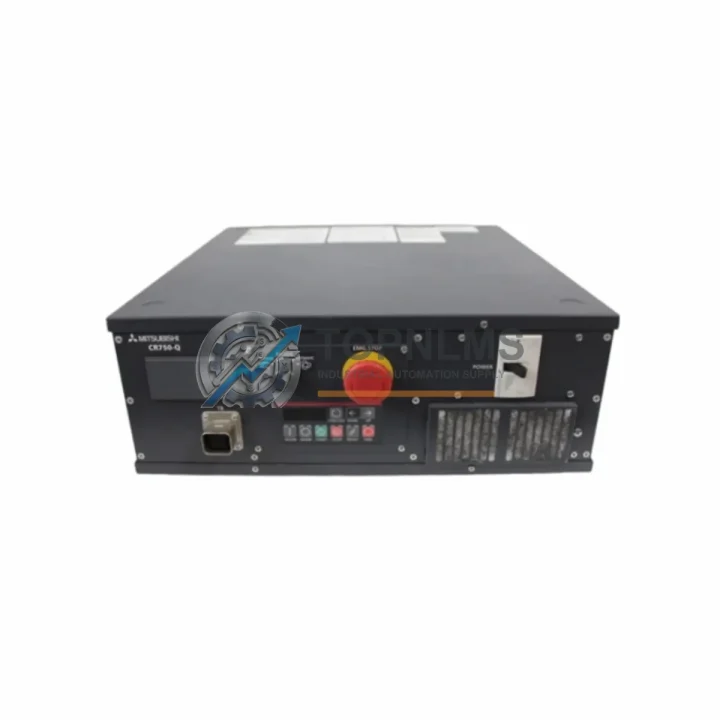
Send this exact part number, quantity and destination country. TOPNLMS will confirm availability, condition and export lead time before quotation.
The Mitsubishi Electric CR750-02VQ-1 is a servo amplifier / robot controller unit within the MELFA CR750 series, designed to drive and coordinate articulated robot arms in precision manufacturing, automotive assembly, electronics production, and general industrial automation. As legacy CR750 and earlier CR700 series controllers reach end-of-life or become increasingly difficult to source, facilities face mounting pressure to migrate to a supported, in-stock replacement without disrupting production schedules or rewriting robot programs from scratch.
This listing provides a verified, tested CR750-02VQ-1 unit — sourced, inspected, and dispatched from our Xiamen warehouse — engineered to serve as a direct drop-in replacement or a structured upgrade path for sites currently operating Mitsubishi MELFA robot systems. Whether your existing controller has failed, your OEM support contract has lapsed, or you are proactively building a spare-parts inventory to reduce unplanned downtime risk, the CR750-02VQ-1 is the correct procurement target.
| Parameter | Legacy / Outgoing Model | CR750-02VQ-1 (This Unit) |
|---|---|---|
| Series | CR700 / CR750 (earlier revisions) | MELFA CR750 Series |
| Robot Compatibility | RV-2F / RV-4F / RV-7F / RH-6FH series | RV-2F-D / RV-4F-D / RV-7F-D / RH-6FH-D series |
| Communication Interface | RS-232C, CC-Link (optional) | Ethernet (TCP/IP), USB, CC-Link IE Field (optional) |
| Programming Language | MELFA-BASIC IV | MELFA-BASIC V / VI (backward compatible) |
| I/O Interface | Parallel I/O (legacy terminal block) | Parallel I/O + CC-Link / PROFIBUS-DP (optional expansion) |
| Power Supply | 3-phase 200–230 VAC, 50/60 Hz | 3-phase 200–230 VAC, 50/60 Hz (identical) |
| Installation Footprint | Standard CR700 cabinet | Compatible with CR750 cabinet; adapter bracket available for CR700 enclosures |
| Wiring Compatibility | Legacy robot cable (CR700 pinout) | CR750 robot cable; adapter harness available for CR700 cable sets |
| Replacement Recommendation | Direct swap with cable adapter if required | ✔ Confirmed drop-in with minor wiring verification |
| Warranty | OEM warranty expired / discontinued | ✔ 12-Month Warranty (TOPNLMS) |
A successful CR750-02VQ-1 migration rarely involves the controller alone. In practice, field engineers replacing a failed or end-of-life MELFA controller must simultaneously verify and often replace several interconnected components to ensure the upgraded system operates reliably from day one.
The robot teach pendant (R56TB or R57TB) must be confirmed compatible with the CR750 firmware revision before reconnection — older CR700-era pendants may require a firmware update or a pendant adapter cable. Similarly, the robot arm cable assembly connecting the CR750-02VQ-1 to the mechanical arm (typically a 7-meter or 10-meter shielded multi-conductor cable) should be inspected for insulation fatigue, especially in high-cycle applications where the cable flexes continuously through a cable track or festoon system.
On the network side, facilities migrating from RS-232C-based robot communication to Ethernet-based MELFA robot control will need to reconfigure their CC-Link IE Field master module or update the PLC-side network parameters. If the host controller is a Mitsubishi MELSEC iQ-R series PLC — for example an R04CPU or R08CPU — the robot program call instructions (MOV, MVS, OVRD) remain syntactically compatible, but the network routing table and IP address assignments must be updated to reflect the new CR750 controller address.
For sites where the robot is integrated into a broader MELSEC Q series or iQ-F series control architecture, the QJ71E71-100 Ethernet module or FX5-ENET communication module may need a parameter refresh in GX Works3 to re-establish the robot controller socket connection after the hardware swap. This is a straightforward configuration change but must be completed before the robot can receive motion commands from the PLC ladder program.
Power distribution within the control cabinet also warrants attention. The CR750-02VQ-1 draws its 3-phase supply through a dedicated noise filter and circuit breaker assembly; if the existing breaker is undersized or the noise filter has degraded, replacing it alongside the controller prevents nuisance tripping during robot acceleration cycles. A 24 VDC control power supply module — such as the Mitsubishi Electric Q61P or an equivalent DIN-rail SMPS — should be verified for adequate current capacity to support the CR750’s I/O interface board and any connected safety relay modules.
For facilities that use PROFIBUS-DP as their fieldbus backbone, the optional CR750-series PROFIBUS interface card must be sourced and installed before the controller is commissioned. Sites already using CC-Link will find the transition smoother, as the CR750 natively supports CC-Link remote device station operation with the same station address and baud rate settings used on the predecessor CR700 controller.
Finally, if the robot cell includes a vision system — such as a Cognex In-Sight camera or a Keyence CV-X series controller — the robot-vision handshake protocol (typically implemented via parallel I/O trigger signals or Ethernet socket commands) must be re-validated after the controller swap to confirm that image capture timing and part-present signals are correctly synchronized with the new CR750 motion program.
Q: Can I reuse my existing MELFA-BASIC IV robot programs on the CR750-02VQ-1?
A: Yes. MELFA-BASIC V and VI, used on the CR750 series, are backward compatible with MELFA-BASIC IV syntax. Most programs can be loaded directly via USB or Ethernet using RT ToolBox3 without modification. Verify that any custom function calls or optional instruction sets are supported in the target firmware version before going live.
Q: Do I need to re-teach robot positions after replacing the controller?
A: If the robot arm mechanical zero-point calibration data is backed up from the original controller (via RT ToolBox3 backup function), it can be restored to the CR750-02VQ-1, eliminating the need for a full re-teach. Always verify position accuracy with a dry-run cycle at reduced speed before resuming production.
Q: Is the wiring harness from my CR700 controller compatible with the CR750-02VQ-1?
A: The main robot cable connector pinout changed between CR700 and CR750 generations. A wiring adapter harness is available to bridge the two connector standards. Signal assignments for emergency stop, door interlock, and external I/O remain functionally identical, but physical connector types differ and must be adapted.
Q: What communication protocols does the CR750-02VQ-1 support?
A: The CR750-02VQ-1 supports Ethernet (TCP/IP socket communication), USB (for programming and backup), and optional CC-Link or PROFIBUS-DP via expansion interface cards. RS-232C is not natively supported on the CR750; sites relying on RS-232C for host communication must migrate to Ethernet or add a serial-to-Ethernet converter.
Q: Will the CR750-02VQ-1 fit in my existing control cabinet?
A: The CR750 controller has a slightly different physical envelope compared to the CR700. In most standard robot cells, the CR750 fits within the same cabinet footprint. For compact or custom enclosures, verify the controller dimensions (W × H × D) against available cabinet space before ordering. Mounting rail and cable entry positions may require minor modification.
Q: How long does commissioning typically take after a controller swap?
A: For an experienced field engineer with a full backup of the original controller data, commissioning typically takes 4–8 hours including wiring verification, program restore, zero-point calibration check, and a production dry-run. First-time retrofits without a prior backup may require 1–2 days for full re-teach and validation.
Every CR750-02VQ-1 unit dispatched by TOPNLMS is covered by a 12-month warranty from the date of shipment. Prior to dispatch, each unit undergoes a multi-point outgoing inspection covering power-on self-test, communication interface verification, servo drive output check, and visual inspection for physical damage or component degradation.
If a unit develops a fault within the warranty period under normal operating conditions, TOPNLMS will provide a replacement unit or issue a full refund — whichever the customer prefers — with no requirement to return the defective unit for laboratory analysis in most cases. Our after-sales response target is 24 hours for initial fault assessment and 72 hours for replacement dispatch from our Xiamen warehouse.
For procurement teams requiring documentation, we can provide a test report, packing list, and commercial invoice with HS code declaration for customs clearance. Units are shipped in anti-static packaging with foam cushioning to prevent transit damage. Express shipping via DHL, FedEx, or UPS is available for urgent replacement scenarios where minimizing downtime is the primary concern.
We maintain buffer stock of CR750-series components specifically to support emergency replacement orders. If you are building a planned spare-parts inventory for a multi-robot cell, contact us for volume pricing and lead-time commitments.
Mitsubishi FCUA-EX10 ruggedized digital I/O expansion module for MELDAS CNC. Harsh-environment rated, 12-month warranty, tested stock. Fast global shipping.
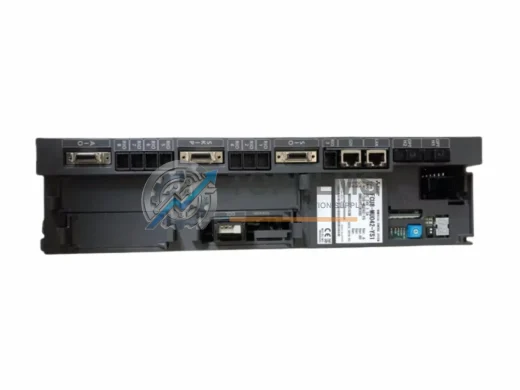
Original Mitsubishi FCU8-MU042-YS1 C80 Series CNC PAC module. Verified spare for industrial replacement. 12-month warranty. Fast global shipping from TOPNLMS.
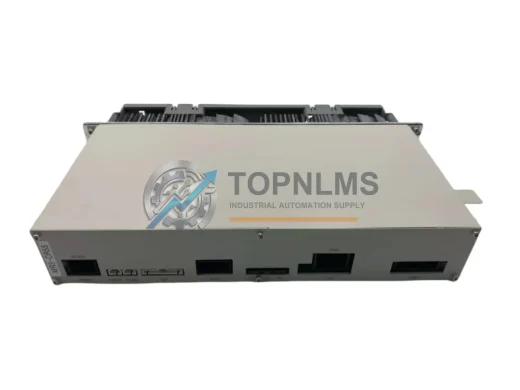
MR3-CR55 replacement & upgrade for MELFA robot controllers. Compatible wiring, comms & rack. 12-month warranty. Fast shipping. Contact TOPNLMS.
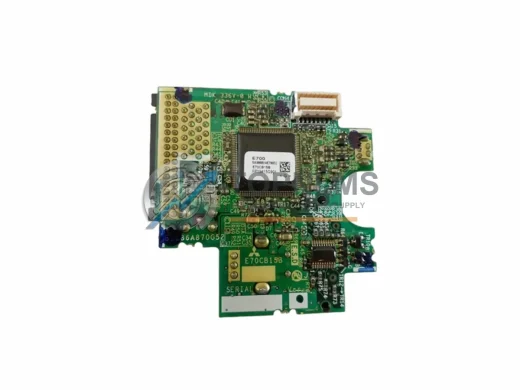
E70CB15B CNC CPU board replacement & upgrade for MELDAS 70 Series. Drop-in compatibility, 12-month warranty, fast global shipping from stock.
Click Quote This Model and the Part Number field will auto-fill with CR750-02VQ-1.