
Mitsubishi
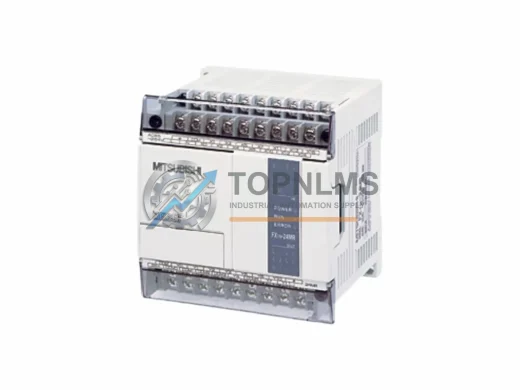
Mitsubishi FX1N-24MT-001 Replacement for MELSEC FX1N
FX1N-24MT-001FX1N-24MT-001 replacement & upgrade solution for MELSEC FX1N series. Full compatibility, 12-month warranty. Fast global shipping from TOPNLMS.
Request availability, condition, lead time and export shipping details for A1SD75P2-S3.
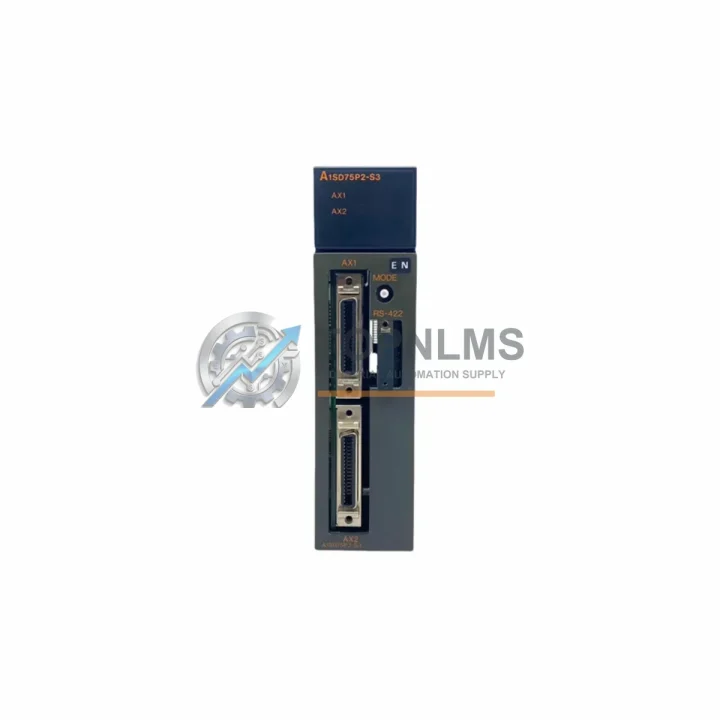
Send this exact part number, quantity and destination country. TOPNLMS will confirm availability, condition and export lead time before quotation.
The Mitsubishi Electric A1SD75P2-S3 is an original 2-axis pulse output positioning module designed for the MELSEC-A series programmable logic controller platform. In industrial environments where precision motion control is critical — from automated assembly lines and CNC transfer systems to conveyor indexing and robotic positioning — this module serves as a cornerstone component. Maintaining a verified spare of the A1SD75P2-S3 in your facility’s inventory is one of the most cost-effective decisions a maintenance engineer can make to protect system uptime and extend the operational life of legacy MELSEC-A control architectures.
When a positioning module fails unexpectedly, the consequences extend far beyond the module itself. Production halts, technicians scramble, and procurement teams face pressure to source a compatible replacement under time constraints. The A1SD75P2-S3, with its 2-axis pulse train output capability and compatibility with the MELSEC-A backplane, is not always available through standard distribution channels on short notice. Stocking an original spare eliminates this risk entirely, enabling same-shift replacement and immediate system restoration without compromising motion control accuracy or PLC program integrity.
| Parameter | Specification |
|---|---|
| Model | A1SD75P2-S3 |
| Brand | Mitsubishi Electric |
| Series | MELSEC-A |
| Module Type | 2-Axis Pulse Output Positioning Module |
| Output Method | Pulse train (open collector) |
| Max Output Pulse Frequency | 200 kpps per axis |
| Control Axes | 2 independent axes |
| Positioning Data Points | Up to 600 points per axis |
| Interface | MELSEC-A series backplane (A1S/A2S/A3 compatible) |
| Power Consumption | 5 VDC, approx. 0.55 A |
| Operating Temperature | 0°C to 55°C |
| Storage Temperature | -20°C to 75°C |
| Humidity | 5% to 95% RH (non-condensing) |
| Weight | Approx. 1,140 g |
| Origin | Japan |
| Compatibility | MELSEC-A series: A1S, A2S, A2SH, A3, A3H, A3N base units |
| Installation | Slot-in module, MELSEC-A standard backplane |
| Warranty | 12 Months (TOPNLMS) |
A positioning module does not operate in isolation. The A1SD75P2-S3 is part of a broader motion control ecosystem within the MELSEC-A control cabinet, and a comprehensive preventive maintenance strategy must account for all interdependent components. When scheduling a planned inspection or responding to a positioning fault, experienced maintenance engineers know that replacing only the failed module while ignoring adjacent components is a short-term fix that invites repeat failures.
Begin any MELSEC-A cabinet inspection by verifying the condition of the A1S62B or A1S65B base unit — the backplane that hosts the A1SD75P2-S3. Damaged backplane connectors or oxidized slot contacts are a common root cause of intermittent positioning errors that are misdiagnosed as module failures. Simultaneously, inspect the A1S61PN or A1S62PN power supply module; an aging power supply with voltage ripple will cause erratic pulse output behavior and can shorten the service life of the positioning module itself.
The pulse output signals from the A1SD75P2-S3 are transmitted to servo amplifiers via differential pulse cables (e.g., MR-J2CN1 or equivalent shielded twisted-pair cables). These cables are subject to mechanical fatigue in environments with frequent cabinet door opening, vibration, or thermal cycling. Cable integrity should be verified with a continuity tester during every scheduled maintenance window. Damaged or degraded cables are a leading cause of positioning deviation and lost-pulse faults.
For I/O signal management within the same control cabinet, review the status of A1SX40 or A1SY10 I/O modules that handle limit switch inputs, zero-return signals, and external interlock circuits connected to the positioning axes. A faulty input module that fails to register a hardware limit signal can result in mechanical overtravel — a scenario that damages both the driven equipment and the positioning module’s internal counters.
Communication integrity between the CPU and the A1SD75P2-S3 depends on the health of the A1SCPU or A2SCPU CPU module. If the CPU module is exhibiting memory errors or watchdog faults, positioning data may be corrupted before it reaches the module. Keeping a verified spare CPU module alongside the A1SD75P2-S3 in your critical spares inventory is strongly recommended for facilities where motion control downtime carries high production cost.
Additionally, inspect terminal blocks and wiring connectors on the servo amplifier side. Loose or corroded terminals on the pulse input connector of the servo drive (such as MR-J2S or MR-E series amplifiers) will manifest as positioning errors that appear to originate from the PLC module but are actually downstream wiring issues. A signal isolator or pulse signal conditioner installed between the A1SD75P2-S3 output and the servo amplifier input can significantly improve noise immunity in electrically noisy environments such as welding lines or high-frequency drive installations.
Finally, review the fuse modules and circuit protection within the control panel. Blown fuses on the 24 VDC control circuit powering limit switches and proximity sensors connected to the positioning axes are a frequent and easily overlooked cause of positioning system faults. A quarterly fuse inspection and replacement schedule, combined with a stock of compatible fuse modules, is a low-cost measure that prevents high-cost unplanned downtime.
The A1SD75P2-S3 is a legacy MELSEC-A series module that has been out of standard production for many years. As Mitsubishi Electric’s product lifecycle has transitioned toward the MELSEC-Q and MELSEC-iQ-R platforms, sourcing original A1SD75P2-S3 units through authorized distribution channels has become increasingly difficult. This supply constraint makes original spare inventory management a strategic priority rather than a routine procurement task.
For facilities committed to maintaining their existing MELSEC-A architecture — a common decision when the cost and complexity of a full PLC migration outweighs the operational risk — the A1SD75P2-S3 remains the only drop-in replacement that preserves full compatibility with existing positioning programs, parameter settings, and servo amplifier wiring. Unlike migration-path alternatives such as the QD75P2N (MELSEC-Q equivalent), the A1SD75P2-S3 requires no program conversion, no backplane replacement, and no re-commissioning of servo parameters. This translates directly to reduced replacement time — typically under two hours for a trained technician — versus a multi-day migration project.
For facilities that are planning a phased migration to MELSEC-Q or iQ-R, maintaining one or two A1SD75P2-S3 spares provides a critical bridge: it allows the legacy system to remain operational and productive while the migration is planned, budgeted, and executed on a controlled schedule rather than under emergency conditions. This approach protects both production continuity and capital expenditure planning.
All A1SD75P2-S3 units supplied by TOPNLMS are sourced as original Mitsubishi Electric components, inspected prior to shipment, and covered by a 12-month warranty. Each unit is tested for basic electrical integrity before dispatch. Detailed inspection reports are available upon request for quality-critical procurement processes.
Q1: Is the A1SD75P2-S3 still in production by Mitsubishi Electric?
The A1SD75P2-S3 is a legacy MELSEC-A series module and is no longer in standard production. TOPNLMS supplies original units sourced from verified industrial channels. Stock availability is limited — early procurement is strongly recommended for facilities with active MELSEC-A systems.
Q2: What is the warranty coverage and what does it include?
All A1SD75P2-S3 units supplied by TOPNLMS carry a 12-month warranty from the date of shipment. The warranty covers manufacturing defects and functional failures under normal operating conditions. Each unit undergoes pre-shipment electrical inspection. Warranty claims are processed with priority response.
Q3: Can the A1SD75P2-S3 be installed directly without reprogramming the MELSEC-A CPU?
Yes. The A1SD75P2-S3 is a direct slot-in replacement for existing units of the same model. No program changes, parameter re-entry, or servo re-commissioning are required when replacing a like-for-like unit in the same backplane slot. Verify that the replacement unit’s firmware revision is compatible with your CPU version if your system uses advanced positioning functions.
Q4: How should I verify compatibility before installation?
Confirm that your base unit is a MELSEC-A series backplane (A1S, A2S, A2SH, A3, A3H, or A3N). Check the existing module’s label to confirm the exact model number is A1SD75P2-S3 (not A1SD75P1 or A1SD75P3, which differ in axis count). Verify that your servo amplifier’s pulse input specifications match the open-collector pulse output of the A1SD75P2-S3. Contact TOPNLMS at [email protected] if you require pre-purchase compatibility confirmation.
FX1N-24MT-001 replacement & upgrade solution for MELSEC FX1N series. Full compatibility, 12-month warranty. Fast global shipping from TOPNLMS.
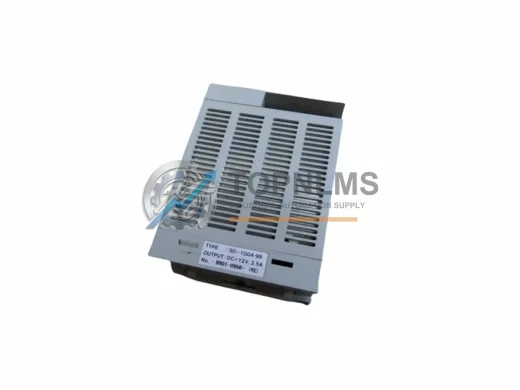
Mitsubishi SD-1G0A-99 original MELSEC-Q Series PLC CPU module. Fast replacement, 12-month warranty, tested before shipment. Reduce downtime now.
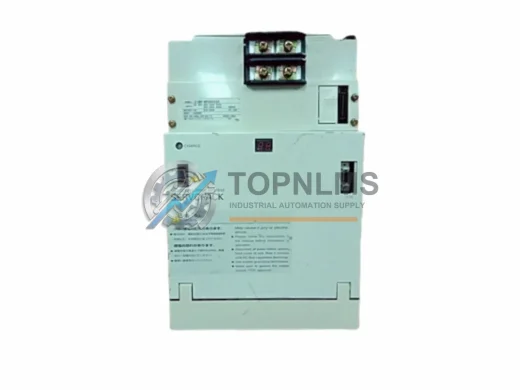
R612CPU-B: Original Mitsubishi MELSEC iQ-R Motion CPU Module. Fast replacement, 12-month warranty, tested before shipment. Reduce downtime now.
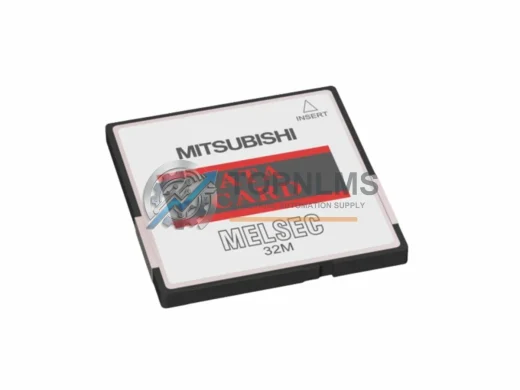
Mitsubishi Q2MEM-32MBA 32MB ruggedized flash memory for MELSEC-Q PLCs. Harsh-environment rated, 12-month warranty, tested stock. Fast global shipping.
Click Quote This Model and the Part Number field will auto-fill with A1SD75P2-S3.