
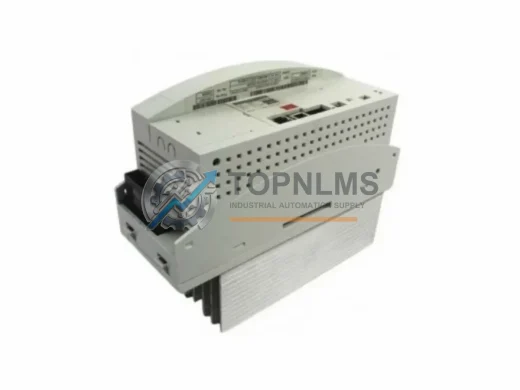
KUKA
KUKA KSP600-3×40 Ruggedized Three-Axis Servo Drive Module
KSP600-3X40KUKA KSP600-3x40 (00-198-268) three-axis servo drive module for harsh industrial environments. 12-month warranty, tested stock, fast global shipping. topnlms.com
Request availability, condition, lead time and export shipping details for KSD1-16.
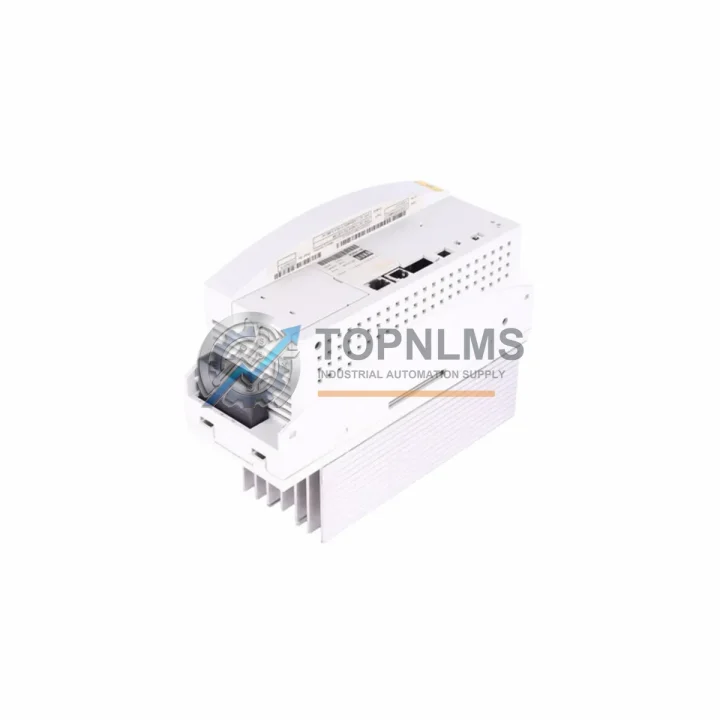
Send this exact part number, quantity and destination country. TOPNLMS will confirm availability, condition and export lead time before quotation.
The KUKA KSD1-16 is a genuine servo drive module engineered for the KR C2 robot controller platform, delivering 16A continuous axis current to maintain precise motion control across demanding industrial environments. As a critical axis drive within the KSD series, this module governs the torque and velocity loop of individual robot axes, making it one of the highest-priority spare parts in any KUKA-equipped facility. Whether your plant operates a fleet of KR 6, KR 16, KR 30, or KR 60 articulated robots, maintaining a verified stock of the KSD1-16 is a foundational element of any responsible preventive maintenance program.
Unplanned downtime caused by a failed servo drive is among the most costly disruptions in automated manufacturing. A single axis fault can halt an entire production cell, triggering cascading delays across upstream and downstream processes. The KSD1-16 is designed for direct hot-swap replacement within the KR C2 cabinet, minimizing mean time to repair (MTTR) and restoring full six-axis motion without requiring software reconfiguration or parameter re-entry when the replacement unit is sourced from the original KUKA KSD series.
| Parameter | Specification |
|---|---|
| Part Number / SKU | KSD1-16 |
| Brand | KUKA Robotics |
| Series | KSD (KR C2 Servo Drive Series) |
| Rated Axis Current | 16 A continuous |
| Compatible Controller | KUKA KR C2, KR C2 ed05 |
| Compatible Robot Models | KR 6, KR 16, KR 30, KR 60 (axis-dependent) |
| Drive Topology | Shared DC bus, multi-axis cabinet architecture |
| Mounting | DIN rail / cabinet backplane slot, KR C2 standard |
| Cooling | Forced air (cabinet fan-cooled) |
| Origin | Germany |
| Condition | Original, tested before shipment |
| Warranty | 12 Months |
| Application Environment | Industrial automation, automotive, metal fabrication, logistics |
| Maintenance Recommendation | Inspect every 12,000 operating hours or at scheduled PM intervals; replace proactively if thermal cycling or overcurrent faults are logged |
A servo drive failure rarely occurs in isolation. The KSD1-16 operates within a tightly integrated power and signal ecosystem inside the KR C2 controller cabinet. During any scheduled maintenance window or unplanned repair involving this axis drive, experienced maintenance engineers consistently recommend a concurrent inspection of the surrounding components to prevent repeat failures and maximize the value of each cabinet opening.
Begin with the KPS-600 power supply module, which feeds the shared DC bus that all KSD-series drives depend on. A degraded KPS-600 delivering unstable bus voltage is a leading cause of premature KSD1-16 failure and should be load-tested whenever a drive fault is diagnosed. Alongside the power supply, inspect the KSD1-40 and KSD1-64 axis drives installed in adjacent slots — these higher-current variants serve the heavier axes (A1, A2, A3) and share the same thermal and electrical environment. If one drive shows signs of stress, the others warrant close scrutiny.
The RDC (Resolver Digital Converter) board is another component that should be verified during any KSD1-16 replacement. The RDC processes encoder feedback from each axis motor and communicates directly with the drive; a marginal RDC can generate spurious axis errors that are misdiagnosed as drive failures. Similarly, the DSE (Drive System Electronics) board — the central communication and control interface between the KR C2 computer and the KSD drives — should be inspected for connector integrity and firmware currency.
Do not overlook the motor power cables and resolver cables connecting the KSD1-16 to the axis motors. Repeated flexing through the robot’s cable harness causes insulation fatigue and intermittent contact faults that can trigger overcurrent protection in the drive. Replacing a drive without inspecting the associated cabling is a common cause of repeat failures within weeks of a repair. The X20 and X30 connector assemblies at the cabinet interface panel are particularly prone to fretting corrosion in high-vibration environments and should be cleaned and re-torqued at every PM visit.
For facilities running multiple KR C2 cells, a strategic spare parts inventory should also include the KMC (KUKA Motion Computer) module and the CI3 (Customer Interface) board, both of which interact with the drive layer and are subject to age-related failure in controllers that have accumulated more than 50,000 operating hours. Maintaining one exchange unit of each on the shelf eliminates the multi-week lead time that can otherwise extend a single-robot outage into a production crisis.
Finally, verify the condition of the cabinet cooling fans and filter mats. The KSD1-16 is rated for operation within a defined thermal envelope; a blocked filter or failed fan raises internal cabinet temperature and accelerates electrolytic capacitor aging in the drive’s DC link stage. Replacing filter mats on a quarterly schedule and logging fan current draw at each PM visit is a low-cost intervention that measurably extends drive service life.
The KUKA KSD1-16 has been in service across global manufacturing facilities since the widespread adoption of the KR C2 platform in the early 2000s. Many of these controllers remain in active production, supported by a combination of KUKA’s extended service programs and the availability of original spare parts through specialist industrial suppliers. Sourcing a genuine KSD1-16 — rather than an aftermarket substitute — is the only way to guarantee full compatibility with the KR C2’s proprietary drive communication protocol and to preserve the integrity of the axis calibration data stored in the controller.
For facilities transitioning from KR C2 to KR C4 or KR C5 platforms, the KSD1-16 remains essential for maintaining legacy cells during the transition period. A phased modernization strategy that keeps one or two KR C2 cells operational while new cells are commissioned requires a reliable supply of KSD-series drives to avoid production gaps. Stocking the KSD1-16 as a bridge spare supports this strategy without committing to a full controller upgrade on an accelerated timeline.
Each unit supplied by TOPNLMS is sourced from verified original production, functionally tested prior to shipment, and dispatched with full traceability documentation. Worldwide shipping is available with standard lead times of 3–7 business days for in-stock units, supporting urgent maintenance requirements across time zones.
Q1: What is the service life expectation for the KSD1-16, and when should I plan a proactive replacement?
The KSD1-16 does not have a fixed calendar-based end-of-life, but industry practice recommends proactive replacement after 40,000–60,000 operating hours or when the controller logs recurring overcurrent, bus voltage, or encoder faults on a specific axis. Controllers operating in high-duty-cycle environments (three-shift automotive lines) should be evaluated earlier. Maintaining one exchange unit on the shelf eliminates the risk of an unplanned outage while awaiting procurement.
Q2: How do I verify compatibility between the KSD1-16 and my specific KR C2 controller variant?
Compatibility is determined by the axis current rating (16A suits lighter axes — typically A4, A5, A6 on mid-range KR models), the KR C2 cabinet generation (standard or ed05), and the firmware version of the DSE board. The KSD1-16 is plug-compatible across all standard KR C2 variants without hardware modification. If you are uncertain, provide your controller serial number and robot model when placing your order and our technical team will confirm compatibility before shipment.
Q3: What pre-shipment testing does TOPNLMS perform on the KSD1-16?
Every KSD1-16 unit undergoes functional power-on testing, DC bus voltage verification, and axis current output validation before dispatch. Units that do not meet original KUKA performance specifications are quarantined and not offered for sale. A test report is available upon request. All units are covered by a 12-month warranty from the date of delivery, covering manufacturing defects and functional failures under normal operating conditions.
Q4: Can the KSD1-16 be used as a direct field replacement without recalibrating the robot?
Yes. The KSD1-16 is a direct drop-in replacement within the KR C2 cabinet. Axis calibration data (mastering positions) is stored in the KR C2 computer, not in the drive module itself, so replacing the KSD1-16 does not require robot remastering. After installation, perform a standard axis test run at reduced speed to verify encoder feedback and current loop response before returning the cell to full production speed.
KUKA KSP600-3x40 (00-198-268) three-axis servo drive module for harsh industrial environments. 12-month warranty, tested stock, fast global shipping. topnlms.com
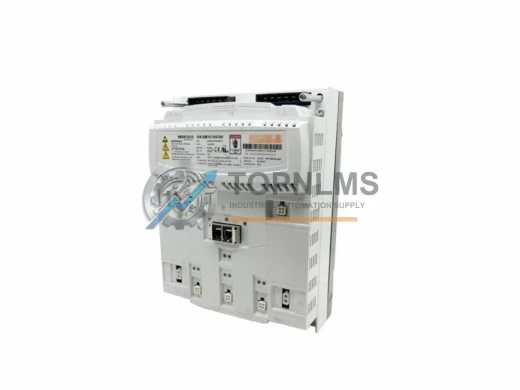
KUKA 00-150-553 KRC2 servo drive replacement. Drop-in upgrade, wiring & comms compatible. 12-month warranty. In stock at TOPNLMS — fast global shipping.
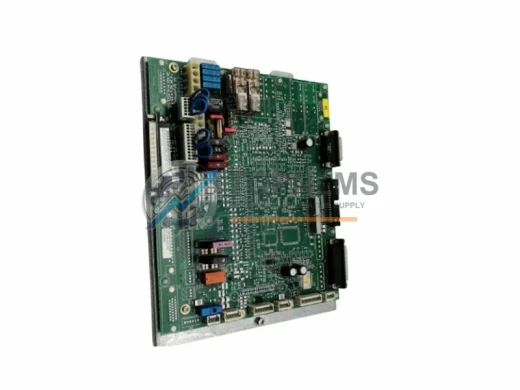
KUKA MFC+DSE 00-117-336 / 00-128-358 replacement for KR C4. Drop-in upgrade, wiring compatible, 12-month warranty. Fast global shipping from TOPNLMS.
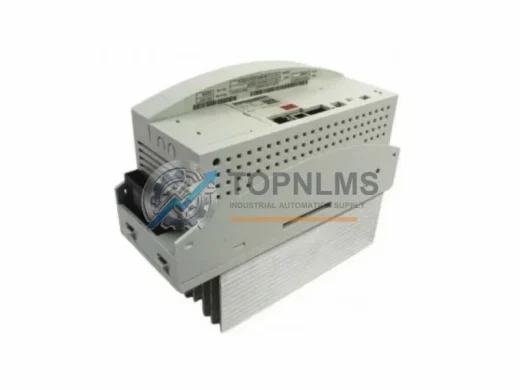
KUKA KSP 600 3X4000-160-154 three-axis servo drive replacement for KR C4. Compatible upgrade, 12-month warranty, fast global shipping from stock.
Click Quote This Model and the Part Number field will auto-fill with KSD1-16.