
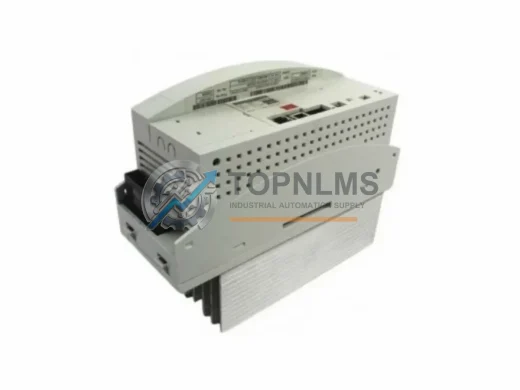
KUKA
KUKA KSP600-3×40 Ruggedized Three-Axis Servo Drive Module
KSP600-3X40KUKA KSP600-3x40 (00-198-268) three-axis servo drive module for harsh industrial environments. 12-month warranty, tested stock, fast global shipping. topnlms.com
Request availability, condition, lead time and export shipping details for 00-150-553.
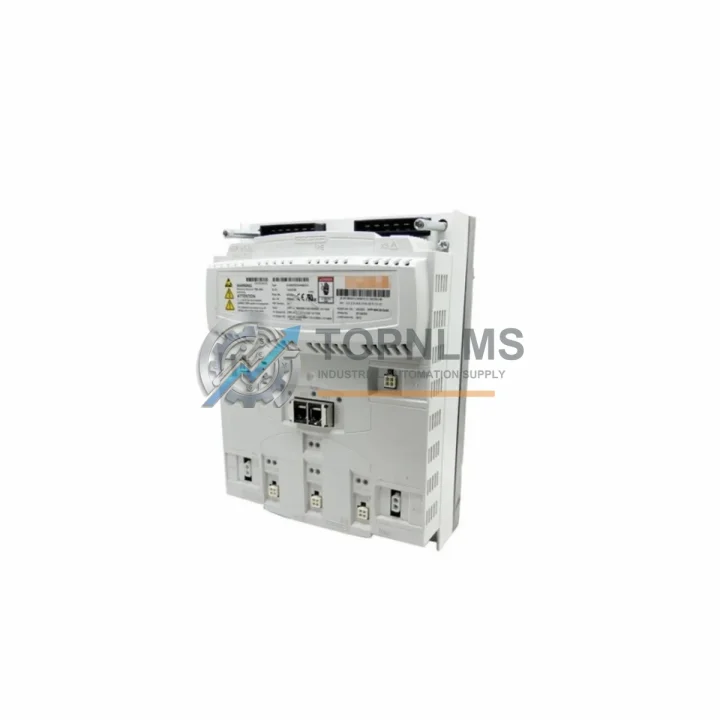
Send this exact part number, quantity and destination country. TOPNLMS will confirm availability, condition and export lead time before quotation.
The KUKA 00-150-553 is a KRC-series servo drive module engineered for industrial robot control cabinets operating within the KRC2 platform. As KUKA progressively phases out KRC1 and KRC2 generation components, facilities running legacy robot cells face mounting pressure to source verified replacement units or execute a structured migration to current-generation hardware. This guide covers every dimension of the upgrade process — wiring compatibility, communication protocol continuity, physical installation constraints, power supply requirements, and on-site commissioning — giving your maintenance engineers and procurement teams the technical confidence to act decisively.
Whether you are responding to an unplanned servo axis failure, building a preventive spare inventory, or executing a phased KRC2-to-KRC4 migration across a multi-robot production line, the 00-150-553 is the validated drop-in solution that eliminates rewiring, minimizes downtime, and preserves your existing KSS software environment.
| Parameter | Legacy / Outgoing Model | KUKA 00-150-553 (Replacement) |
|---|---|---|
| Series Platform | KRC1 / KRC2 (End-of-Life) | KRC Series — direct drop-in for KRC2 cabinets |
| Module Type | Servo Drive / Axis Module | Servo Drive Module |
| Communication Interface | Proprietary KUKA KCB / DSE internal bus | KCB-compatible; integrates with KRC2 controller backplane without protocol conversion |
| Power Supply Compatibility | KPS 600 / KPS 1500 power supply units | Compatible with KPS 600 and KPS 1500 — no power rail modification required |
| Wiring / Connector | Standard KRC2 servo connector pinout | Identical pinout — no rewiring of motor cables, resolver lines, or brake circuits |
| Rack / Backplane Fit | KRC2 cabinet backplane slot | Direct slot replacement; standard DIN rail and backplane mounting retained |
| Axis Support | Single-axis servo control (A1–A6) | Single-axis; compatible with A1–A6 and external axis configurations |
| Firmware / Software | KSS 4.x / 5.x | Compatible with KSS 5.x — verify KSS version before installation |
| Country of Origin | Germany | Germany |
| Warranty | OEM warranty (expired on legacy units) | 12-Month Warranty from TOPNLMS — includes functional pre-shipment verification |
| Replacement Recommendation | Immediate — legacy units at end-of-life | Recommended for all KRC2 servo axis failures and preventive spare stock programs |
A reliable KRC2 servo drive replacement rarely involves a single component in isolation. Field experience across automotive, foundry, and general manufacturing environments consistently shows that adjacent modules require simultaneous evaluation to restore full robot cell functionality and prevent repeat failures within the same maintenance window.
The KPS 600 power supply module is the most common companion unit in KRC2 control cabinets. When a servo drive fails due to overcurrent, bus fault, or thermal overload, the KPS 600 frequently absorbs transient damage and must be inspected — or replaced — in parallel with the 00-150-553. Skipping this step is the leading cause of repeat servo drive failures within weeks of an initial replacement.
The KRC2 main computer board — which hosts the KSS operating environment and manages axis coordination across all six robot axes — should be verified for firmware integrity after any servo drive swap. Corrupted axis machine data or lost mastering offsets can prevent successful recommissioning even when the replacement drive module is fully functional. Always back up robot programs and machine data before beginning the replacement procedure.
For robots with external axes or positioner integration, the KRC2 external axis servo amplifier card sharing the same backplane must be confirmed compatible with the replacement 00-150-553 to ensure synchronized motion profiles are maintained across coordinated motion groups. Mismatched firmware revisions between axis modules are a common source of post-replacement commissioning delays.
The DSE-IBS (Drive System Electronics with Interbus interface) communication board, which bridges the KRC controller to the servo drive layer, is another component that should be held as a spare when undertaking KRC2 servo drive replacements at scale. A degraded DSE-IBS board can produce intermittent bus communication errors that are easily misattributed to the servo drive itself.
Facilities managing multi-robot cells should also audit their KCP2 teach pendant cables and pendant units before and after the 00-150-553 replacement. Communication faults between the pendant and the KRC2 controller can be misdiagnosed as servo drive failures, adding unnecessary troubleshooting time. Confirming pendant interface integrity eliminates ambiguity during post-installation functional testing.
For sites executing a broader migration from KRC2 to KRC4 architecture, the transition introduces a fundamentally different servo drive topology based on KSP (KUKA Servo Pack) modules communicating over EtherCAT via the KUKA System Bus (KSB). In this scenario, the 00-150-553 serves as a validated bridge solution — keeping existing KRC2 robots operational and productive while the migration roadmap is executed robot-by-robot, preserving capital and minimizing production disruption during the transition period.
Signal isolation is a recurring challenge when integrating KRC2 robots with modern safety PLCs or upgrading cabinet I/O interfaces to meet IEC 62061 or ISO 13849 safety standards. Signal isolator modules and terminal adapter blocks are frequently required to bridge legacy analog wiring to new digital control architectures. Stocking the 00-150-553 alongside these interface components ensures your team can execute a complete, validated repair in a single planned maintenance window — without waiting for secondary parts to arrive.
Q: Can I replace the 00-150-553 without rewiring motor cables?
A: Yes. The 00-150-553 uses the standard KRC2 servo connector pinout. Motor power cables, resolver feedback lines, and brake control wiring connect identically to the replacement module. No rewiring is required for A1–A6 standard axes.
Q: Do I need to update KSS software after replacing the servo drive?
A: Not necessarily. The 00-150-553 is compatible with KSS 5.x. However, best practice requires backing up axis-specific machine data — load data, mastering offsets, and software limits — before replacement and restoring it after installation. A mastering procedure will be required following the swap.
Q: Is the 00-150-553 compatible with KRC1 cabinets?
A: The 00-150-553 is designed for KRC2 platform cabinets. KRC1 systems use a different backplane and power architecture. Cross-platform compatibility is not supported without significant cabinet modification and is not recommended.
Q: What communication protocol does this module use?
A: The 00-150-553 communicates via the KUKA internal KCB (KUKA Controller Bus) proprietary protocol. Open fieldbus standards such as PROFIBUS, EtherCAT, or DeviceNet are managed at the KRC controller level — not at the servo drive module level.
Q: How much physical space does the replacement module require?
A: The 00-150-553 is a direct slot-for-slot replacement within the KRC2 cabinet backplane. No additional cabinet space or DIN rail modification is required. Verify that adjacent modules are fully seated after installation to ensure proper backplane bus contact.
Q: Can this module be used as a preventive spare?
A: Absolutely. Given the end-of-life status of KRC2 components and extended OEM lead times, stocking one or two 00-150-553 units per robot cell is standard practice in automotive and general manufacturing facilities to eliminate lead-time risk during unplanned downtime events.
Every KUKA 00-150-553 servo drive module shipped by TOPNLMS is covered by a 12-Month Warranty from the date of delivery. Prior to shipment, each unit undergoes functional verification including power-on testing, KCB bus communication checks, and visual inspection for connector integrity and component condition. Units that do not pass our outgoing quality inspection are not shipped.
In the event of a warranty claim, TOPNLMS provides replacement support with priority processing for customers experiencing active production downtime. Our technical team is available to assist with installation verification, fault code interpretation, and commissioning guidance remotely. Replacement units are dispatched from our Xiamen warehouse with express logistics options available for urgent requirements.
For procurement teams, full traceability documentation is available upon request, including inspection records and shipping manifests. Orders are accepted via email or phone, and we support standard B2B purchase order workflows. Lead times for in-stock units are typically 1–3 business days for domestic China shipments and 5–10 business days for international destinations.
Contact our sales team to confirm current stock availability, request a formal quotation, or discuss volume pricing for multi-unit preventive spare programs.
KUKA KSP600-3x40 (00-198-268) three-axis servo drive module for harsh industrial environments. 12-month warranty, tested stock, fast global shipping. topnlms.com
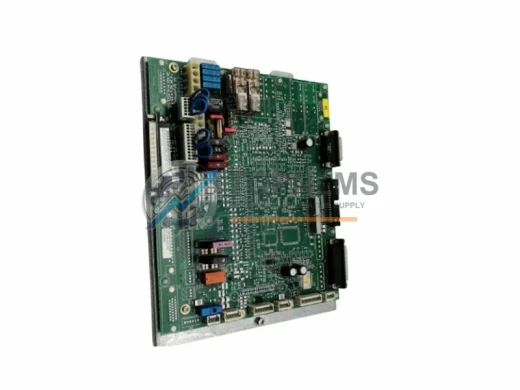
KUKA MFC+DSE 00-117-336 / 00-128-358 replacement for KR C4. Drop-in upgrade, wiring compatible, 12-month warranty. Fast global shipping from TOPNLMS.
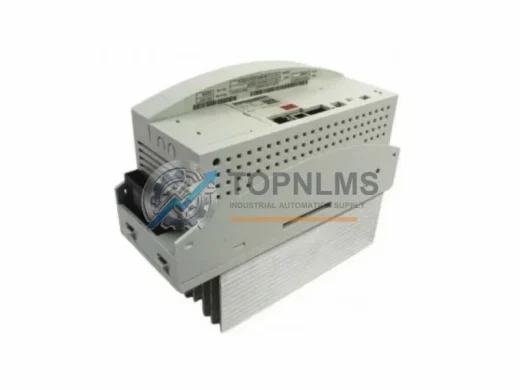
KUKA KSP 600 3X4000-160-154 three-axis servo drive replacement for KR C4. Compatible upgrade, 12-month warranty, fast global shipping from stock.
KUKA KSD1-48C200-105-413 servo drive module — rugged, EMI-resistant, 12-month warranty. In stock, tested, fast shipping. Ideal for harsh industrial environments.
Click Quote This Model and the Part Number field will auto-fill with 00-150-553.