
KUKA
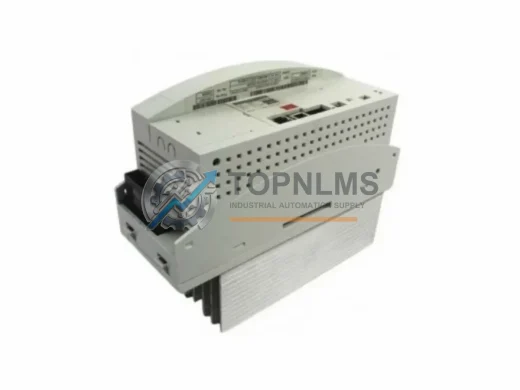
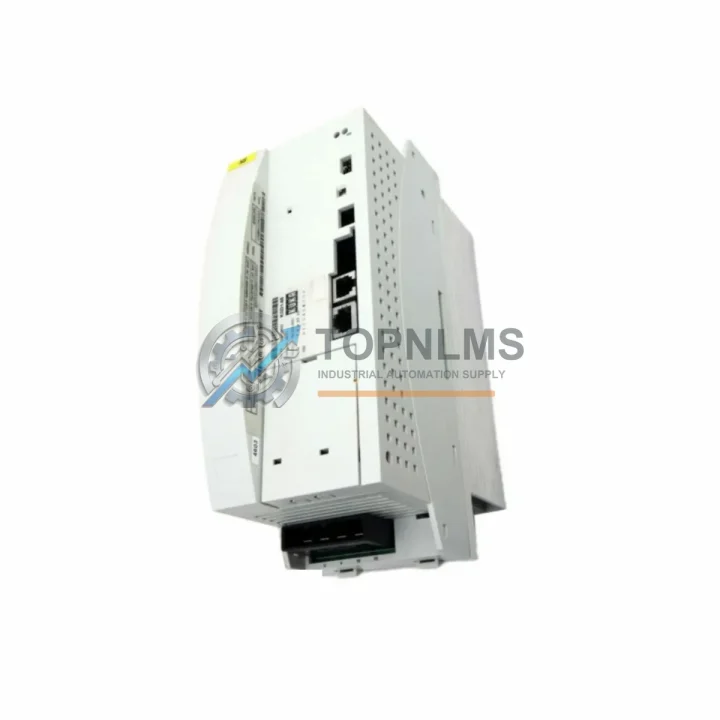
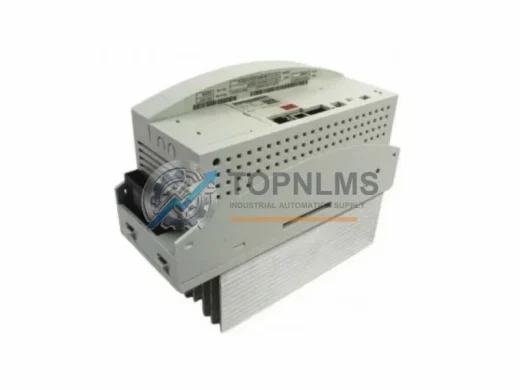
KUKA KSP600-3×40 Ruggedized Three-Axis Servo Drive Module
KSP600-3X40KUKA KSP600-3x40 (00-198-268) three-axis servo drive module for harsh industrial environments. 12-month warranty, tested stock, fast global shipping. topnlms.com
Request availability, condition, lead time and export shipping details for KSD1-16-00-122-285.
Send this exact part number, quantity and destination country. TOPNLMS will confirm availability, condition and export lead time before quotation.
Upgrading or replacing a failed axis servo drive in a KUKA KRC2 robotic control system demands precision, speed, and verified compatibility. The KUKA KSD1-16 (Part No. 00-122-285) is a 16A axis servo drive amplifier engineered specifically for KUKA KRC2 and KRC2 ed05/ed2005 controller cabinets. Whether you are managing an emergency breakdown, executing a planned retrofit, or building a critical spare parts inventory, this unit delivers a seamless, drop-in replacement with no firmware re-flashing or mechanical rework required.
TOPNLMS maintains verified stock of the KSD1-16 00-122-285 with full pre-shipment functional testing, ensuring every unit dispatched from our Xiamen facility meets KUKA’s original performance specifications. Orders are processed within 24 hours, with DHL Express and FedEx International Priority available for urgent industrial requirements worldwide.
| Parameter | KUKA KSD1-16 (00-122-285) | Common Legacy / Replaced Units |
|---|---|---|
| Part Number | 00-122-285 | 00-109-477 / 00-116-342 (earlier KSD1-16 revisions) |
| Drive Series | KSD1 Series | KSD1 Series (earlier hardware revisions) |
| Compatible Controller | KRC2, KRC2 ed05, KRC2 ed2005 | KRC2 (all variants) |
| Rated Current | 16 A continuous | 16 A continuous |
| Bus Interface | KUKA KRC2 internal servo bus (DSE-IBS) | Same — direct slot replacement |
| Mounting / Form Factor | KRC2 cabinet rack-mount, standard slot | Identical mechanical footprint |
| Wiring Compatibility | Direct connector match — no rewiring needed | Full pin-for-pin compatibility |
| Communication Protocol | KUKA proprietary servo bus (DSE) | Same protocol — no reconfiguration |
| Firmware / Software | Pre-loaded; KSS 5.x compatible | No re-flashing required |
| Installation Space | Standard KRC2 cabinet slot (no modification) | Direct swap |
| Replacement Recommendation | ✅ Recommended drop-in replacement | — |
| Warranty | 12-Month Warranty (TOPNLMS) | — |
A successful KRC2 servo drive replacement rarely involves a single component in isolation. In practice, field engineers replacing the KSD1-16 00-122-285 frequently address adjacent components within the same control cabinet to ensure system-wide reliability and minimize repeat downtime events.
The KRC2 cabinet typically houses multiple KSD1-series axis drives — commonly a combination of KSD1-16 and KSD1-08 units serving different robot axes. When one drive fails due to age or thermal stress, it is standard practice to inspect and bench-test the remaining drives in the same rack. The KUKA KPS-600 power supply module, which feeds the DC bus shared across all KSD1 drives, is another critical component to verify during any servo drive replacement; a degraded KPS-600 is a frequent root cause of repeated KSD1 failures.
On the controller side, the KUKA KRC2 DSE-IBS board (the drive system electronics interface board) manages communication between the KR C2 computer and all axis drives via the internal servo bus. If axis fault codes persist after a KSD1-16 swap, the DSE-IBS board should be evaluated as a secondary suspect. Similarly, the KUKA KRC2 MFC board (multi-function controller board) governs higher-level motion coordination and should be confirmed operational before commissioning the replacement drive.
Wiring integrity between the KRC2 cabinet and the robot arm is equally important. The KUKA motor power cable assembly and resolver feedback cable connecting each axis motor to its corresponding KSD1 slot must be inspected for insulation breakdown, connector corrosion, or pin damage — conditions that can cause a new drive to fault immediately upon startup. Replacing a KSD1-16 without verifying cable condition is a common field error that leads to unnecessary repeat failures.
For facilities managing multiple KUKA KR series robots on the same production line, maintaining a structured spare parts kit is strongly recommended. A practical kit alongside the KSD1-16 00-122-285 typically includes a spare KUKA KPS-600 power supply, one or two KSD1-08 drives for lower-current axes, a KUKA teach pendant cable (KCP2 cable assembly), and a set of KUKA KRC2 fuse kits for the cabinet’s internal protection circuits. Having these components on-site reduces mean time to repair (MTTR) from days to hours.
For sites transitioning from KRC2 to KUKA KRC4 architecture, the KSD1-16 serves as a reliable interim solution to extend the operational life of existing KRC2 cells while the broader migration is planned and budgeted. The KRC4 platform uses a fundamentally different KSP (KUKA Servo Pack) drive architecture, so a full cabinet upgrade is required for that transition — but keeping KRC2 cells running with verified spare KSD1-16 units is the most cost-effective bridge strategy.
Q: Does replacing the KSD1-16 00-122-285 require any wiring changes?
No. The KSD1-16 uses a direct plug-in connector that matches all KRC2 cabinet wiring harnesses. No rewiring, pin remapping, or cable modification is required. Simply power down the cabinet, remove the faulty drive from its slot, insert the replacement unit, and restore power.
Q: Will the replacement drive require firmware updates or KSS reconfiguration?
No firmware flashing is required. The KSD1-16 00-122-285 is compatible with KUKA System Software (KSS) versions 5.x as used on KRC2 systems. Robot axis parameters (mastering data) stored in the KRC2 controller are not affected by a drive swap and do not need to be re-entered, provided the controller hard disk and battery-backed RAM are intact.
Q: What fault codes typically indicate a failed KSD1-16?
Common KRC2 fault codes associated with KSD1 drive failure include KSS 1302x series (axis amplifier errors), overtemperature faults, DC bus undervoltage errors, and axis enable faults. If the fault is axis-specific and clears after drive replacement, the KSD1-16 is confirmed as the root cause.
Q: Can the KSD1-16 00-122-285 be used in a KRC1 or KRC4 cabinet?
No. The KSD1-16 is designed exclusively for KRC2 architecture. KRC1 uses an earlier drive generation (KSD0 series), and KRC4 uses the KSP servo pack platform. Physical connectors and communication protocols are not cross-compatible.
Q: How much physical space does the replacement require?
The KSD1-16 occupies a standard single slot in the KRC2 cabinet’s drive rack. No additional space, bracket modification, or cabinet rework is needed. The unit is a direct mechanical and electrical drop-in replacement.
Q: What should be checked during commissioning after installation?
After installation, perform a cold start of the KRC2 controller and verify that no axis amplifier faults are present on the KCP2 teach pendant. Run the robot through a slow-speed mastering check on the replaced axis. Confirm motor current feedback is within normal range using the KSS diagnostic screens before returning the cell to production speed.
Every KUKA KSD1-16 00-122-285 unit supplied by TOPNLMS is covered by a 12-month warranty from the date of shipment. Our pre-shipment testing protocol includes power-on functional verification, servo bus communication check, and visual inspection for connector integrity and component condition. Units that do not pass all test criteria are quarantined and never dispatched.
In the event of a warranty claim, TOPNLMS provides a replacement unit or full refund within the warranty period. Our technical support team is reachable via email at [email protected] or by phone at +86 18359293191 to assist with fault diagnosis, installation guidance, and return authorization. We understand that industrial downtime is measured in production losses, not inconvenience — our response target for warranty cases is within 24 hours of notification.
Shipping is handled via DHL Express, FedEx International Priority, or SF Express for domestic China deliveries. Export documentation including commercial invoice, packing list, and certificate of origin is provided for all international shipments to support customs clearance.
KUKA KSP600-3x40 (00-198-268) three-axis servo drive module for harsh industrial environments. 12-month warranty, tested stock, fast global shipping. topnlms.com
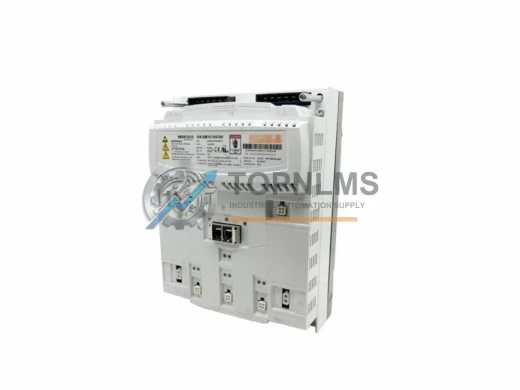
KUKA 00-150-553 KRC2 servo drive replacement. Drop-in upgrade, wiring & comms compatible. 12-month warranty. In stock at TOPNLMS — fast global shipping.
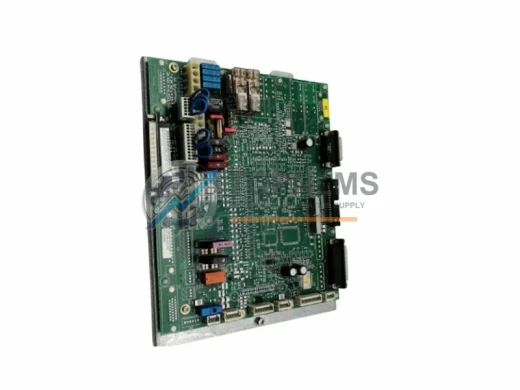
KUKA MFC+DSE 00-117-336 / 00-128-358 replacement for KR C4. Drop-in upgrade, wiring compatible, 12-month warranty. Fast global shipping from TOPNLMS.
KUKA KSP 600 3X4000-160-154 three-axis servo drive replacement for KR C4. Compatible upgrade, 12-month warranty, fast global shipping from stock.
Click Quote This Model and the Part Number field will auto-fill with KSD1-16-00-122-285.